
Last updated November 18, 2026
 Wrought iron
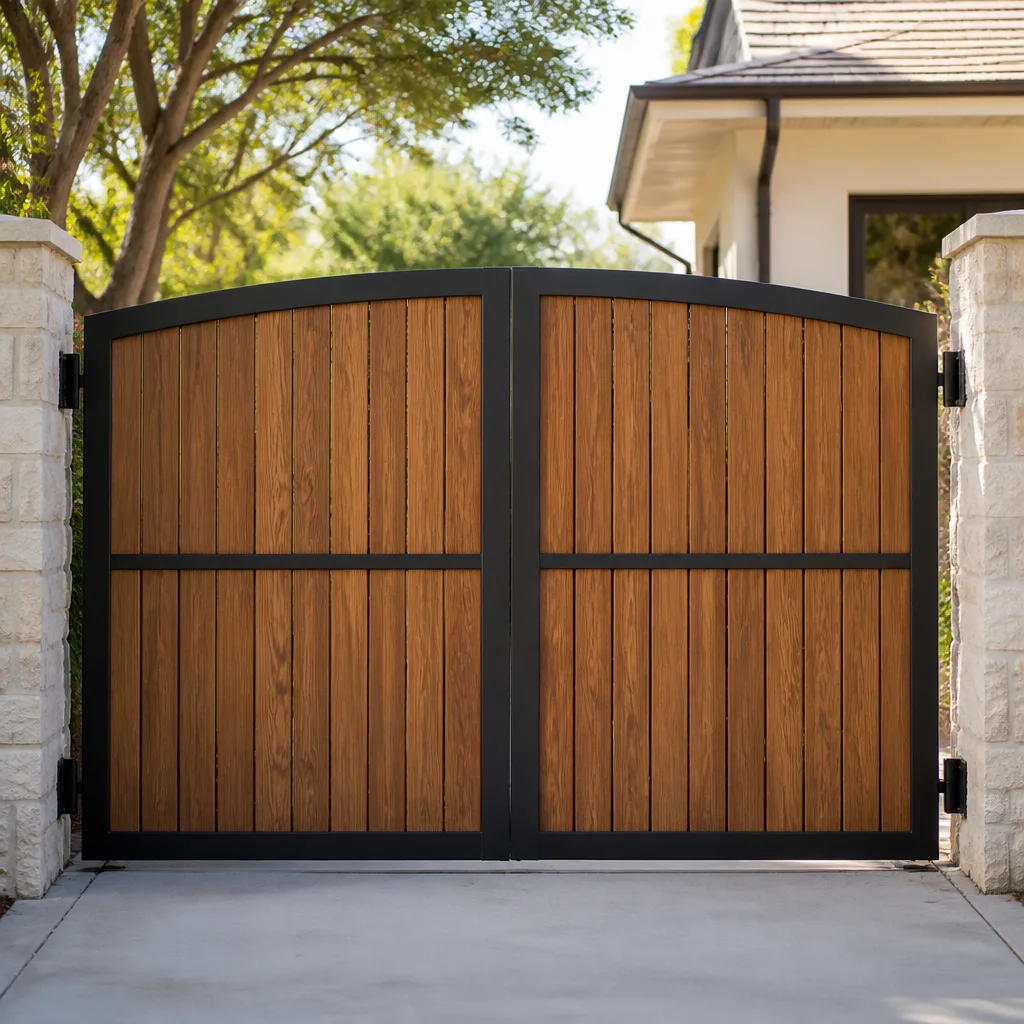 Wood & steel frame
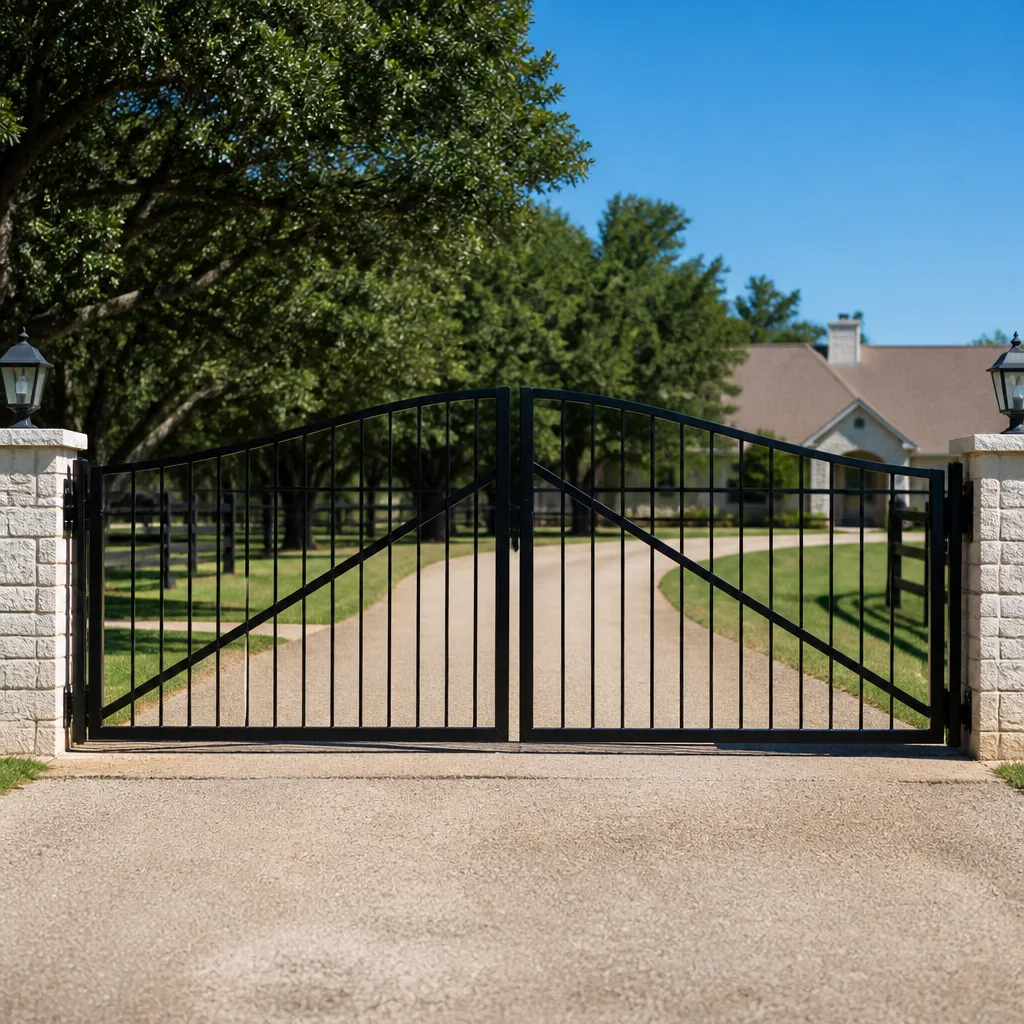 Farm & ranch
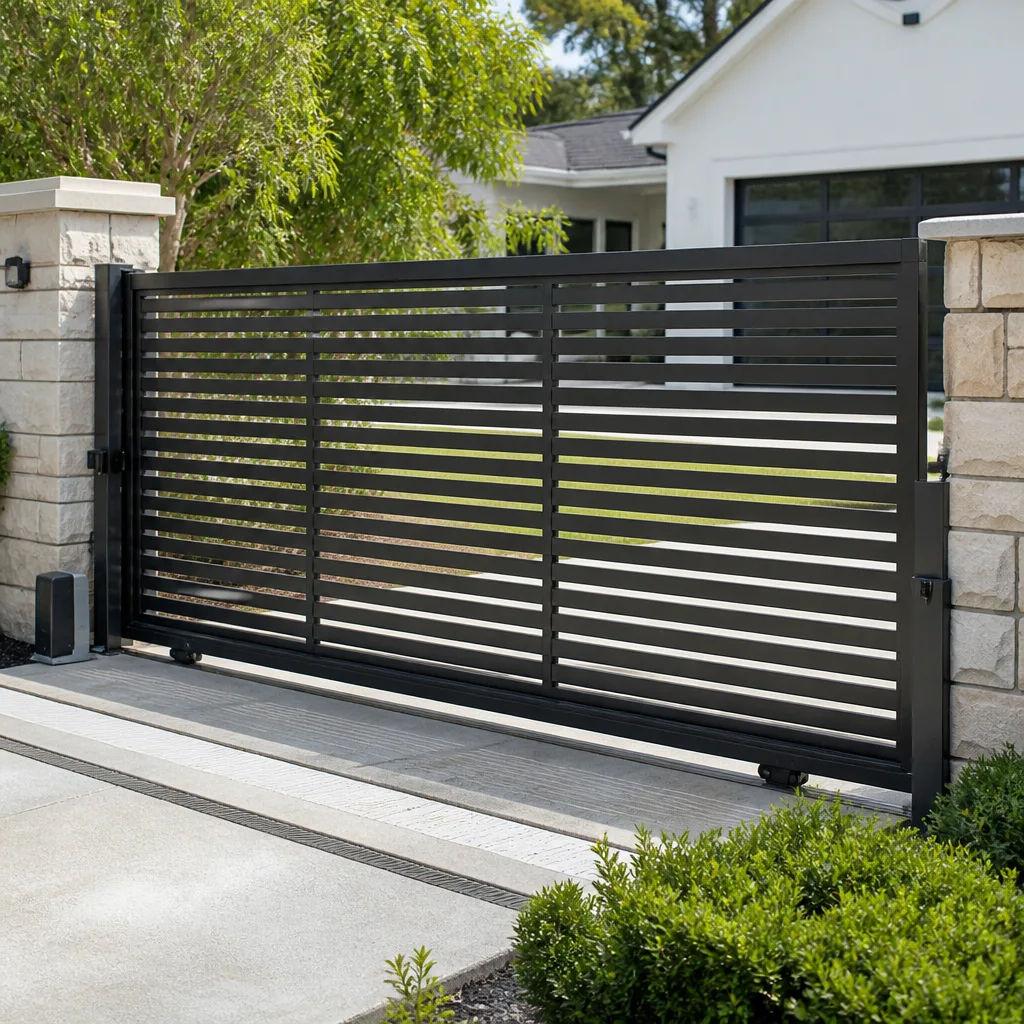 Sliding driveway gates
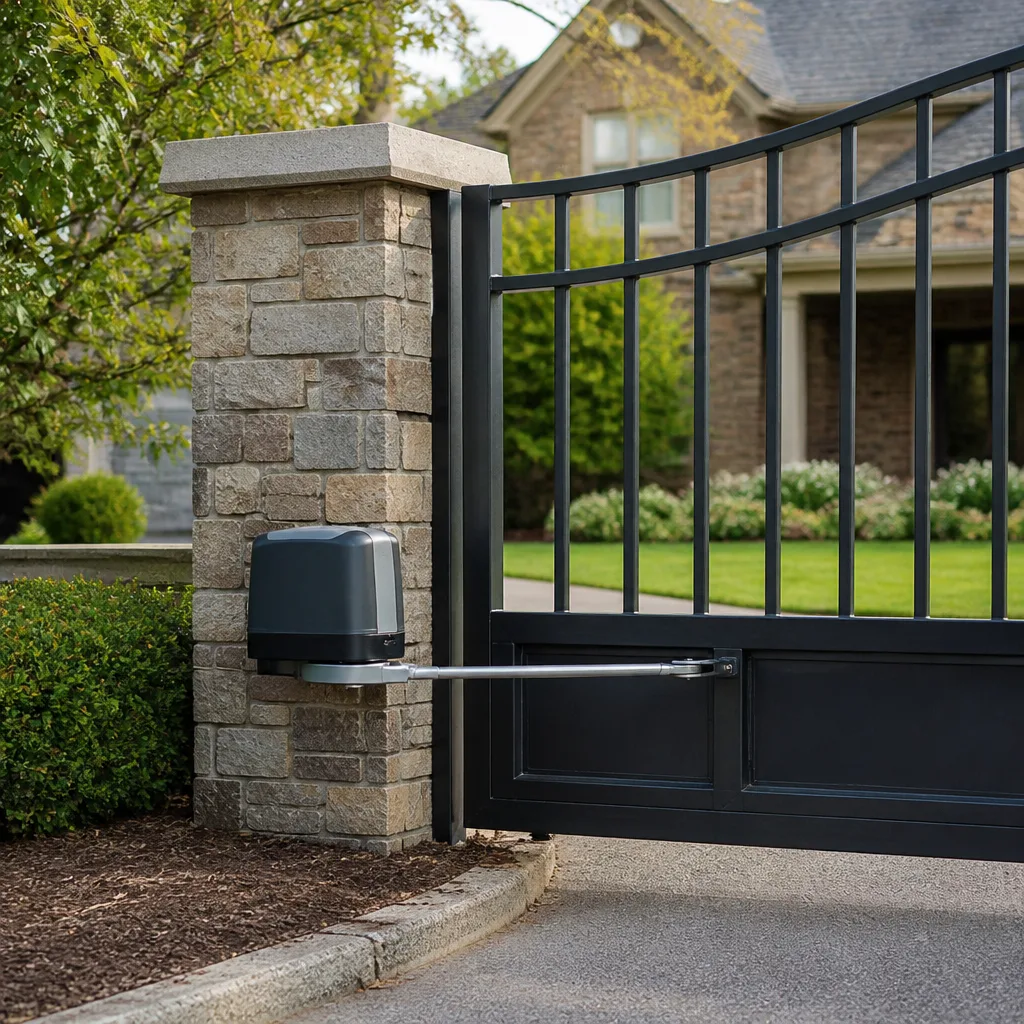 LiftMaster operators
Free on-site gate assessment - hinges, posts, and your LiftMaster or Nice gate operator checked before anything is quoted
The assessment is free and the quote is the invoice.
Get your free estimateThe Complete Guide to Gate Repair in Winchester
A sagging gate hinge isn’t a hinge problem. In our experience across Winchester, it’s almost always the post that has moved, and the hinge gets blamed and replaced for years while the real cause stays in the ground. That single misdiagnosis explains a large share of the repeat calls we run in this valley. Soil, water, welded joints, and time work on a gate as one system, and the problem you see at eye level rarely started where it shows. This guide walks the whole chain, from footing to motor, so you can name what’s actually wrong and get a repair that holds.
Quick Answer
Gate repair in Winchester most often means correcting a structural fault first: soil movement under the footing, a cracked weld at a hinge post, or a bent frame. Hardware and automation follow. A correct repair finds the root cause, quotes a fixed price in writing, and fixes it once. A repair that skips the footing will come back, usually within a few seasons.
Styles & brands we work with
- Wrought iron
- Wood & steel frame
- Farm & ranch
- Sliding driveway gates
- LiftMaster operators
Table of Contents
- Why Gate Problems Compound: The Structural Cascade
- Winchester Soil and Footings: The Root Cause Under Your Gate
- Welds, Hinges, and Frames: What Fails First
- How Structural Failures Wear Out Your Motor
- Repair vs. Adjustment: Reading the Invoice
- What a Homeowner Can Safely Check, and What Can’t Wait
- How to Document Your Gate Before You Call
- Common Mistakes to Avoid
Why Gate Problems Compound: The Structural Cascade
Gates fail in sequence, not all at once. We’ve watched the same pattern play out on dozens of Winchester driveways, and once you can see the chain you can predict where the damage will surface next.
A gate hung on a post is a load path. Weight travels from the gate frame into the hinge, through the post, and down into the footing. When any link in that path weakens, the load shifts to whatever is still holding. That’s the cascade.
- The footing moves. Soil settles imperceptibly, or water softens the base. The post leans a fraction of an inch.
- The hinge carries the load. The gate leans with the post, so the hinge binds and the weld at the hinge ear starts to crack.
- The frame twists. A gate that no longer sits square flexes every time it swings. Small cracks become long ones.
- The latch fails to line up. The gate no longer meets the receiver cleanly, so it’s forced shut. That stress goes back into the post and hinge.
- The automation compensates. The motor pushes harder to close a gate that’s fighting its own frame. Motor and gears pay the price.
Steps one through three can take a year or more to become visible. Steps four and five move faster. In our experience, a failed structural joint can start showing up at the operator anywhere from six to eighteen months later, depending on how often the gate cycles. That’s the gap that fools people into thinking they have a motor problem when they really have a post problem.
Winchester Soil and Footings: The Root Cause Under Your Gate
Winchester sits on alkaline desert ground, and that soil behaves differently from the clay or loam a lot of repair advice assumes. Understanding it explains why posts here move in ways that mimic hardware failure.
Alkaline soil holds salts and tends to swell and shrink more sharply with moisture than its dry surface suggests. A gate footing is set in that ground, and every irrigation cycle or heavy rain season changes the pressure around it. When water collects at the base of a post (common where a driveway drains toward the gate line), the soil softens, the footing loses grip, and the post tilts. The tilt is tiny at the ground and amplified at the top of the gate, which is why a small footing shift reads as a badly sagging gate.
Alkaline soil also accelerates corrosion on steel that’s set directly in it. Posts that weren’t properly isolated from the ground can pit at the soil line, and a pitted post fails from the inside out. If you see rust blooming at the base of a post, that’s a structural warning, not a cosmetic one.
Winchester’s dry-season heat adds another stressor: metal expands and contracts across the day, working fasteners and welds loose over years. Add our occasional hard freezes and the steel takes a seasonal beating that milder climates never apply.
- Post heave: upward or sideways movement from soil that swells and settles.
- Footing failure: the concrete base cracks or loses grip, so the whole post leans.
- Soil-line corrosion: steel pitting where post meets alkaline ground.
The lesson for Winchester homeowners: before anyone replaces a hinge or a latch, confirm the post is still plumb and the footing is sound. If it isn’t, replacing hardware just moves the problem down the line. Our Gate Repair in Winchester page covers how we check and correct footing issues on the spot.
Welds, Hinges, and Frames: What Fails First
Once the post moves, the welded joints take the punishment. We can usually tell how long a gate has been out of square by reading the cracks.
A gate frame is a load-bearing structure built from steel tube or bar stock. The hinge ear, the latch stile, and the corner joints all carry stress. When the frame twists, stress concentrates at the stiffest points, and that’s where welds crack. A hairline crack that looks harmless soon grows into a joint that flexes, and a flexing joint on a swing gate puts enormous strain on everything downstream.
Most of what we repair on Winchester gates falls into a few categories:
- Cracked hinge ears and welds: the most common failure, usually a symptom of post movement.
- Bent or twisted frames: from impact, wind on a heavy gate, or years of a bound hinge.
- Worn or seized hinges: binding from misalignment rather than from age.
- Latch misalignment: the gate no longer meets the receiver, so it’s forced to close.
- Rusted structural steel: corrosion that thins the metal until it can’t carry the load.
Proper gate repair means restoring the weld with matching heat and fill, then re-checking the frame for square. A quick tack weld over a cracked joint will crack again. When a gate has reached that point and the frame can’t be saved, we’ll tell you plainly, and that’s when Gate Installation in Winchester is the honest answer rather than a repair you’ll repeat.
How Structural Failures Wear Out Your Motor
An opener is a machine that moves a gate. If the gate fights it, the motor loses. That’s the core of why so many “motor failures” in Winchester are really structural problems wearing a mechanical disguise.
Automated gates in this area run on operators from BFT, Linear, Viking, Ghost Controls, and other major brands, and they’re built to move a gate that opens smoothly within its designed limits. When a post shifts or a frame twists, the operator now pushes against friction it was never meant to overcome. It works harder on every cycle. Gears wear, the control board overcurrents more often, and the safety sensors trip because the gate closes with resistance.
The wear is gradual and predictable:
- Resistance climbs first. The gate drags or binds partway through its swing.
- The operator compensates. It draws more current and pushes harder to finish the cycle.
- Components wear faster. Gears, the limit switch mechanism, and the control board all age prematurely.
- Faults show up. Random stops, reversed travel, and sensor trips become routine.
We’ve replaced motors on Winchester gates that failed with zero structural fault, and we’ve corrected the frame on gates whose motors were about to suffer the same fate. The right call depends on which came first. That’s why our technicians carry training on the full spread of operator brands (BFT, Linear, Viking, Ghost Controls, and others) and check the gate’s structure before deciding the operator is at fault. Our Gate Motor & Opener in Winchester page explains what a proper diagnostic includes.
Repair vs. Adjustment: Reading the Invoice
This distinction matters to your wallet, and it’s the one most often blurred on invoices. A repair restores a component to its working condition. An adjustment simply changes a setting, and it often doesn’t fix the cause.
A common scene in Winchester: a gate drags, a technician turns a hinge or a latch a quarter-inch so the gate closes again, and you’re billed for a “repair.” The gate works for a few months. Then the post tips a little further and the dragging returns. You’ve paid repeatedly for a symptom that was never fixed, because the real issue was in the ground.
Here’s how we draw the line:
- Adjustment: hinge lubrication, minor latch tension, operator limit or sensitivity settings. It’s legitimate maintenance, but it doesn’t fix a structural fault.
- Repair: re-welding a cracked joint, re-setting a footing, correcting frame square, replacing a seized hinge or a worn part.
- Replacement: when the gate frame or post can’t be restored to sound condition.
A straightforward invoice names what was done and why. If a “repair” charges you for a hinge tweak without addressing the post, ask what the post checks showed. Upfront pricing settled before a single bolt is turned gives you leverage to ask that question. At Ironworks, the price is quoted and agreed before work starts, and there are no surprises on the bill.
What a Homeowner Can Safely Check, and What Can’t Wait
You can safely observe a lot of your gate. You shouldn’t safely touch some of it. Knowing the difference protects you and gets you a better estimate.
Safe to do yourself (observation only):
- Look for plumb. Stand back and sight down the gate post. If it leans, the footing is likely involved.
- Look for rust at the base. Soil-line corrosion on a steel post is a structural warning.
- Test the swing by hand, carefully. With the operator disconnected (a manual release, and follow the manufacturer’s instructions), feel whether the gate binds.
- Check the latch gap. If the gate won’t meet the receiver, note where it stops.
- Cycle the operator and listen. Grinding, stuttering, or a gate that stops partway is information to pass to a technician.
Leave to a trained professional:
- Any welding. Gate frames are structural steel under load. A bad weld on a loaded joint can fail and the gate can fall. A licensed technician with the right equipment and training is who should do it.
- Footing and post work. Digging out a post that’s holding a heavy gate is a load-handling job, not a weekend task.
- Operator and wiring work. Automated gates have electrical power and safety circuits. Unless you’re qualified, the motor, control board, and wiring are a licensed electrician or gate-automation technician’s work, not a homeowner’s. On that note, power runs and safety edges are part of the job and we handle them when we install. A live gate that must stop on contact with an obstruction is a safety system, and getting it wrong is a genuine injury risk.
For anything involving a leaning post, a cracked weld, or an operator fault, call us rather than force it. Safety edges, in particular, exist to protect people, and they need to be tested regularly and repaired by a trained technician.
How to Document Your Gate Before You Call
The clearest calls we take are from homeowners who’ve written down what they see. A few minutes of documentation gets you a more accurate estimate on the first call and saves a return visit.
Gather these five things:
- The gate type. Swing or sliding, single or double, steel or wood-clad.
- The operator brand and model. Look at the label on the housing (e.g., Linear, BFT, Viking, or Ghost Controls). Brand and model tell us what we’ll be working on.
- What the gate is doing, and when. A short phone video of the gate opening and a photo of the affected area (post base, weld, hinge) is worth a dozen words.
- What’s been done before. Note past repairs, especially any that a technician called a “repair” but that didn’t last.
- Whether the post looks plumb. A photo taken from a few feet back, with the gate closed, shows whether it’s leaning.
With that in hand, a technician can quote more accurately over the phone and arrive prepared. That’s the difference between a single-visit fix and a first visit just for diagnosis. Ironworks makes every effort to complete the job on that first visit, whichever brand is on the driveway. A live person answers every call, 24 hours a day, 7 days a week, so there’s no voicemail to fight.
Common Mistakes to Avoid
- Replacing hinges before checking the post. It’s the classic Winchester mistake. If the post has moved, a new hinge binds within a season and you’ve paid for a part that was never the problem.
- Treating a motor fault as a motor fault. Nine times out of ten, if an operator is straining, the gate is the reason. Replacing a healthy motor before checking the frame and hinges wastes the money you spent.
- Letting a small weld crack run. A hairline crack at a loaded joint grows. Catching it early is a weld; letting it flex is a frame repair.
- Ignoring rust at the post base in our alkaline soil. Soil-line corrosion on a steel post is the earliest sign of trouble. Wall it off with a glance before it becomes a footing problem.
- Accepting a “repair” bill for an adjustment. If the invoice charges for a repair but the work was a latch tweak, ask what structural checks were done. A square deal is an upfront price settled before the work starts.
- Skipping the written guarantee check. A repair with no written guarantee is a repair you’ll pay for again. Ask what’s in writing before you book.
- Tackling welding or an operator repair as a DIY job. Loaded steel, live electrical circuits, and safety edges are not a homeowner’s territory. This is where injuries happen and warranty work gets voided.
See the difference
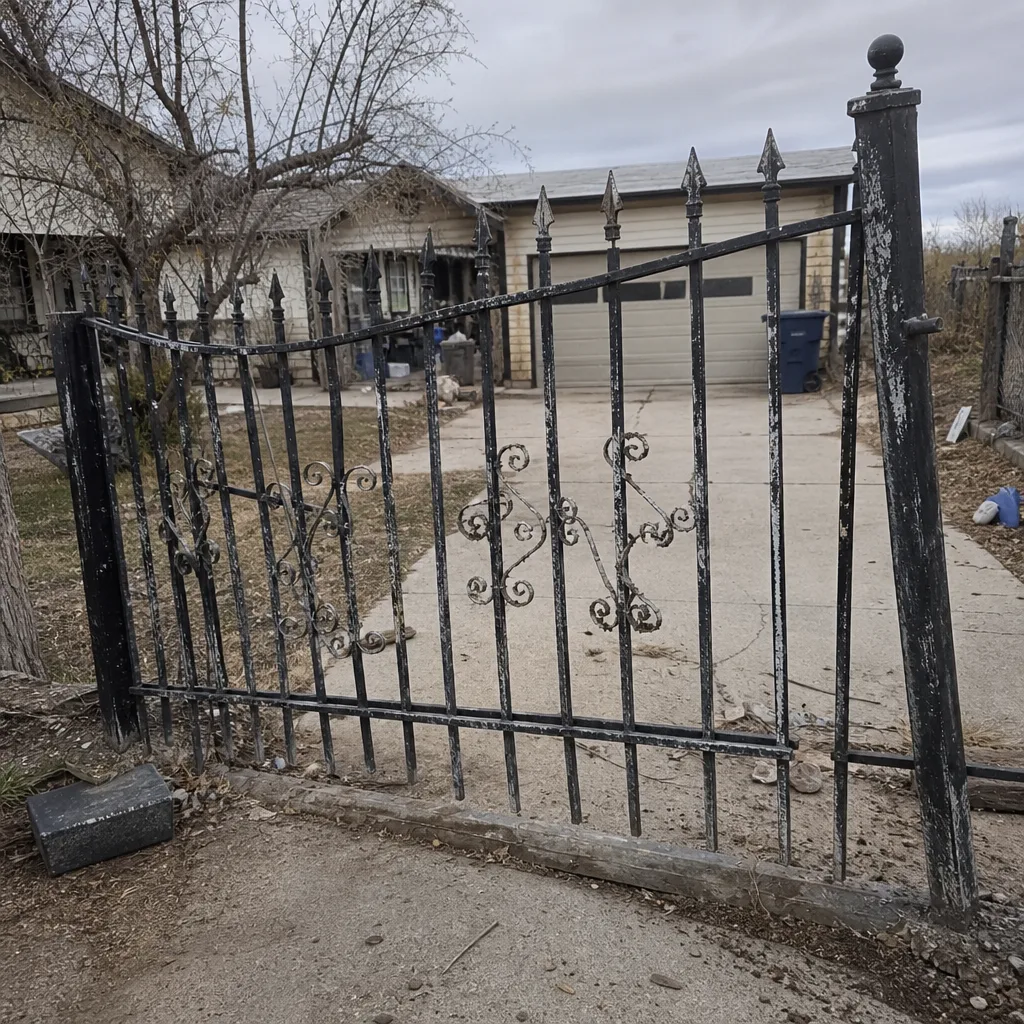 Before
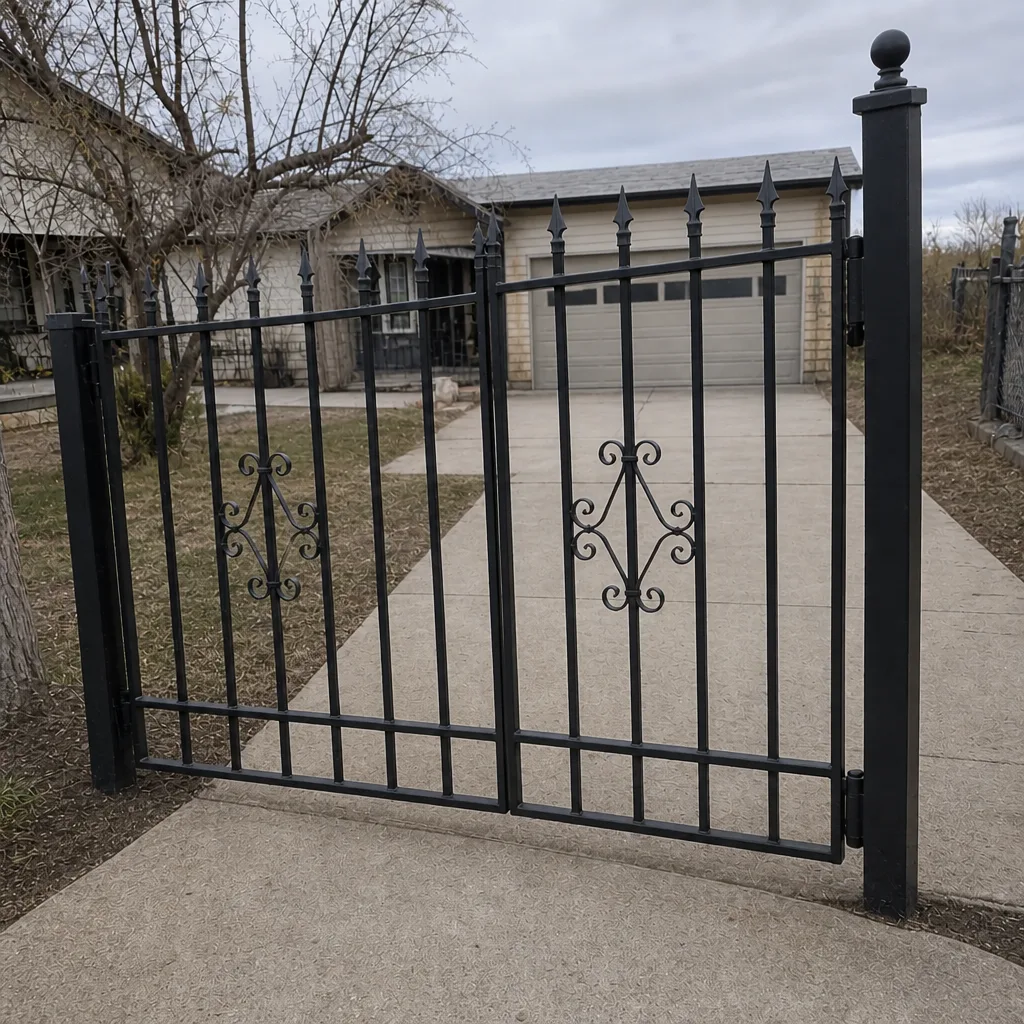 After
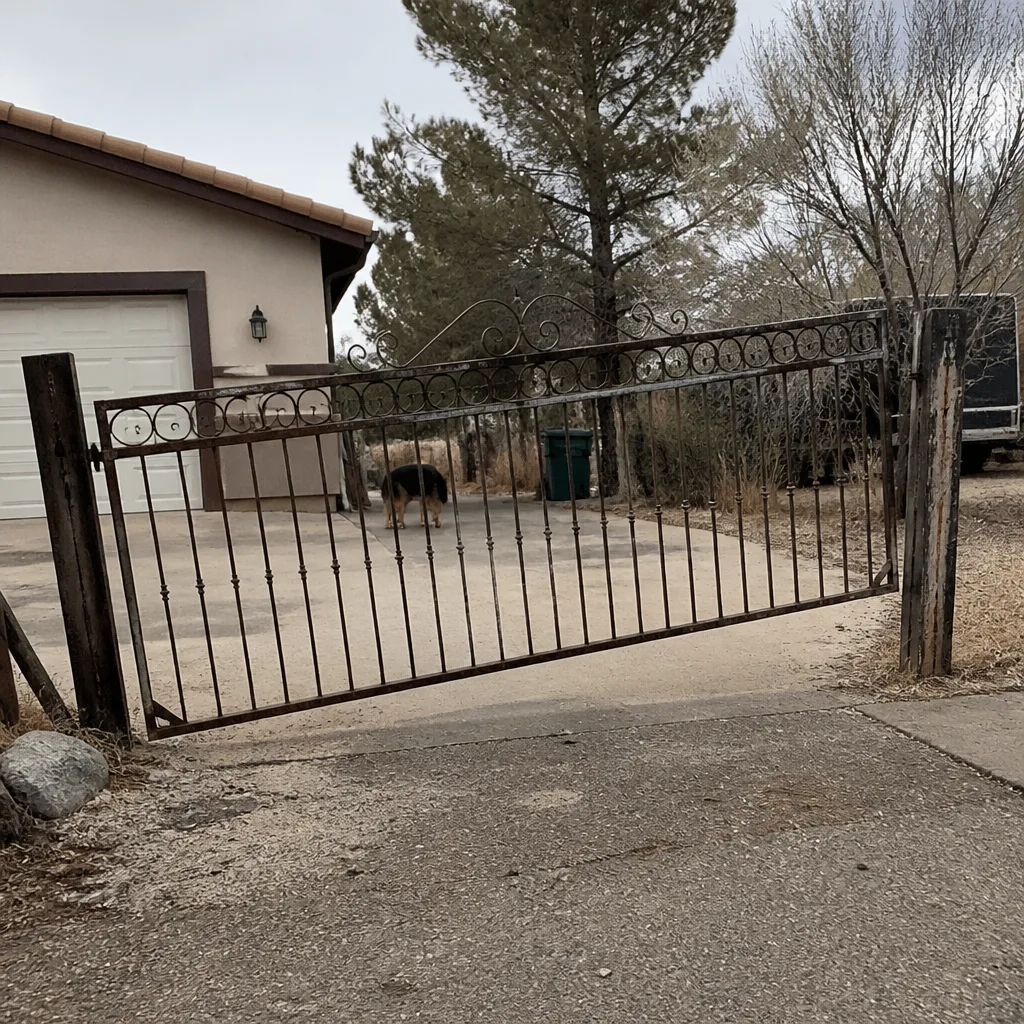 Before
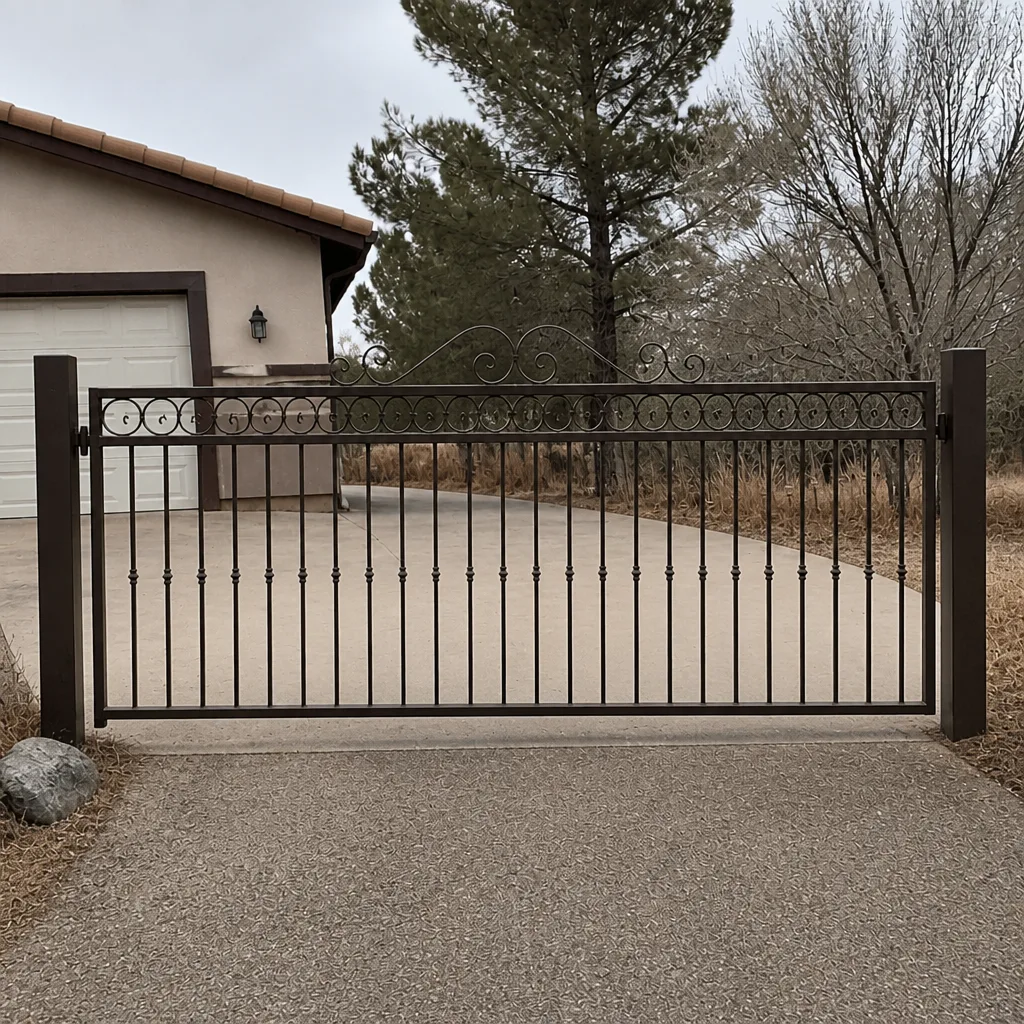 After
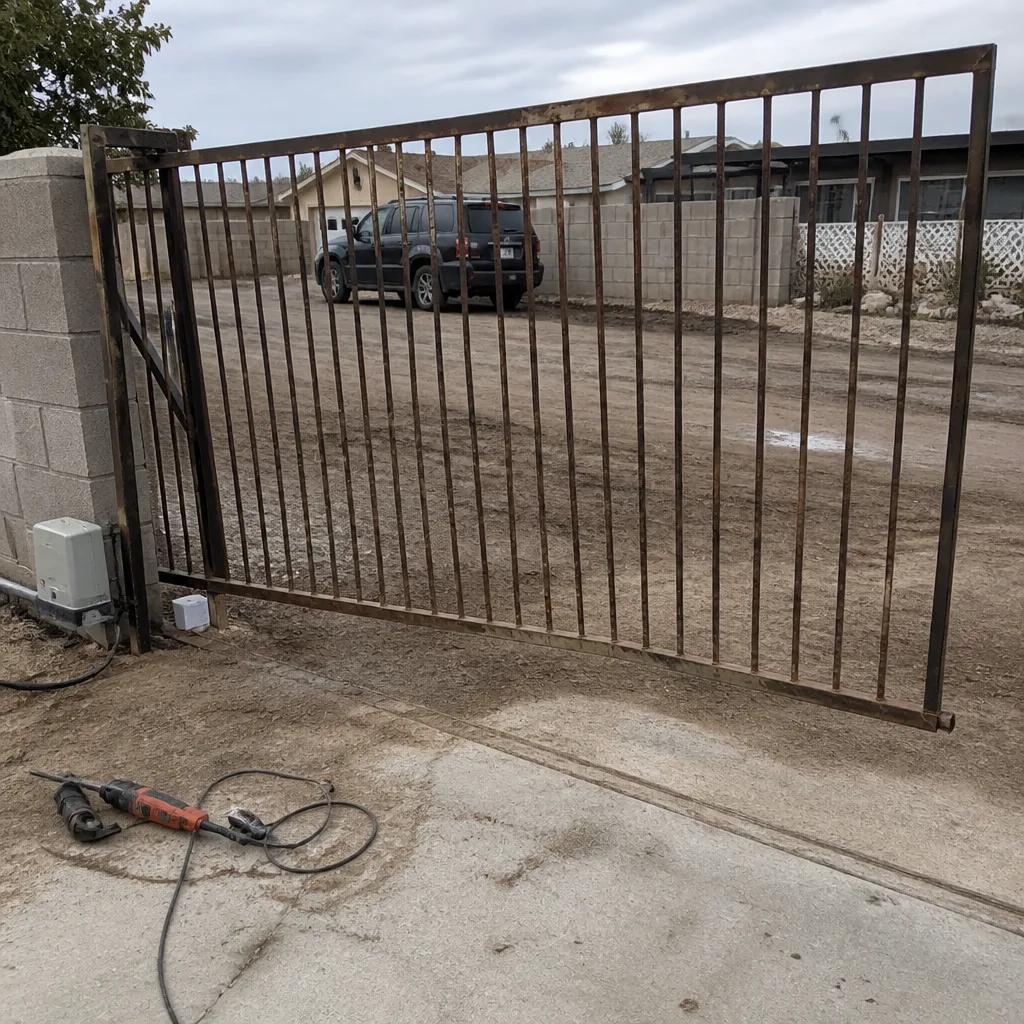 Before
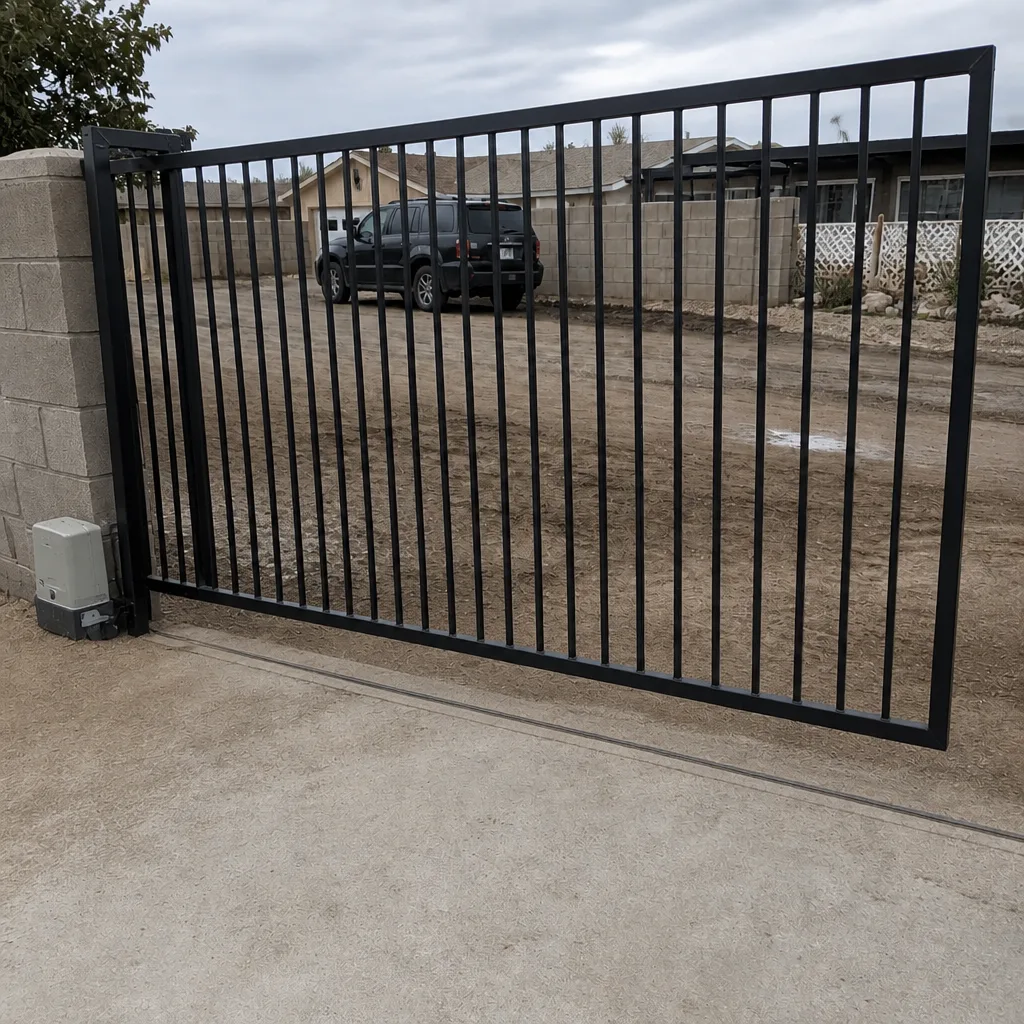 After
When to Call a Professional
Call us when the gate leans, when a weld has cracked, when a hinge binds, or when the opening cycle has become rough, grinding, or unpredictable. Call us when the latch no longer lines up, when the post shows rust at the ground, or when the automation is doing anything on its own. These are the situations that reward a trained technician’s diagnosis, and they’re the ones a quick fix will keep revisiting. Our technicians have up to 13 years of experience and are trained across major operating brands, and every job comes with our 90-Day Done Right Promise: if it isn’t right, we come back and make it right, in writing and without argument. Ironworks Gate Co. Winchester offers free estimates in Winchester, so you can get a straight answer before any work starts. Call (866) 984-8340 for a free estimate.
Frequently Asked Questions
Most gate repairs in Winchester run from a modest service call for an adjustment up to a larger cost for structural work like re-setting a footing or re-welding a frame, with the price quoted before work starts. The exact figure depends on what’s actually wrong, which is why a documented diagnosis comes first. Call (866) 984-8340 for an exact quote. Estimates are free, and as a standing offer, our seasonal tune-up is $89, plus $50 off any repair over $250.
For most repair calls in Winchester, yes. Because we run same-day service for repairs and emergencies, we make every effort to reach you the same day. A live person answers every call, 24 hours a day, 7 days a week, so you’ll talk to someone who can schedule you. Call (866) 984-8340 and we’ll find the first available time.
Because the hinge wasn’t the cause. In Winchester’s soil, a sagging gate usually reflects a post that has tilted or a footing that has lost grip, and replacing the hinge just adds a part while the post keeps moving. A correct repair checks post plumb and footing condition before touching the hardware. If you’ve had hinges replaced and the gate still sags, it’s worth a second look at the post.
In most cases, yes. Our technicians are trained and equipped on nine major gate-automation brands, including BFT, Linear, Viking, and Ghost Controls, so the correct fix is made on the first visit whenever possible. If your operator isn’t among them, tell us the model and we’ll be straight about whether we can service it. Call (866) 984-8340 with the brand and model to confirm.
A repair restores a part or structure to its working condition, while an adjustment changes a setting. Adjustments are legitimate maintenance, but they won’t fix a structural fault like a moved post or a cracked weld. Our invoices name what was done and why, and our pricing is settled before work starts, so you can see which you’re getting. Call (866) 984-8340 if you’re unsure what a previous invoice covered.
We do both. We install driveway and estate gates, including the operator and access control, and we repair the ones already in place. Installation is measured, ordered, and scheduled rather than same-day, and we’ll give you a free measure and a written price instead of a rushed estimate. Call (866) 984-8340 to book a measure for a new gate.
The Bottom Line
Most gate problems in Winchester start in the ground and surface at the hardware. If you remember one thing from this guide, make it this: check the post and the footing before you replace a hinge, a latch, or a motor. That single habit separates a lasting repair from a recurring bill. A good repair restores the whole chain from footing to operator, quotes a fixed price upfront, and backs the result in writing. When you’re ready, our team is here to look at the gate, tell you plainly what’s wrong, and fix it once. We’re the company that makes a 40-year-old gate close like the day it was hung, and we stand behind it. Start with our Ironworks Gate Co. Winchester home page, or call us for a free estimate and get your gate back to doing its job.
Written by the team at Ironworks Gate Co. Winchester.