
Last updated November 18, 2026
 Wrought iron
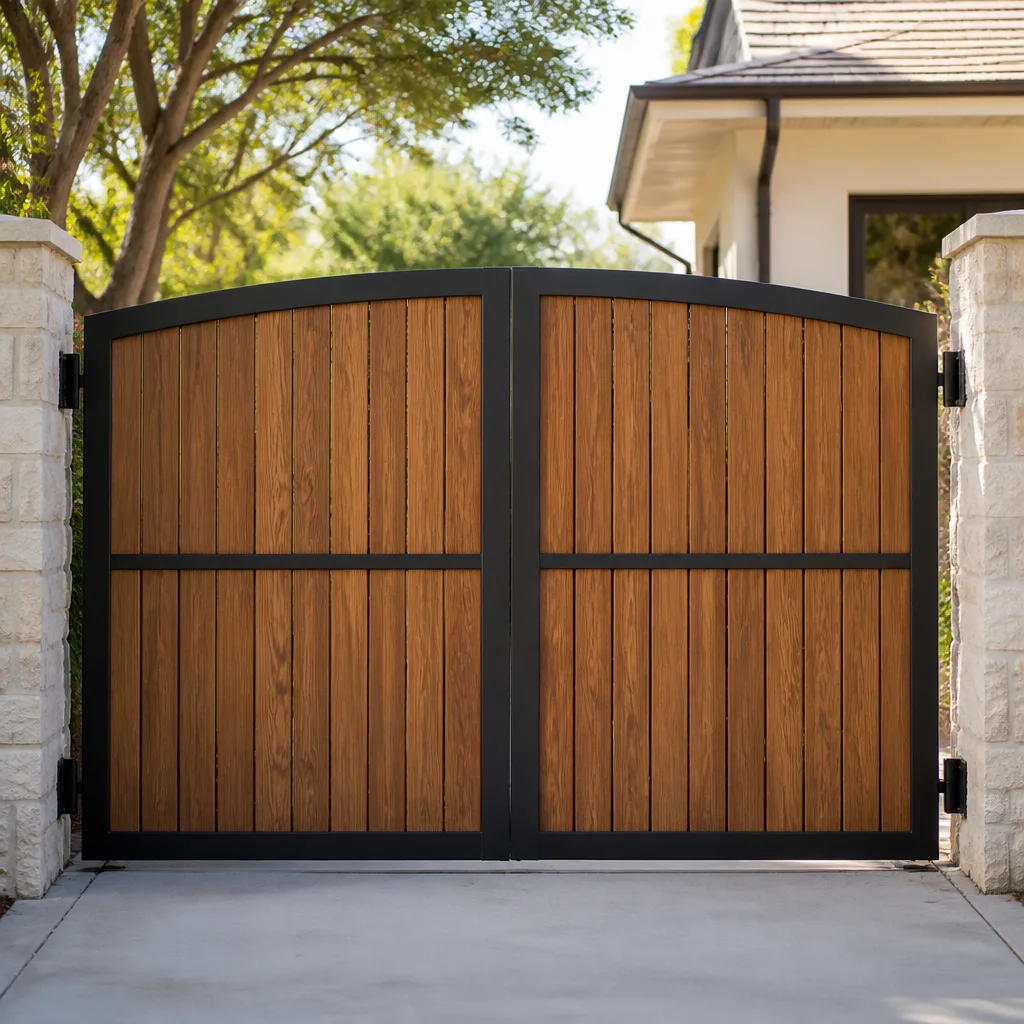 Wood & steel frame
 Farm & ranch
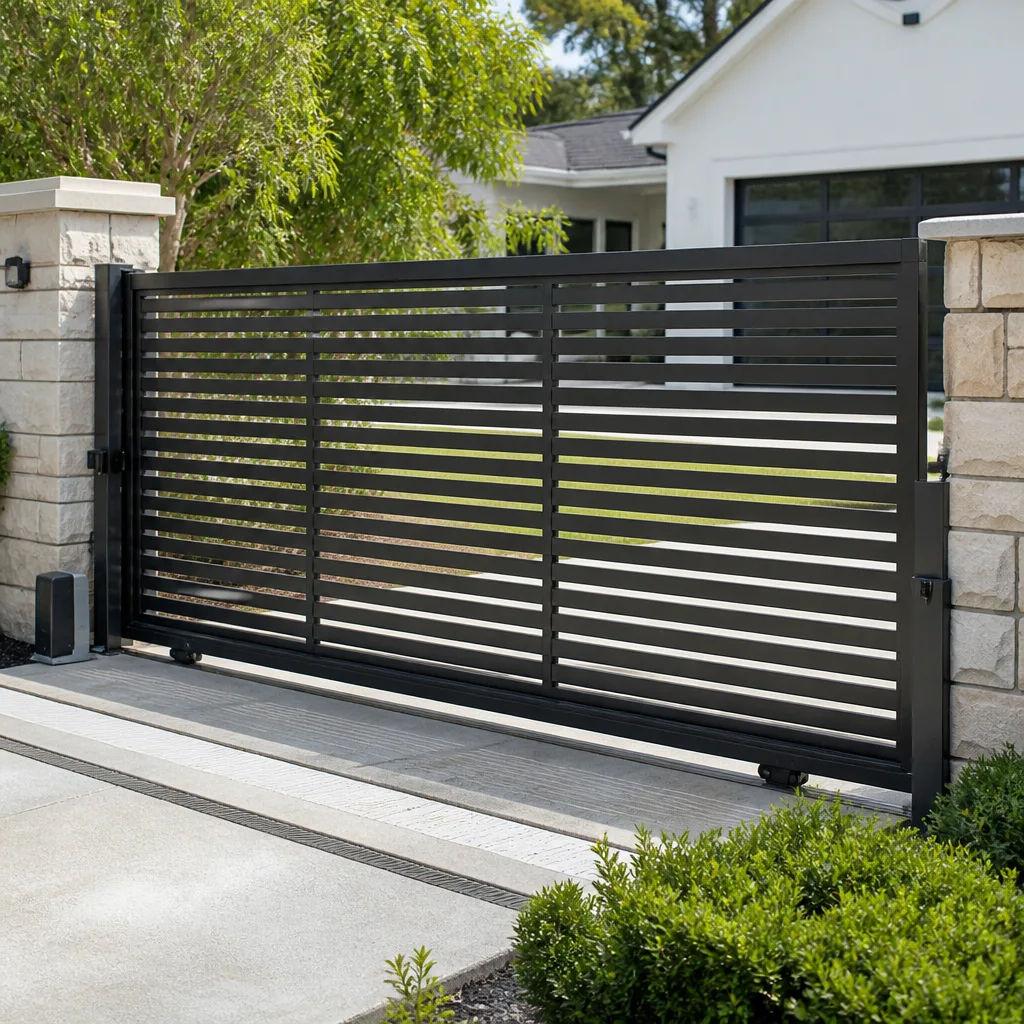 Sliding driveway gates
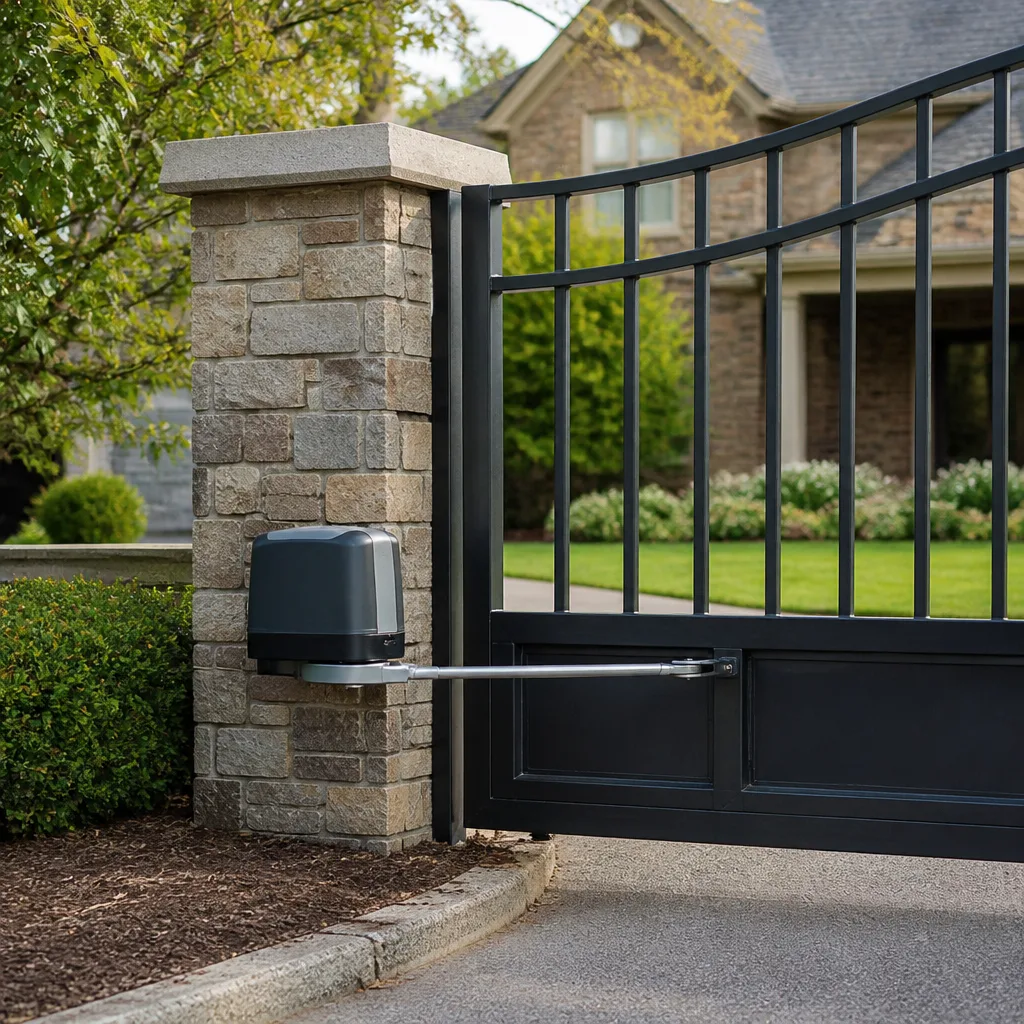 LiftMaster operators
Free on-site gate assessment - hinges, posts, and your LiftMaster or Nice gate operator checked before anything is quoted
The assessment is free and the quote is the invoice.
Get your free estimateDIY vs Professional Gate Motor & Opener: What’s Safe to Do Yourself
Reprogramming a remote takes four minutes, the manual is on the manufacturer’s website, and you can do it yourself this afternoon. Opening the control box on a live 120-volt opener to swap a board is a different animal entirely. That distinction sits at the heart of every DIY call we get in Winchester. Some tasks genuinely belong in your hands, and doing them yourself saves money with zero risk. Others involve line voltage, safety-critical force calibration, or structural load that can turn a $200 board into a $900 repair when something goes wrong. This guide draws the honest line between the two, task by task, including what a swapped opener actually saves you and what a botched job costs to undo.
Quick Answer
Homeowners can safely reprogram remotes and keypads, clean sensor lenses, operate the manual release, and lubricate the chain and hinges. Tasks involving line-voltage wiring, safety-sensor alignment, auto-reverse force calibration, underground conduit, or gate-post structural repair require a trained technician, because the failure mode is injury or a voided warranty, not a dud remote. If you can hear the motor run but the gate doesn’t move, stop and call a professional.
Styles & brands we work with
- Wrought iron
- Wood & steel frame
- Farm & ranch
- Sliding driveway gates
- LiftMaster operators
Table of Contents
- What’s Genuinely Safe to Do Yourself
- What Requires a Professional (and Why)
- Why Auto-Reverse Force Calibration Is Not Intuitive
- How DIY Work Affects Your Opener Warranty
- The Real Cost Comparison: DIY Swap vs. Botched Repair
- Should You Swap Your Own Opener? A Step-by-Step Reality Check
- Common Mistakes to Avoid
- When to Call a Professional
What’s Genuinely Safe to Do Yourself
These tasks are forgiving. If you get something wrong, the worst outcome is a remote that doesn’t work and a ten-minute retry. None of them expose you to line voltage, and none of them touch the safety system.
- Reprogramming a remote or keypad. The pairing procedure for a LiftMaster or FAAC remote is a sequence of button presses on the unit and the receiver: press the “learn” button, then the remote button, wait for the light. Every manufacturer publishes this in a two-page PDF. Four minutes, no tools.
- Cleaning the safety-sensor lenses. Dust, spider webs, and hard-water film are the number-one cause of false “sensor blocked” complaints in Winchester. A soft cloth and a splash of water fix it. Don’t use a pressure washer on the lens housing.
- Operating the manual release. Every opener ships with a bypass. Read the release procedure once, practice it in daylight, and you’ll know how to get out of the driveway when the power drops during a summer monsoon.
- Basic lubrication. A light spray of chain-and-cable lube on the drive chain, hinges, and rollers twice a year quiets a groaning gate and slows wear. Don’t grease the track or the sensor.
Notice what these have in common: no tools on the electrical side, no adjustments to force, no load-bearing fasteners. In our experience across Winchester, half the “our gate is broken” calls turn out to be one of these four items. If you can find ten minutes on a Saturday afternoon, you can keep a Mighty Mule or Elite residential opener running smoothly by yourself.
What Requires a Professional (and Why)
Four categories of work look like homeowner tasks on YouTube but carry real consequences. Each one carries a specific risk that DIY videos tend to skip.
Transformer wiring and any line-voltage connection
The low-voltage control side is safe. The transformer taps 120 volts off the house circuit and steps it down for the logic board. Touching the wrong terminal while the breaker is still on is a shock hazard, and a loose neutral can cook a control board faster than a surge. If the task requires you to open the housing to the mains side, stop.
Auto-reverse force calibration
This is the task homeowners most often get wrong, because it feels intuitive and isn’t. We explain why in the next section.
Underground conduit and photo-eye runs
Running new conduit from the gate to the control box means trenching to code depth, choosing the right weather-rated fittings, and pulling conductors without chafing them against a sharp edge. In the hard caliche soil common on the west side of Winchester, trenching is a job for a machine and a technician, not a shovel and a Saturday.
Structural post and hinge repair
A sagging gate post doesn’t just look off; it puts side-load on the opener’s gearbox and the operator arm, and a motor fighting a bent post burns out prematurely. Welding a new hinge plate or re-setting a post in a proper concrete footing is metalwork and structural work, not handyman work.
If you’re facing any of those four, our Gate Repair in Winchester page covers the diagnosis side in more depth, or read on and we’ll break down the cost math.
Why Auto-Reverse Force Calibration Is Not Intuitive
Here’s the surprising part: the force setting on your opener isn’t a “strength” knob. It’s a safety threshold, and UL 325-authorized technicians set it with a calibrated testing device that pushes back against the gate as it closes to measure exactly how many pounds of resistance will trigger the reversal. Without that instrument, homeowners are guessing.
And they usually guess in one of two directions:
- Too weak. The gate reverses on a gust of wind, a stiff hinge, or a slight slope. In Winchester, late-afternoon wind gusts coming down off the Spring Mountains trigger nuisance reversals on gates whose force settings have never been touched since installation.
- Too strong. The gate never reverses on anything short of a hard impact, which means a child’s hand, a dog’s paw, or a bicycle tire won’t trip it. This is the failure that injures, and it’s the one most homeowners accidentally create while trying to “fix” the weak-gate problem the previous weekend.
There’s no trial-and-error shortcut here. The number on the dial is meaningless without the measurement. If your gate reverses in wind, the fix is usually mechanical (tired hinges, a bent track, a sagging post) rather than electrical, and a force setting tightened to force it closed is the wrong repair. The right tool and the right tester matter, which is why the Gate Motor & Opener in Winchester service exists as a specialty practice rather than a general handyman line item.
How DIY Work Affects Your Opener Warranty
Most manufacturer warranties on LiftMaster, FAAC, Linear, and DoorKing openers cover the motor and control board for a period spelled out in your owner’s manual. The coverage almost always carries a clause excluding damage from unauthorized modification, improper installation, or work performed by anyone other than a trained installer. That’s the fine print homeowners skip.
What that means in practice:
- Reprogramming a remote doesn’t void anything. It’s an end-user instruction.
- Cleaning lenses and lubricating the chain don’t void anything.
- Replacing a control board yourself on a still-in-warranty unit, or cutting into the wiring harness to splice in a third-party accessory, typically voids the electrical coverage from that point forward. If a board fails six months later, the manufacturer can point to the splice.
- Underground conduit work almost always voids the installation-related coverage, because the manufacturer assumes a qualified installer when the conduit matters to the failure mode.
If your opener is two years into a five-year warranty, that coverage is worth more than the hundred dollars you save by doing the swap yourself. On a ten-year-old unit with no coverage left, the math shifts. Know which camp you’re in before you pick up a screwdriver.
The Real Cost Comparison: DIY Swap vs. Botched Repair
Here’s the honest math, with numbers instead of vagueness. The savings on a DIY opener swap are real, but they’re not the full story once something goes sideways.
- You buy the opener: $400 to $700 for a mid-range residential unit (LiftMaster or FAAC class), plus $40 to $80 in fittings, sealant, and a new battery backup module.
- Your weekend: 6 to 10 hours if you’ve never done one, and a second person for the mounting.
- Hauling the old unit to the transfer station: $25 and a bump on the truck tailgate.
- What you save: roughly $400 to $700 versus a measured and installed professional job.
Now the failure-side math, which is what our team sees in Winchester when a DIY swap doesn’t go the distance:
- Burned control board from a reversed low-voltage lead: $200 to $400 parts, plus labor, plus the original opener is now a sunk cost.
- Stripped gearbox from misaligned drive sprocket: $300 to $500, and a used opener that can’t be returned.
- Force calibration set too strong and a subsequent injury or property claim: not a repair line item; a liability exposure that most homeowners’ policies handle poorly.
- Post or hinge pulled out of alignment by a torque-heavy opener mounted to a compromised post: $600 to $1,200 in structural and welding work.
We’re not telling you never to try. We’re telling you the win is only real if nothing goes wrong, and the odds of something going wrong rise sharply when the opener is being mounted to a gate that has been on the same hinges for twelve years in the desert heat. A gate that measures square and swings freely is a good candidate. A gate that has been dragging for a season is not.
Should You Swap Your Own Opener? A Step-by-Step Reality Check
Before you commit a weekend to a swap, run this sequence. If any answer is “no” or “not sure,” the job belongs with a technician.
- Is your existing opener still under manufacturer warranty? If yes, stop here. Read the warranty page of the manual. The coverage is worth more than the DIY saving.
- Does the gate swing (or slide) freely by hand through its full arc? Disconnect the operator arm, push the gate through its range, and watch for binding, drag, or a hitch at one point. Any of those means the gate needs mechanical repair before a new motor goes on.
- Are the hinge posts plumb and solid? A post with visible rust-through or a wobble will not hold a new opener at the correct angle, and the new gearbox will fail early.
- Does the existing wiring to the control box meet current code? If the installer used lamp cord or you’re not sure what’s in the conduit, that’s a licensed-electrician call. In Winchester, ours are wired by licensed electrical partners, and we don’t work on the mains side of an unlicensed install.
- Can you get a second set of hands and a proper torque spec? Mounting bolts on a residential swing opener are spec’d, not hand-tight. Your owner’s manual has the numbers; if you don’t have a torque wrench, the numbers are theoretical.
- Have you budgeted for a force-calibration call even if you install yourself? The final step is the auto-reverse test with the right instrument. If you plan to self-install but call us to calibrate and test, be honest about that up front so we can quote accordingly.
When the answer to all six is “yes, done,” a self-install can save money. When any of them isn’t, the smart move is to schedule a measure. Installing a new opener on a compromised gate is what turns a moderate repair into a Gate Installation in Winchester conversation instead.
Common Mistakes to Avoid
- Adjusting force to “make it close.” If the gate won’t close cleanly, the problem is almost always mechanical. Cranking the force down is a temporary fix that creates a safety failure.
- Disconnecting the safety sensors to stop nuisance reversals. A homeowner in the Sun City area once zip-tied the photo-eye beam to bypass a “won’t close” complaint. The gate then couldn’t detect a child. Never disable the sensors.
- Replacing the battery with a car battery or larger-than-spec unit. The battery backup module is specced for a specific voltage and charge rate. Over-volting the board is a common way to smoke a control unit that had nothing wrong with it.
- Ignoring a sagging post because the gate still “works.” Every clogged weekend in Winchester adds side-load to the gearbox. The bill grows from a hinge re-weld to a new operator.
- Skipping the manual-release test after any adjustment. The release has to work in an emergency. Test it in daylight once a season, not the night the power goes out.
- Buying a bargain opener online without checking compatibility with your gate’s weight and travel. The remote might be rated for a 300-pound gate, and yours might weigh 500. The motor won’t hold up past a season or two.
- Trenching conduit without checking the HOA or city setback requirement. In several Winchester neighborhoods, the visible conduit must be buried to a specified depth and the routing approved before you dig.
When to Call a Professional
Call when the failure involves the motor running without movement, a gate that won’t reverse on obstruction, any smoke or scorch smell at the control box, a sagging hinge post, a keypad or access-control system that has gone dark, or a warranty still in force. Call before you dig a new conduit run. Call before you touch the mains side of the transformer. Call when you’re not sure which category a symptom belongs to, because half the “opener problem” calls we take in Winchester turn out to be gate problems wearing a costume. Ironworks Gate Co. Winchester offers free estimates in Winchester. Call (866) 984-8340 and a live person picks up, day or night.
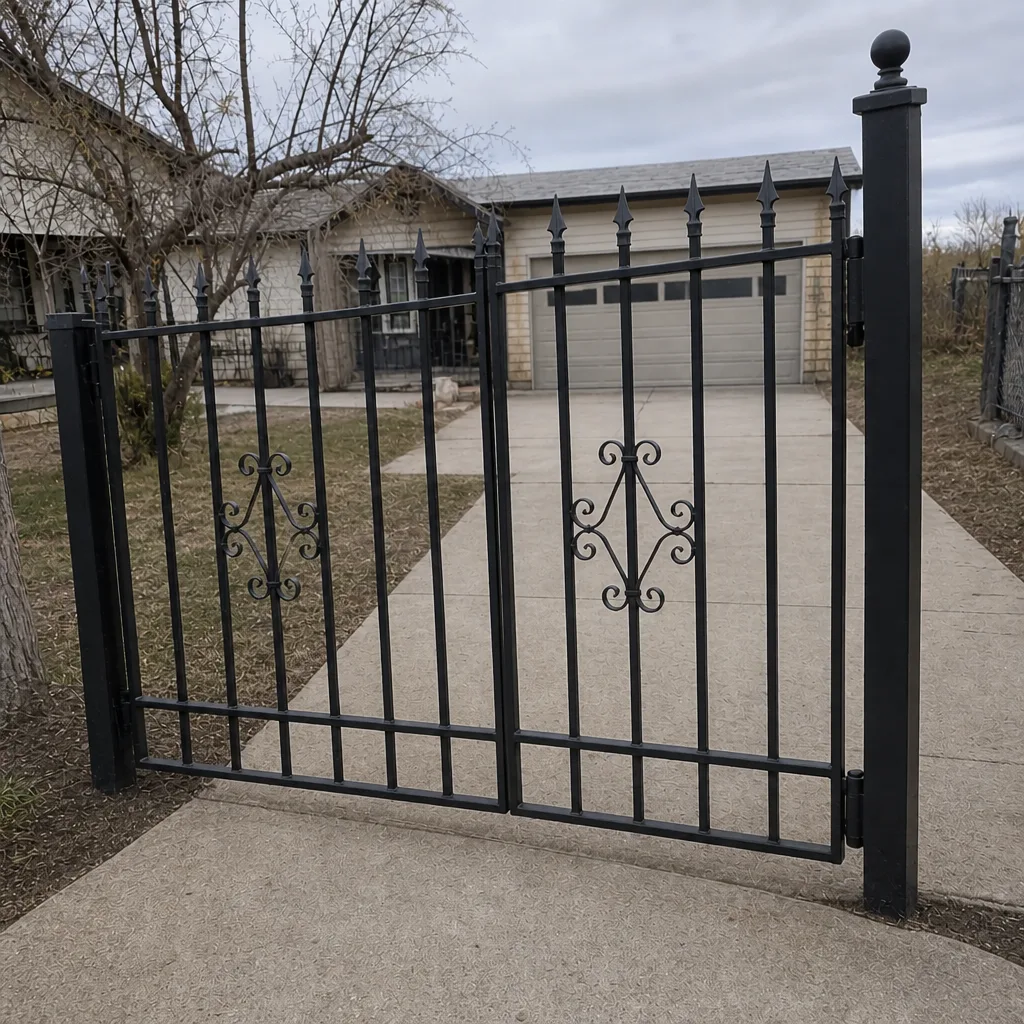
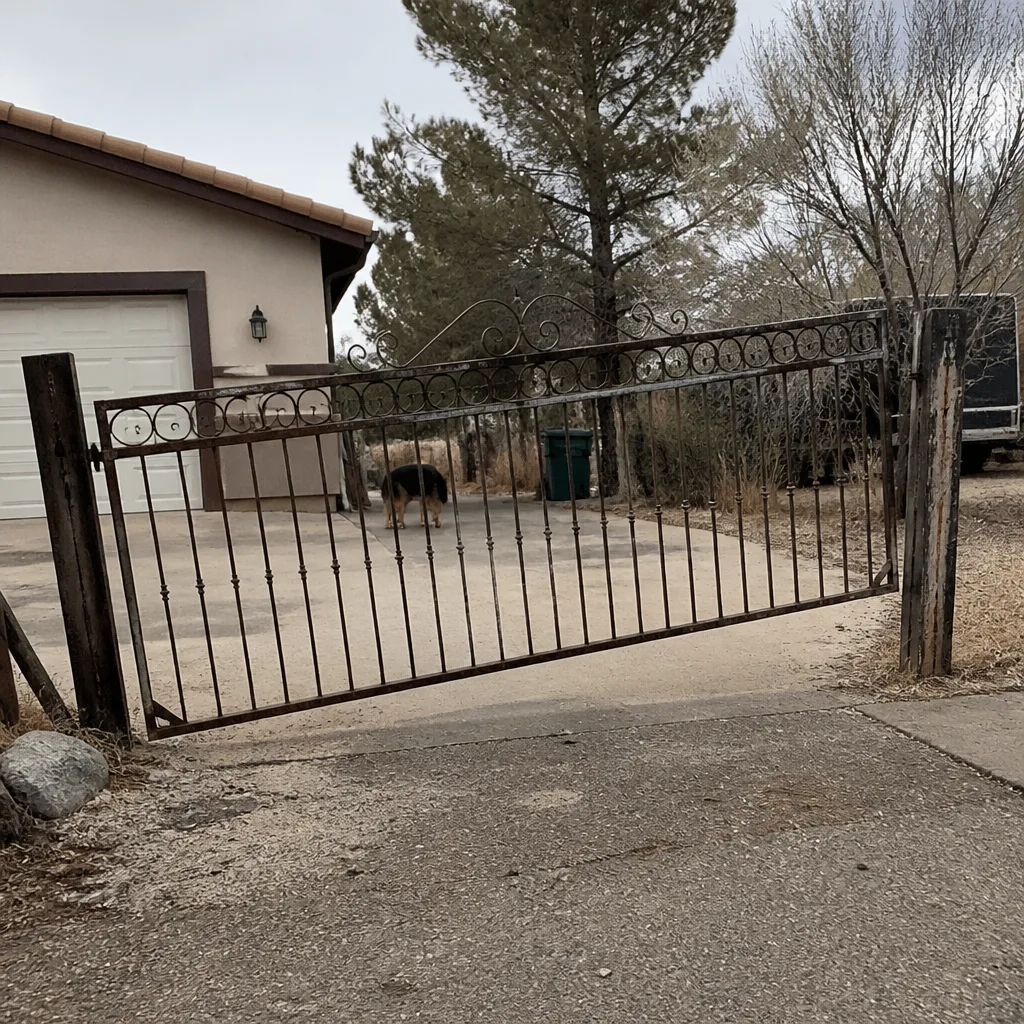
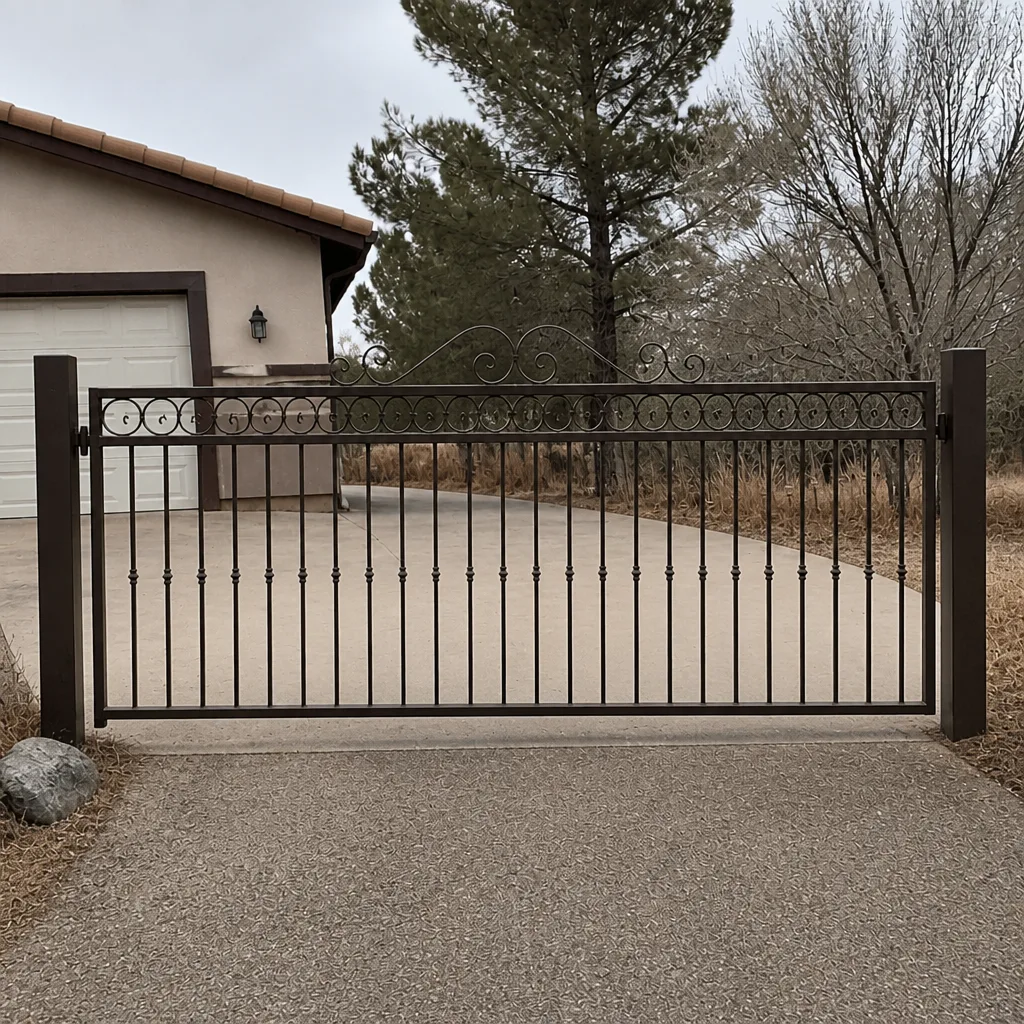
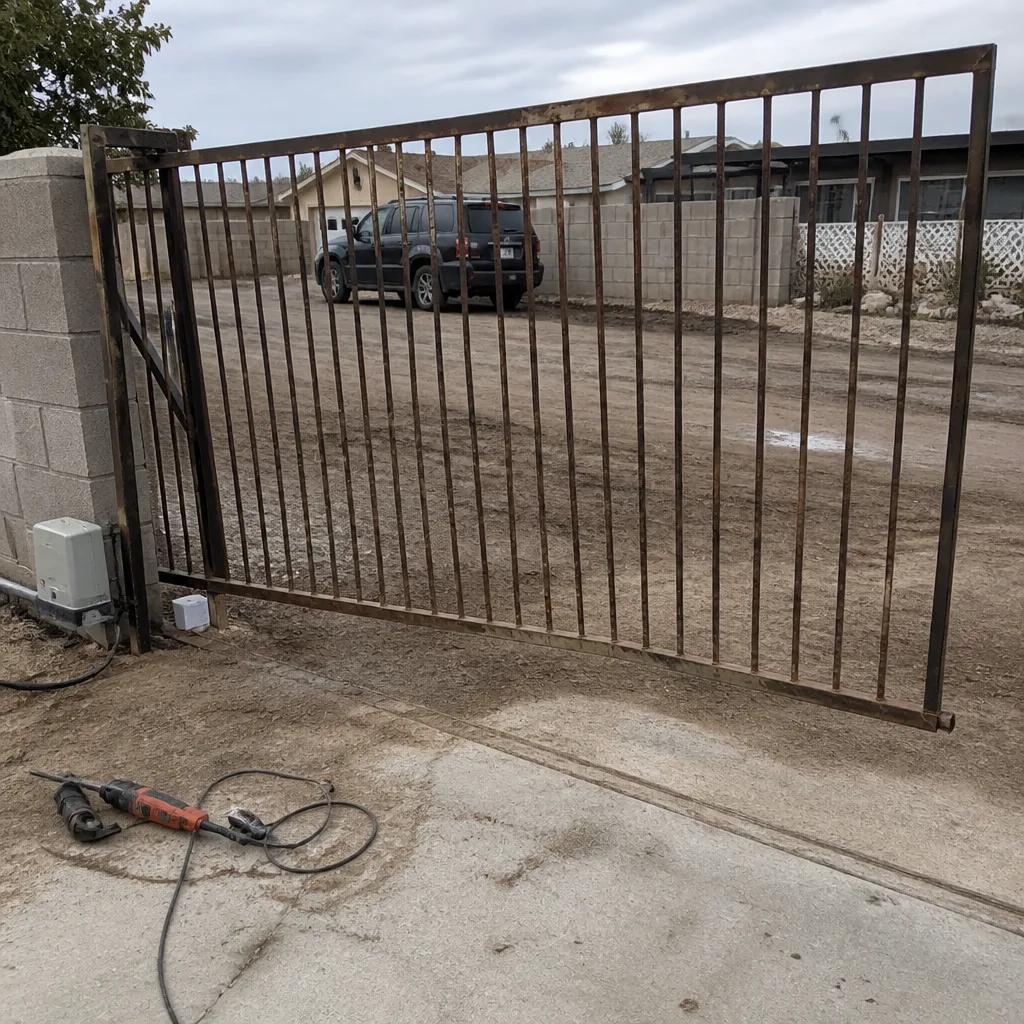
See the difference
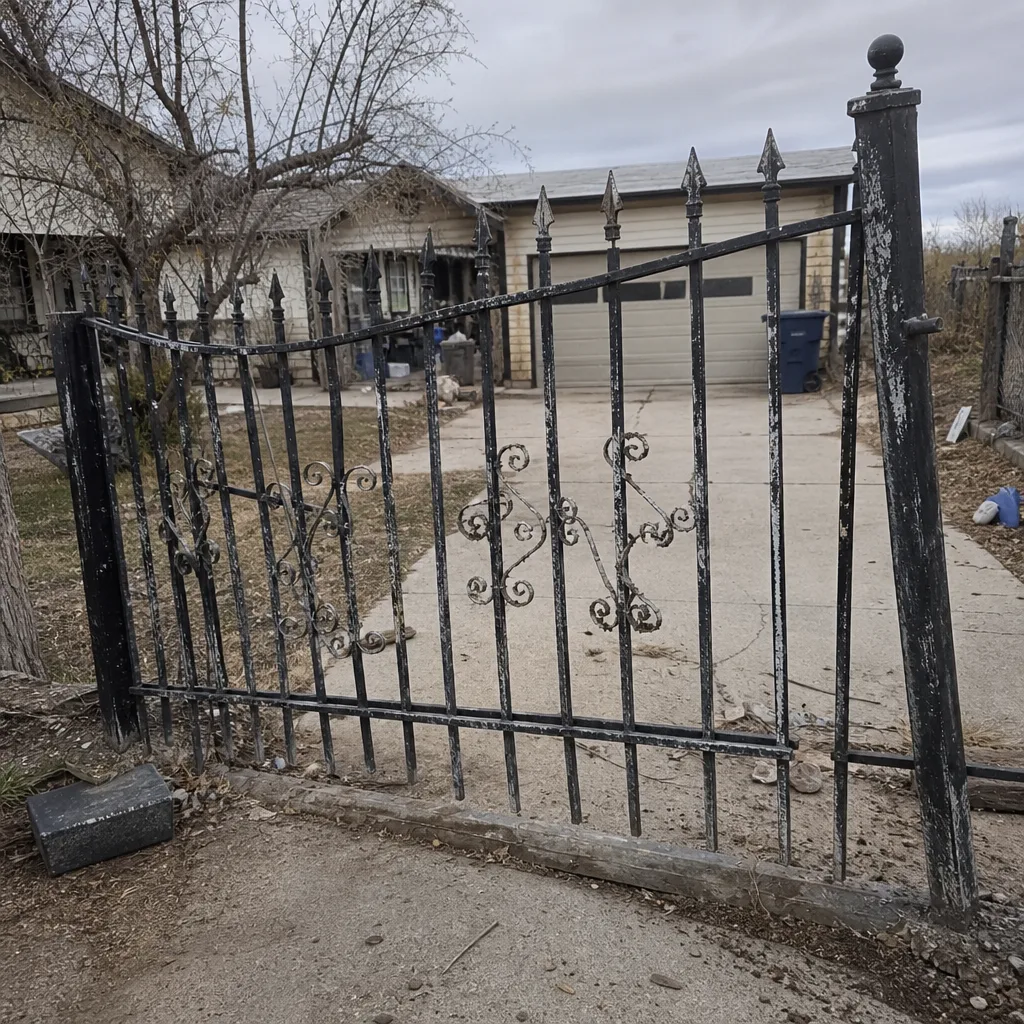 Before
 After
 Before
 After
 Before
 After
Frequently Asked Questions
Yes. Remote and keypad pairing is an end-user procedure the manufacturer includes in the owner’s manual, and it does not void coverage. Follow the press-and-hold sequence for your specific model (LiftMaster and Elite both use a “learn” button on the receiver) and you’ll be done in minutes.
Almost always because the force setting is too light for the gate’s mechanical condition, or because tired hinges are creating resistance the motor reads as an obstruction. Tightening the force to compensate is the wrong fix and a common cause of unsafe gates. Call for a proper force re-check and mechanical inspection: (866) 984-8340.
You can test that the gate reverses when pushed, but you can’t set it correctly without a calibrated force-measuring instrument. UL 325 requires authorized technicians to verify that the reversal triggers within a specific force range. Setting it by feel is guessing, and both guesses (too weak, too strong) are problems.
The electrical coverage typically voids from the point of unauthorized modification. If the new board fails, the manufacturer can decline the claim, and you’re paying for both the board and the original repair. Check your warranty terms before you open the housing.
Replacing a like-for-like opener usually does not require a separate electrical permit, but new wiring runs and any code modifications on the mains side often do. Requirements vary by neighborhood, and HOA rules apply in several Winchester communities. Call and we’ll walk you through what your address requires before you dig.
Residential opener installation typically runs $900 to $1,700 installed, depending on gate weight, travel, and whether new conduit or a battery backup module is involved. Every quote is written and settled before work starts, and the 90-Day Done Right Promise backs the job. Call (866) 984-8340 for a free estimate.
The Bottom Line
Remote programming, sensor cleaning, manual-release practice, and lubrication are yours to do, and doing them well saves real money. Anything that touches line voltage, force calibration, conduit, or a compromised post belongs with a trained technician, because the fault isn’t a dud remote; it’s an injury or a bill that has to be undone. Look at your opener’s warranty, look at your gate’s hinge condition, and let those two answers decide whether a DIY swap makes sense. When in doubt, get a second opinion before you start. That’s the honest line between safe and dangerous.
If you’re in Winchester and the job has crossed from “I can do this” to “I want this done right,” call Ironworks Gate Co. at (866) 984-8340 for a free estimate. We’ll come out, give you a straight answer about what your gate actually needs, quote it upfront, and stand behind the work in writing. A live person answers the phone any hour of the day or night. Visit the Ironworks Gate Co. Winchester home page to see the full scope of what we handle, from hinges and welds to keypads and automation.
Written by the team at Ironworks Gate Co. Winchester.