
Last updated November 18, 2026
 Wrought iron
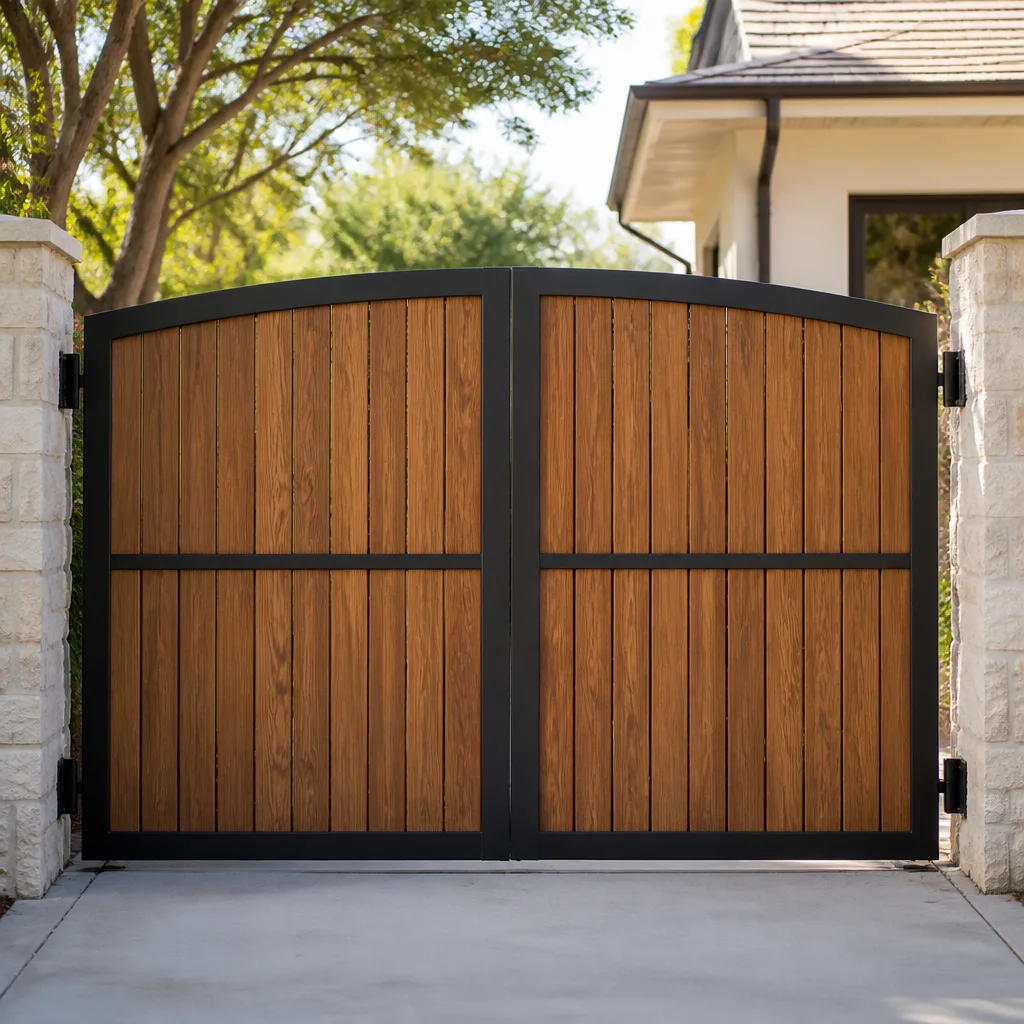 Wood & steel frame
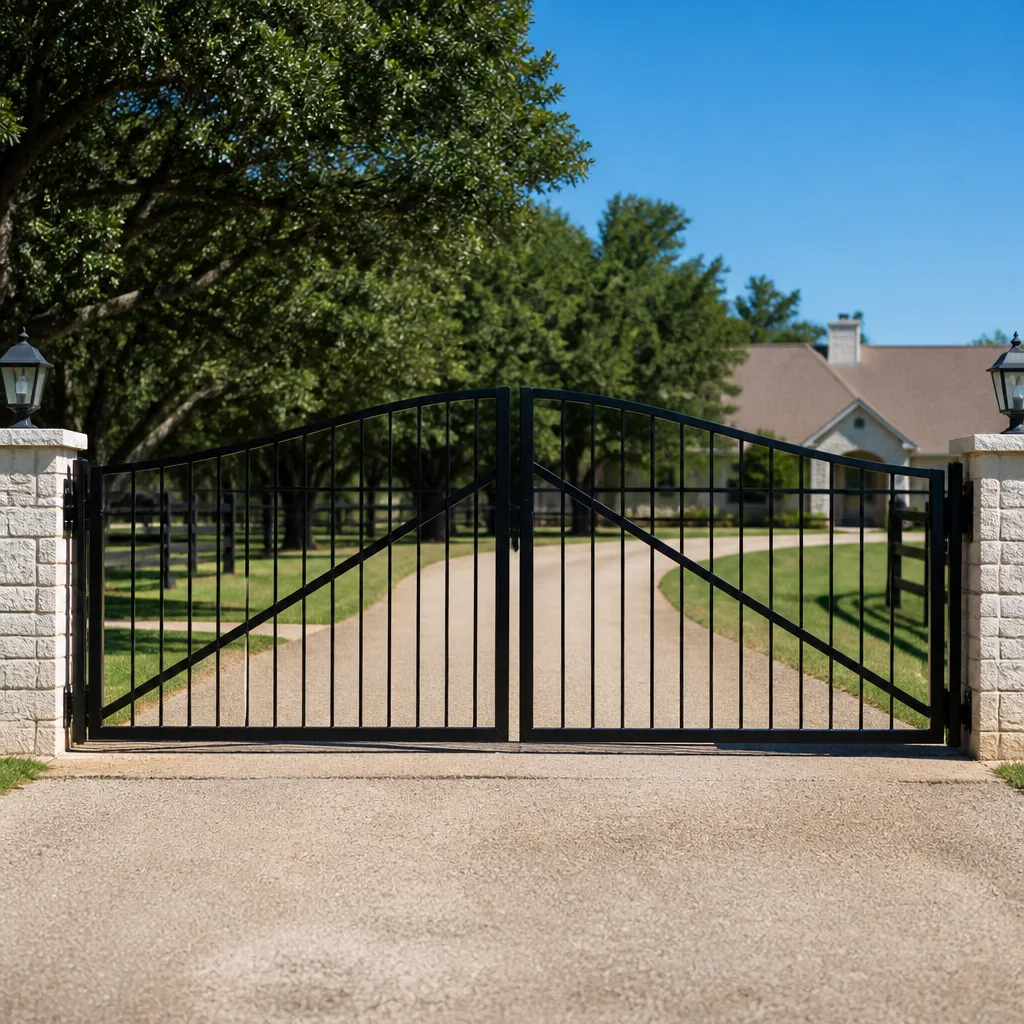 Farm & ranch
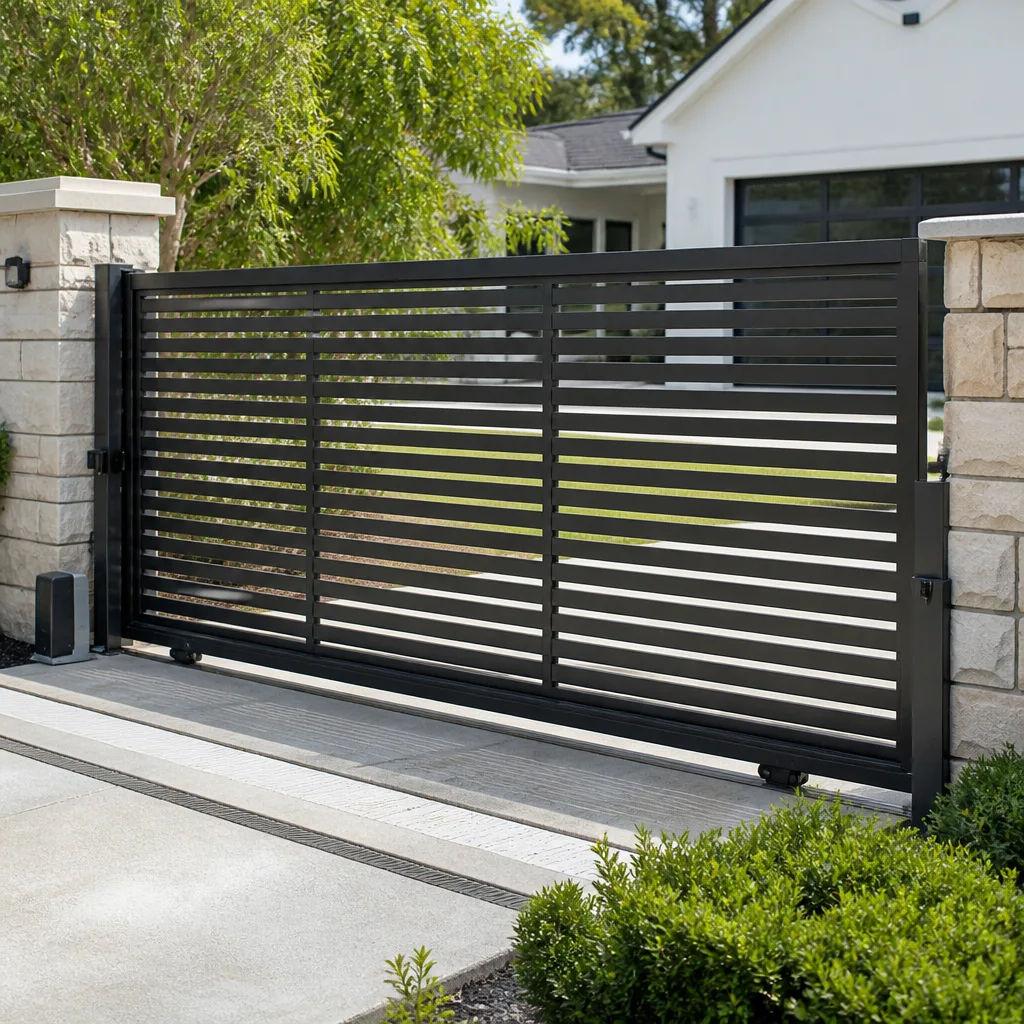 Sliding driveway gates
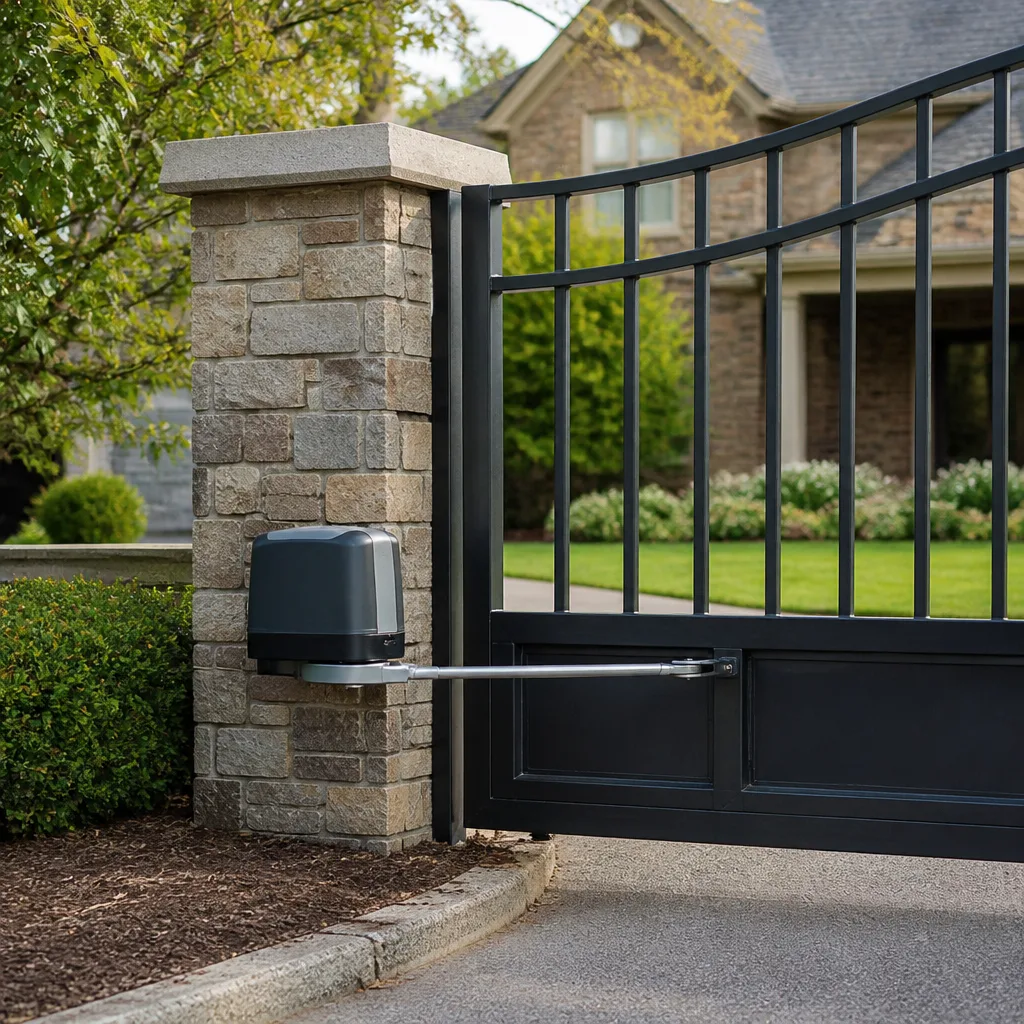 LiftMaster operators
Free on-site gate assessment - hinges, posts, and your LiftMaster or Nice gate operator checked before anything is quoted
The assessment is free and the quote is the invoice.
Get your free estimateDIY vs Professional Gate Installation: What’s Safe to Do Yourself
The gap between hanging a manual garden gate and installing an automated driveway gate is not ambition. It’s the licensed electrician, the footing spec, and the permit that comes due before a single bolt goes in. Most homeowners we talk to in Winchester start with a picture from a weekend video and end up asking a different question: what happens when the opener binds, the post settles, or the inspector wants to see the trench? This guide draws the line for you. We’ll lay out what a careful homeowner can genuinely do, what slips into borderline territory, and what legally and physically belongs to licensed trades, so you can decide before you rent a mixer.
Quick Answer
Manual gates hung on existing posts and hardware are genuinely safe to install yourself. Manual gates needing new posts sit on the borderline and usually call for a professional. Automated driveway gates, single or dual, swing or slide, should be installed by professionals, because automated installation involves load calculations, electrical rough-in, and code compliance that require licensed trades.
Styles & brands we work with
- Wrought iron
- Wood & steel frame
- Farm & ranch
- Sliding driveway gates
- LiftMaster operators
Table of Contents
- The Capability Map: What’s DIY-Viable and What Isn’t
- Electrical Rough-In and Why Low-Voltage vs Line-Voltage Matters
- Footings, Load Calculations, and Post Depth
- The True Long-Term Cost of DIY
- Four Questions to Ask Yourself Before Committing
- How Professional Installation Creates a Chain of Accountability
- Common Mistakes to Avoid
- When to Call a Professional
The Capability Map: What’s DIY-Viable and What Isn’t
Before you buy a single hinge, be honest about which of four categories your project lands in. Each one has a different risk profile, and only the first is truly a Saturday project.
- Manual gate on existing hardware. DIY-viable. The posts are set and level, the hinges are already in place, and you’re replacing or hanging a lightweight wood or small steel gate. You can anchor into an existing frame with basic tools and a helper.
- Manual gate with new posts. Borderline. Digging footings, mixing concrete to the right ratio, plumbing the post so it doesn’t sag after a rainy season, and setting the gate square are all doable, but the margin for error is narrow. A post that’s off by half an inch reads as a swing that drags for the next ten years.
- Automated single gate. Professional recommended. At this point you’re dealing with an opener, an electrical run, and a moving structure heavy enough to injure. Even a small single-leaf swing gate automated with a LiftMaster or FAAC operator belongs to a trained installer.
- Automated dual or slide gate. Professional required. Sliding gates, dual swing gates, and any gate on a public-facing driveway have weight, travel, and safety-edge issues that put them well past the DIY line.
In Winchester, we see the manual-versus-automated split show up on the same property all the time: homeowners hang a pedestrian gate to the side yard themselves without trouble, then try to automate the main driveway gate and stop short once the electrician shows up on the quote. Knowing where the line is before you start saves a lot of money you’d otherwise spend twice.
Electrical Rough-In and Why Low-Voltage vs Line-Voltage Matters
Automated gate openers run on two different electrical worlds, and that distinction is the reason most gate automation falls outside the homeowner’s reach. Getting it wrong doesn’t just cost you time. It can fail inspection and, in some cases, leave a claim sitting with you at insurance time.
- Line voltage (typically 120V). The circuit that actually powers the opener’s motor. In most jurisdictions this requires a licensed electrician to run, terminate, and box, and the work has to be inspected. Running a 120V line yourself is where DIY becomes genuinely dangerous.
- Low voltage (12V, 24V). The signal side: keypads, safety edges, photo-eye loops, and control wiring between the opener and access devices. Much of this is within a confident DIYer’s reach, but “much of it” is not “all of it,” and any connection back to the line-voltage side has to be made by an electrician.
The BFT and FAAC operators we service in Winchester typically carry low-voltage control terminals alongside a line-voltage feed, which is exactly the point: two systems, one housing. From a permit and insurance standpoint, that means your gate install almost always needs a signed-off electrical permit. A homeowner who wires around that fact can run into trouble if the opener ever causes an issue and the insurer asks who did the electrical work. Low-voltage controls are within reach. The line-voltage feed is not.
Footings, Load Calculations, and Post Depth
A gate post isn’t a fence post. It carries a moving load, and the heavier or wider the gate, the more the footing has to resist both weight and side-to-side pull. Load calculation is the part of gate automation that most DIY videos skip, and it’s the part we spend the most time on in the field.
- Weigh the gate before you spec the hinge. A 12-foot steel driveway gate can easily weigh what a person does plus a filing cabinet. You need to know the real number, not the one on the lumber-yard tag.
- Size the footing to the load. Depth, diameter, and rebar aren’t guesses. In Winchester’s soils, which are heavy on caliche and gravel in many neighborhoods, the footing spec changes; a rule-of-thumb from a coastal video is not a square deal for your yard.
- Plumb and set at the right height. The post has to sit deep enough that frost isn’t a factor (mild here, but moisture movement is) and high enough to clear the ground through the rainy season so the gate doesn’t drag.
- Hang the gate and test travel. A post that’s slightly out of plumb reads as a gate that swings shut on its own or sags a year later.
For an automated gate, the footing spec needs an engineer’s sign-off in many jurisdictions, and the opener has to be mounted at the right height and distance from the hinge to keep the arm within its arc. That’s where Gate Installation in Winchester becomes a technical job, not a carpentry one. If you’re weighing whether your existing post will hold, we’ll include footing evaluation in any estimate.
The True Long-Term Cost of DIY
Homeowners thinking of a DIY driveway gate usually price the materials and stop there. The honest ledger is wider. Here’s what people routinely forget, and where the numbers usually land.
- Tool rental. For a new-post install you’re looking at a post-hole digger or auger rental, a concrete mixer, a level, a chop saw, and clamping gear. A weekend rental of even half that list runs a couple of hundred dollars before you’ve bought anything.
- Concrete and rebar. A proper footing takes multiple bags of fast-setting mix plus rebar. A driveway gate footing takes more than the bag suggests. Add it up across two posts on a dual gate and you’re quickly into a figure that surprises people.
- Rework. A post set off-plumb or a gate hung slightly twisted usually gets fixed once. The second pass is where DIY costs the most, because you’re paying for the same materials again.
- The warranty gap. Most opener brands, LiftMaster and Linear among them, tie their warranty to professional installation. A self-installed automated gate often voids coverage on the opener, and any failure becomes entirely your labor and parts cost.
- Resale and insurance documentation. When you sell a home in Winchester, a buyer’s inspector and their insurer both want to see that the gate was installed to code. A DIY automated install without permits or inspection can complicate a sale.
The math rarely favors DIY once you add the tool rental, the second attempt, and the missing warranty. Doing it yourself on a manual gate is a real saving. Doing it yourself on an automated gate is a bet you’re making against your future self.
Four Questions to Ask Yourself Before Committing
Before you commit to any gate install, sit with these four questions. If you can’t answer all of them cleanly, that’s your signal.
- Have I done the load calculation? Not the guessed weight. The real weight of the gate, plus the wind load it faces, against the hinge and post spec. If you’re not sure, you haven’t done it.
- How deep is my footing, and does it match the soil in my yard? In Winchester, soils vary by neighborhood. A spec from a forum in another state is not your spec.
- What’s the wiring path? Draw it. Where does the power leave the house, where does it cross the yard, is there a trench to dig, and where’s the disconnect? If you’ve got a question mark on any of those, an electrician needs to be part of the plan.
- Do I have HOA approval, and any permits the city requires? Many Winchester neighborhoods with HOA covenants require the board to review gate style, height, and placement before work starts. A gate installed without approval can be asked to come down. That’s not a scenario anyone recovers from easily.
Answering these in writing, on paper, is also good practice. If you go the professional route, those same answers form the basis of the written estimate. If you go DIY, they tell you exactly where the job stops being yours.
How Professional Installation Creates a Chain of Accountability
A professional gate install leaves a paper trail. That trail is the point. Every step creates evidence that the work was done to code, and each one matters at resale or at insurance time.
- Footing inspection. The footing is examined before the concrete sets, documented, and signed off by the inspector where the jurisdiction requires it. That record goes with the property.
- Electrical permit and inspection. The 120V circuit gets a permit, an inspection, and a green tag. Your insurer and your buyer’s inspector both look for this.
- Opener certification. The opener is installed to the manufacturer’s spec, keeps its warranty, and is documented as installed by a trained technician. With LiftMaster and FAAC, that documentation is the difference between a covered failure and a paid one.
- Written warranty. A written guarantee from the installing company is the layer a DIY install can never replicate. Ours is the 90-Day Done Right Promise: if it’s not right, we come back and make it right, in writing, with no paperwork and no arguing. Our technicians carry up to 13 years of experience, are background-checked and uniformed, and every job is priced upfront before a single bolt is turned.
None of those four exist on a self-installed automated gate. For good reason: they require licensed trades, third-party inspection, and a company that stands behind the work. If you’re serious about the long game, that chain of accountability is the reason to hire a professional, not the promise on the truck. You can read more about Gate Motor & Opener in Winchester to see how the opener side of that chain works.
Common Mistakes to Avoid
- Setting a post shallow because the ground is hard. Winchester’s clay-heavy and caliche-laced soil tempts homeowners to cut the footing depth. A shallow post means a sagging gate inside two seasons.
- Running a 120V line without a permit. It feels like a shortcut and saves an inspection fee. It also voids insurance coverage on related claims. That trade is never a square deal.
- Ordering an opener before measuring the gate. Opener sizing depends on weight and swing width. Ordering by eye is where the first return happens.
- Skipping the HOA review. Many Winchester neighborhoods require approval before a gate goes in. Installing first and asking after can mean taking the gate down.
- Reusing old hinges on a new, heavier gate. The hinge that worked on a wooden pedestrian gate will fail under a steel driveway gate. Match the hardware to the load.
- Forgetting the safety edges on an automated gate. Photo-eyes and reverse edges aren’t accessories. They’re required for a residential automated gate by code, and leaving them out fails inspection.
- Not keeping the paperwork. The permit, the inspection, and the warranty belong in your home file. If you ever sell, they’re the reason you don’t have to explain yourself to a buyer.
When to Call a Professional
Call a professional when any of these is true: you’re automating a gate, whether single leaf, dual leaf, swing, or slide; your gate needs new posts; the electrical run isn’t already in place; your HOA requires review; or your gate is already bound up and needs repair before it’s installed. For everything on that list, the calculation of whether to DIY has a clear answer, and it isn’t “try it and see.” We offer free second opinions on any written estimate, so if you’ve been quoted for a gate install and want a plainspoken read on it, that’s exactly what we’re for. Ironworks Gate Co. Winchester offers free estimates in Winchester. Call (866) 984-8340, and you’ll reach a live person, day or night. A free second opinion on any written estimate is a standing offer, and the 5% senior and veteran discount is always available.
See the difference
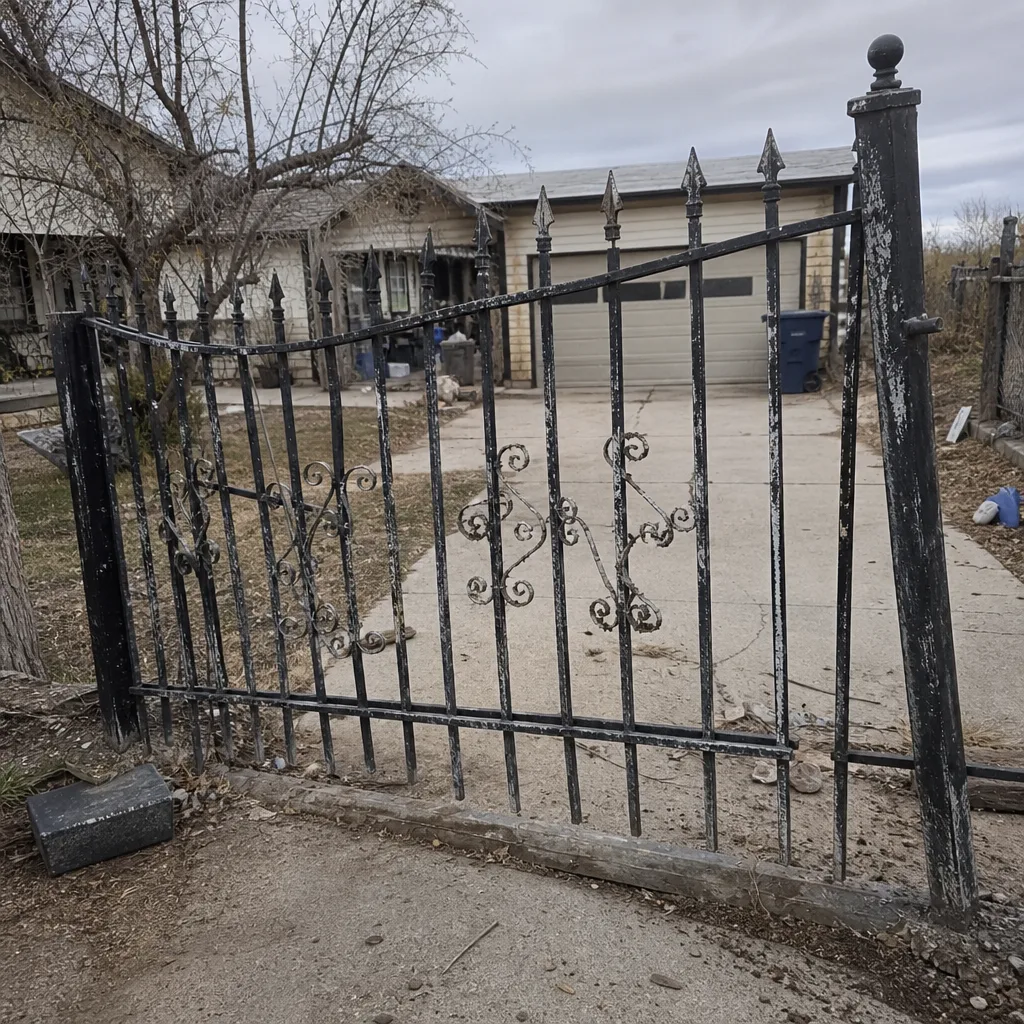 Before
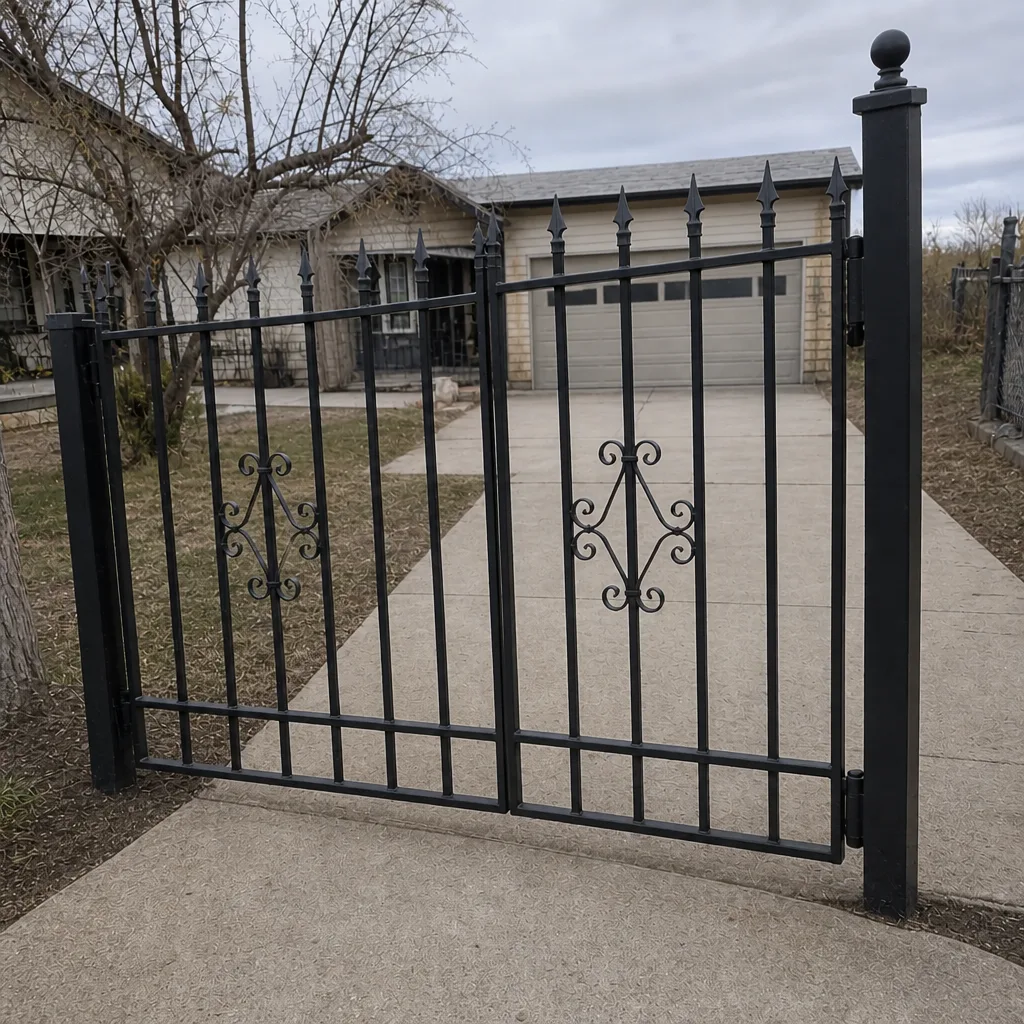 After
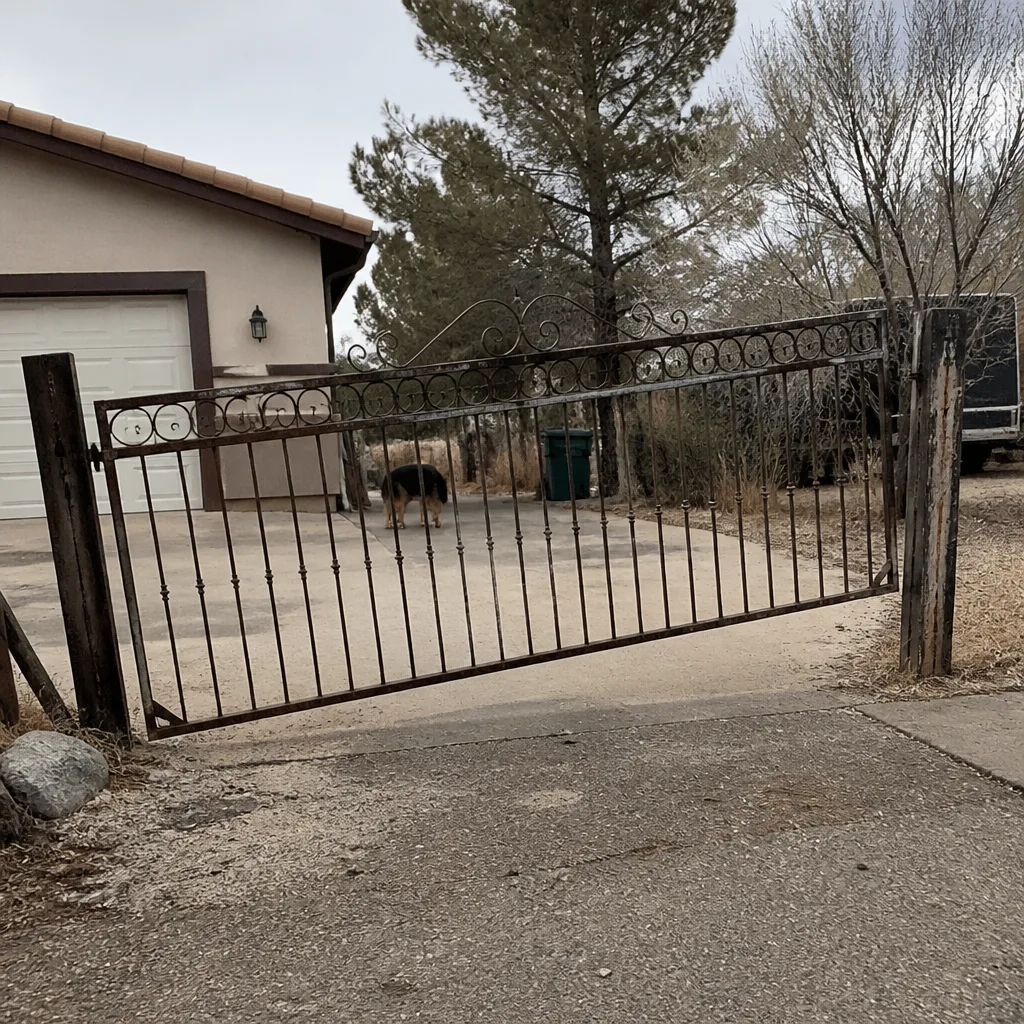 Before
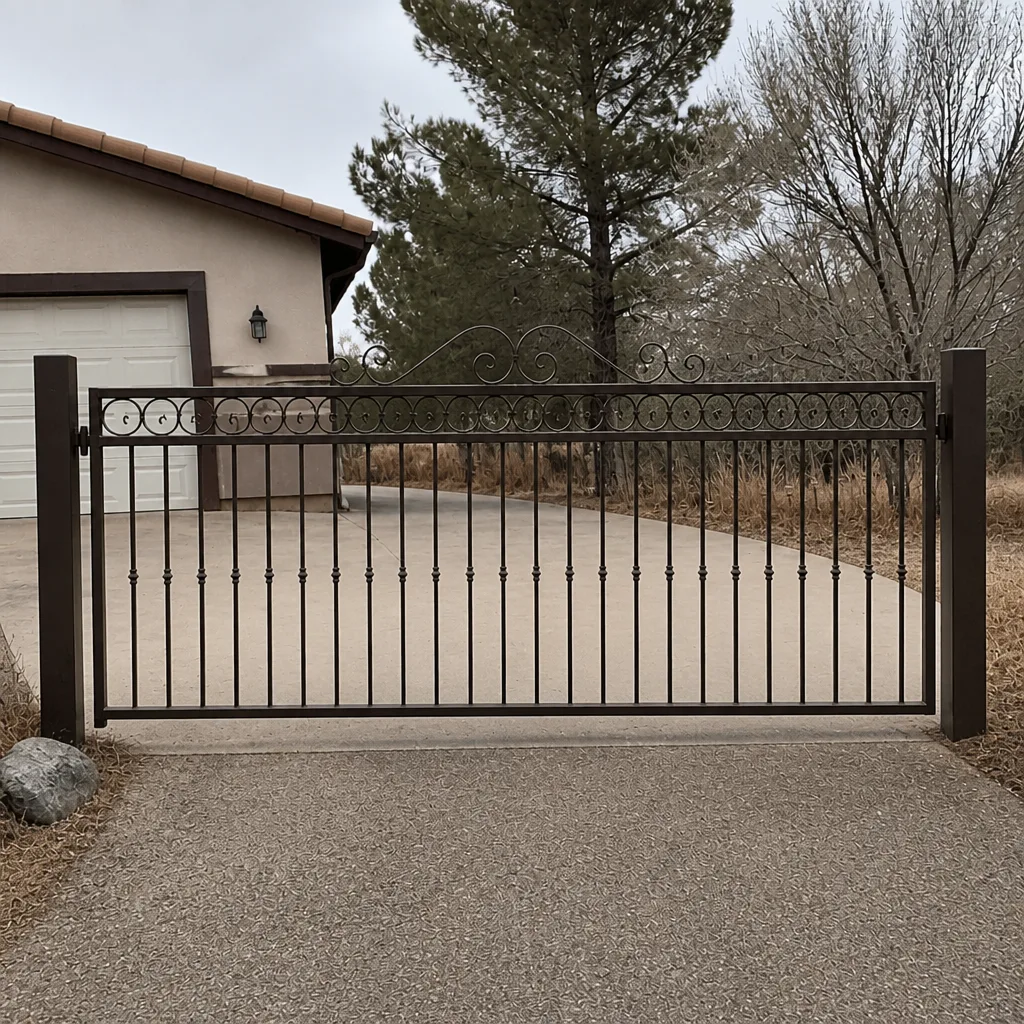 After
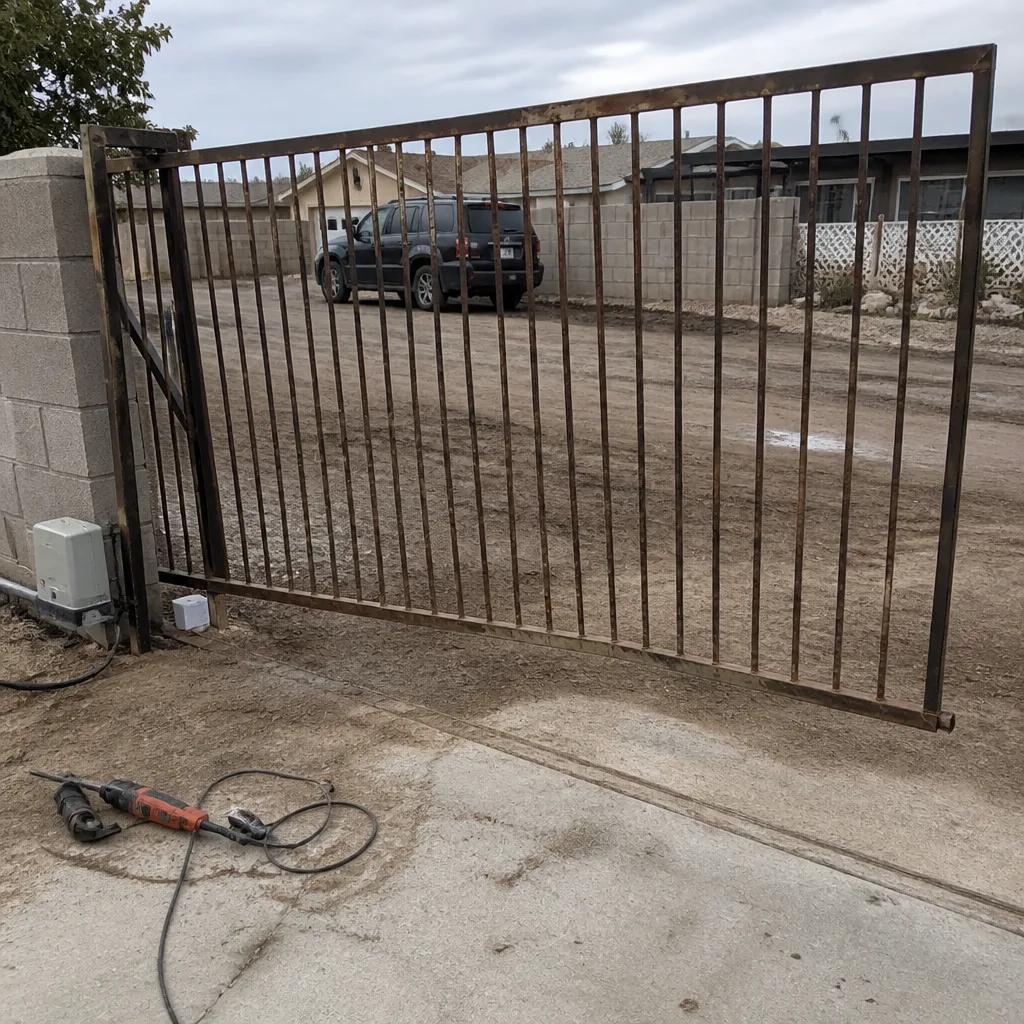 Before
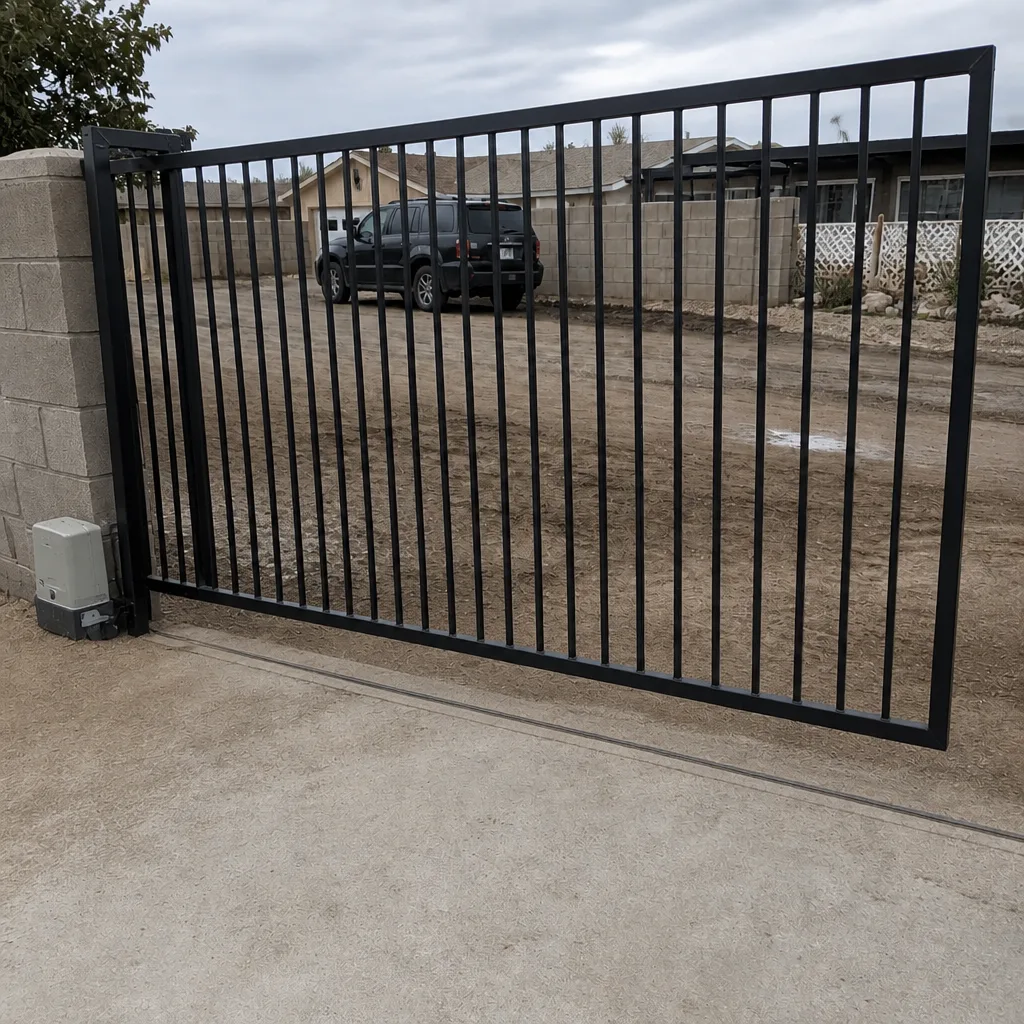 After
Frequently Asked Questions
You can install a manual gate on existing posts yourself. Anything with new posts, and anything automated, calls for a professional because of footing specs, electrical permits, and inspection requirements. In our experience, the DIY attempts that hold up are the ones on existing hardware.
Yes, in most cases. The 120V electrical feed almost always requires a permit and inspection, and automated gate installations typically need a footing review as well. Skip the permit and the insurer can treat a related claim as your problem, so check with the city before work begins and get the answer in writing.
Usually, yes. Most opener brands, including LiftMaster and Linear, tie their warranty to professional installation. A self-installed opener often loses that coverage, so the cost of a warranty claim shifts entirely to you. Ask the manufacturer in writing if you’re unsure.
Most single automated gate installs are completed over a defined schedule, not squeezed into a same-day slot, because the work involves the footing, the electrical run, the opener and safety-edges, and the inspection. Dual and slide gates take longer. We give you a written schedule with your estimate so you know what to expect.
No. On a professional install, we handle the opener mounting and the low-voltage controls, and a licensed electrician handles the line-voltage feed. The safety edges and photo-eyes are part of the install, not an add-on, because they’re what fails inspection if they’re missing. Ours are installed and tested before we leave.
Materials for a manual gate on existing posts run in the low hundreds. A professional automated install is a larger figure because it includes the footing, the electrical work, the opener, the safety edges, and the inspection, and it carries a written warranty. We quote upfront and settle the price before a single bolt is turned, so you know exactly what you’re paying. Call (866) 984-8340 for an exact quote; estimates are free.
The Bottom Line
DIY is a fair answer for a manual gate on existing posts. It is a poor answer for anything automated, anything with new posts, and anything the HOA or the city needs to sign off on. The electrical rough-in, the footing spec, and the permit pull are the reasons. If you’re wondering where your project lands, the Ironworks Gate Co. Winchester home page will show you the full scope of what we do, and Gate Repair in Winchester covers the fix-before-you-install scenario. Across nine automation brands, we make the correct call on the first visit, backed by the 90-Day Done Right Promise, and we’re a phone call away.
Contact
If you’re weighing a gate installation in Winchester and want a straight answer on whether it’s a DIY job or a professional one, call Ironworks Gate Co. Winchester at (866) 984-8340 for a free estimate. A live person answers, day or night, and we’ll give you our honest read before you spend a dollar.
Written by the team at Ironworks Gate Co. Winchester.