
Last updated November 18, 2026
 Wrought iron
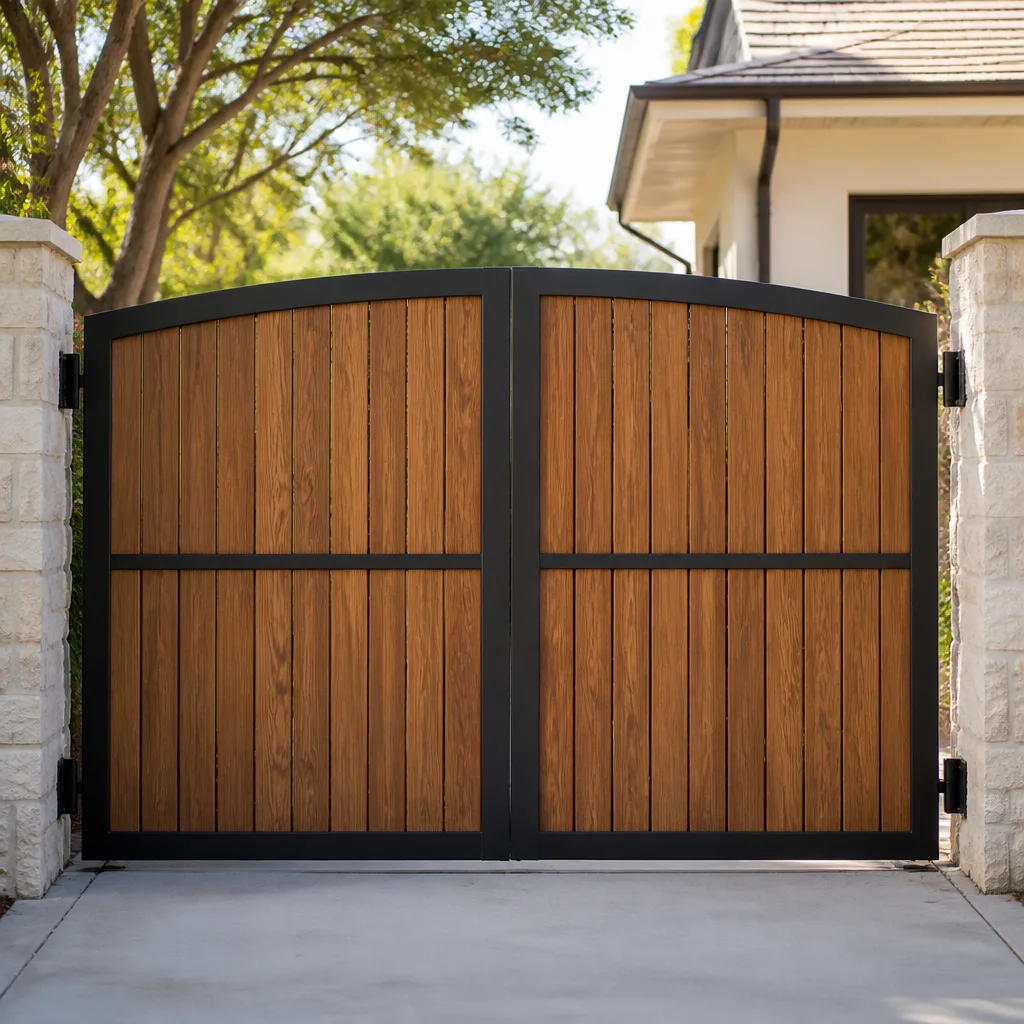 Wood & steel frame
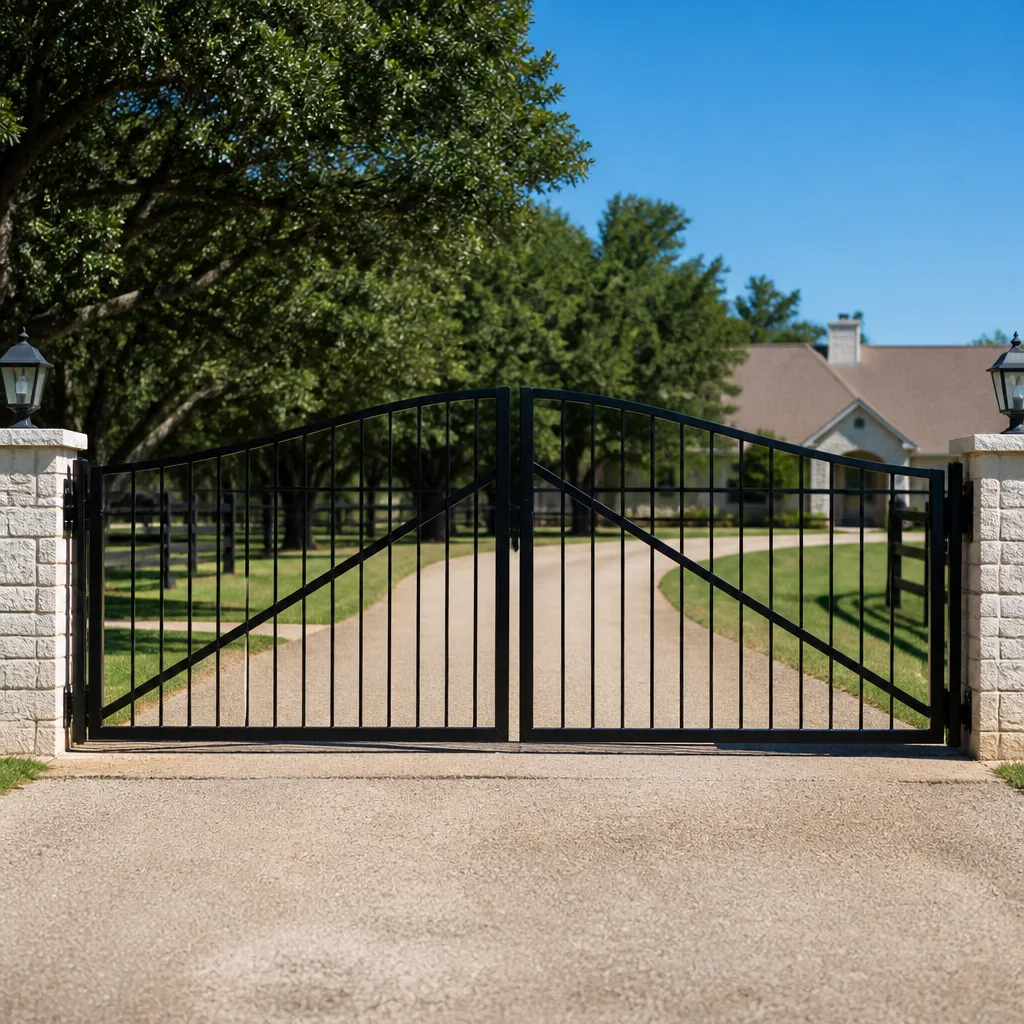 Farm & ranch
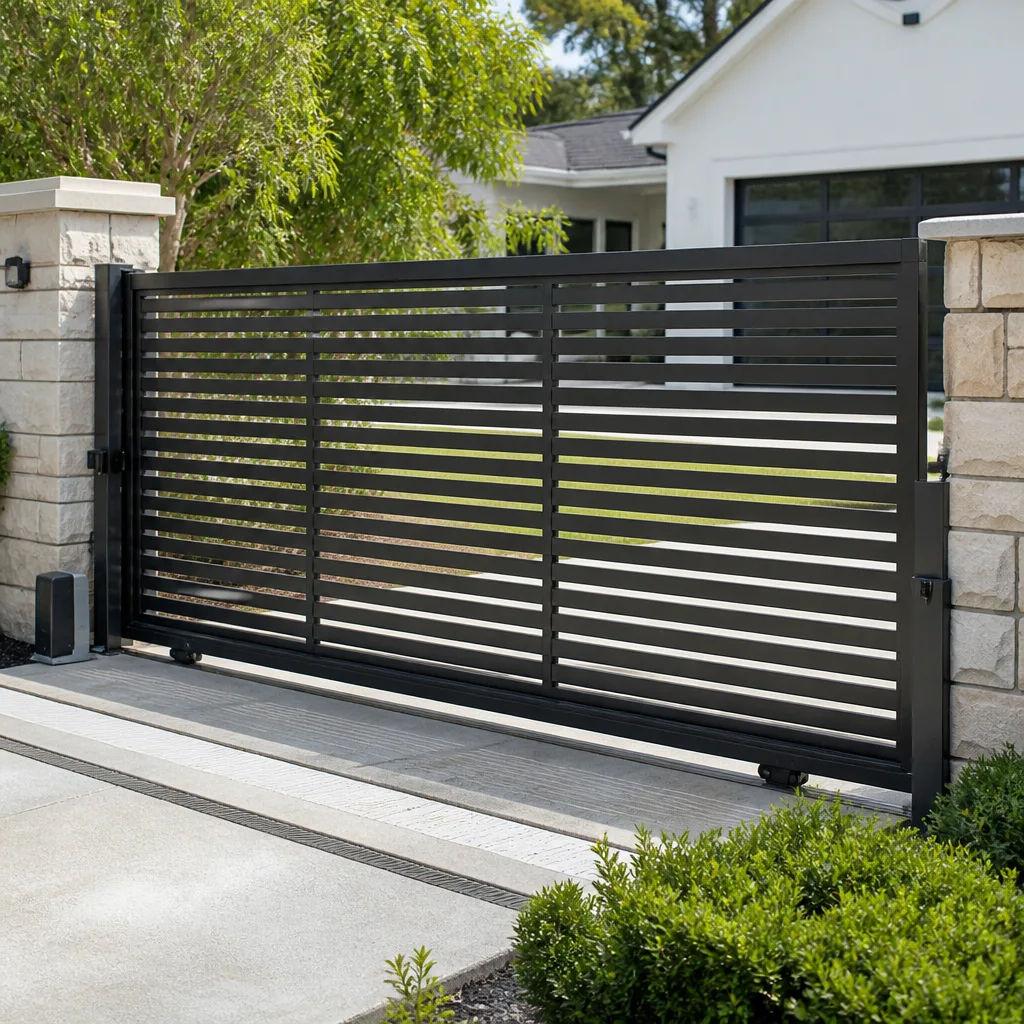 Sliding driveway gates
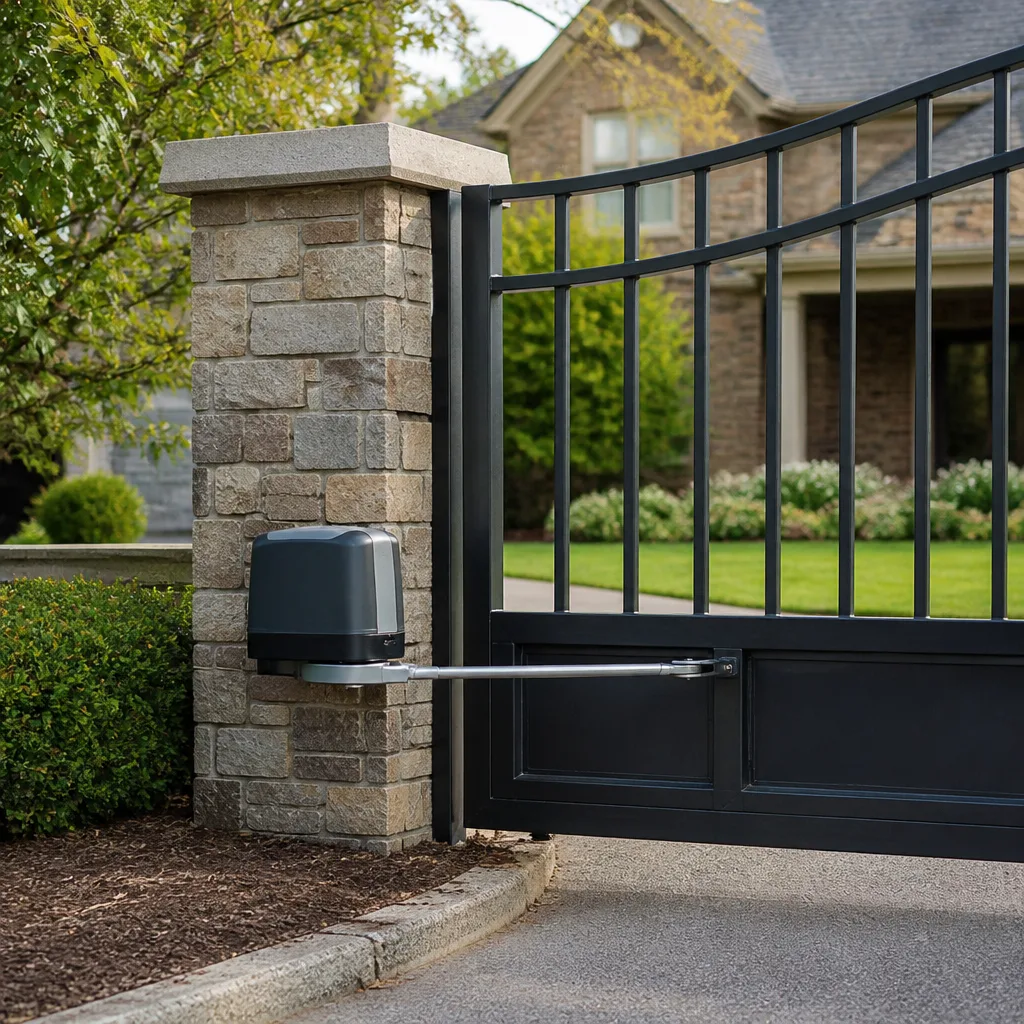 LiftMaster operators
Free on-site gate assessment - hinges, posts, and your LiftMaster or Nice gate operator checked before anything is quoted
The assessment is free and the quote is the invoice.
Get your free estimateGate Motor & Opener Troubleshooting: Common Problems and How to Fix Them
Before you call anyone, check the obstruction sensor. A spider web stretched across the safety beam, and in the Nevada desert evenings that happens more than you’d think, will stop a gate cold and read as a dead motor to anyone who doesn’t know to look for it. We see this call constantly in Winchester, usually from homeowners who have already steeled themselves for a four-figure control board. More often than not it’s a two-minute fix. This guide is the diagnostic conversation we have on the phone every week: the four causes behind almost every “the opener died” call, how to tell electrical from mechanical without touching anything dangerous, and the hard line where troubleshooting stops and a licensed technician starts.
Quick Answer
Most gate motor failures come down to four fixable causes, roughly in order of likelihood: a power or transformer problem, a triggered obstruction sensor, limit switch drift, or a faulty logic board. A homeowner can safely check the first three in about ten minutes and either solve the problem or diagnose it well enough to save a technician half the visit. Anything inside the transformer wiring, the control board itself, or the safety loop belongs to a licensed technician.
Styles & brands we work with
- Wrought iron
- Wood & steel frame
- Farm & ranch
- Sliding driveway gates
- LiftMaster operators
Table of Contents
- The Four Most Common Causes (In Order of Likelihood)
- How to Tell If It’s Electrical or Mechanical
- Remotes and Keypads Fail Differently Than Motors
- Overheating, Capacitor, or Stripped Gear? Matching Symptoms
- The Hard Line: What Homeowners Should Never Open
- Why Gate Motors Fail More in Winchester Heat and Dust
- When to Call a Professional
The Four Most Common Causes (In Order of Likelihood)
We’ve worked on Elite, Mighty Mule, LiftMaster and FAAC operators across Winchester, and the same pattern repeats. When a homeowner says “the opener just quit,” it’s nearly always one of these four. Run through them in order and you’ll have your answer before a technician’s truck leaves the driveway.
- Power supply or transformer issue. Start at the breaker. Then check the transformer box on the wall near the operator. Look for a tripped GFCI outlet, a loose transformer plug, or a fuse inside the control housing (yours may have one – check the manual). In Winchester’s older neighborhoods, long runs from panel to gate sometimes suffer voltage drop, and in summer the draw from air conditioning can make a weak supply weaker. If the control board has no indicator light at all, suspect power first.
- Obstruction sensor trigger. The safety beam across the driveway is sensitive. Spider webs, blown dust, a dropped leaf, a jostled post after mowing, or direct afternoon sun on the receiver will all trip it. Wipe the lenses on both sides with a dry cloth, check the alignment marks, and clear any debris. If the gate reverses instantly on closing, this is your likely culprit.
- Limit switch drift. Limit switches tell the motor where “fully open” and “fully closed” are. Over years of use they slip. A gate that stops short, over-travels, or reverses near a limit position is usually just out of adjustment. This is an electrical adjustment, not a swap of the motor; the operator may need to be re-learned – see your operator manual for the exact re-learning steps, or let a technician adjust and re-learn it in one visit.
- Logic board fault. When power is confirmed, the sensor is clean, and the limits are set, the board is the last suspect. Boards fail from power surges (common in southern Nevada summer storms), moisture, and simple age. A board replacement is a licensed-technician job. Board replacement is not obvious, and a board diagnosis is only reliable when the first three causes have been ruled out.
Notice that only one of those four requires a homeowner to stop and call. That’s the point.
How to Tell If It’s Electrical or Mechanical
This is the single most useful diagnostic step, and most homeowners skip it. You want to know whether the operator is trying to move the gate and failing (electrical, or motor-side), or whether the gate itself is hard to move (mechanical). Don’t put your hands near moving parts during this test; if the gate is hung or jammed, do not force the manual release under spring load.
- Disengage the operator using the manual release. Every gate operator has one – usually a key release or lever on the motor housing. Follow your operator’s manual to disengage. If the release is stuck or won’t move freely, stop and call a technician.
- Walk the gate through its full travel by hand. Open and close the gate slowly across the whole arc. It should move with moderate resistance and no grinding, no binding, no sudden heavy spots, and no dragging on the ground.
- Interpret what you felt. If the gate moves freely by hand but the motor won’t move it, the problem is electrical or motor-side. If the gate is stiff, binds, drags, or grinds by hand, the problem is mechanical – hinges, tracks, rollers, or the drive mechanism.
- Re-engage the operator. Follow the manual’s steps and test with the remote. Do this only once, and only if you’re confident the gate isn’t binding.
Two things make this essential. First, it prevents unnecessary part swaps: if the gate is binding on a hinge, no remote, board, or sensor change will fix it. Second, a homeowner who has done this test can tell us “the gate moves freely by hand” – and that one sentence cuts the service call roughly in half, because we know to look at the electrical side first. On the mechanical side, we see rusted and seized hinges so often, especially the iron work on older gates, that gate repair in Winchester often resolves what a homeowner assumed was a dead motor. If the gate itself is heavy, warped, or binding, the right answer may be gate installation rather than repair – see our gate installation in Winchester page.
Remotes and Keypads Fail Differently Than Motors
Most homeowners conflate a remote problem with a motor problem. They are different systems with different fixes, and mixing them up drives much of the unnecessary part replacement we see. A motor that operates fine from the wall control but won’t respond to the remote is not a motor failure. It’s a remote or keypad issue.
Run this simple decision tree:
- Wall control works, remote doesn’t. The motor is fine. The issue is the remote, its battery, its pairing, or the receiver. Replace the remote battery first, then re-pair the remote to the operator per the manual. If you have multiple remotes and only one fails, it’s the remote. If all fail, it’s the receiver or a pair of very old batteries.
- Wall control and remote both fail, gate functions by manual release. This is a motor or control-board issue. Go back to the four-cause checklist.
- Keypad only fails. Keypads fail from moisture and dust. Clear the face, replace batteries, and re-check the code. A keypad that works intermittently is usually a wiring or moisture problem, not a motor.
- All remotes work intermittently. This points to interference from a newly installed device on the property – a security camera, a Wi-Fi router, or even a neighbor’s new equipment. Re-pairing helps; a frequency scan from a technician may be required.
Our gate motor & opener in Winchester service covers receiver and remote diagnostics separately from motor service, precisely because so many calls start as one and turn out to be the other. A good technician will ask “does the wall control work?” before anything else – so know the answer before you call.
Overheating, Capacitor, or Stripped Gear? Matching Symptoms
These three failures sound almost identical on the phone but require completely different fixes. Match your symptom to the table, then decide whether it’s a call-out or a check. (Note: don’t open the motor housing to inspect the capacitor or gear yourself – see the next section for the line you should not cross.)
- Overheating. The motor runs, then stops after a few cycles and won’t restart for a while. Symptom pattern: works again after it cools down, especially on hot afternoons. Causes: too many cycles in a short window, a heavy or binding gate, poor ventilation, or ambient heat in a metal housing. In Winchester, where summer afternoons regularly hit triple digits, overheating is far more common than it is in cooler climates. The fix usually starts with a mechanical check on the gate’s free movement, sometimes a duty-cycle adjustment or a thermal-protection reset; if the gate binds, freeing the hinges alone can solve it.
- Failing capacitor. The motor hums but won’t turn, or turns weakly and then stalls. This is a classic start-capacitor symptom – the motor gets power but can’t develop the starting torque. A hum with no movement, especially with the gate moving freely by hand, points straight at the capacitor. This is a motor-side electrical fix, done by a technician.
- Stripped drive gear. The motor runs smoothly and at normal speed but the gate barely moves, or creeps and slips. You may hear a whining or grinding sound or nothing at all, but the motor itself is running fine. The drive gear is worn or stripped and needs replacement. This is the most expensive of the three, which is why a technician should confirm it before parts are ordered.
The practical takeaway: “runs then stops” is overheating, “hums but won’t move” is likely the capacitor, “runs fine but the gate doesn’t” is the drive gear. Give a technician that sentence and you’ll get an accurate estimate before the visit.
The Hard Line: What Homeowners Should Never Open
We have to be direct about this, because the risks are real and they build up over years without anyone noticing. Gate operators run on mains voltage. A control board can hold a charge after power is cut. Safety loops wired into the driveway can be live when the operator looks off. This is not a “watch a video and have a go” zone – it’s where a licensed technician belongs. Do the checks above. Stop at the transformer wiring, the board, and the safety loop.
- Transformer wiring. Never open the transformer housing, and never move or re-terminate supply wiring. On 120-volt or 240-volt circuits the risk of shock is serious, and a mistake can create a fire hazard inside the wall.
- Control board replacement. Boards aren’t just plug-and-play; they need the correct model for the operator (LiftMaster, FAAC, Elite, and Mighty Mule boards are all different), correct wiring, and a full re-learn of limits and sensor behavior. An incorrect or partial fit can leave a gate that closes on a vehicle.
- Safety loop reconfiguration. In-ground or above-ground safety loops are wired into the operator’s safety circuit. Moving, splicing, or reconfiguring a loop is a job for someone with the right test equipment – a loop that fails mid-cycle can cause the gate to reverse at the wrong moment or stop mid-travel.
- Manual release under spring load. If the gate has a counterbalance spring and the release is under heavy load, don’t force it. Ask a technician.
If you’re at the point where you’ve decided a technician is needed, our Ironworks Gate Co. Winchester home page is the place to start, and everything on it is quoted and agreed before a single bolt is turned.
Why Gate Motors Fail More in Winchester Heat and Dust
Winchester has its own patterns, and it pays to know them. The Nevada desert environment is hard on motors in ways that coastal or rainy climates aren’t. The dust that blows in from the open desert finds its way into safety sensor lenses, keypads, and hinge pivots. The triple-digit afternoons push operators into thermal protection more often than the manufacturer’s duty cycle suggests. And the summer monsoon storm season brings power surges that finish off tired control boards.
So what a homeowner in Winchester calls a motor failure in late July is often one of:
- A thermal shutdown, especially on an operator with a heavy gate and a long driveway full of gear.
- A dust-obstructed safety beam that trips every evening when the low sun hits the receiver straight on.
- A limit switch that slipped after a season of heat expansion in the gate frame.
- A control board that took a surge in the last storm.
Seasonal maintenance – a hinge and pivot check, sensor cleaning, and limit inspection in spring before the heat arrives – prevents most of these. We offer an $89 seasonal tune-up for exactly this reason: it’s the difference between a hot-weather phone call and a working gate. Regular gate repair visits catch these problems before they become emergencies.
See the difference
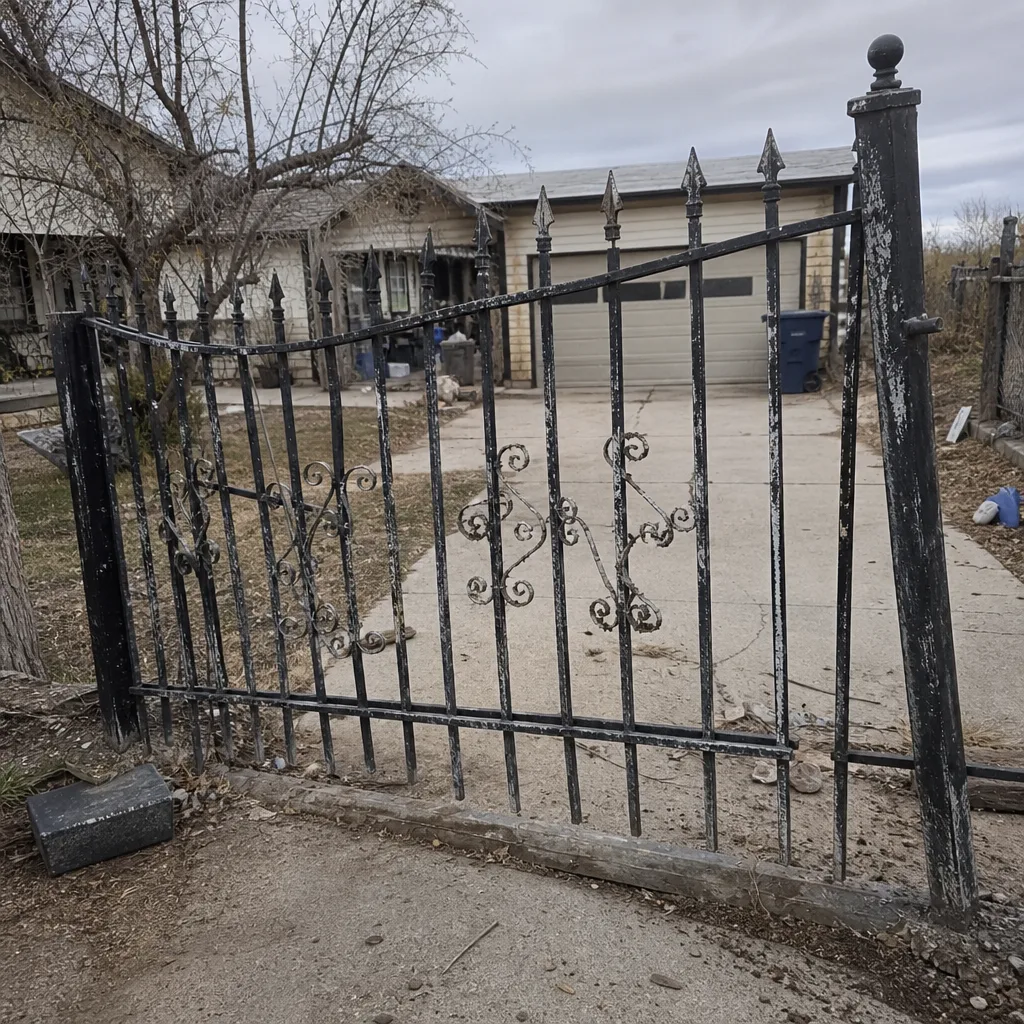 Before
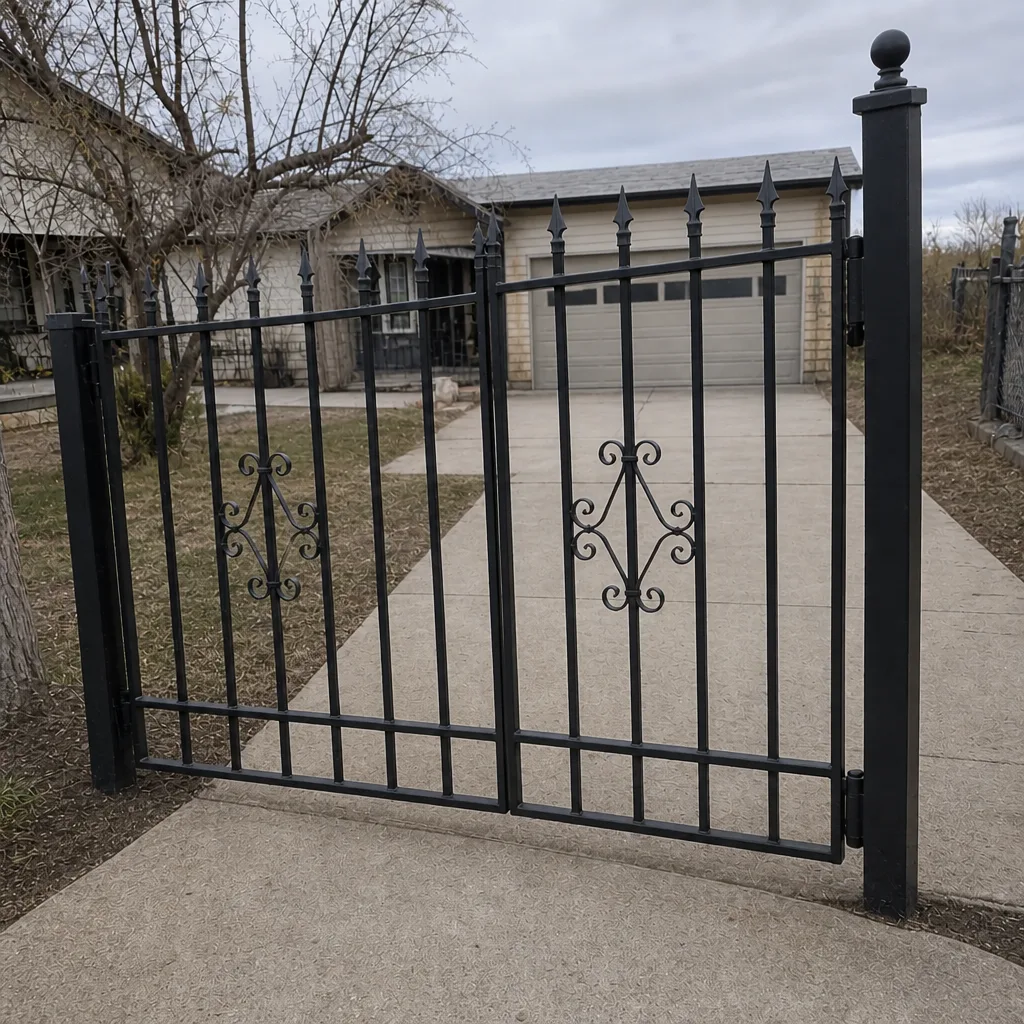 After
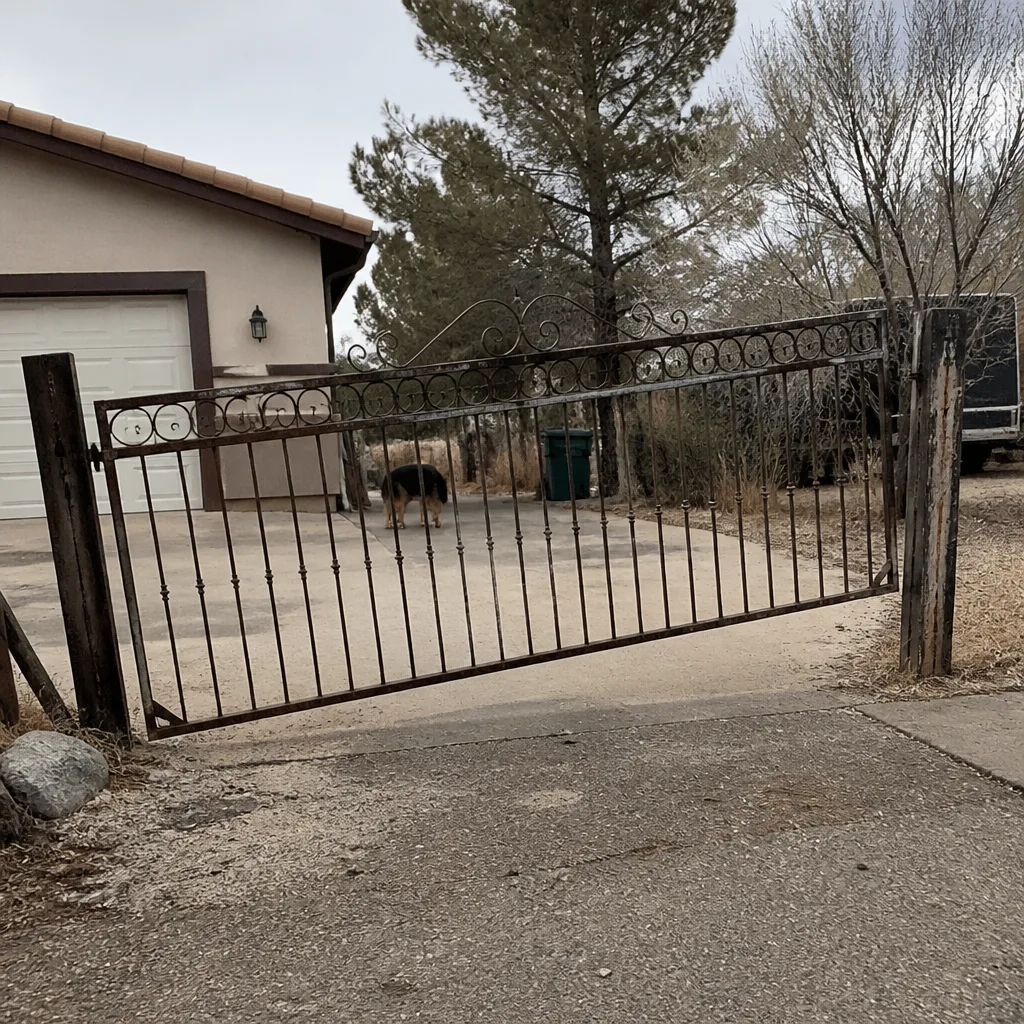 Before
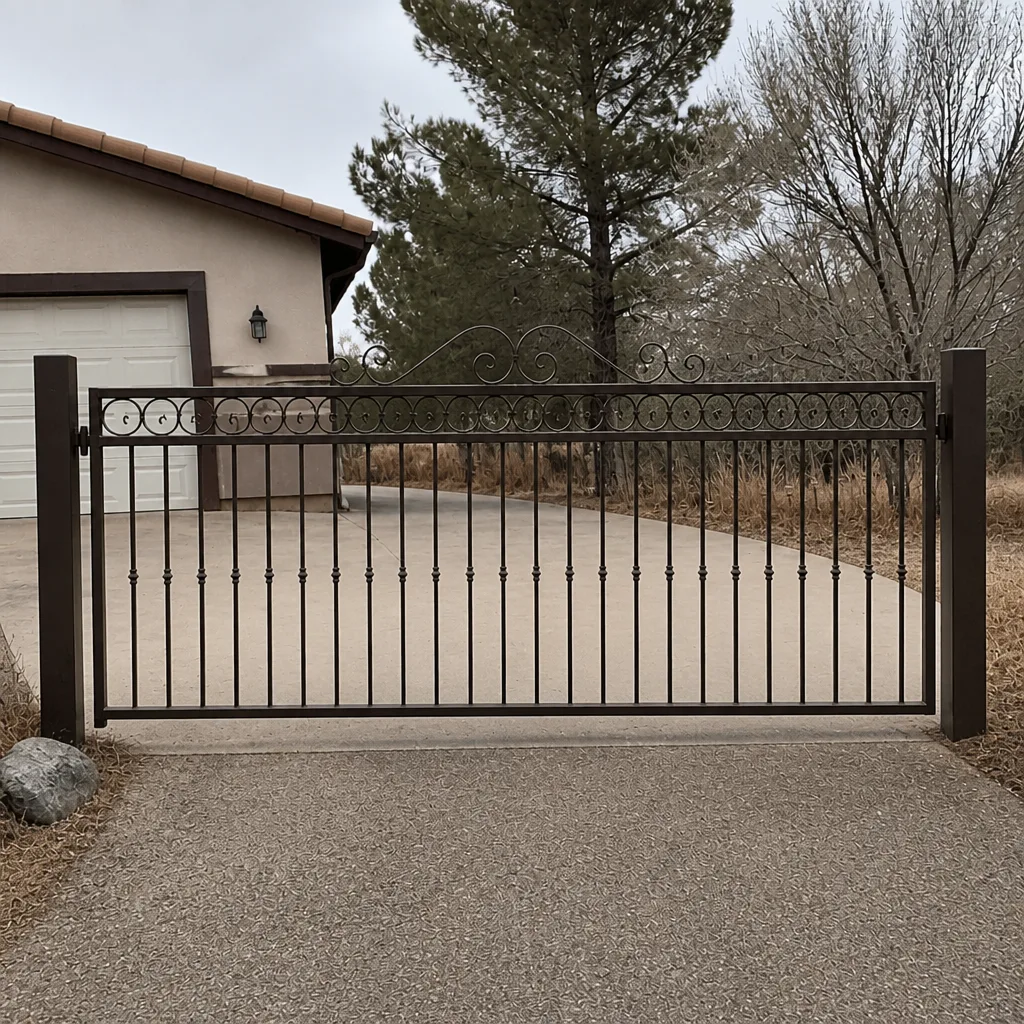 After
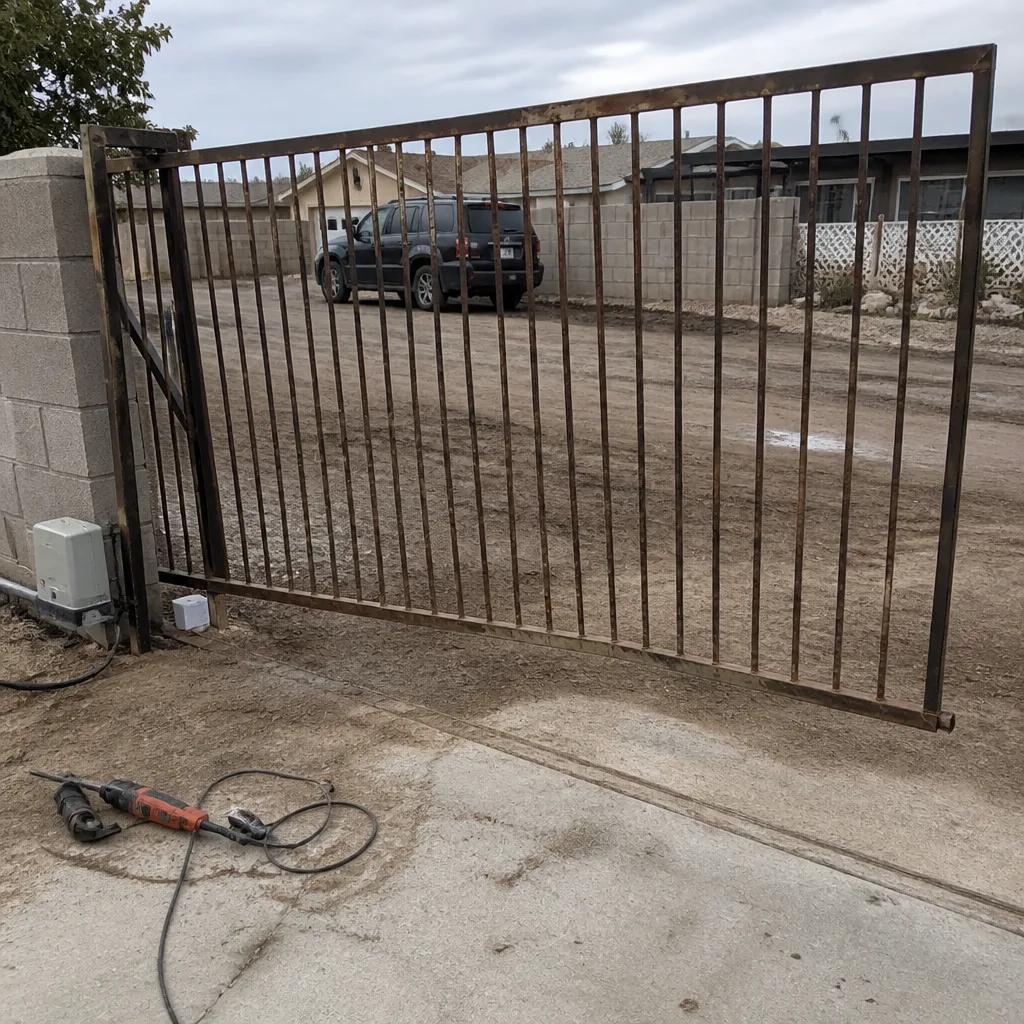 Before
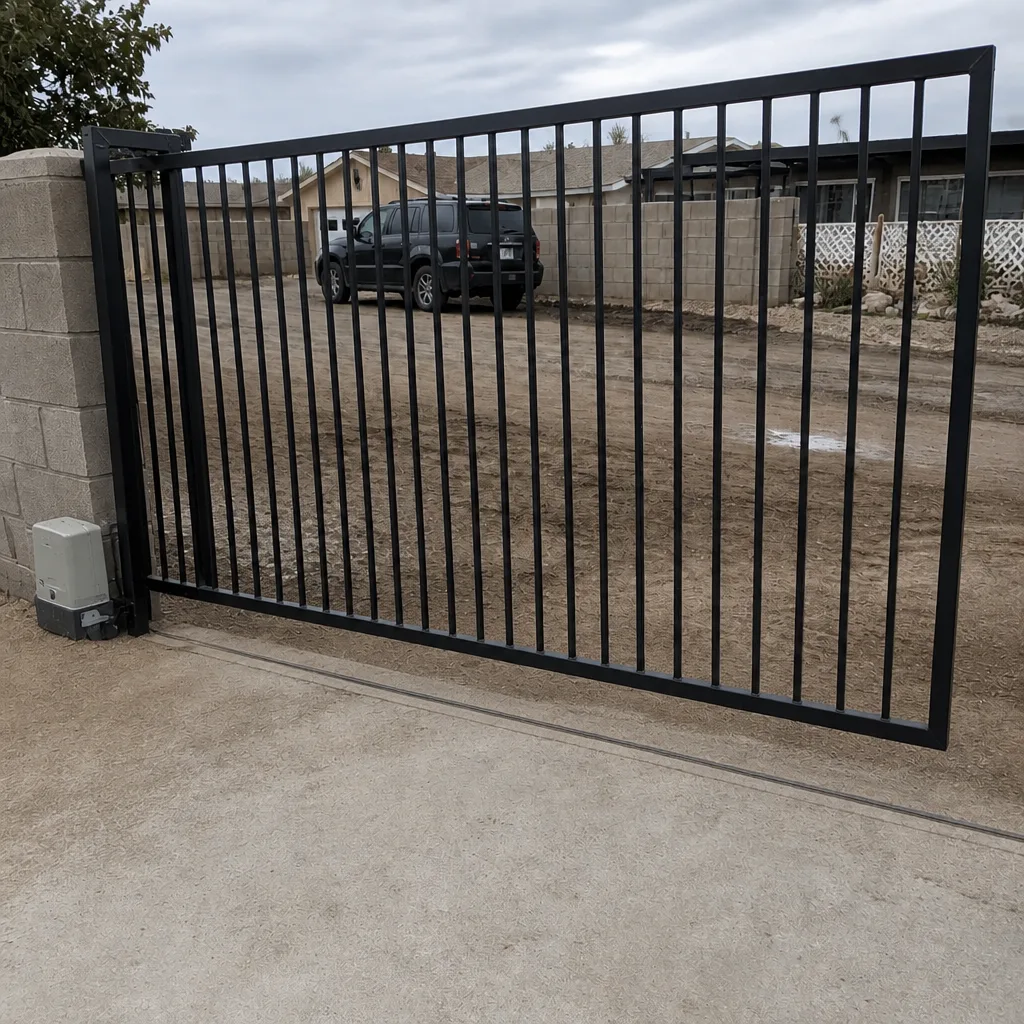 After
Common Mistakes to Avoid
- Replacing the motor when the gate just binds. A seized hinge or roller will make a good motor look dead. Do the manual-release test before ordering parts.
- Assuming a remote problem is a motor problem. If the wall control works and the remote doesn’t, you’re troubleshooting the remote, the battery, or the receiver – not the motor. Save the cost of unnecessary part replacement.
- Spraying the wrong lubricant into a remote or keypad. WD-40 in a keypad or remote shortens its life. Dry cloth for sensor lenses and keypads is all you need.
- Ignoring a spider web across the sensor. In Winchester evenings this is the single most common cause of “the gate won’t close” – and the simplest to fix.
- Opening the control board or transformer yourself. Mains voltage, live safety loops, and stored charge on boards make this the one part of the job that belongs to a licensed technician.
- Forcing a manual release under spring load. If the release won’t move freely, stop. A jammed release with a loaded counterbalance spring is a genuine safety hazard.
- Letting thermal shutdowns go unchecked. A motor that stops after a few cycles is telling you something – usually that the gate is heavy or the operator is over-worked. Deal with it before it fails entirely.
When to Call a Professional
Call a licensed technician when you reach the transformer, the control board, or the safety loop. Call a licensed technician when the gate has a counterbalance spring and the manual release won’t move freely. Call one when a motor is overheating repeatedly even after a mechanical check, or when a humming motor with a free-moving gate points at the capacitor. And call one when a “motor failure” has turned out to be a stripped drive gear, because that’s a parts decision best confirmed before money is spent. Ironworks Gate Co. Winchester offers free estimates in Winchester and a live person answers the phone 24 hours a day – call (866) 984-8340. Every job is covered by our written 90-Day Done Right Promise, and the price is agreed before any work begins. There’s also a $50 Off Any Repair Over $250 offer, a Free Second Opinion on Any Written Estimate, and 5% off for seniors and veterans.
Frequently Asked Questions
That’s overheating. The operator’s thermal protection cuts power when the motor gets too hot and resets once it cools. In Winchester, hot afternoons and a heavy or binding gate make this common. It’s a call-out – we’ll check whether the gate is too heavy for the operator or whether a hinge or roller is dragging. Call (866) 984-8340 for a free estimate.
Almost certainly not. If the wall control works, the motor is fine. The problem is in the remote, its battery, or the receiver. Replace the remote battery, then re-pair the remote per the manual. If several remotes fail at once, suspect the receiver or interference from new wireless equipment on the property. Call for a diagnostic if the re-pairing doesn’t take.
No. The motor and control board involve mains voltage, stored charge, and safety-loop wiring that must be re-learned and tested correctly. A mis-fitted board can leave a gate that closes on a vehicle. Board replacement, transformer wiring, and safety loop reconfiguration are licensed-technician work. We’re equipped on LiftMaster, FAAC, Elite, and Mighty Mule operators, among others, and can confirm the right fix in one visit.
Most domestic gate motor repair calls in Winchester land in a diagnostic-plus-repair range, with the exact figure depending on the operator and the failed part – a capacitor, drive gear, or board each costs differently. The most useful number for you is our price, which is quoted and agreed before any work starts. There’s a $50 Off Any Repair Over $250 offer, and the free estimate means you owe nothing to find out. Call (866) 984-8340.
The classic cause is the safety beam. In Winchester, low evening sun hitting the receiver, a spider web across the beam, or dust on the lens will all read as an obstruction and prevent closing. Wipe both lenses with a dry cloth, clear any web, and check the alignment marks. If it persists, it’s a sensor alignment or wiring job for a technician.
A hum with no movement usually points at a failing start capacitor, especially if the gate moves freely by hand. A motor that runs normally but only creeps or slips is more likely a stripped drive gear. Either way, don’t open the motor housing – this is a technician’s call. We service the leading operators across Winchester and will confirm before ordering parts.
The Bottom Line
Most “dead opener” calls turn out to be a power issue, a dirty sensor, a drifted limit switch, or a failed board – and only the last one definitely needs a technician. The manual-release test tells you electrical from mechanical in two minutes. A remote that fails while the wall control works is not a motor problem. “Runs then stops” means overheating, “hums but won’t move” means capacitor, “runs but the gate doesn’t” means drive gear. The line you don’t cross is the transformer, the board, and the safety loop. Check what you can check safely, then call (866) 984-8340. We’ll be there when we say, the price is agreed before the work, and the 90-Day Done Right Promise is in writing.
Written by the team at Ironworks Gate Co. Winchester.