
Last updated November 18, 2026
 Wrought iron
 Wood & steel frame
 Farm & ranch
 Sliding driveway gates
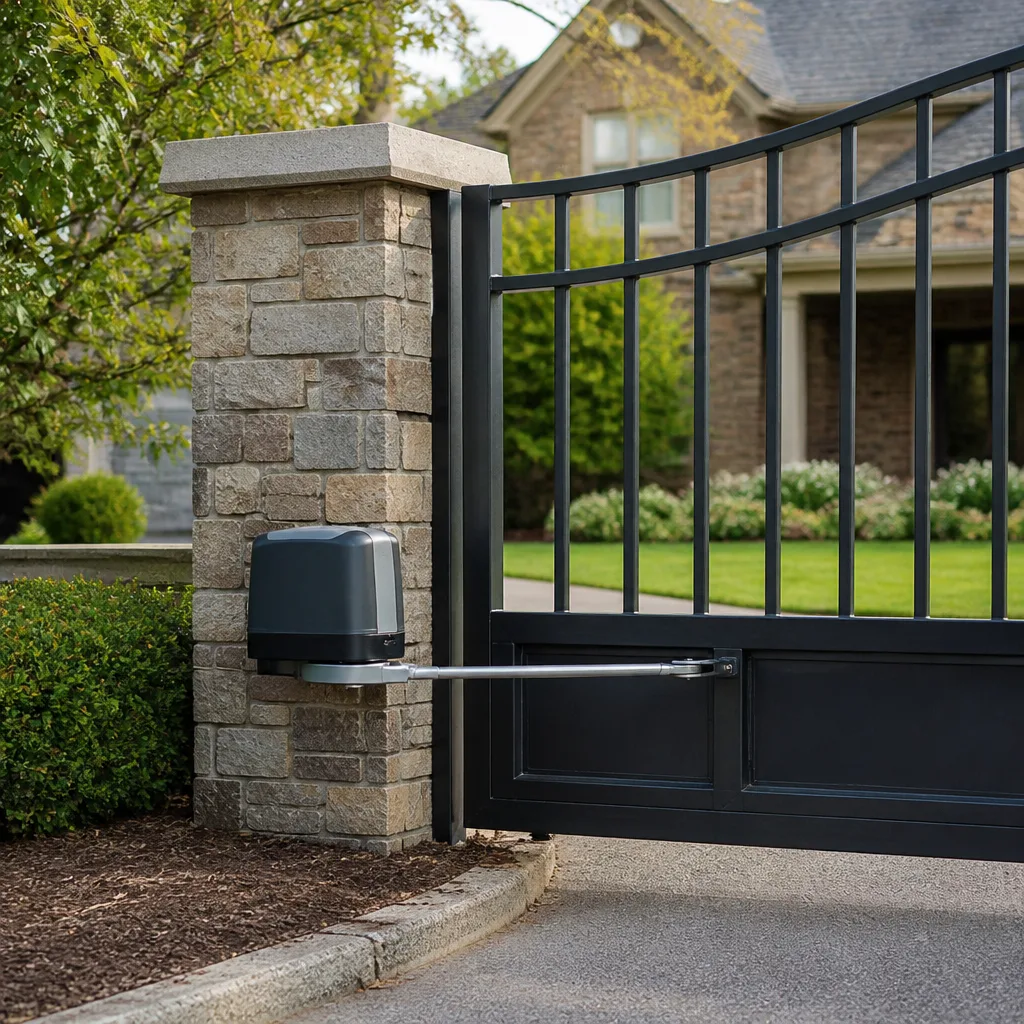 LiftMaster operators
Free on-site gate assessment - hinges, posts, and your LiftMaster or Nice gate operator checked before anything is quoted
The assessment is free and the quote is the invoice.
Get your free estimateGate Motor & Opener Warning Signs Every Homeowner Should Know
A gate that hesitates for half a second before it moves has already told you the start capacitor is weakening. By the time it stops entirely, you’re paying for an emergency weekend call instead of a scheduled capacitor swap that costs a fraction of that. Gate openers don’t fail without warning. They fail after weeks or months of small sounds, timing changes, and odd behavior that most homeowners are never taught to read. This guide walks through those signals one by one, in plain terms, so you can tell the difference between a cheap scheduled fix and an expensive emergency. If you’ve watched your gate in Winchester and something felt off lately, this is where to start.
Quick Answer
The most common gate motor and opener warning signs are a hesitation before the gate starts moving, inconsistent travel time, new grinding or buzzing sounds, sluggish performance in afternoon heat, and a gate that closes but leaves a small gap. Each points to a specific part – usually a capacitor, a limit switch, or a worn gear – and most are cheap to fix when caught early and expensive when ignored. In our experience across Winchester, reading these signs early turns an emergency call into a planned service visit.
Styles & brands we work with
- Wrought iron
- Wood & steel frame
- Farm & ranch
- Sliding driveway gates
- LiftMaster operators
Table of Contents
- The Hesitation Start: What Half a Second Tells You
- Inconsistent Travel Time: Limit Drift vs. Power Problems
- Grinding, Clicking, Buzzing: What Each Sound Means
- Works in the Morning, Struggles in the Afternoon
- The Small Gap at Close: A Safety Sign, Not a Cosmetic One
- What to Check by Hand: A Numbered Walkaround
- Brand-Specific Notes: DoorKing, LiftMaster, Mighty Mule
- When to Shut the Gate Down and Call
The Hesitation Start: What Half a Second Tells You
A hesitation at the start of travel is the single most useful warning sign on an automatic gate. The motor hums, waits a beat, then the gate begins to move. Most homeowners assume this is “warming up” or normal for an older unit. It isn’t. On most residential swing and slide openers, that half-second pause is the start capacitor failing to deliver its initial jolt. The capacitor gives the motor the kick it needs to overcome inertia. When it weakens, the motor runs but doesn’t quite have the push at the start.
This matters because the fix is small and the alternative is not. A failing capacitor on a LiftMaster or Elite operator is usually a modest replacement part, and swapping it is a quick visit. A motor that keeps starting under a weak capacitor, however, draws higher current on every cycle, overheats, and eventually burns out the windings. That turns a small repair into an opener replacement. We’ve walked up to gates in Winchester where the homeowner had been listening to that stutter for a month, assuming it was fine, and the motor had already started to smell hot.
How to tell the difference between a weak capacitor and a failing motor:
- Weak capacitor: the gate hesitates, then starts and runs smoothly. The delay is the same every time. No hot smell from the housing.
- Failing motor: the gate struggles to move at all, the housing gets warm to the touch after a few cycles, and the hesitation is unpredictable.
- Belt or chain issue (slide gates): the motor starts fine but the gate jerks or the chain slips before travel begins.
If you can’t tell which one you have, don’t keep cycling the gate to test it. Call for a diagnostic before the motor cooks itself. Full Gate Motor & Opener in Winchester service is the right starting point.
Inconsistent Travel Time: Limit Drift vs. Power Problems
A gate that takes eight seconds to open one morning and twelve seconds the next afternoon is telling you something, and the story is usually limit drift or an intermittent power problem. Limit drift means the physical stops that tell the opener “you’ve reached the end of travel” have shifted. On a swing gate, that’s usually a hinge sagging or a bracket loosening. On a slide gate, it’s often a chain or rack slipping a tooth. The opener compensates, travel time changes, and eventually the gate stops short or runs past.
An intermittent power problem is a different animal. The opener is fighting a low-voltage condition some of the time. Common causes are a corroded splice in the low-voltage loop, a failing transformer, or a solar panel that isn’t keeping up on Ghost Controls and Mighty Mule systems. You’ll usually notice this one comes and goes with weather, time of day, or after a storm.
Here’s how to work out which you’re dealing with:
- Watch the gate over five consecutive cycles at the same time of day. Steady but wrong time points to limit drift.
- Watch it at different times of day, especially afternoon in Winchester summer. Sluggish only when hot points to power or overheating.
- Look at the physical stops at the open and closed positions. Visible wear or a loose bracket points to limit drift.
- Check the low-voltage wiring at any splice. Green corrosion points to power.
Limits that drift are usually a straightforward adjustment or a hinge repair. Intermittent power needs a proper meter test at the operator, not guesswork. In Winchester’s heat, both are common, and we treat them differently because the fix is different.
Grinding, Clicking, Buzzing: What Each Sound Means
Your ear is the best diagnostic tool you own on an automatic gate. Different sounds point to different parts, and one of them means stop running the gate right now.
- Grinding: usually the operator gearbox, a worn sprocket, or a dry chain under load. Grinding that gets louder over a few weeks is mechanical wear and needs service before the gear strips.
- Clicking (in rhythm with travel): often a loose chain, a chipped rack tooth on a slide gate, or a relay inside the control board cycling. Clicking that just started is usually cheap to address.
- Clicking (once, then nothing): the control board is telling the motor to move but the motor isn’t responding. This is often a capacitor at the end of its life or a bad connection at the motor leads.
- Buzzing (constant, without movement): the motor is trying to turn against a jam, a seized bearing, or a locked gate. Stop it. Buzzing under load can burn out the motor in minutes.
- Buzzing (faint, from the control box): usually a transformer hum, which is normal on many units, but a new or louder buzz means the transformer is failing.
The one to act on immediately is a buzzing motor without movement. If the gate is jammed and the motor is trying to push through it, shut the power off at the breaker and leave it off until a technician has looked at it. That’s the one sound that turns a repair into a replacement in a single afternoon.
Works in the Morning, Struggles in the Afternoon
This one is specific to Winchester, and we see it every summer. The gate opens smoothly at 7 a.m., then labors, slows, or cuts out at 3 p.m. The homeowner assumes the gate is “acting up.” It isn’t. The opener is thermally overloading, and the cause is usually that the motor is undersized for the gate it’s driving.
Winchester summer afternoons push well past 100°F on the driveway. A gate steel surface absorbs that heat and radiates it straight back at the opener housing. An opener spec’d with little margin, often a lower-cost unit installed years ago on a gate that’s since been reinforced or re-clad, hits its thermal cutoff and either slows down or shuts off to protect itself. When the driveway cools in the evening, it works again. Same gate, same motor, different temperature.
Signs you’re looking at a thermal problem rather than a failing motor:
- Performance tracks temperature and time of day, not usage or battery charge.
- The housing is hot to the touch after a few cycles on a hot afternoon.
- It resets itself after the gate sits for 30 to 60 minutes.
- Same symptoms return the next hot afternoon.
Thermal overloading is a warning that the opener is being asked to do more than it was built for. Left alone, it shortens motor life and eventually strands you. The correct fix depends on the gate – sometimes a motor upgrade, sometimes added ventilation or shading, sometimes both. A DoorKing or LiftMaster unit rated for the actual gate weight solves it once. If your gate is stuck on these hot afternoons, call us before the motor gives out entirely.
The Small Gap at Close: A Safety Sign, Not a Cosmetic One
A gate that closes but leaves a quarter-inch of daylight isn’t “basically closed.” It’s a warning that the limits have crept, and limits creeping is what happens under desert temperature cycles. Metal expands and contracts through the day. Hinges sag slowly. The physical stop the opener reads at the closed position drifts by a fraction of an inch each month. The gate keeps closing, but each time it stops a touch earlier. Three months later there’s a gap.
Two things make that gap matter. First, safety edges and photo-eyes are set to detect obstruction at a specific line. If the gate stops short of that line, the edge may still register as clear when the gate is at rest, and small children or pets can move through the gap undetected on the next close. Second, a gap on a security gate is an open door for exactly the kind of access the gate exists to prevent.
What causes limit creep:
- Daily thermal expansion and contraction of the gate frame and driveway anchors.
- Hinge wear on swing gates, usually invisible without close inspection.
- Chain and rack stretch on slide gates under regular use.
- Loose mounting bolts at the operator that shift slightly cycle by cycle.
The fix is a proper limit reset and safety edge re-verification, done with a tester, not by eye. If your gate has developed a gap in the last few months, that’s a scheduled visit, not an emergency. It becomes an emergency the moment someone squeezes through it.
What to Check by Hand: A Numbered Walkaround
Before you call anyone, walk out and look at your gate with the power off. This is safe, quick, and tells you what kind of visit you’re looking at.
- Kill the power at the breaker. Never put hands near hinges, chains, or brackets with the opener live.
- Open and close the gate by hand. It should move with steady resistance. If it binds, drags, or feels loose at a hinge, the mechanical side is the problem.
- Look at the physical stops at both ends. Worn or shifted stops point to limit drift.
- Check the hinges and the chain. Look for metal dust, fresh wear marks, or a chain that sags more than usual.
- Look at the control box and photo-eyes. Cracked lenses, spider webs, or wet connections cause false obstruction stops.
- Look at the wiring splices. Any green corrosion or chew marks is a power problem waiting to fail.
- Turn the power back on and watch one full cycle. Note every sound and any hesitation. Write it down before you call.
What you find in the walkaround cuts the diagnostic time on the visit and often saves you money. If you’d rather have a trained eye do it, that’s exactly what we do at Gate Repair in Winchester.
Brand-Specific Notes: DoorKing, LiftMaster, Mighty Mule
Different openers fail in different ways, and knowing your brand helps you read the warning signs more accurately. A DoorKing slide gate operator, common on long estate drives in Winchester, tends to show limit drift earlier than a swing gate because the rack and chain take more temperature expansion across its length. If your DoorKing starts missing its closed stop by a fraction, look there first.
A LiftMaster swing operator, one of the most common residential units we see, usually announces a failing capacitor with that hesitation start long before it fails outright. LiftMaster control boards also log fault codes; a technician reads those on the visit and saves a lot of guessing. On a Mighty Mule solar or low-voltage unit, the classic symptom is not the motor at all but the battery. Morning works, afternoon is sluggish, and by evening the gate stops. If your Mighty Mule has run the same battery through more than a few Winchester summers, replace the battery before you replace the opener.
We service nine major gate automation brands, including all three of these, which means whatever is on your driveway, we can read its signals. If you’re thinking about replacing the opener rather than repairing it, Gate Installation in Winchester covers what a properly matched opener should look like.
When to Shut the Gate Down and Call
Some warning signs are safe to live with for a week. Others aren’t. Shut the gate down and call if any of these are true:
- The opener buzzes but the gate doesn’t move – power off at the breaker immediately.
- You smell hot plastic or burning from the operator housing.
- The gate moves fast or slams at the end of travel.
- The gate leaves a gap wide enough to pass a hand or a small pet at close.
- A safety edge or photo-eye stops working.
- The motor housing gets too hot to touch after a couple of cycles.
- Any grinding sound that has gotten louder in the last two weeks.
Safety edges and slamming gates are the two to treat as urgent. A gate that slams is one cycle away from a bent arm or a broken hinge. A gate with a failed safety edge is a real hazard to anyone in the driveway. Both need a technician before the gate is cycled again.
Common Mistakes to Avoid
- Assuming a hesitation start is “just the gate warming up.” It’s a failing capacitor, and every cycle on it shortens the motor’s life.
- Pushing a stuck gate by hand while the operator is still powered. The opener can grab and injure a hand or arm; always kill the breaker first.
- Skipping the seasonal tune-up because “it’s working fine.” A tune-up catches limit drift and capacitor wear before they strand you. Ours is $89, and it’s the cheapest visit you’ll ever book.
- Replacing the battery on a Mighty Mule every summer without checking the panel. If the panel isn’t charging, the new battery goes the same way as the old one.
- Ignoring the small gap at close because the gate “still works.” That’s a safety sign, not a cosmetic one, and it’s the one most likely to be noticed by someone you didn’t invite.
- Running a gate in a jam because the opener “should force it.” Most modern openers cut out for a reason; forcing them through a jam burns the motor.
- Calling a generalist for automation problems. Get a gate specialist who reads DoorKing, LiftMaster and Mighty Mule fault codes without the guesswork.
See the difference
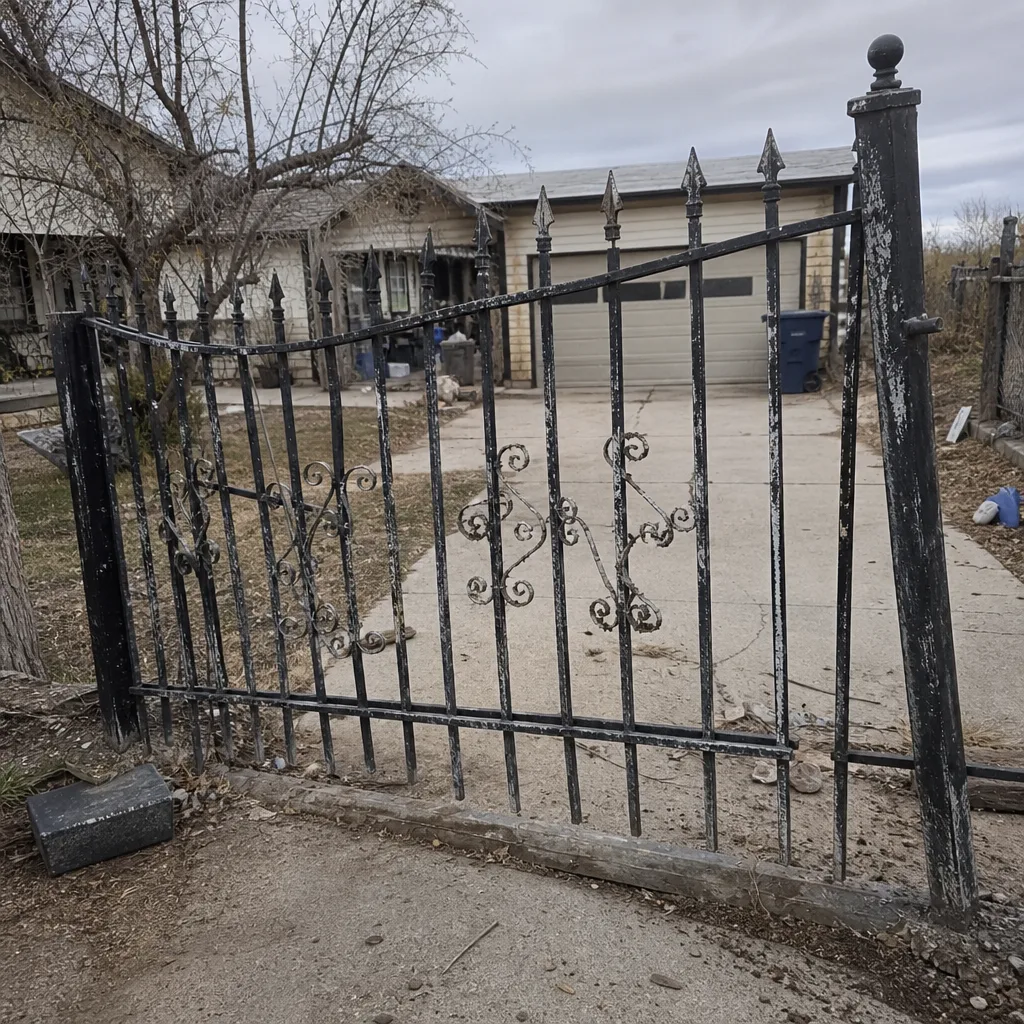 Before
 After
 Before
 After
 Before
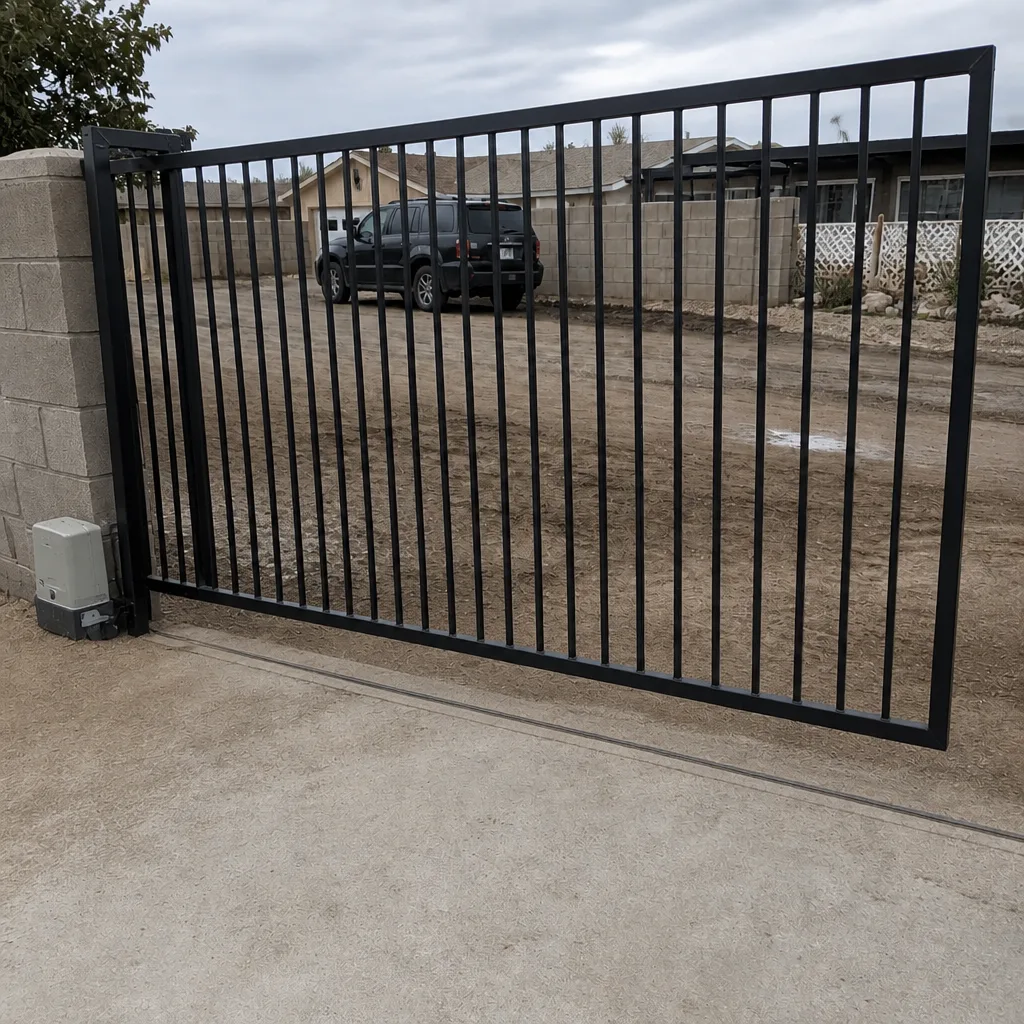 After
When to Call a Professional
Call a professional when the sound is new, when the timing has changed, when the gate stops short, or when the operator smells hot. Those four things cover nearly every warning sign in this guide. If you’re not sure, the diagnostic visit is the cheapest way to find out and the only way to avoid paying emergency-weekend rates for a job that should be a scheduled fix. We offer free estimates in Winchester and a free second opinion on any written estimate you’ve already got from another shop. If your gate is stuck or unsafe, call us at (866) 984-8340. Repairs and diagnostics are our daily work, and a live person answers the phone 24 hours a day. Most repair jobs are completed in a single visit, with the price settled and agreed before a single bolt is turned. Our technicians have up to 13 years of experience, and every job is backed by our written 90-Day Done Right Promise.
Frequently Asked Questions
Most gate motor repairs in Winchester run somewhere in the low-to-mid hundreds for common fixes like a start capacitor, limit reset, or safety edge repair, and higher for gearbox or full motor replacement. The exact figure depends on your opener brand and what’s actually failed, which is why we quote in person rather than over the phone. You get the price up front, in writing, agreed before we start. Call (866) 984-8340 for an exact quote – estimates are free.
Yes. Stuck gates, gates that won’t close, and openers buzzing under load are the calls we prioritize, and we answer a live person 24 hours a day, 7 days a week. Most stuck-gate repairs are completed in a single visit. If the gate is jammed, kill the power at the breaker and call us before you cycle it again. Call (866) 984-8340 – a live person will pick up.
Yes, and it’s the cheapest warning sign to act on. A hesitation at the start of travel almost always means the start capacitor is weakening. Replacing a capacitor is a small job. Replacing a motor that burned out under a weak capacitor is a much bigger one. If your gate has been hesitating for more than a couple of weeks, book a diagnostic before the motor stops entirely. Call (866) 984-8340 to schedule.
That pattern is a thermal overload, and it’s specific to Winchester’s summer heat. The opener is running hotter than it was built for, usually because it’s undersized for the gate or the housing is baking on a hot driveway. It’s a warning that the motor is being overworked and will eventually fail. A proper fix – upgraded openers, or a motor correctly matched to the gate – solves it once. Call (866) 984-8340 for a free estimate.
Yes. A gap at close is a safety and security warning, not a cosmetic one. It usually means the limits have crept from daily temperature cycles, and it can defeat your safety edges and let small pets slip through. The fix is a limit reset and safety edge re-verification with a tester, done in one visit. Don’t wait for it to get wider. Call (866) 984-8340 – estimates are free.
Yes. We’re trained and equipped on nine gate automation brands, including DoorKing, LiftMaster, Mighty Mule, FAAC, BFT, Linear, Viking, Ghost Controls and Elite, which means we can read the fault codes and know the typical failure patterns on your unit. That’s why most jobs are fixed on the first visit. If you’ve been told “we don’t work on those,” call us instead at (866) 984-8340 for a free estimate.
The Bottom Line
Gate openers don’t fail quietly. They send a hesitation, a slow-down, a grinding gear, a hot housing, or a gap at close long before they stop entirely. Reading those signs turns an emergency into a scheduled visit and turns a big bill into a small one. If your gate in Winchester has been trying to tell you something, listen to it, and then call a specialist who’ll read it properly. We do exactly that. Our team at Ironworks Gate Co. Winchester home is here for the diagnostic, the repair, or the replacement when it’s time, and every job is backed by our 90-Day Done Right Promise. Call (866) 984-8340 for a free estimate today.
Written by the team at Ironworks Gate Co. Winchester.