
Last updated November 18, 2026
 Wrought iron
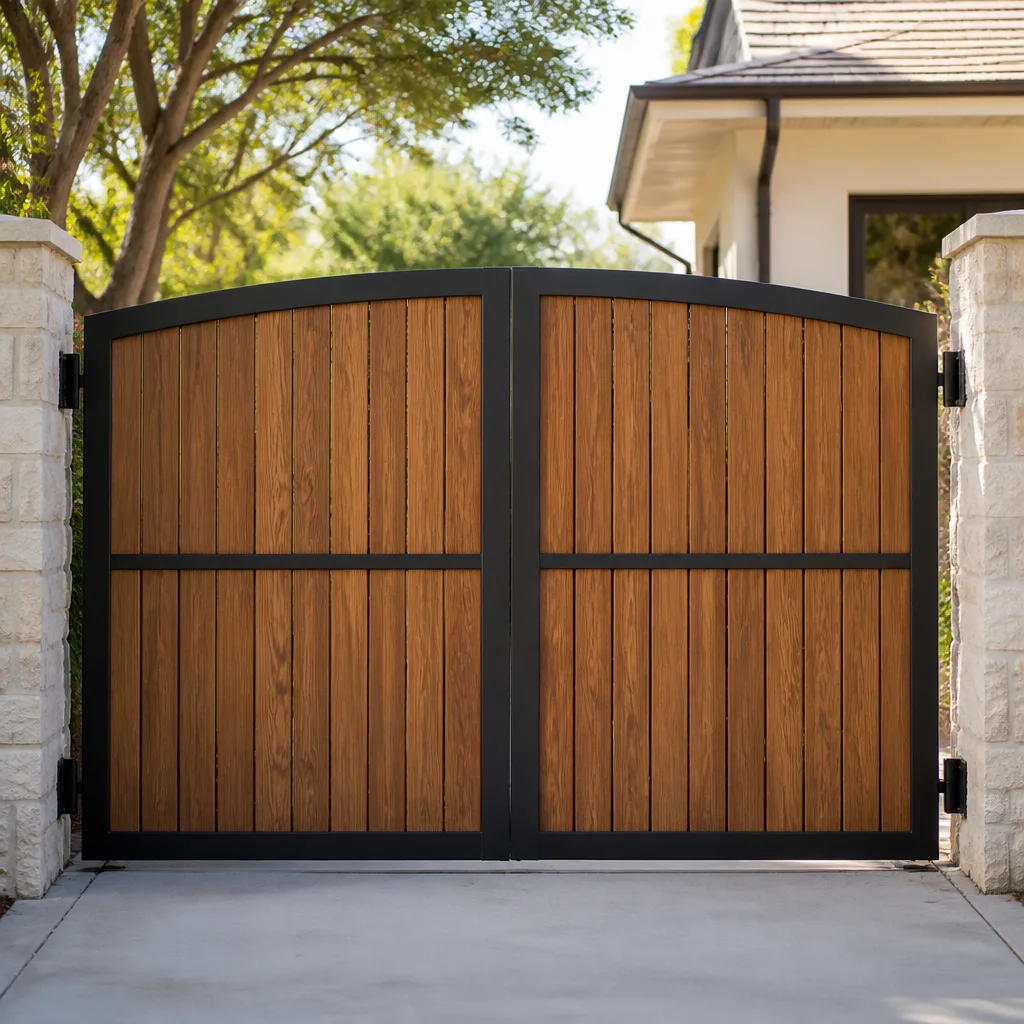 Wood & steel frame
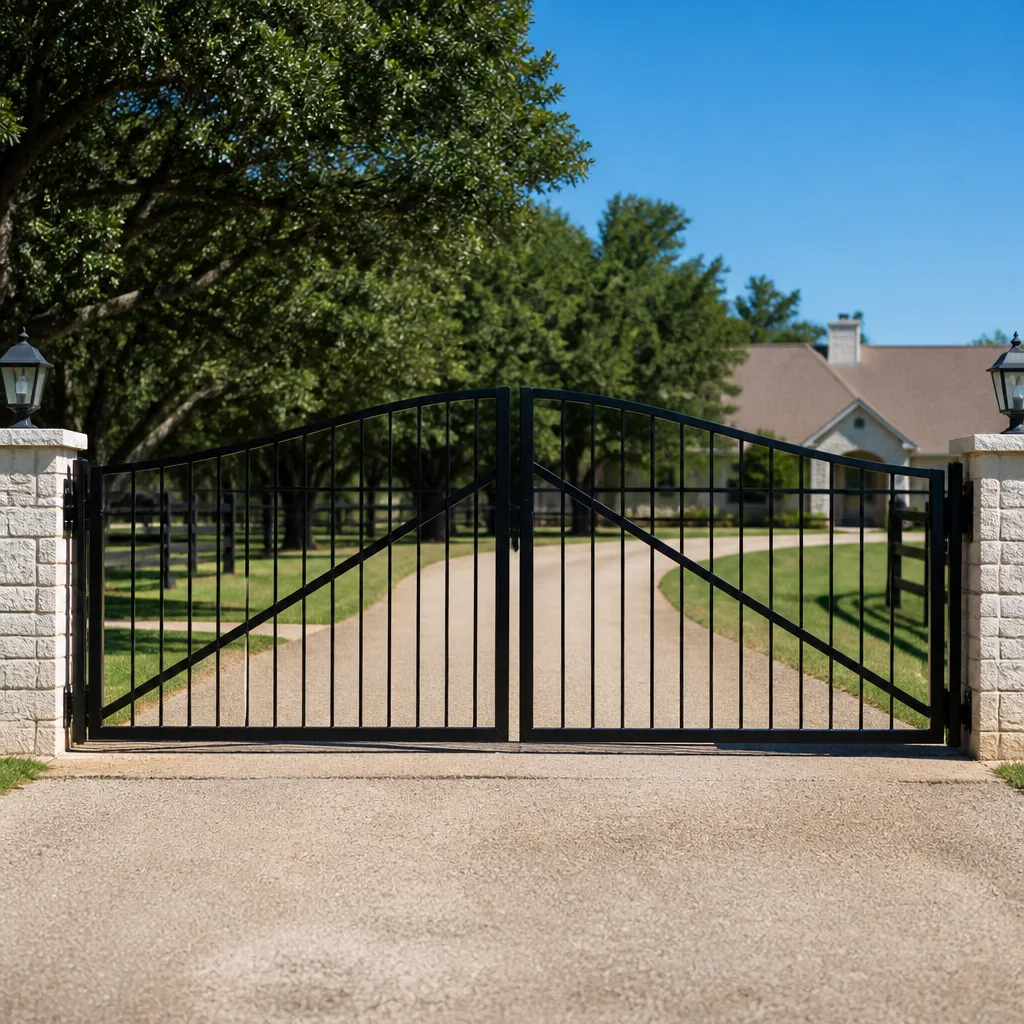 Farm & ranch
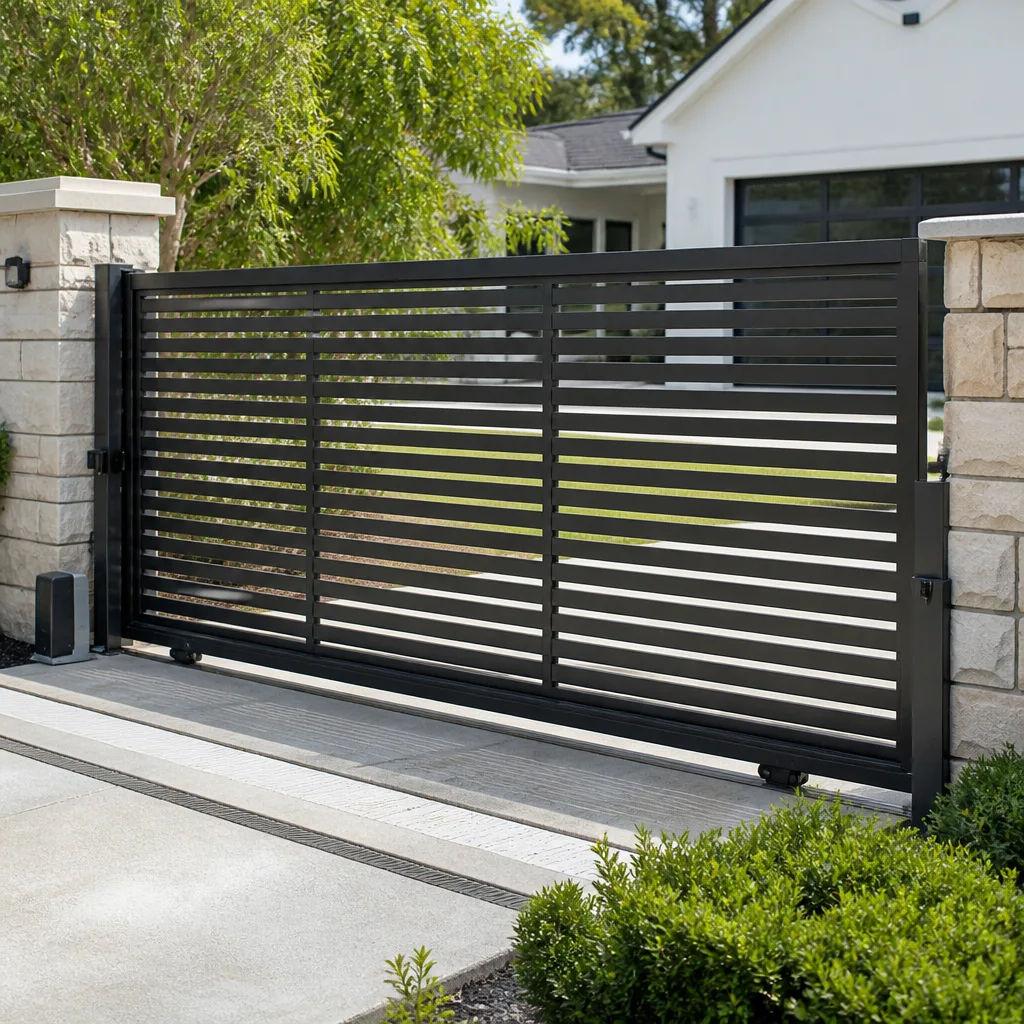 Sliding driveway gates
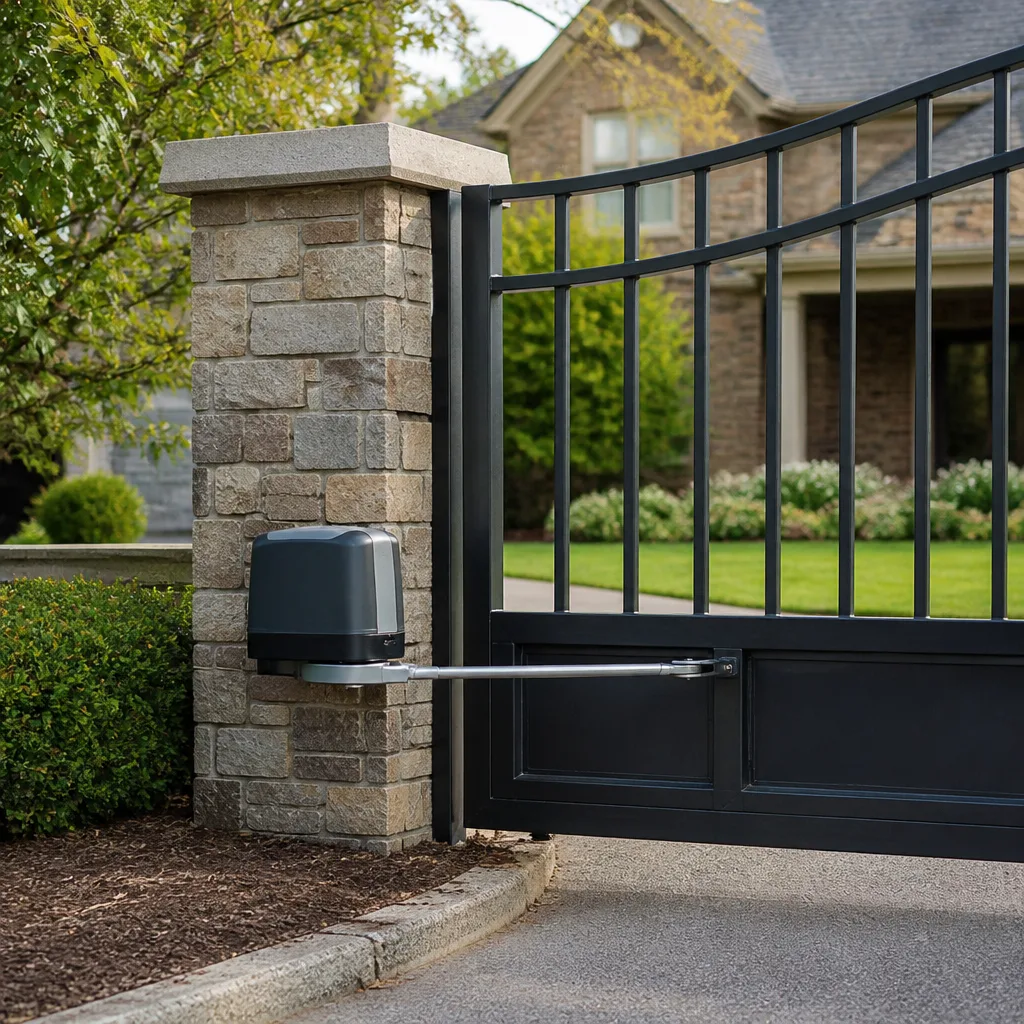 LiftMaster operators
Free on-site gate assessment - hinges, posts, and your LiftMaster or Nice gate operator checked before anything is quoted
The assessment is free and the quote is the invoice.
Get your free estimateGate Parts & Welding Troubleshooting: Common Problems and How to Fix Them
A gate that now drags the ground on the latch side almost never has anything wrong with the latch side. The problem is almost always a failing hinge or a shifting post on the hanging side, and the drag is just where the geometry ends up. We’ve seen that exact pattern on hundreds of driveway gates around Winchester, and it’s the single most useful thing to understand before you spend a dollar on repairs. This guide teaches you to work backward from what you see to what actually caused it, so the fix holds and the same problem doesn’t return in 18 months.
Quick Answer
Most residential gate problems that look like mysterious structural failures trace back to one of three root causes: a post that has moved, a hinge that has worn, or a weld that has fatigued. Diagnose the cause before touching the symptom. A gate that sags, drags, or grinds is telling you where the load has shifted, and a level, a tape measure, and a close look at the metal will tell you which of the three it is.
Styles & brands we work with
- Wrought iron
- Wood & steel frame
- Farm & ranch
- Sliding driveway gates
- LiftMaster operators
Table of Contents
- The Three Root Causes Behind 80% of Gate Problems
- How to Self-Diagnose: Structural vs. Hardware vs. Adjustment
- Why a Gate That Worked for Years Suddenly Sagged
- Reading a Weld: Failing Joint vs. Simple Corrosion
- What You Can Safely Adjust vs. What Needs a Welder
- Parts That Wear First on a Residential Gate
- Winchester Climate and What It Does to Gate Metal
- Common Mistakes to Avoid
The Three Root Causes Behind 80% of Gate Problems
In our experience across Winchester, four out of five structural gate complaints come down to the same short list. Knowing the three lets you stop guessing.
- Post movement. The gate hangs from one post and latches into another. When the hanging post settles, leans, or rotates, every measurement downstream shifts with it. The gate can look fine at the top and drag at the bottom, because the post has tipped a fraction of an inch over its full height.
- Hinge wear. Hinges carry the entire weight of the gate and take every swing. Over years, the pin wears into the barrel, the barrel wears into the plate, and the plate slowly enlarges its mounting holes. The gate drops a little each season. A grinding hinge is a hinge that has lost its lubricant and is now metal-on-metal.
- Weld fatigue. Welds fail at the joints that carry the most load: where the frame meets the hinge plate, where the rails meet the stiles, and anywhere a stress riser was built in. Fatigue is cumulative. A joint that has flexed a million times finally cracks, and the crack usually starts where you can’t easily see it.
Tell them apart by where the symptom shows. Post movement shows as a gate that’s out of level or out of plumb relative to the fence line. Hinge wear shows as a gate that drops over time and grinds when swung. Weld fatigue shows as cracks, rust streaks from a joint, or a gate that flexes more than it used to. Each has a different proper repair, and patching the wrong one is how a gate ends up back in the same condition.
How to Self-Diagnose: Structural vs. Hardware vs. Adjustment
You can sort most gate problems into one of three buckets with a 4-foot level and a tape measure, and you don’t need to touch a tool. Here’s the sequence we walk homeowners through on a first visit.
- Level the gate itself. Hold the level along the top rail and the bottom rail. If the gate is out of level, the problem is in the hanging side (post or hinge), not the latch side.
- Plumb the hanging post. Hold the level against the face of the hanging post. If the post is out of plumb by more than about a quarter inch over its height, that’s the root cause. Everything else is a symptom.
- Measure the gap top and bottom on the latch side. A gap that’s even top to bottom usually means the gate is square and the latch needs adjustment. A gap that’s wider at the top or bottom means the gate has racked.
- Measure diagonals. Measure corner to corner across the gate frame both ways. Unequal diagonals mean the frame is out of square, which points to weld fatigue or a bent frame member.
- Check hinge play by hand. Lift the gate slightly at the latch end. Any movement at the hinge that isn’t the gate swinging means worn hinges.
If the post is plumb and the gate is square and the diagonals match, you’re looking at a hardware or adjustment issue, which is often a Saturday job. If any of the first four checks fail, you’re looking at a structural problem, and that’s welder territory. Winchester’s clay-heavy soils shift seasonally, so post movement is more common here than in sandier parts of the valley, and a plumb check is the first thing we do.
Why a Gate That Worked for Years Suddenly Sagged
A gate that sags a little each year is a gate wearing gradually. A gate that worked fine last spring and doesn’t close this spring almost always experienced an event. Three events account for nearly all the sudden sags we see in Winchester.
- Soil shift from water. A downspout redirected, a sprinkler head moved, a winter of heavy rain, or a slow irrigation leak at the base of the hanging post all soften the soil and let the post settle or rotate. Even a quarter inch of movement at the base becomes half an inch at the gate’s free end.
- Impact. A vehicle backing into the gate, a delivery truck clipping the swing, or a teenager using the gate as a brace. Impact usually bends a hinge plate, distorts the frame slightly, or cracks a weld at the point of load transfer, and the gate starts hanging differently afterward.
- Water pooling at the post footing. If the ground around the hanging post stays wet, the footing gradually loses bearing. Poor drainage is the most overlooked cause of gate failure we see on older Winchester properties.
This is why we always inspect the ground before inspecting the gate. If the soil at the base of the hanging post is soft, cracked, or unusually wet, the post has moved and the gate is telling the truth. Repairing the gate without addressing the water source is a temporary fix.
Reading a Weld: Failing Joint vs. Simple Corrosion
Not every rusty joint is a failing joint. Corrosion and fatigue look different up close once you know what to look for, and the difference matters for how you fix it.
Surface rust is the orange-brown film that forms on any unpainted steel gate exposed to weather. It sits on the surface, wipes off with a rag, and doesn’t affect the strength of the joint. Cosmetic rust on a sound weld is a maintenance issue, not a structural one.
Deep pitting is where the metal has actually been eaten away. Look for dark pits, flaking scale, or a joint that has visibly thinned. Pitting at a weld means the weld has lost metal and its load capacity has dropped. That needs attention from a welder, not a wire brush.
A failing weld usually shows as one or more of the following:
- A hairline crack in the weld bead or in the metal right next to the bead (the heat-affected zone)
- A rust streak running out from a joint, which means moisture has gotten inside the weld and the joint is wicking rust out through a crack
- Movement at the joint when you push on the gate frame
- A click or creak at a joint when the gate is swung by hand
- Paint or powder coat flaking away in a line along a joint, which often hides a crack underneath
Corroded fasteners are a separate problem from a cracked weld, and we treat them differently: a rusted hinge bolt gets replaced, a cracked weld at the hinge plate gets re-fabricated. If you can see rust streaks coming out of a weld on your gate, have it looked at. That’s the joint telling you it’s working on borrowed time.
What You Can Safely Adjust vs. What Needs a Welder
Homeowners ask us all the time which gate fixes they can handle themselves. There’s a clean line, and it’s about what happens if the repair fails under load.
Safe to adjust yourself
- Hinge bolt tension. If your hinges have adjustable bolts, tightening a loose one is fine. Don’t over-tighten, and don’t strip the bolt head.
- Drop rod alignment. If the drop rod doesn’t drop cleanly into its receiver, minor realignment of the receiver sleeve is a reasonable homeowner task.
- Latch alignment. Adjusting the striker plate or latch receiver by a fraction of an inch is straightforward. Snug the fasteners, don’t overtighten.
- Lubrication. A light application of the manufacturer’s recommended lubricant to hinge pins at the start of each season extends hinge life noticeably.
- Removing surface rust and repainting. Scuff, treat with a rust converter, and repaint. Cosmetic, and safe.
Needs a welder’s hands
- Any cracked or broken weld. A homeowner-fabricated repair with a hardware-store bolt or a bracket is a temporary patch, and the gate will fail again at the same spot.
- Post resetting. Pulling a post, re-pouring a footing, and re-plumbing the hang line is a job that needs equipment, materials, and the knowledge to set the post so it doesn’t move again.
- Frame straightening. Heating and working a bent or racked frame back to square is a controlled process. Bending it cold risks cracking welds.
- Hinge replacement when the mounting is compromised. If the hinge plate has torn out of the frame or the mounting holes are wallowed out, the repair is welding, not tightening.
Age of the gate doesn’t change the line. We’ve serviced 40-year-old gates in Winchester that only needed lubrication and a hinge replacement, and we’ve serviced 6-year-old gates that needed post resetting because the footing was undersized. What matters is the root cause, not the calendar. Our gate repair in Winchester team works through the same three-bucket diagnosis on every call.
Parts That Wear First on a Residential Gate
If you’re going to watch a few things on your gate, watch these. They’re the parts that carry load and take the most abuse, and they’re where the diagnosis usually lands.
- Hinges and hinge pins. The highest-wear item on any swing gate. On a heavy gate they can wear out in 8 to 12 years. On a light gate with occasional use, they can go 20.
- Latch and striker plate. Wears whenever the gate isn’t quite aligned, which accelerates once the hinges start to go. A worn latch is often a symptom of a hinge problem.
- Drop rod and receiver. The holding mechanism on double swing gates. Corrosion, bent shafts, and misaligned receivers are common, especially on gates that get used as a leaning post.
- Hinge plates and their welds. The load-transfer point from the hinge into the gate frame. This is the number-one failure location for weld fatigue.
- Post footings. The least visible and most consequential. When the footing moves, every other part above it fights the geometry.
- Operator hardware on an automated gate. On gates fitted with a FAAC, BFT, Linear, or Viking operator, the gate-side mounting bracket and the arm connection are wear items alongside the gate hardware. We check both sides together on a service call, because a dragging gate puts extra load on the operator too.
If your gate has an automatic opener and the gate itself is dragging, the opener is often the first thing homeowners blame. It’s almost never the opener. The gate is the problem, and the opener is telling you so. That’s a conversation we have weekly in Winchester, and it’s usually good news, because a gate hardware repair is less expensive than an operator replacement. Our gate motor & opener in Winchester team can sort out which side of the system is at fault.
Winchester Climate and What It Does to Gate Metal
Winchester sits in a high-desert valley with wide temperature swings and alkaline soils. That shapes gate wear in ways that don’t always match national advice.
Summer surface temperatures on unpainted steel can climb high enough to make powder coat soften, which lets dust bond to the surface. Those 40-degree overnight drops in fall and spring cycle every joint on the gate through thermal expansion and contraction. Multiply that by years and you understand why weld fatigue is more common here than in mild coastal climates.
Alkaline soil matters too. Concrete footings and steel posts in contact with alkaline soils corrode faster at the ground line than they do in neutral soil. That’s one reason we inspect every post at the base as well as the joint where the gate meets the post. If the paint is intact above the ground line and gone below it, that’s soil attack, and a post that’s thinner at the ground line is a post that’s getting ready to move. On older properties around Winchester, we regularly see this pattern on gates that have been up for 15 years or more.
Wind is the other factor. A closed gate is a sail. A gate left open during a gusty afternoon gets caught mid-swing and puts the full load of the gust into the hinges and the stop. On a residential gate in Winchester, a proper hold-open or a soft-close operator is worth considering for that reason alone. Pair that with a seasonal tune-up and most gates never reach the failure point. Our gate installation in Winchester team thinks about load path and drainage at layout, which is why we push for a proper post footing on every new gate we install.
Common Mistakes to Avoid
- Adjusting the latch when the hinge is the problem. Homeowners see the gate missing the latch, adjust the latch, and buy three months of clearance before the gate sags again. Fix the hinge, then re-check the latch.
- Grinding a weld instead of repairing it. Grinding a hairline crack opens it up, and the joint fails under load. The right move is a proper bevel and re-weld, not a cosmetic grind-and-paint.
- Bending a bent frame back cold. Cold-working steel cracks welds. If the frame is out of square, straighten it under controlled heat and check every joint afterward.
- Ignoring drainage. Rebuilding a gate without addressing the pooled water at the post footing is a repair that will undo itself. In Winchester, we fix the drainage many times before we touch the gate.
- Using the gate as a brace. Leaning on the gate to garden, pushing it open with a shoulder, using the latch end as a step. Every one of those actions loads a joint the gate wasn’t designed to carry.
- Waiting for the drag to fix itself. It won’t. A dragging gate is putting load into the operator, the hinges, and the post every time it’s used. The longer you wait, the more parts need replacing.
- Patching a weld with a bolt-on bracket. A through-bolt repair on a structural joint works loose within a season. The gate ends up worse than it started, with the original weld still broken underneath.
See the difference
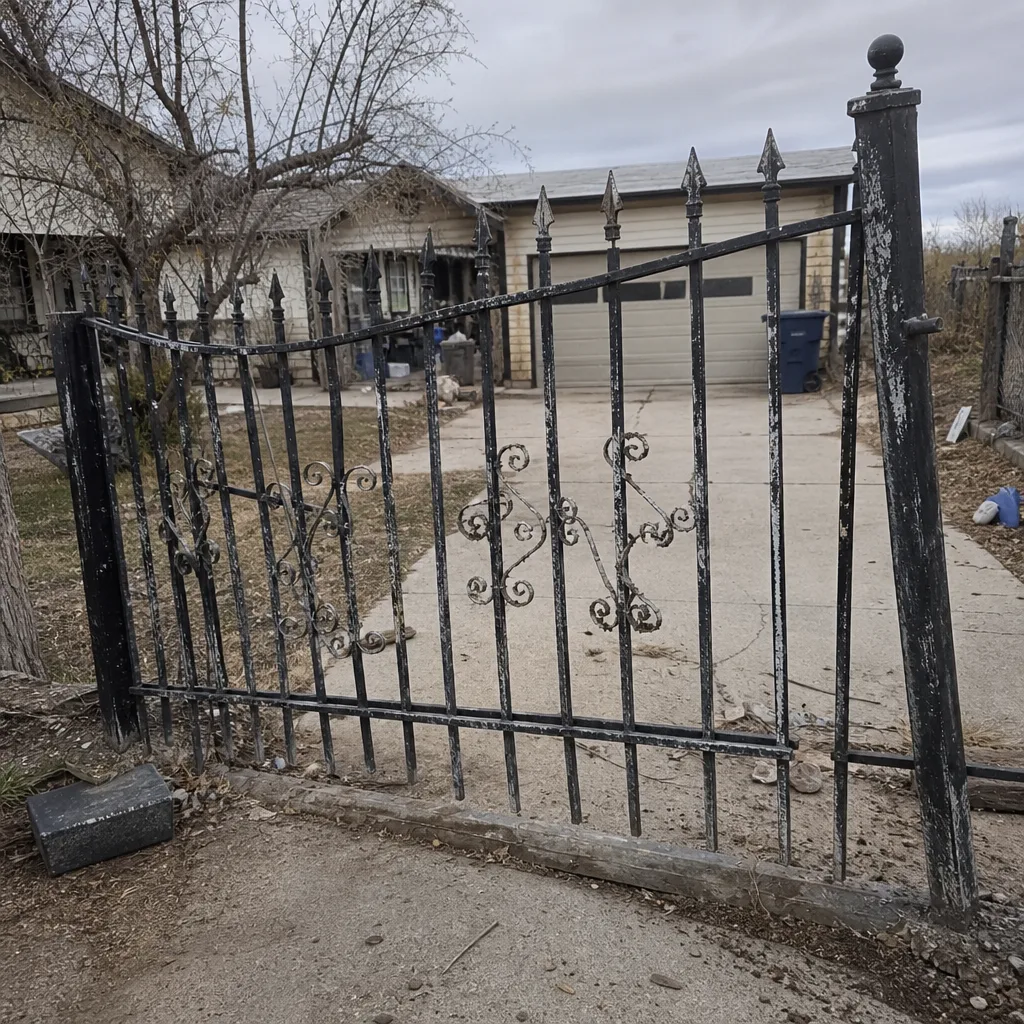 Before
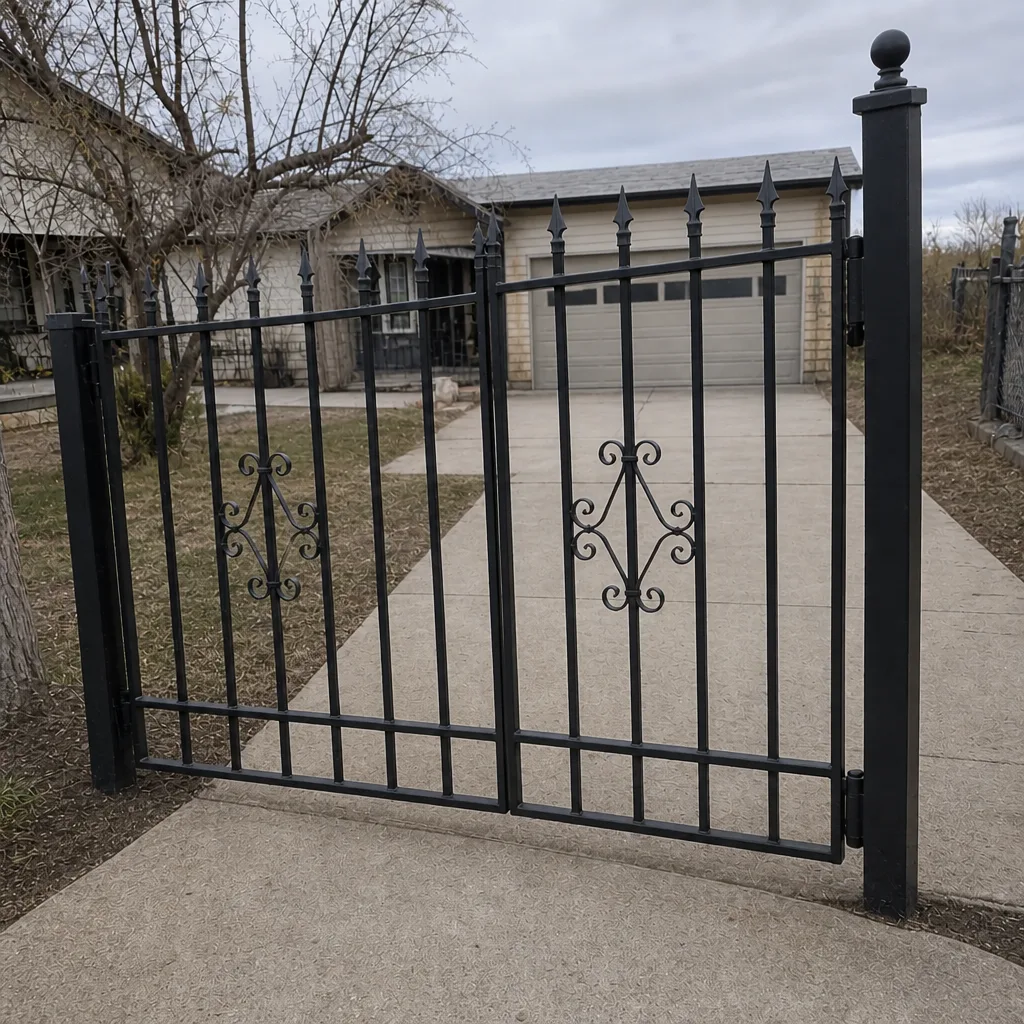 After
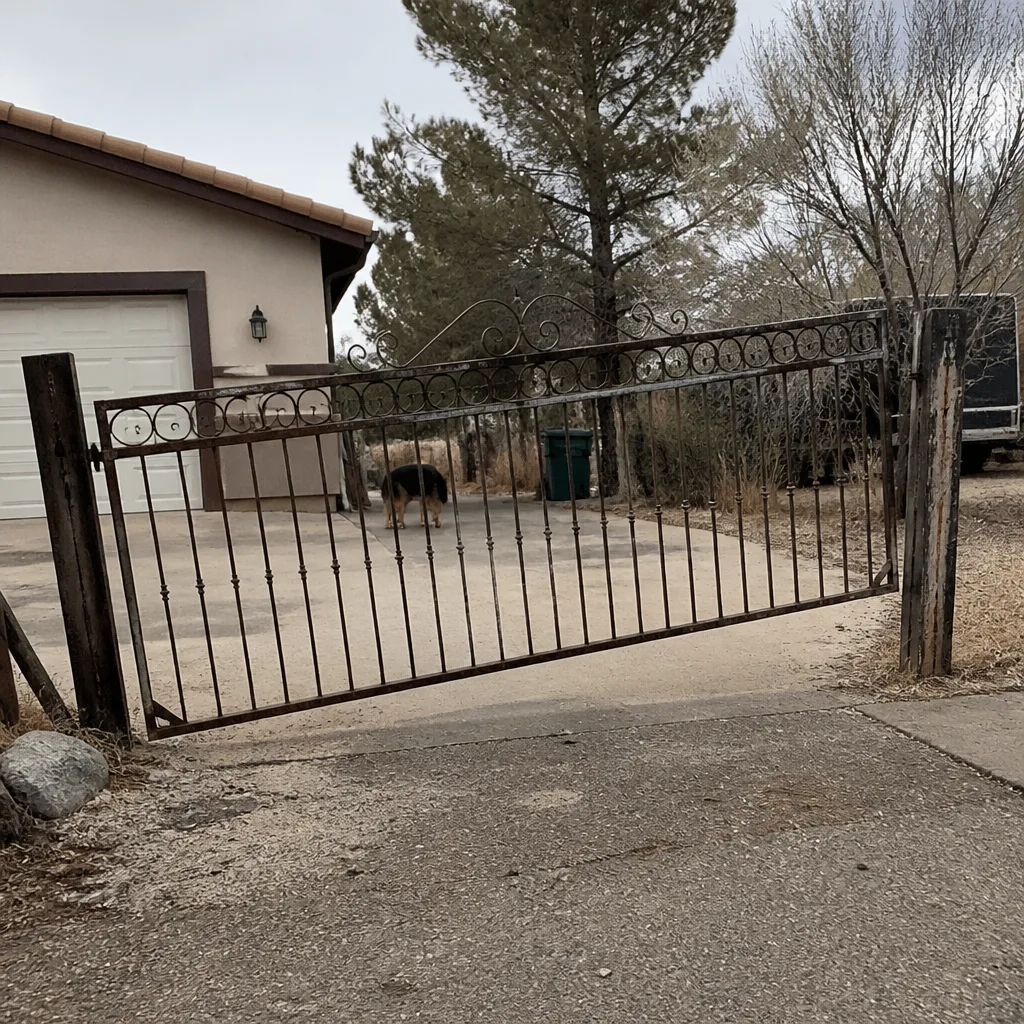 Before
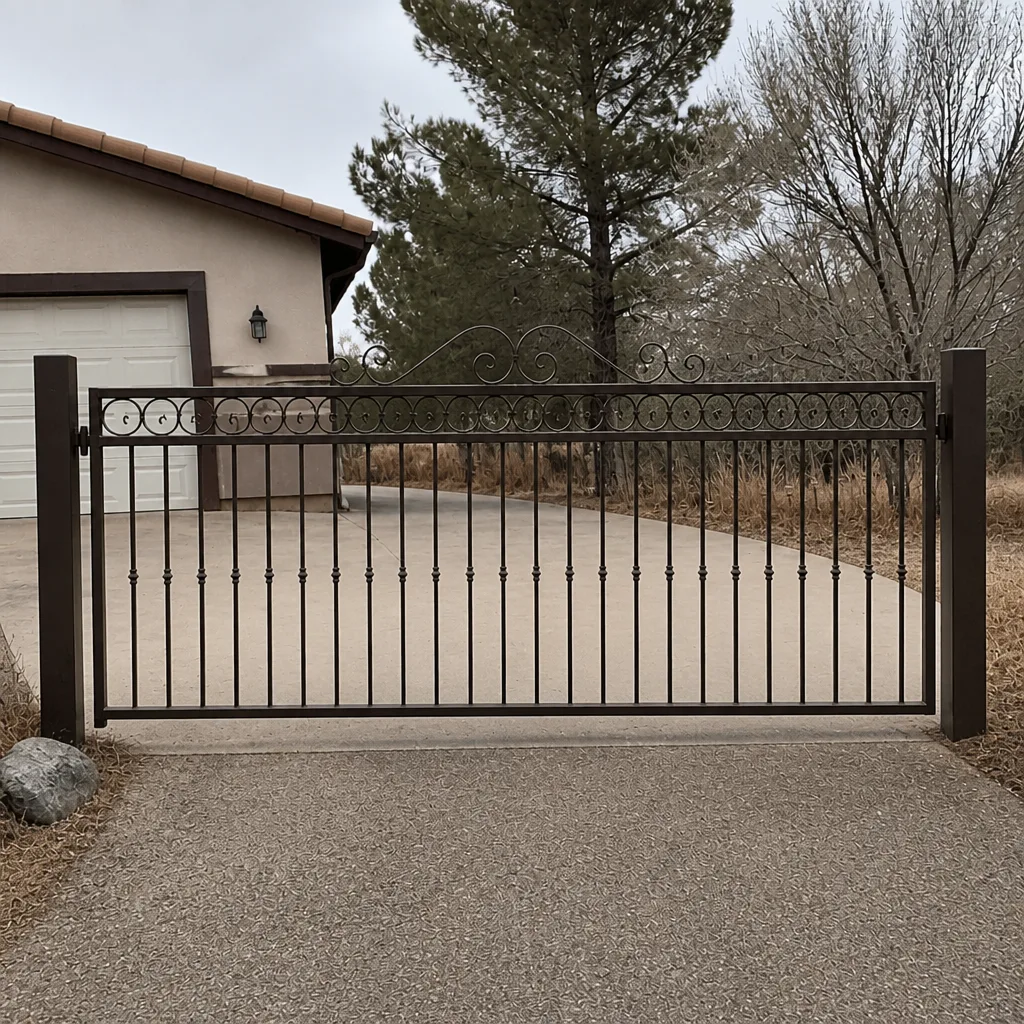 After
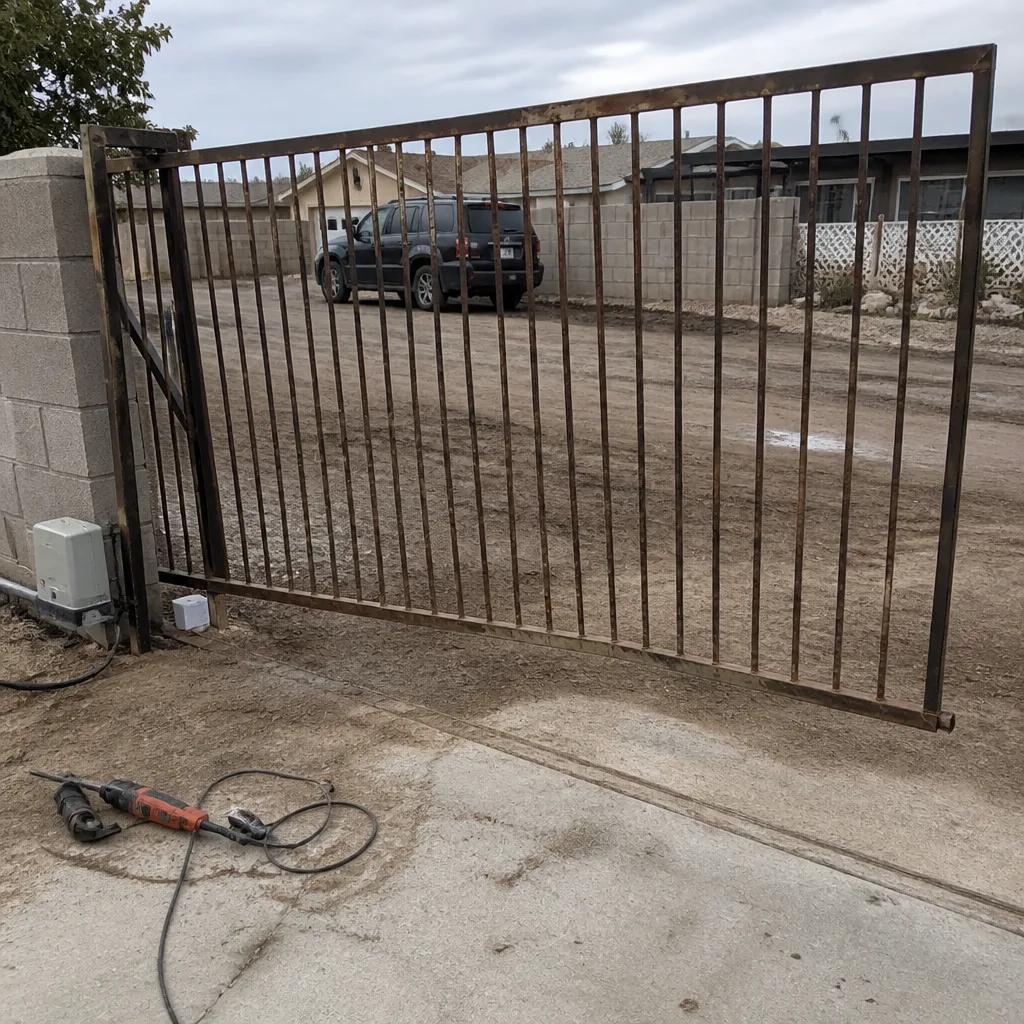 Before
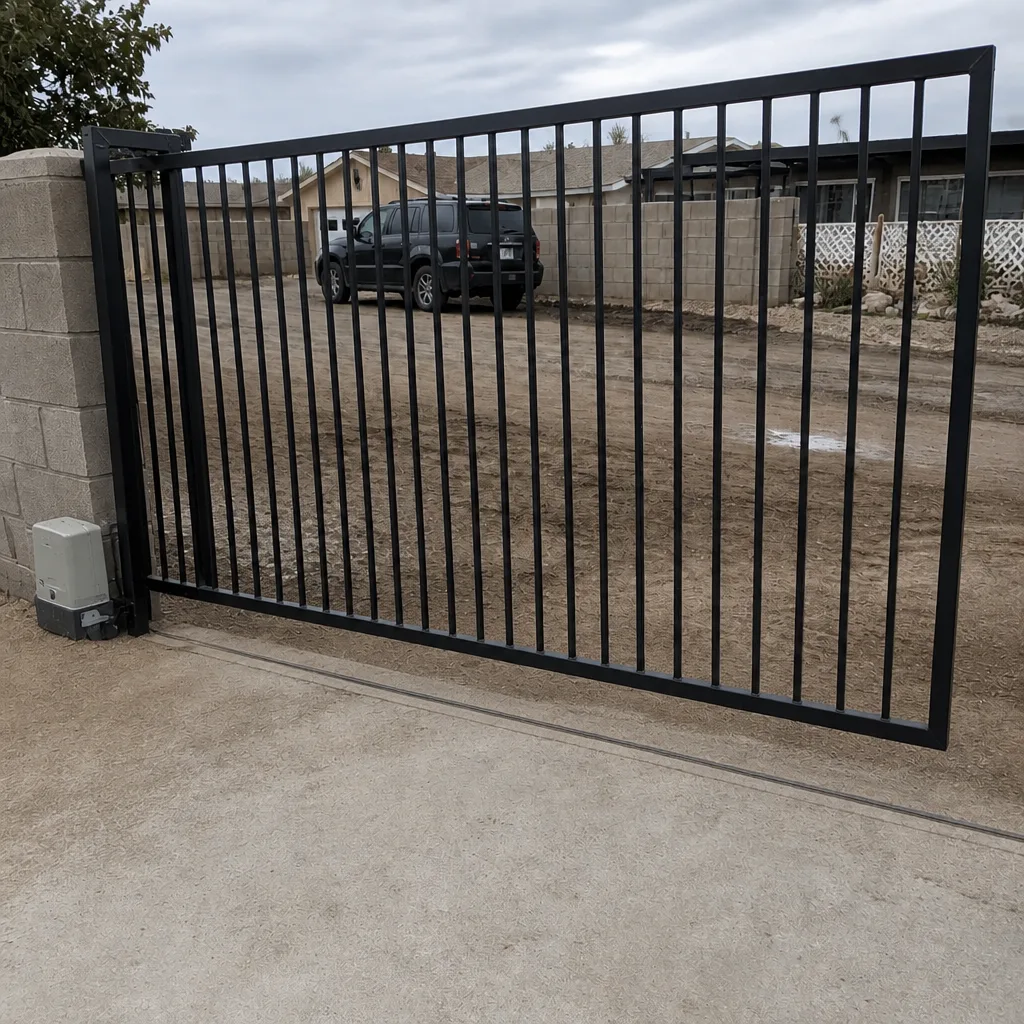 After
When to Call a Professional
Call a professional welder the moment a crack, a broken weld, a torn hinge plate, or a dropped post is in play. These are the repairs where a temporary fix costs you more than a proper one, and where a failed repair can drop a gate onto a car or a person. Structural welding on a hanging gate should never be a homeowner task. Our team is trained and equipped to handle the full load path, from hinges and welds to keypads and automation, and we’re certified to service nine of the major gate-automation brands including FAAC and BFT. Every job is backed by our 90-Day Done Right Promise in writing, and the price is settled upfront before we turn a single bolt. If you’re not sure which bucket your gate problem falls into, that’s exactly what a free estimate is for. If you’re in the middle of a repair and want a second look, we’ll give you a free second opinion on any written estimate. The Ironworks Gate Co. Winchester home page is the place to start, or call and we’ll walk you through the diagnosis.
Frequently Asked Questions
Welding repairs on a residential gate in Winchester typically run a few hundred dollars for a straightforward weld repair and go up from there when the repair involves resetting a hinge plate or a post. The exact price depends on access, gate size, and whether paint or powder coat needs to be touched up after the weld. We quote before we start, and the price you agree to is the price you pay. Call (866) 984-8340 for an exact quote, and we’ll give you a free estimate.
Sudden sag almost always means an event caused it, not gradual wear: soil shift from water, an impact, or water pooling at the post footing. In Winchester’s clay-heavy soils, soil movement after a wet season is the most common cause we see. We check the ground at the base of the hanging post first, because repairing the gate without addressing the underlying cause is a fix that won’t hold. Call us and we’ll look at the post and the soil before we recommend a repair.
Not by itself. Surface rust sits on top of the metal and doesn’t weaken the joint. Deep pitting, rust streaks coming out of a joint, or paint flaking away in a line along a weld is a different story, and those are signs a weld is failing or moisture has gotten inside. If you can see a rust streak running out from a joint, that’s worth a closer look from a welder. Call us and we’ll tell you which kind of rust you’re looking at.
No. A cracked weld on a hanging gate carries structural load, and a homeowner repair, whether a bracket or a hardware-store weld job, is a temporary patch that fails again. Structural welding on a gate needs a trained welder with the right equipment and the right process. This is the one gate repair where we want every homeowner to call us rather than take it on. Call (866) 984-8340 and we’ll get it looked at properly.
Hinge bolt tension, drop rod alignment, latch receiver alignment, lubrication, and cosmetic rust removal and repainting are all fine homeowner tasks. Post resetting, frame straightening, cracked weld repair, and hinge replacement when the mounting is compromised are not. The line is what happens if the repair fails under load. When in doubt, a free estimate from a trained eye will tell you which bucket you’re in.
Yes. We’re trained and equipped to service FAAC, BFT, Linear, Viking, and five other major gate-automation brands. On an automated gate, we check both the gate hardware and the operator, because a dragging gate loads the operator and a failing operator doesn’t cause gate sag. Nine times out of ten, the operator gets blamed for a gate problem that started on the gate side. Call us and we’ll tell you which side is the actual problem.
The Bottom Line
Most gate problems come down to one of three root causes: post movement, hinge wear, or weld fatigue. The symptom is a drag, a gap, or a grind, but the problem is on the hanging side. Diagnose with a level and a tape measure before you touch a tool, read weld rust carefully, and draw a hard line between what you can safely adjust and what needs a welder. The gates that last in Winchester are the ones where the root cause gets fixed the first time. Our technicians have up to 13 years of experience, we answer the phone around the clock, and every job is backed by the 90-Day Done Right Promise in writing. Call (866) 984-8340 for a free estimate and we’ll walk the gate with you.
Written by the team at Ironworks Gate Co. Winchester.