
Last updated November 18, 2026
 Wrought iron
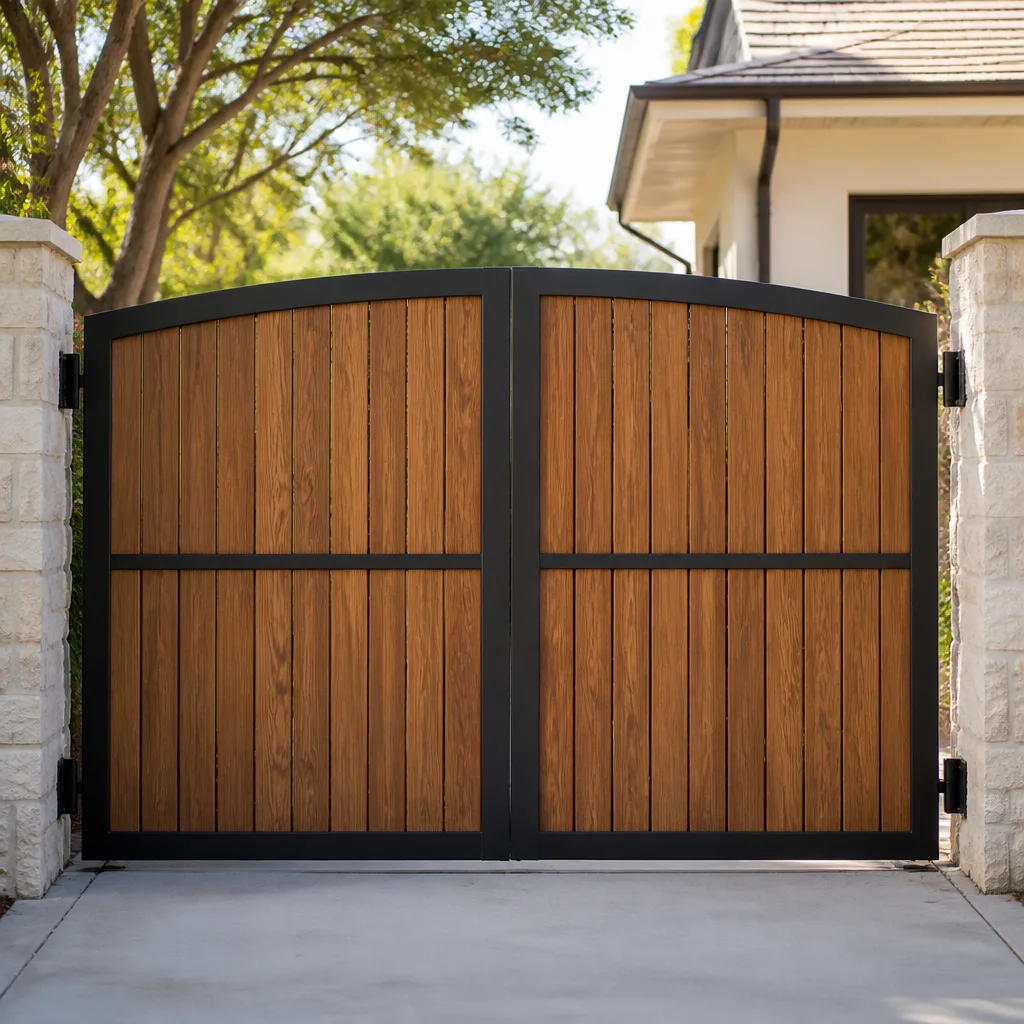 Wood & steel frame
 Farm & ranch
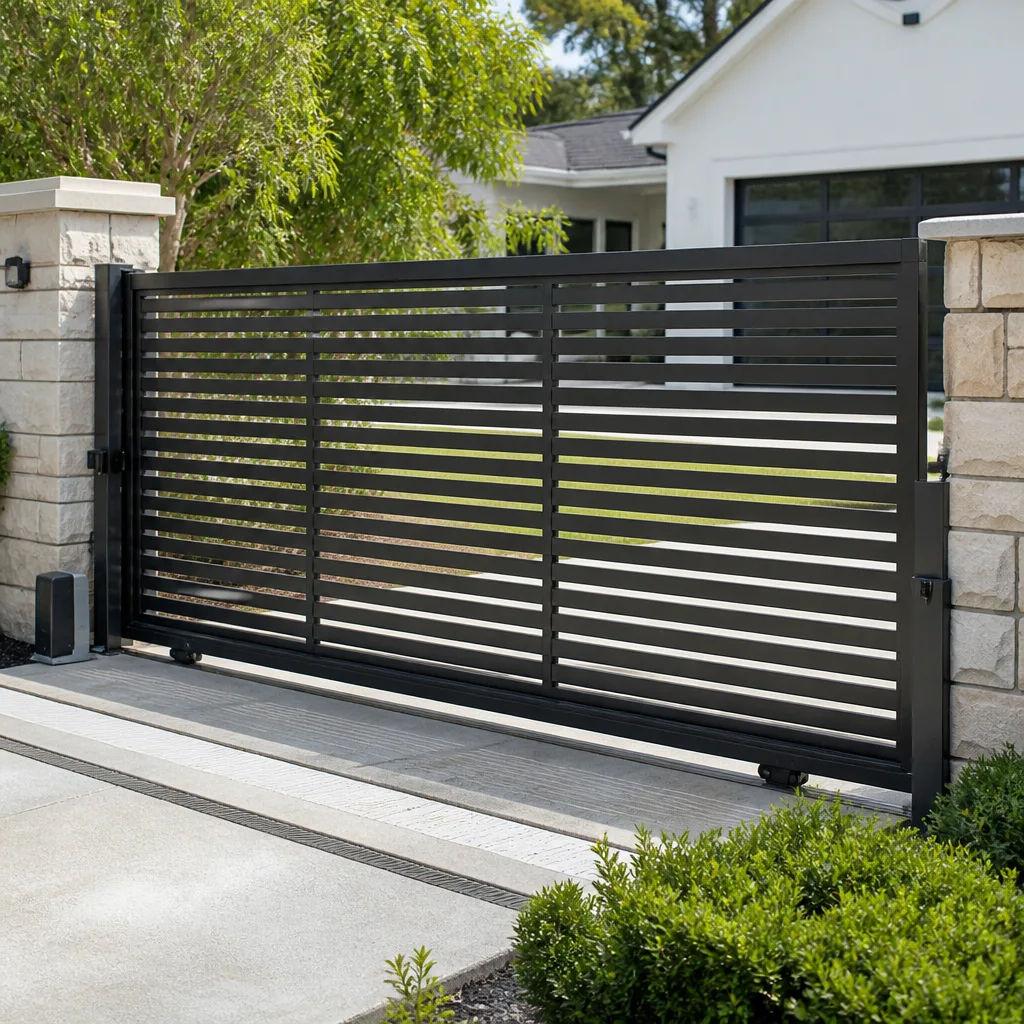 Sliding driveway gates
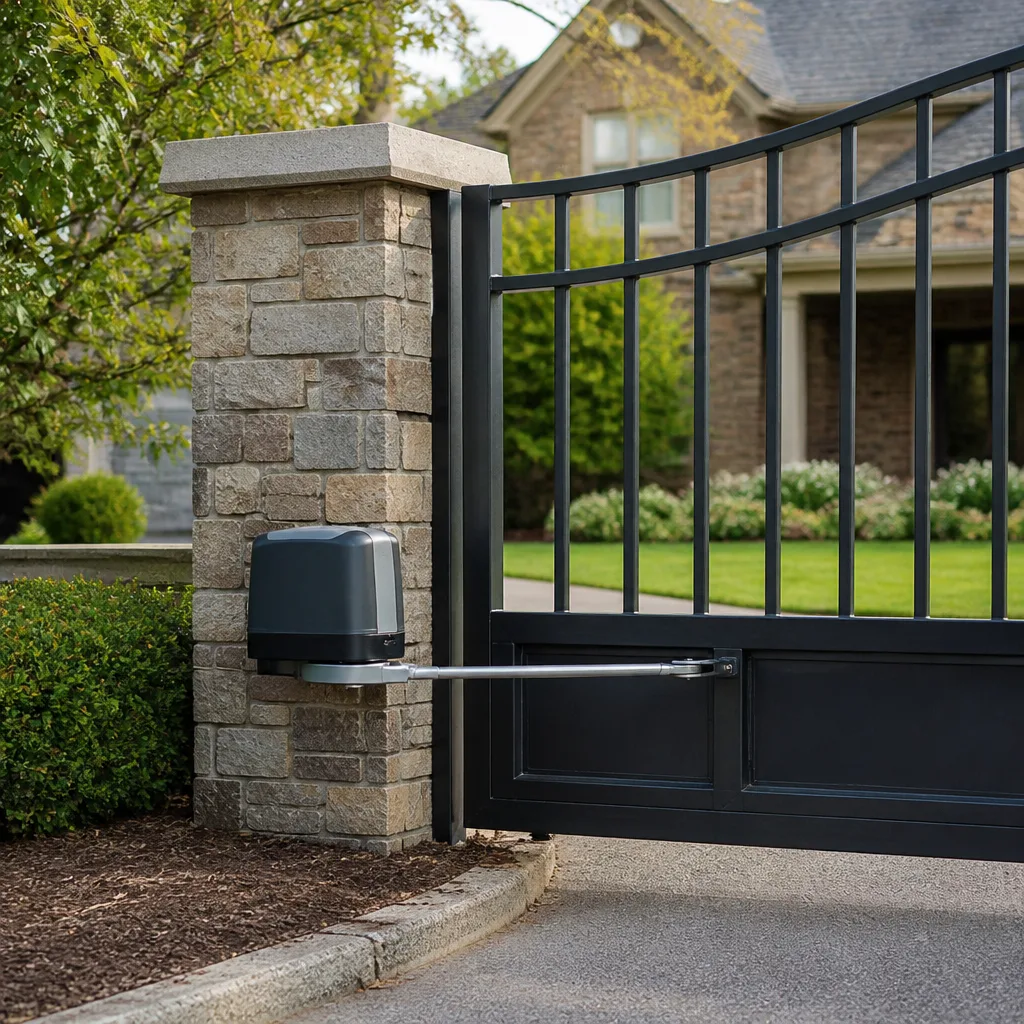 LiftMaster operators
Free on-site gate assessment - hinges, posts, and your LiftMaster or Nice gate operator checked before anything is quoted
The assessment is free and the quote is the invoice.
Get your free estimateDIY vs Professional Gate Repair: The Winchester Homeowner’s Decision Guide
Open the owner’s manual for almost any automatic driveway gate and you’ll find a section the manufacturers call homeowner-serviceable maintenance. Lubrication. Manual release procedure. Battery replacement for the keypad. What the manual doesn’t tell you, and what most repair guides skip entirely, is that you can void the manufacturer’s warranty on a $600 gate opener with a single adjustment as small as half a turn of the wrong screw, and the adjustment doesn’t have to be electrical to do it. We’ve watched Winchester homeowners learn that lesson the expensive way. This guide draws the line task by task, so you know exactly which jobs are worth doing yourself and which ones belong to a trained gate technician.
Quick Answer
Roughly 70% of driveway gate repairs we see in Winchester fall into two groups: jobs a careful homeowner can safely handle (latch adjustment, track clearing, battery replacement, wipe-down and lubrication) and jobs that cross a hard safety or legal line (anything involving the counterbalance springs, the 120V electrical supply, or the internal opener control board). Homeowner-safe tasks save money. The rest can void your warranty, endanger you or a family member, and, in Nevada, trail into licensed electrical work. The dividing line isn’t your skill level. It’s the task.
Styles & brands we work with
- Wrought iron
- Wood & steel frame
- Farm & ranch
- Sliding driveway gates
- LiftMaster operators
Table of Contents
- What Can You Safely Fix Yourself, and What Can’t You Touch?
- What Tools Do You Actually Need for Legitimate DIY Gate Adjustments?
- How Does Nevada’s Homeowner Electrical Exemption Apply to Gate Automation?
- Which DIY Gate Repairs Most Often Precede Emergency Calls?
- DIY vs Professional Gate Repair: What Do You Really Save?
- What Voids a Gate Opener Warranty in Winchester?
- How Does Winchester’s Desert Climate Change the DIY Calculus?
- Common Mistakes to Avoid
What Can You Safely Fix Yourself, and What Can’t You Touch?
The gate repair question breaks cleanly into three categories. Knowing which category a problem lands in answers the DIY question before you pick up a single tool. Here’s our working classification after years of service calls across Winchester:
Homeowner-safe tasks
- Latch alignment and hinge lubrication – loosening and re-centering a sagging latch is a wrench-and-screwdriver job any homeowner can do safely, and it’s the single most common “my gate won’t shut” call we get. Clear the track or path of debris first, then adjust.
- Clearing the gate’s travel path – rocks, dirt, and gravel kicked up by our desert wind are the number one cause of a gate that drags or reverses. Sweep, level the ground, and test.
- Battery replacement – keypad batteries, backup-battery in the opener housing (if the manual lists it as a homeowner item), and remote batteries. Straight swap, no tools beyond a small screwdriver.
- Exterior cleaning and light lubrication – wiping the gate and cleaning the opener’s control housing. Manufacturer-approved lubricant only.
- Manual release operation – knowing how to disengage the gate and swing it by hand during a power outage is critical and safe.
Licensed-electrician territory
Any work on the 120V supply circuit, the wiring between the house and the gate, the terminal block inside the opener’s power housing, or the breaker that feeds the gate circuit. That line is clear and we’ll walk through the Nevada rule below.
Professionally trained gate-technician territory
Counterbalance springs and the cables that ride on them. The internal control board and its DIP switch limits. The safety-edge sensor loop. The opener drive motor and gearbox. And any welding on the gate frame. These require training, specific tools, and often manufacturer-authorization to avoid voiding the warranty. If you’re unsure which category a problem lands in, that’s when to at least request a free second opinion on any written estimate before proceeding.
What Tools Do You Actually Need for Legitimate DIY Gate Adjustments?
A clean tool kit keeps DIY work safe. The tools needed for the tasks above cost about $75 to $150 if you own none of them, which matters when you’re weighing whether the DIY savings are real. Here’s the short list:
- Adjustable wrench and a socket set – 3/8″ and 1/2″ sockets cover most latch and hinge bolts on residential gate hardware.
- Phillips and flathead screwdrivers – for the latch plate and the opener’s exterior control cover (battery compartment only, not the power housing).
- Spirit level and 4-foot straightedge – for checking gate sag. A bowed gate pulls a latch out of true, and you’ll be chasing the same adjustment every month without fixing the cause.
- Manufacturer-approved gate lubricant – lithium or silicone grease, never WD-40 on the opener’s guides. WD-40 attracts dust and turns to sludge in our dry air.
- A multimeter – only if you intend to test a low-voltage command wire at the keypad (not the 120V power side). Most homeowners don’t need this.
The distinction between adjusting and repairing is everything. Adjustment is loosening a bolt and shifting a component a fraction of an inch. Repair is replacing or rebuilding a component, and for anything inside the opener or involving the spring, that’s a technician’s job. The Gate Motor & Opener in Winchester side of the work, in particular, needs someone trained on the specific brand’s control logic. Our team is certified on FAAC, BFT, Linear, and Viking systems among the nine brands we service, and each has its own quirks on limit adjustment. Trying to adjust a BFT limit switch without knowing the procedure is a fast way to break one.
How Does Nevada’s Homeowner Electrical Exemption Apply to Gate Automation?
Nevada allows homeowners to perform electrical work on their own single-family residence without a contractor’s license in some circumstances. That exemption gets misread by some homeowners thinking it covers gate wiring. It has real limits.
The homeowner exemption does not remove the requirement to follow local electrical code, obtain a permit where the local authority requires one, and pass inspection on permitted work. It also does not cover commercial or rental property. Critically, when hard-wired gate automation is installed, the connection to the home’s 120V circuit is a permanent electrical installation, and in most Winchester jurisdictions the permit-and-inspection requirement follows it. Getting that wrong is a code violation and can be a problem when you sell. If you’re uncertain about what your Clark County permit requires, ask before you do the work.
There’s an additional dimension. The manufacturer’s warranty does not care about state law. A gate opener’s warranty on a $600-$1,200 unit typically excludes damage from improper installation, incorrect voltage, or homeowner modification of the power side. Even where the state would let you do the wiring, the manufacturer will void the warranty when the motor fails if the installation doesn’t meet their spec. We’ve seen this happen on Linear and FAAC units specifically. The homeowner saved a few hundred dollars by wiring it themselves and lost the entire warranty when the board cooked six months later.
Bottom line: the homeowner electrical exemption is real but narrow. For gate automation, treat the 120V supply as licensed-electrician work. Call our number if you want the straight answer on your situation before you start.
Which DIY Gate Repairs Most Often Precede Emergency Calls?
In our experience across Winchester, three specific homeowner attempts account for nearly every “I started this myself and now it’s worse” call. The pattern is clear, and each one crosses a line the homeowner couldn’t see from the outside.
1. Counterbalance spring adjustment
The spring on a swing or sliding gate counterbalances the gate’s weight. It’s stored energy, under hundreds of pounds of tension. A homeowner who reads online that “you just tighten the turnbuckle” doesn’t know that if the spring releases during adjustment, the arm and the gate can move with enough force to break bones. There are no safe homeowner service steps on a torsion or extension spring. Full stop. If you think the spring is the problem, call us. This is the one category where we strongly discourage any homeowner involvement.
2. Limit switch and travel adjustment inside the opener
The limit switch tells the opener when to stop. Misadjusting it by 3/8″ is enough to send the gate slamming into the end post, stripping the gear, or driving the gate backward into the opener housing. On FAAC and BFT operators in particular, the limit settings are interactive and easy to lose track of.
3. Safety-edge sensor bypass
When a safety edge starts falsely triggering (a common issue with dust and heat here), the temptation is to disconnect or jumper it. Never do this. The safety edge is what stops the gate from crushing a child or a pet. A bypassed safety edge is a legal liability and a serious safety failure, and it will void the opener’s warranty immediately.
Each of these three is exactly the “adjustment” that looks small, costs nothing to try, and creates the liability problem the homeowner was trying to avoid. If any of these are on your list, that’s a call, not a project.
DIY vs Professional Gate Repair: What Do You Really Save?
Here’s the honest math. The savings question isn’t the sticker price difference between a service call and a Saturday of your own time. It’s the net after tools, time, and the redo risk. Let’s put the common tasks side by side, with Winchester-relevant figures.
- Latch adjustment: DIY – $0 in parts, 20 minutes of your time, small screwdriver. Professional – typical call-out of $95-$175. Net DIY savings: real, about $100-$150. Worth doing yourself.
- Path clearing, leveling: DIY – $20-$40 in gravel or crusher fines, an afternoon. Professional – $95-$175, and they’ll do the same shovel work. Net DIY savings: $70-$140. Worth doing yourself.
- Battery replacement: DIY – $10-$25 in batteries. Professional – $95-$150 plus the battery. Net DIY savings: $80-$130. Do it yourself.
- Limit switch adjustment: DIY – “free” until you strip a gear, then $250-$600 for a technician to replace it plus the trip charge. Professional – $120-$200 done correctly. Net DIY value: negative. This crosses the line.
- Spring adjustment or replacement: DIY – the risk includes serious injury and $400-$900 in subsequent repairs if the mechanism is over-tensioned or under-tensioned. Professional – a trained technician handles a spring adjustment as part of a broader service call. Not a DIY job.
- Control board replacement: DIY – $200-$400 board if you can source one, with a strong chance of voiding warranty. Professional – the technician diagnoses first so you’re replacing the right part. Not a DIY job.
The pattern is obvious once you see it. The tasks that save you the most by doing them yourself are also the tasks that are safe and warranty-neutral. The tasks you might be tempted to tackle because they “seem bigger” and therefore “seem worth the savings” are exactly the ones that put your warranty and your safety at risk. When weighing any repair over $250, the standing $50 off offer on those repairs makes the professional side cheaper than most homeowners expect.
If you want a straight answer on any specific diagnosis before you decide, our team is one call away. See the Gate Repair in Winchester service page for the full scope of what we handle.
What Voids a Gate Opener Warranty in Winchester?
A gate opener factory warranty is a contract. The manufacturer is checking for any indication the unit was modified, wired improperly, or stressed outside specification. The void triggers are consistent across the major brands:
- Improper electrical connection – wrong voltage, no dedicated circuit, no permit, or homeowner-installed wiring that doesn’t meet code. This is the most common void we see.
- Homeowner modification of the internal control board or limit switches – even a small DIP-switch change outside the documented procedure counts.
- Bypassed safety edge or sensor – any safety accessory removed, disconnected, or jumpered.
- Improper lubrication – the wrong grease (often WD-40 or a heavy automotive grease) on a drive or gear mechanism.
- Physical damage from over-tensioning, forcing the gate, or improper spring adjustment – over-tensioning a spring puts more stress on the opener arm than the design allows.
Every one of these is avoidable. The first-visit, do-it-right model, with pre-agreed pricing and a written 90-Day Done Right Promise, exists exactly so that a technician trained on nine automation brands is the one who sets limits and confirms the wiring. When the manufacturer has a documented proper installation on file, the warranty stands. That’s what you’re actually buying when you call us instead of opening the housing yourself. The Gate Installation in Winchester service is the foundation for this warranty protection.
How Does Winchester’s Desert Climate Change the DIY Calculus?
Our climate is hard on gate hardware, and it changes how often DIY work is needed. Winchester sits in the desert Southwest, with summer highs that push into triple digits, daily temperature swings of 30-40 degrees, and persistent wind that shifts dry soil and dust. That combination hits gate hardware in three specific ways.
First, dust and grit accumulate in exposed hinges, tracks, and opener guides faster than in coastal climates. The result is compressed maintenance intervals: our recommendation is lubrication and a visual check every 60-90 days in Winchester, not the annual interval many manufacturer manuals suggest for milder regions. Second, thermal expansion and contraction on metal gate frames loosens hinge bolts about twice as often as in stable climates. That’s why a homeowner who checked everything in April finds a dragging gate in September. Third, sun exposure degrades the plastic control covers and sensor housings on outdoor openers, so keypad and sensor replacement is more common here than in cooler areas.
The DIY opportunity here is real but requires a regular schedule. If you set a quarterly reminder to walk the gate line, lubricate the hinges, clear the grit, and check that every latch still catches cleanly, you’ll eliminate 60-70% of the average service calls we handle in Winchester. The climate also argues for a standing seasonal tune-up to capture what you might miss.
The other side of that coin: the desert environment stresses springs and opener motors more heavily, so failures when they happen tend to be more serious. When we see an over-tensioned spring in a Winchester home, it’s often a homeowner’s second or third attempt to compensate for seasonal sag. That’s a moment to call, not to try one more quarter-turn.
Common Mistakes to Avoid
- Treating the spring as “just another adjustment.” A counterbalance spring stores hundreds of pounds of energy. It is not a DIY task regardless of what a video shows. We’ve seen injuries and secondary gate damage from homeowner spring attempts in Winchester.
- Disconnecting a safety edge when it falsely triggers. In our dusty climate, safety edges trigger falsely more often, so the temptation is higher. Never bypass the safety edge. Diagnose the cause or call.
- Using WD-40 on the opener guide or gears. It attracts dust and turns to sludge in our heat. Manufacturer-approved lithium or silicone grease only.
- Wiring the 120V supply yourself assuming the Nevada homeowner exemption covers it. The exemption doesn’t remove permit, inspection, or the manufacturer warranty requirement. It’s a common mistake with expensive consequences.
- Adjusting the opener’s limit switch to “stop the gate from hitting the post.” The gate is hitting the post because it’s out of level or the path has shifted. Fix the cause, or the limit adjustment just adds a new failure mode.
- Skipping a post-rain inspection. The seasonal monsoon rains move soil around gate footings in Winchester and can pull a gate out of level in one storm. A visual check within a few days of a heavy rain saves an emergency call.
- Buying a replacement part on price alone. A $50 knockoff control board from an online seller may fail in weeks and void the warranty. On a Linear or FAAC opener, use the manufacturer’s part.
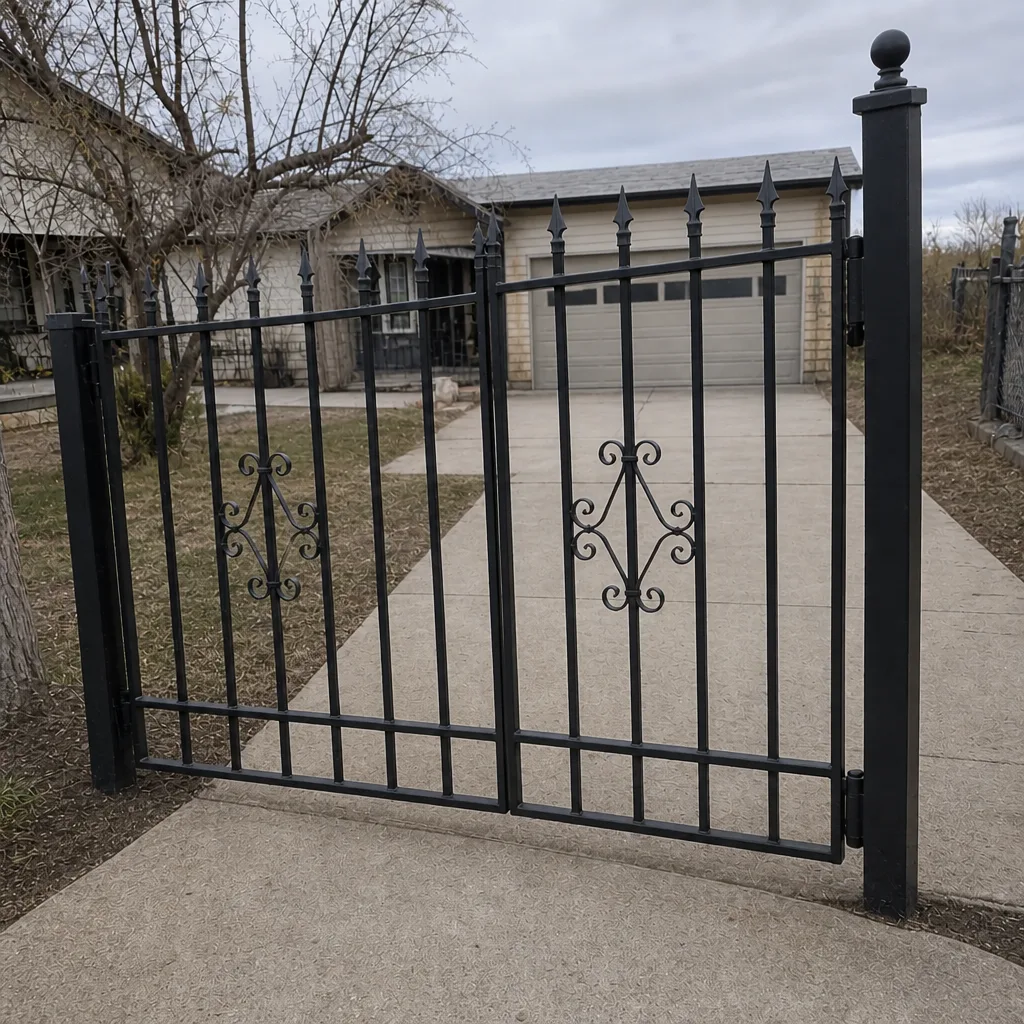
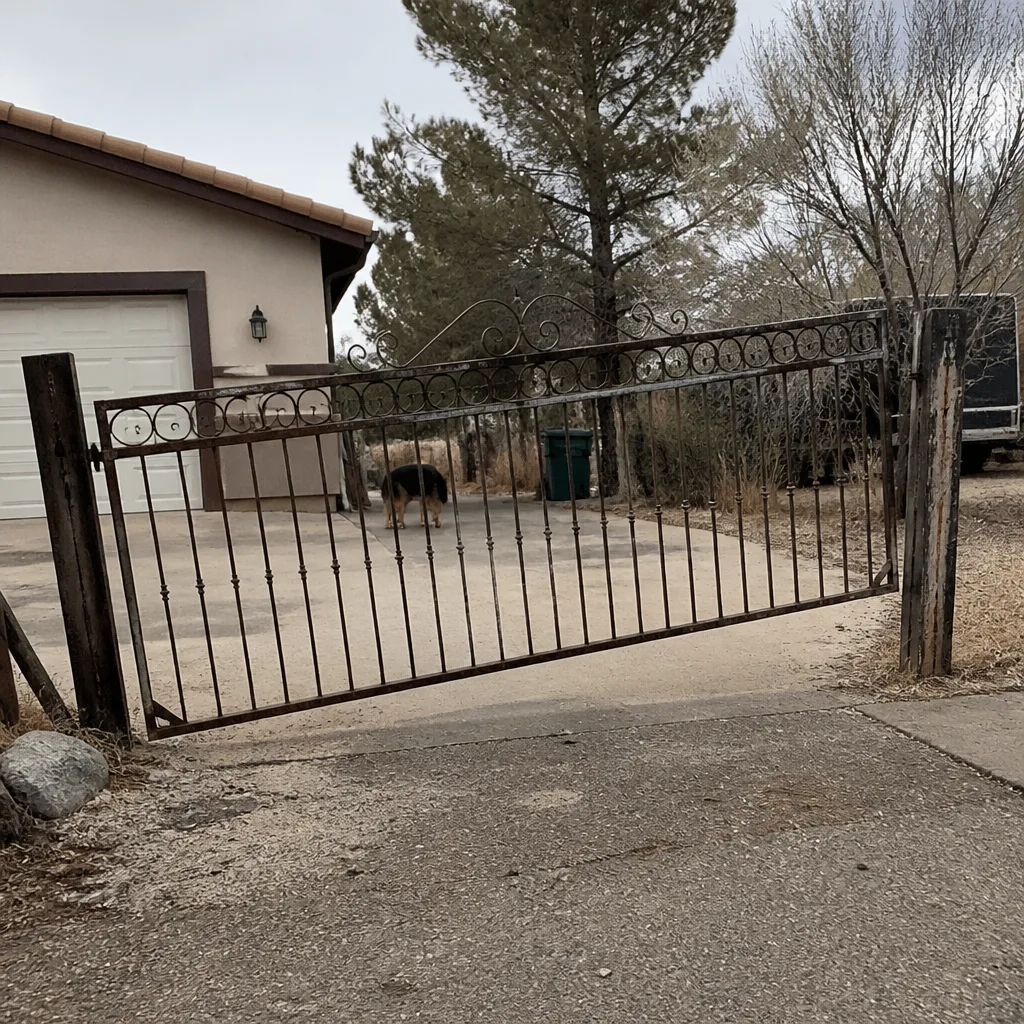
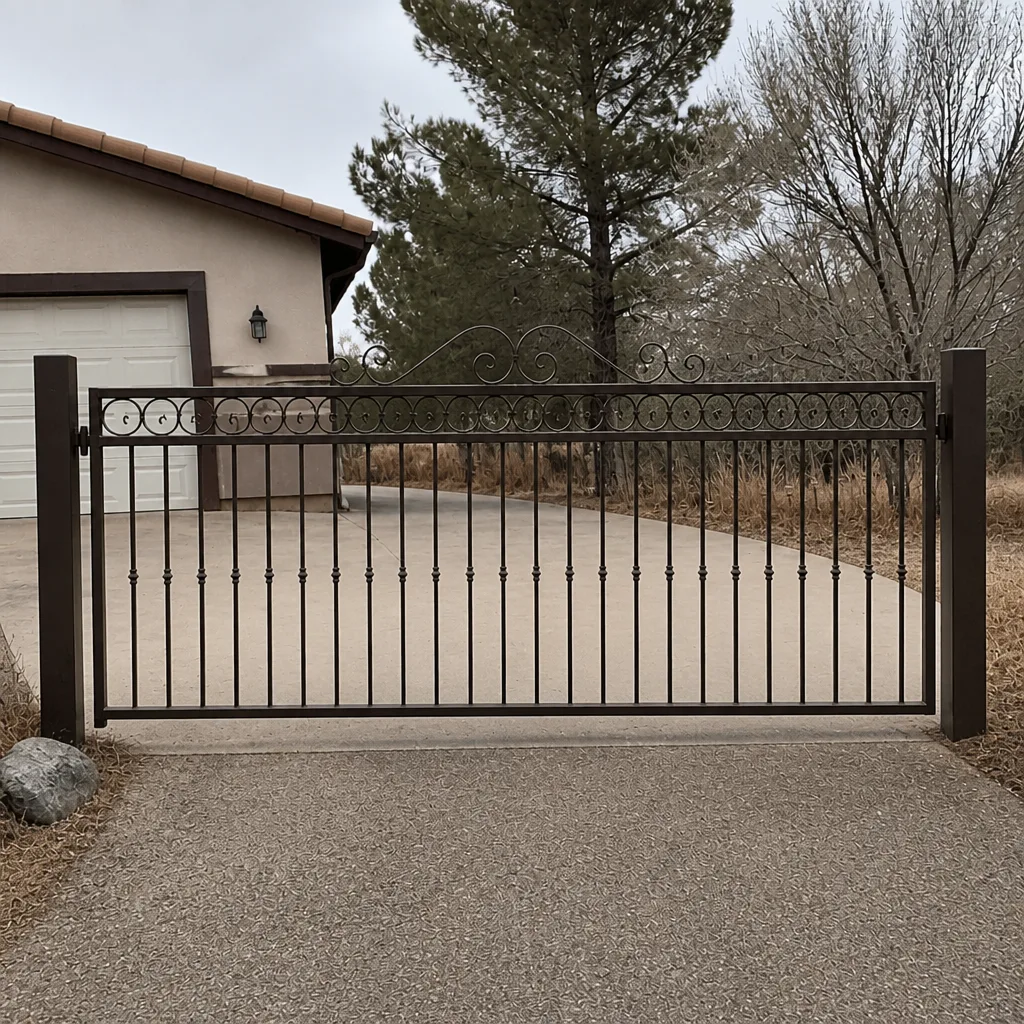
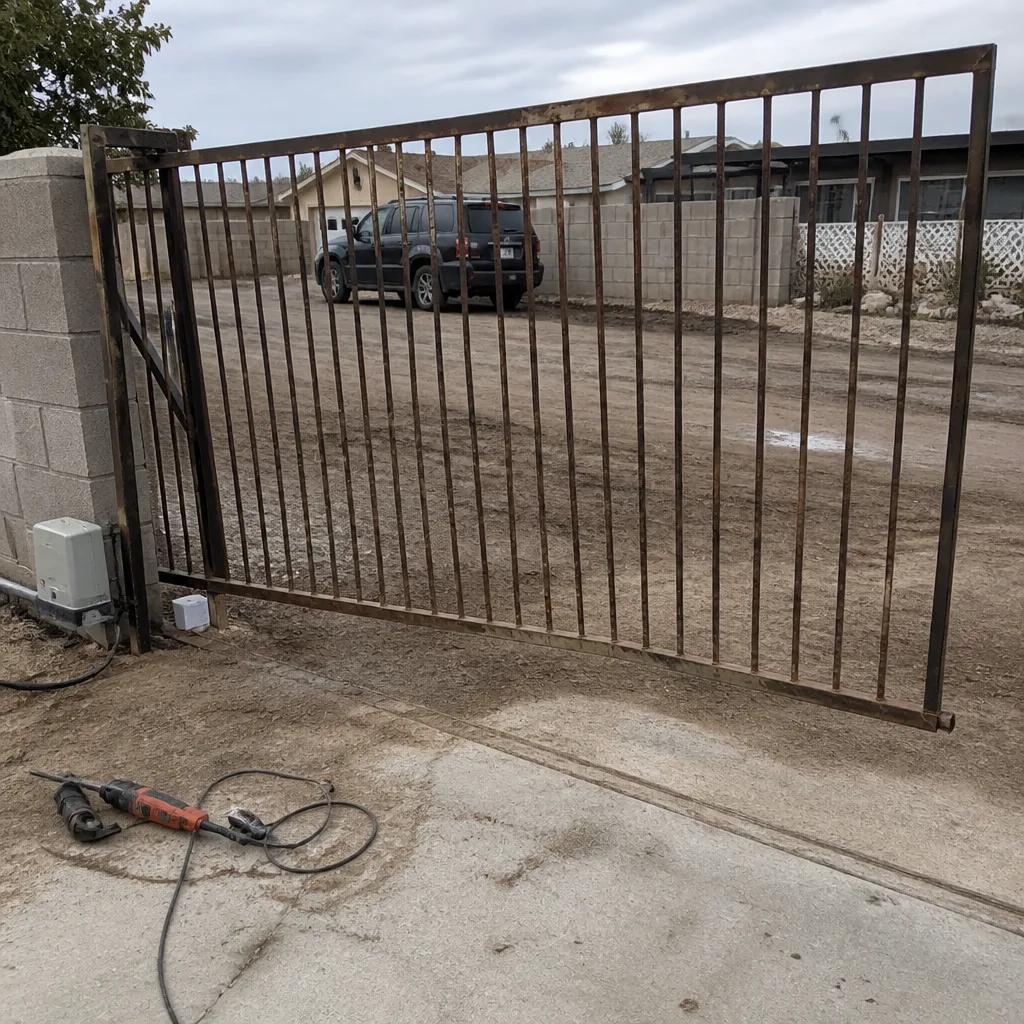
See the difference
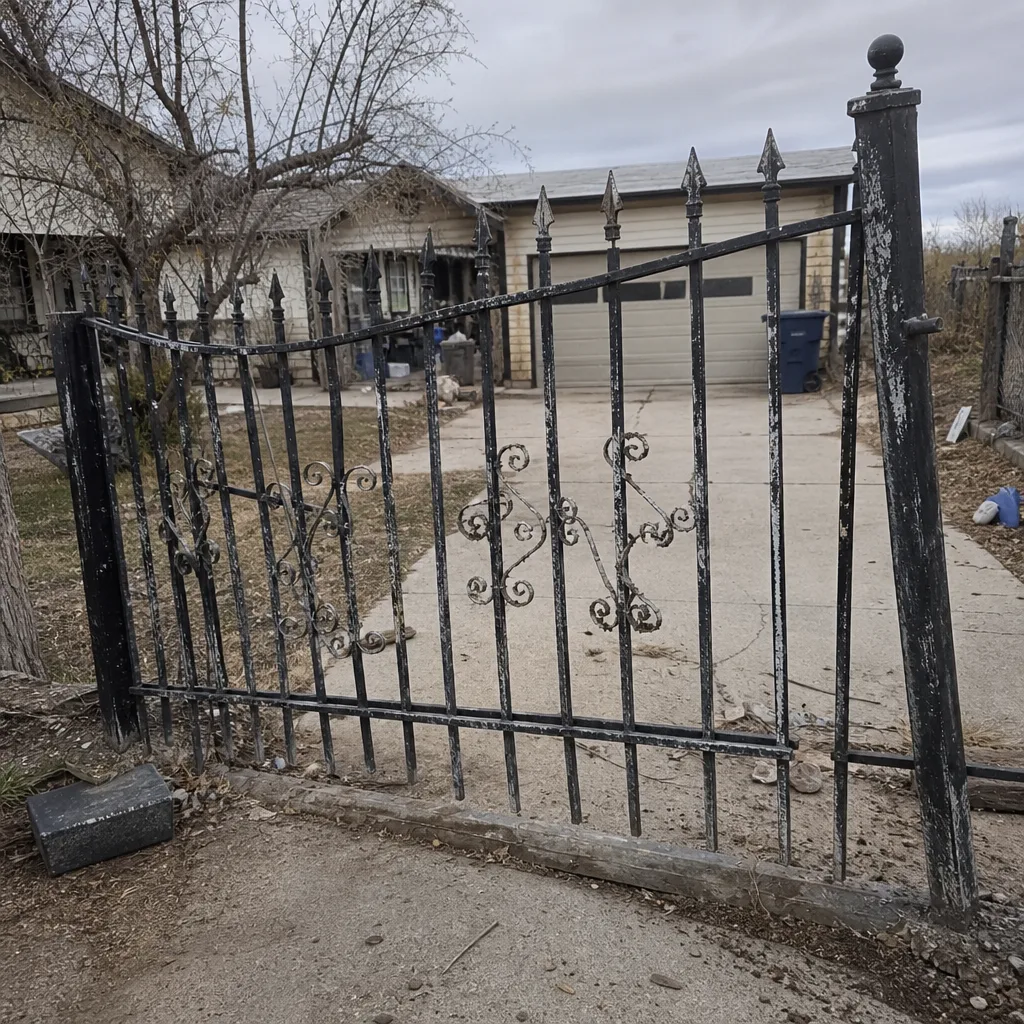 Before
 After
 Before
 After
 Before
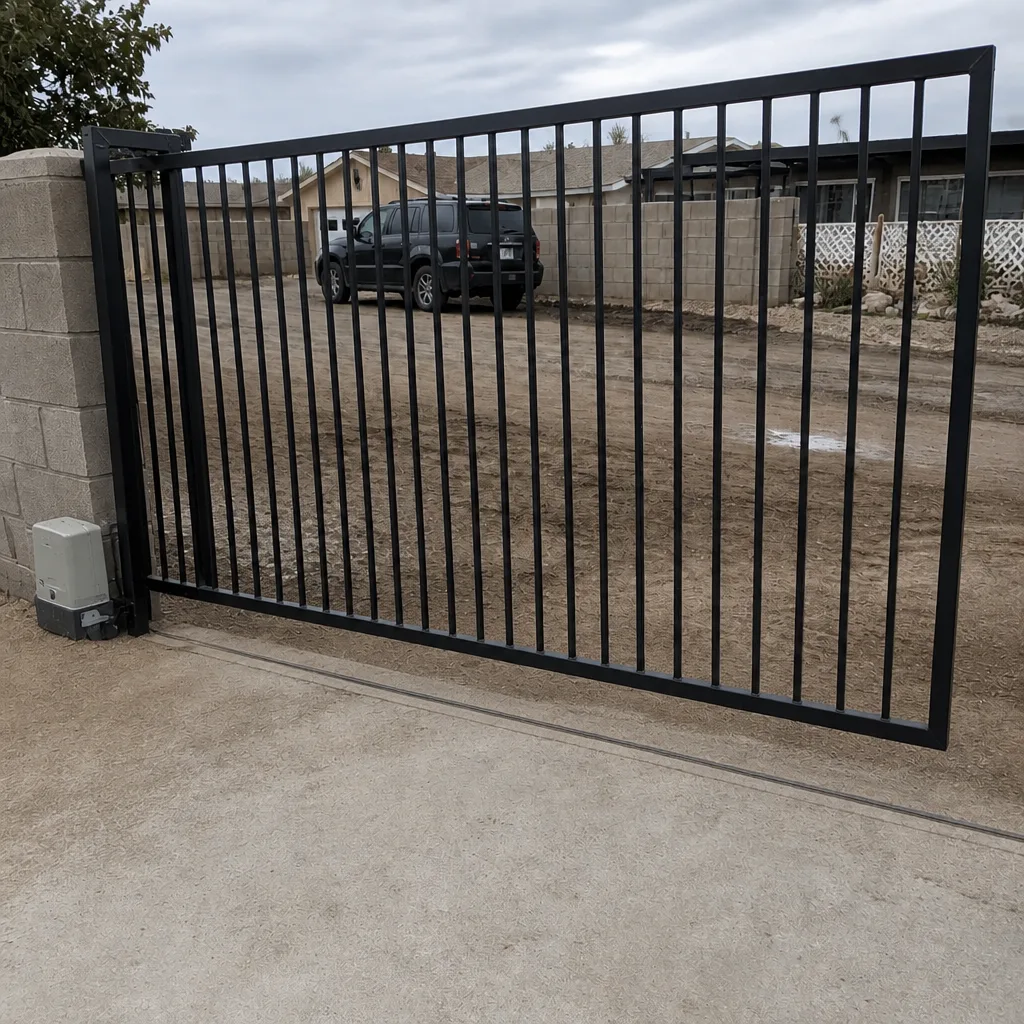 After
When to Call a Professional
Call a professional gate technician for anything involving the counterbalance spring, the internal control board, the safety-edge wiring, the 120V power supply, any welding on the frame, or any symptom you can’t reproduce reliably. Also call when the gate has become genuinely unsafe to operate (sagging, self-closing unexpectedly, or reversing intermittently), when you’ve already attempted an adjustment and it didn’t take, or when the gate is more than a few years old and you’re not sure of its maintenance history. Our team is certified on the major opener brands including FAAC, BFT, and Linear, and we’ve seen the full spectrum of DIY attempts. Ironworks Gate Co. Winchester offers free estimates in Winchester – call (866) 984-8340 for a straight answer on your specific job.
Frequently Asked Questions
No. Limit-switch adjustment is a professional task. A misadjusted limit can slam the gate into the post and strip the opener’s gear. It also may void the warranty on FAAC, BFT, and other major brands. A technician with brand-specific training sets limits correctly in a single visit. Call (866) 984-8340 for an estimate.
A service call for most common repairs in Winchester runs $120-$350 depending on the brand and part. A spring replacement runs higher. A DIY attempt that strips a gear or damages a control board pushes the final cost above $600. Our $50 off any repair over $250 standing offer makes the professional side cheaper than most homeowners expect. Call (866) 984-8340 for a firm price before any work starts.
Rarely. The Nevada homeowner exemption for single-family residences doesn’t remove the permit, inspection, or manufacturer warranty requirements. For hard-wired gate automation, that usually means licensed electrical work is required. Get a straight answer on your Clark County permit question before you start, and call us if you want help sorting it out.
Improper electrical connection, homeowner modification of the internal control board, bypassed safety edges, wrong lubricant, and spring over-tensioning are the five most common void triggers. All are avoidable with a single properly executed installation or service call. Call (866) 984-8340 and we’ll walk you through your specific opener.
Every 60-90 days for visual inspection and lubrication. Our desert heat, wind, and dust accelerate wear more than in milder climates, so an annual service isn’t often enough. An $89 seasonal tune-up captures what you’d miss and prevents most emergency calls. Call us to schedule.
We’re certified on nine major automation brands including FAAC, BFT, Linear, and Viking. That covers the vast majority of driveway openers in Winchester homes. Call (866) 984-8340 to confirm your model; most jobs are completed on the first visit.
The Bottom Line
The DIY question for gate repair isn’t about skill. It’s about the task in front of you. Latch adjustments, path clearing, battery replacement, and quarterly lubrication are homeowner tasks that save real money and pose no risk. Anything involving the counterbalance spring, the internal control board, the safety edge, the 120V electrical supply, or welding crosses a hard line that protects your body, your warranty, and your home’s legal standing. When the task falls in that second category, we recommend calling before you turn a single bolt. Ironworks Gate Co. Winchester home has the training to do the job right the first time, and the 90-Day Done Right Promise stands behind the work in writing.
Ready to schedule a free estimate or a straight answer on your gate? Call (866) 984-8340. We listen, we quote upfront, and we do the job right. That’s the Keystone Standard.
Written by the team at Ironworks Gate Co. Winchester.