
Last updated November 18, 2026
 Wrought iron
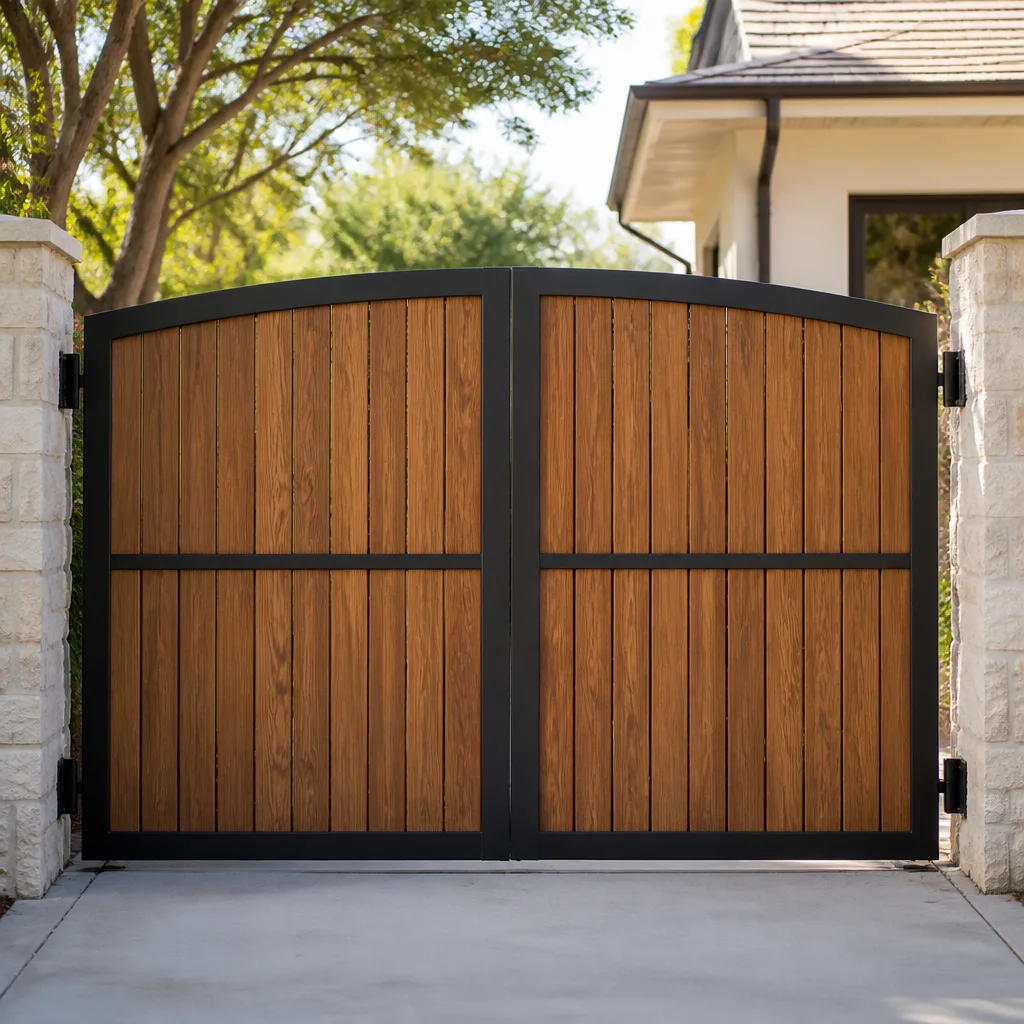 Wood & steel frame
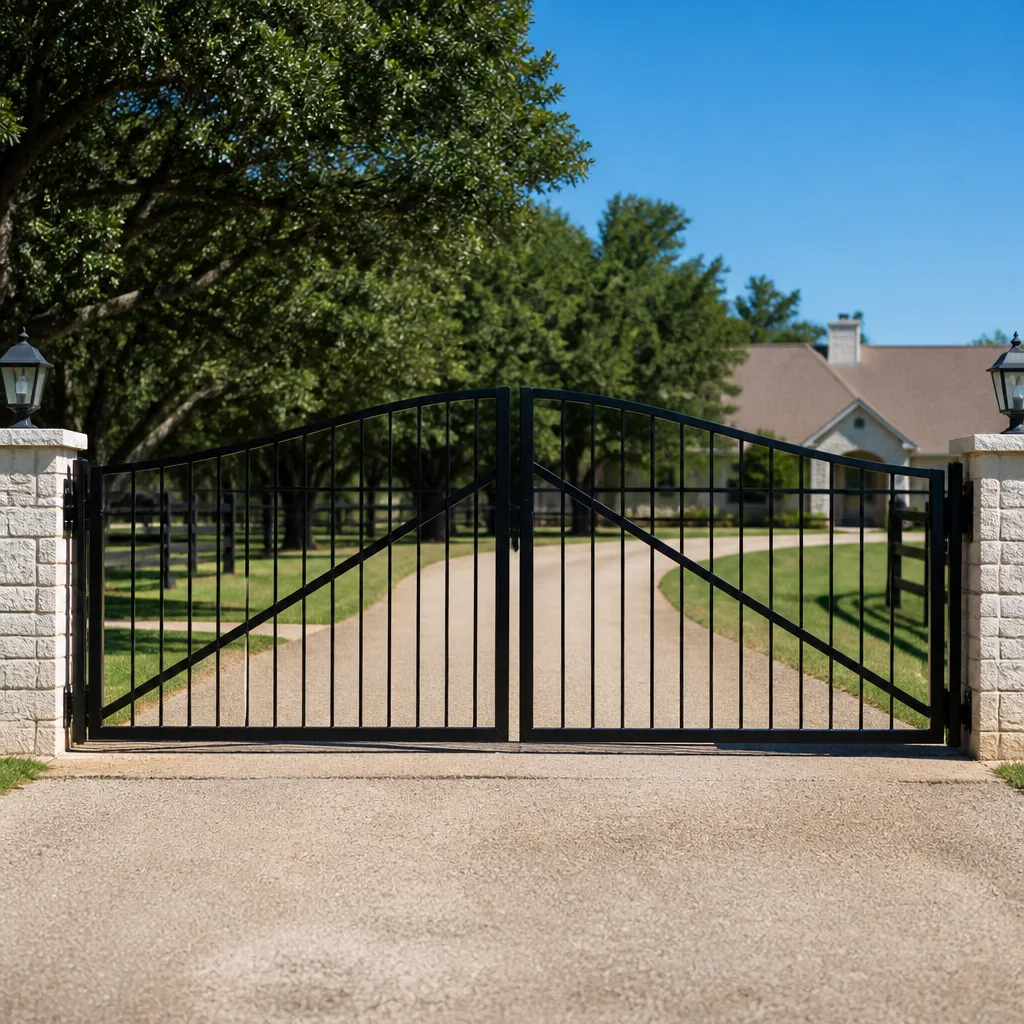 Farm & ranch
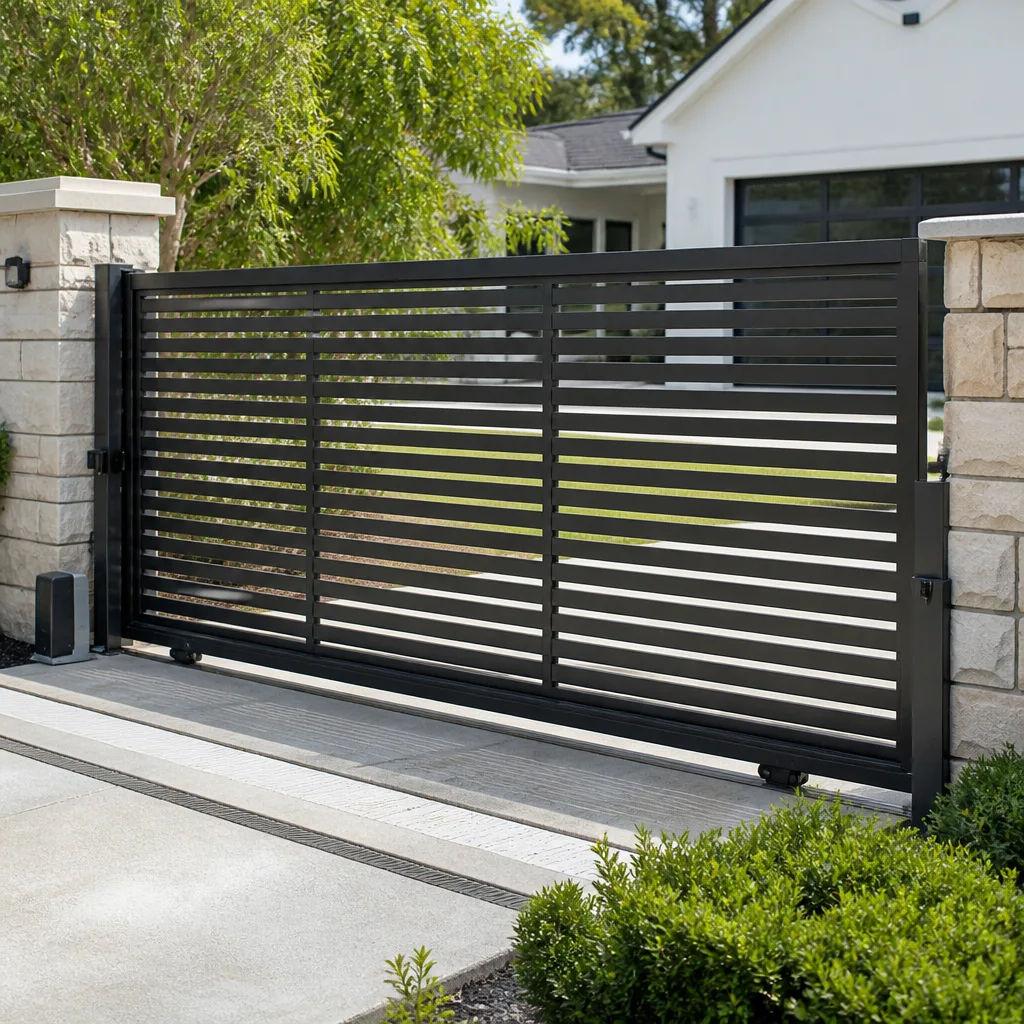 Sliding driveway gates
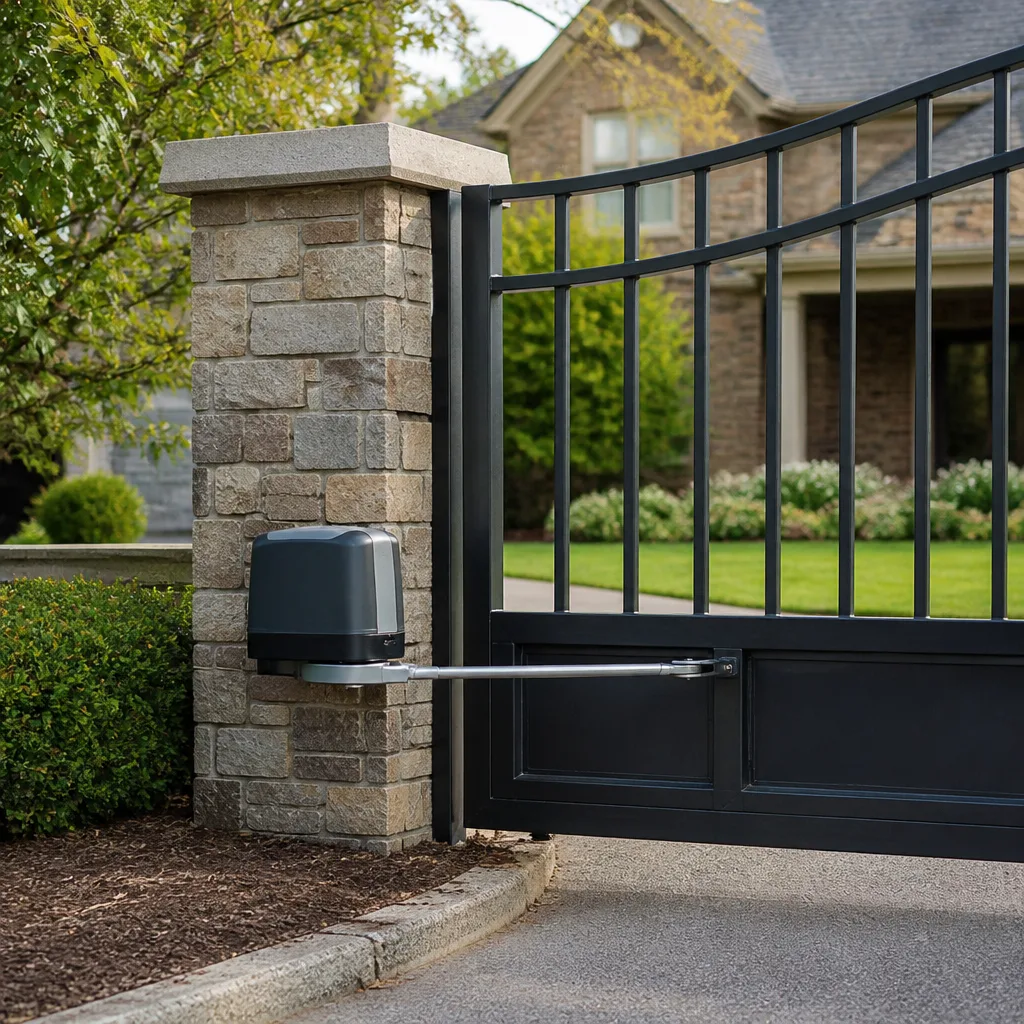 LiftMaster operators
Free on-site gate assessment - hinges, posts, and your LiftMaster or Nice gate operator checked before anything is quoted
The assessment is free and the quote is the invoice.
Get your free estimateDIY vs Professional Gate Parts & Welding: What’s Safe to Do Yourself
Tightening a loose hinge bolt is a 10-minute job with a socket wrench. Rewelding the hinge plate to the post looks nearly identical on a video, but it carries a vehicle-weight load path, and a weld that holds for a year before failing under a truck bumper is worse than one that fails in the driveway during the repair. In our experience across Winchester, the most expensive gate failures we see are the ones a homeowner “fixed” two seasons ago. This guide draws a clear line between gate maintenance you can do well and gate repair that requires a certified welder and the right equipment, with the reasoning behind each placement so you can judge for yourself.
Quick Answer
Cosmetic and adjustment tasks are safe to do yourself: tightening hinge bolts, greasing rollers, clearing track debris, and replacing a keypad battery. Structural work is not. Any weld on a gate post, hinge plate, or frame member, and any repair involving the opener’s springs or high-voltage wiring, belongs to a trained professional. When in doubt, treat it as structural. A gate weighs more than you think, and it swings over the place people and vehicles pass.
Styles & brands we work with
- Wrought iron
- Wood & steel frame
- Farm & ranch
- Sliding driveway gates
- LiftMaster operators
Table of Contents
- Where the Line Actually Falls
- Safe DIY: The Tasks You Can Own
- Conditional DIY: Proceed With Caveats
- Professional-Only: Do Not Attempt
- Structural vs Cosmetic Welds: Telling Them Apart
- The Equipment Reality on 3/16″ Steel
- What Temporary Repairs Really Cost
- The Liability Question and Insurance Documentation
Where the Line Actually Falls
The gate industry tends to make one of two mistakes. Either it implies everything is a quick homeowner fix, or it refuses to explain the reasoning and simply says “call a pro.” Neither serves you. What you actually need is a task-by-task sort with a stated reason for each placement, so that you can recognize the difference between maintenance and structure.
Here is the principle that governs every task below: if a part holds weight or manages force, it is structural; if it manages alignment, surface, or convenience, it is maintenance. A bolt that clamps two pieces together and carries the gate’s swing is holding weight. A roller that guides the gate along a track is managing alignment. That single distinction sorts most jobs correctly, even if you have never picked up a wrench.
In Winchester, that distinction matters for one extra reason. Our summers push steel to 140°F or more in direct sun, and our winter nights drop close to freezing. That expansion and contraction cycle works on every weld and every bolted joint a little more each year. A gate that has survived twenty summers is telling you something about the quality of its original welds, and it is also telling you that any new weld you add has to hold up to the same cycle. That is a hard test for a hobby welder working on a Saturday.
Safe DIY: The Tasks You Can Own
These are maintenance jobs a careful homeowner can do well with hand tools and a bit of patience. None of them involve welding, high-voltage wiring, or a component under the load of the gate’s weight. If you are comfortable on a stepladder and know the difference between tightening and overtightening, these are yours.
- Tightening hinge bolts and lag screws. A loose hinge is the most common gate complaint, and re-torquing the hardware is safe. Snug is enough; if the bolt spins freely in stripped wood or metal, stop and call.
- Greasing rollers, pulleys, and the track. A light coat of white lithium grease keeps sliding gates moving smoothly. Wipe off grit before greasing, and never grease a track you have not cleaned.
- Clearing debris from the track and photo-eye path. A leaf or a dropped toy can trip a safety sensor and stop the gate. Clearing the path is maintenance, not repair.
- Replacing remote and keypad batteries. A dead battery is not a broken opener. Swap the battery, then test the range from the driveway.
- Touch-up painting of rust spots. Sand, prime, and paint. Cosmetic rust is common in Winchester because of our dry heat and occasional monsoon humidity, but a spot that keeps coming back through the paint is likely a weld seam that needs a professional eye.
- Wiping down and inspecting the gate once a season. Walk the gate by hand with the power off. Listen for a groan, a click, or a wobble. A five-minute inspection each spring catches most small problems.
None of these tasks requires the gate to be off its hinges or the opener to be disassembled. If a job on this list leads you to the point where you need to unbolt something structural, you have crossed the line and it is worth a call. That is where most DIY gate projects go wrong: not in the task itself, but in what the task reveals.
Conditional DIY: Proceed With Caveats
These are jobs that a homeowner with some mechanical skill can sometimes handle, but only under specific conditions. Treat them as yellow lights rather than green. If the condition does not apply to you, the job is not yours.
- Replacing a worn roller or guide. Safe only if the gate can be blocked securely in place and the new roller matches the original load rating. A cheaper roller of similar size but lighter rating will fail within a season.
- Replacing cosmetic hardware (handle, cap, cover plates). Safe as long as the hardware does not attach to the gate frame under load. If you remove a piece and find that it held a weld or the frame together, stop.
- Adjusting the opener’s travel limits and force on a low-voltage unit. Safe only on brands you can find instructions for, only with the gate in view, and only when the reverse test passes. Our technicians are trained on nine major brands – LiftMaster, FAAC, BFT, Linear, Viking, Ghost Controls, DoorKing, Elite, and Mighty Mule – and we would tell you the same thing: if the opener manufacturer’s manual does not clearly describe the adjustment, do not guess. A mis-set force limit can crush a cat, a child, or a trash can without stopping.
- Patching a small area of rust on a cosmetic panel. Safe if the rust has not reached a structural weld. Probe the area with a screwdriver. If the tip sinks in, the metal is thin and needs a professional repair, not paint.
For any of these, the caveat is the same. If you cannot see the load path clearly, or if the repair would leave the gate in a state you would not want to stand under, it is a professional job. That is not a lack of skill on your part. It is the reality that gate repair requires understanding the whole system, not just the part in your hand.
Professional-Only: Do Not Attempt
These tasks belong to a trained, insured, and equipped professional. The reason is not that a homeowner couldn’t try. The reason is that a failure on any of these can injure someone or damage property, and the consequences follow you home.
- Any structural weld on a gate frame, post, hinge plate, or gate arm. This is the single most common DIY error we see in Winchester. A hinge plate carries the whole gate leaf every time it swings. A weld there has to hold a vehicle-weight load hundreds of times a day for years.
- Rewelding a hinge or latch to a masonry or steel post. This requires knowing the substrate, the correct filler metal, and the right penetration. A weld that looks fine will fail at the wrong moment.
- Replacing or repairing springs on a swing or slide gate. Springs are the highest-energy components in the system. A released spring can break a bone. This is not a matter of opinion; it is the safety consensus of every trade body in this industry.
- Any wiring inside the gate operator or the power supply panel. High-voltage work requires a licensed electrician in most jurisdictions, and a mistake can start a fire or leave the gate energized.
- Removing and re-mounting the gate leaf or opener arm to replace a worn post. The load path is broken the moment the leaf is unbolted, and re-hanging it correctly is a two-person job with proper blocking and know-how.
- Fixing a gate that has sagged or twisted after a season. A sagged gate can look like a hinge problem when the true cause is a foundation issue, a bent post, or a broken weld. Structural diagnosis is not a homeowner job.
If you have a gate in Winchester that fits any of these, the safe move is to keep it closed, keep people clear, and call for a professional evaluation. A free estimate is a far smaller cost than an ambulance or an insurance claim.
Structural vs Cosmetic Welds: Telling Them Apart
The difference between a weld that needs a professional and one you can touch up is not how it looks. It is what the weld is holding. A cosmetic weld fills a gap, closes a seam, or stops rust on a non-load-bearing surface. A structural weld transfers the weight of the gate from one member to another: the hinge plate to the post, the frame to the mounting brackets, the actuator to the gate leaf.
You can usually tell which you are looking at by asking three questions:
- Is the part holding the gate up, or just covering the gate? If the part appears in the path between the gate and the ground or post, it is structural.
- Did the part move in your hand when you removed the fasteners? If yes, it was carrying weight, and putting it back incorrectly is a serious failure point.
- Would a crack there leave the gate hanging by one connection? If the answer is yes, treat the weld as structural regardless of how small it looks.
When we inspect a gate, we look first at the hinge plates and the post brackets. Those are where structural failures concentrate in Winchester, especially on the older gates in established neighborhoods where the original welds have been through decades of thermal cycling. Cosmetic weld touch-ups – filling a pinhole, closing a rust seam – can be done by a careful homeowner with the right equipment and a bit of practice. Structural welds on those same gates cannot.
The Equipment Reality on 3/16″ Steel
Most homeowner welders are rated for thin sheet metal. Gate frames and posts are typically 3/16-inch steel or thicker, and welding that thickness properly requires significantly more amperage than a 110-volt hardware-store unit can deliver. The consequences are subtle and dangerous. An underpowered welder produces a weld that looks joined but has shallow penetration – it sits on top of the metal rather than fusing with it. That weld can hold for a year and then fail suddenly under load.
What a proper structural weld on 3/16″ steel actually requires:
- A 220-volt machine with adequate amperage. A 110-volt unit is not designed for this thickness, even if the dial goes high enough to make the arc.
- The correct filler and joint prep. The wrong filler on the wrong steel produces a brittle joint.
- Proper surface prep. Paint, rust, and mill scale must be ground back before welding. Skipping this step is the most common cause of weld failure.
- Enough penetration. Judging a weld from the outside is not the same as knowing it penetrated the base metal. A certified welder knows the difference and inspects the joint dimensionally.
We bring a fully equipped welding setup to every structural gate repair in Winchester, and that is why we can make a repair that outlasts the gate rather than one that holds until the next windstorm. If you have only a hobby welder and no way to inspect penetration, that is the honest answer to the question of whether you can DIY a structural weld: you cannot, and neither can we with the wrong tool.
What Temporary Repairs Really Cost
A bolted bracket or an epoxy patch can get a gate back into service for a few weeks, and sometimes that is the correct choice. If a hinge has partially failed and you need the gate usable while you wait for a scheduled repair, a bolted brace is a reasonable bridge. Epoxy on a small cosmetic seam is fine. The mistake is treating a temporary fix as permanent.
Here is the honest math on temporary repairs:
- A bolted-on bracket costs $15 to $40 in hardware and an hour of your time. It will typically hold for one to two seasons at most before the bolts loosen in the same steel that failed the weld.
- An epoxy patch costs $10 to $25 and will fail on any surface that flexes. Gates flex. It is a stopgap, not a fix.
- A proper weld repair on a hinge plate costs more up front but solves the underlying problem.
In our experience, the homeowner who bolts and re-bolts a hinge through three seasons ends up paying more in time, hardware, and eventual replacement than the homeowner who repairs the weld once. The steel does not get stronger with each temporary repair; the mounting holes wallow out, the bolt heads strip, and the eventual fix gets more expensive.
A temporary repair is acceptable when it holds a gate closed safely until a professional can arrive. It is not acceptable when it is the only plan. If a bolt or epoxy is the only thing standing between a gate and a fall, the gate needs an evaluation, not a hardware store run.
The Liability Question and Insurance Documentation
This is the part most homeowners never think about until after something goes wrong. If a gate you welded fails and damages a parked car, or worse, injures a visitor, your homeowner’s insurance policy may cover the damage, but the claim may be complicated by proof that the failure came from unpermitted or unprofessional work. Some insurers will cover the damage and then cancel or non-renew the policy. That is a real risk and it is worth understanding before you pick up a welder.
Professional work protects you in two ways. First, a licensed and insured professional carries their own liability coverage for the work performed, so a failure is on their insurance rather than yours. Second, you get documentation: a written description of what was welded, by whom, and when. That documentation matters if a claim ever comes up.
When you hire for structural gate work in Winchester, ask for the invoice and keep it. Note the date, the scope, and the company name. If you ever sell the home, the record of a properly repaired gate is a small asset, and if a claim ever surfaces, the paper trail is what turns a stressful call into a straightforward one.
Our written 90-Day Done Right Promise is part of that documentation. If a repair we made is not right, we come back and make it right, and the record of the job stays with you. That is the reason we put the promise in writing rather than talking about it.
Common Mistakes to Avoid
- Welding a hinge plate with a 110-volt hobby machine. The weld can look fine and still fail within a year because it never penetrated the steel. We see more of these than any other DIY error in Winchester.
- Bolting a hinge where a weld failed and calling it fixed. A bolted repair is a temporary bridge, not a repair. It fails on the same load path that caused the original failure.
- Adjusting opener force limits until the gate “moves right.” Raising the force limit can make a gate work, but a force limit set too high will not reverse on an obstruction. The gate closes on whatever is in the way. Never raise the force limit to fix a mechanical problem.
- Greasing a track without cleaning it first. Grease plus grit is an abrasive paste. Clean the track, then apply a thin coat. In Winchester’s dry, dusty summers this matters more than in wetter climates.
- Ignoring a fresh rust streak near a weld. Rust that appears along a weld seam is often the first sign that the weld is failing. Paint over it and you will not see the next sign until the joint lets go.
- Touching the springs. This is not a mistake you get to learn from. Spring systems store enough energy to cause serious injury. Call a professional.
- Skipping the spring inspection altogether. A gate that binds, jerks, or stops midway is telling you something. A seasonal check catches most of these before they become failures.
See the difference
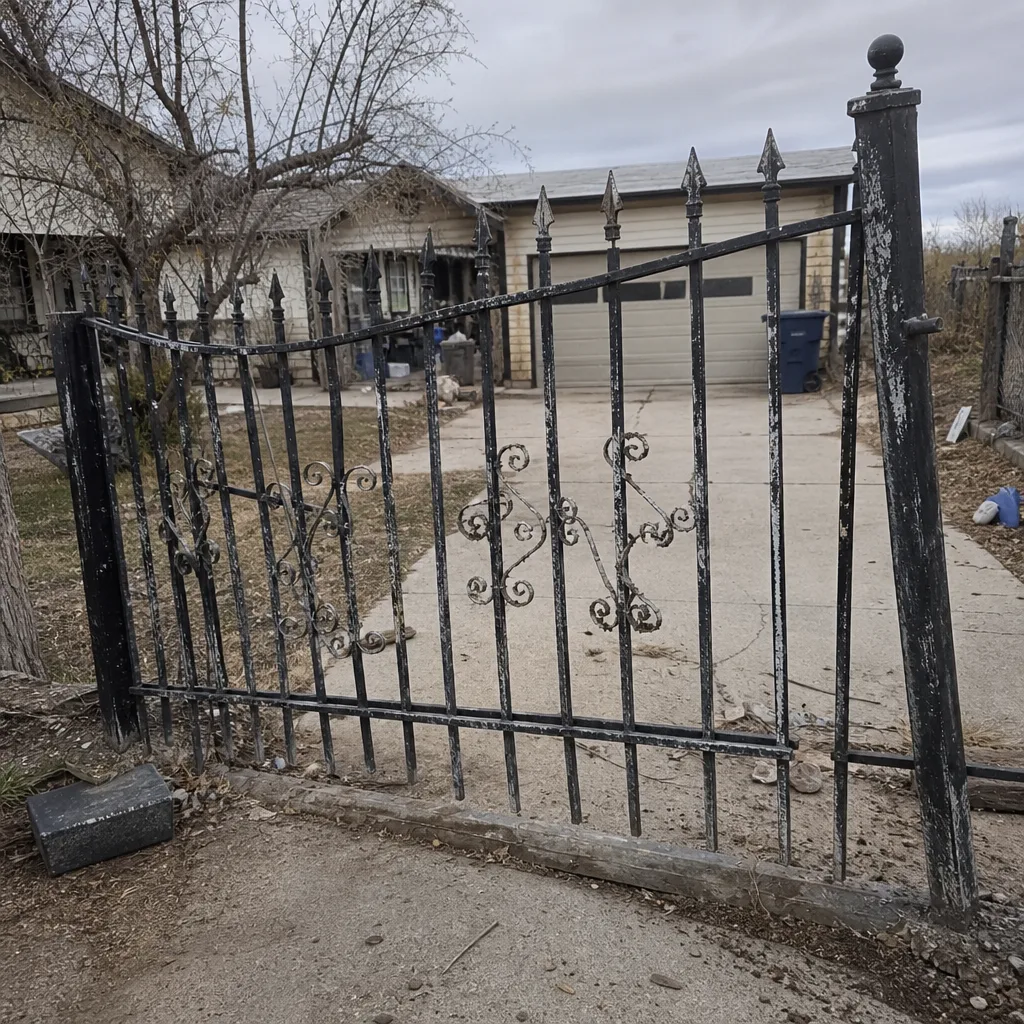 Before
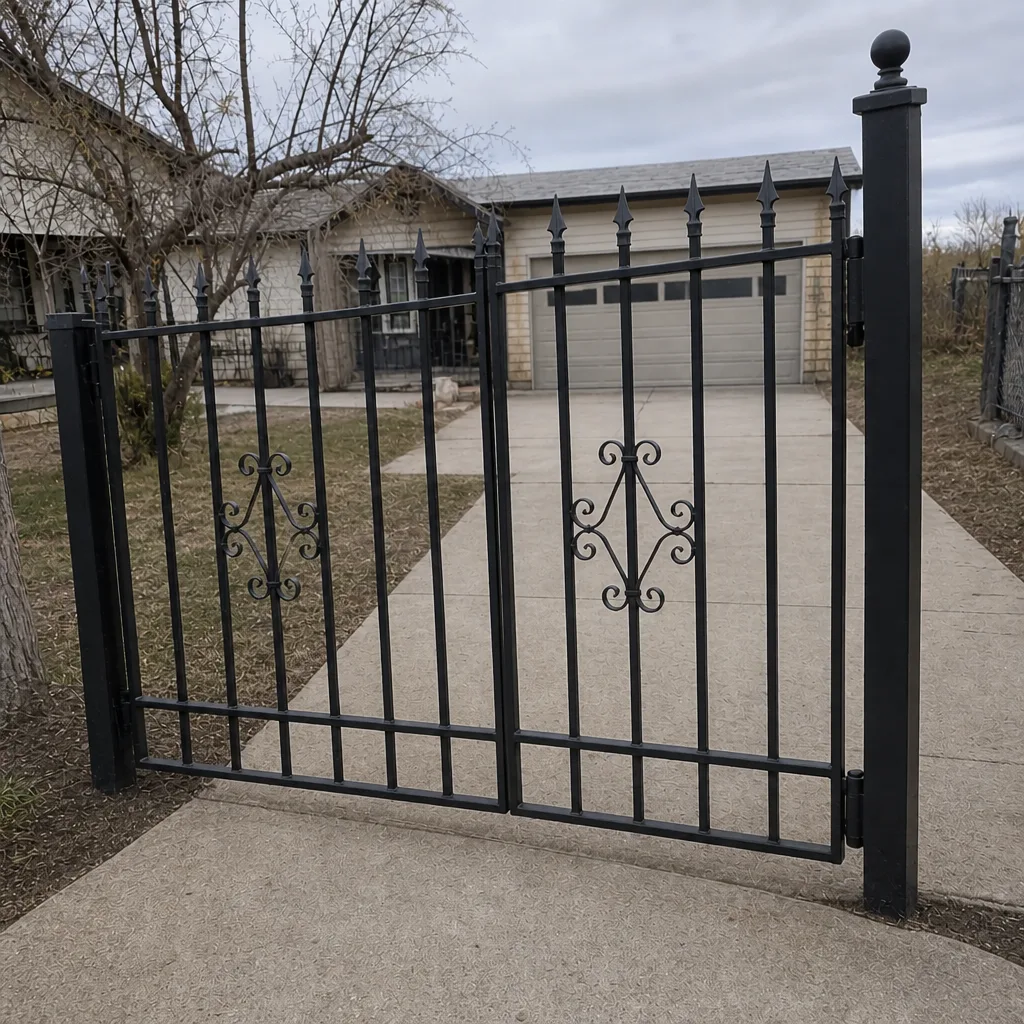 After
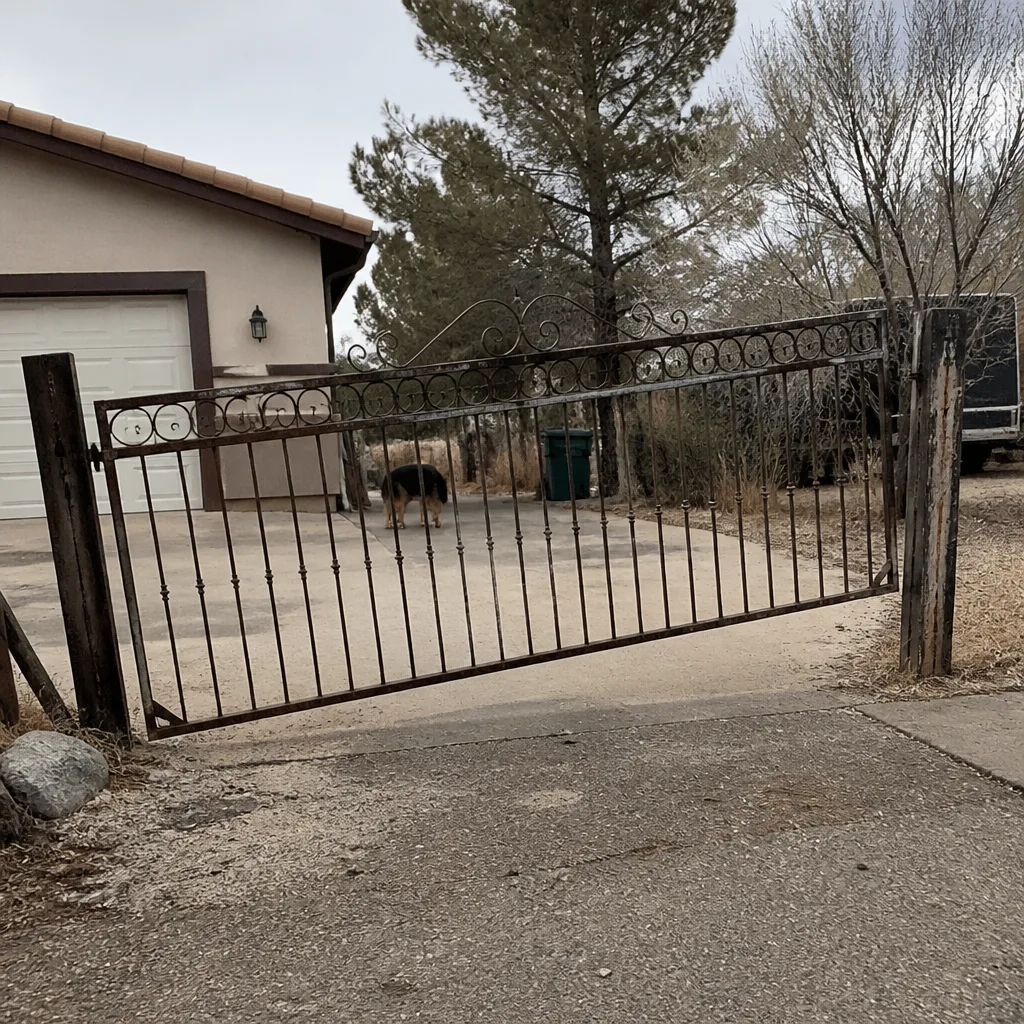 Before
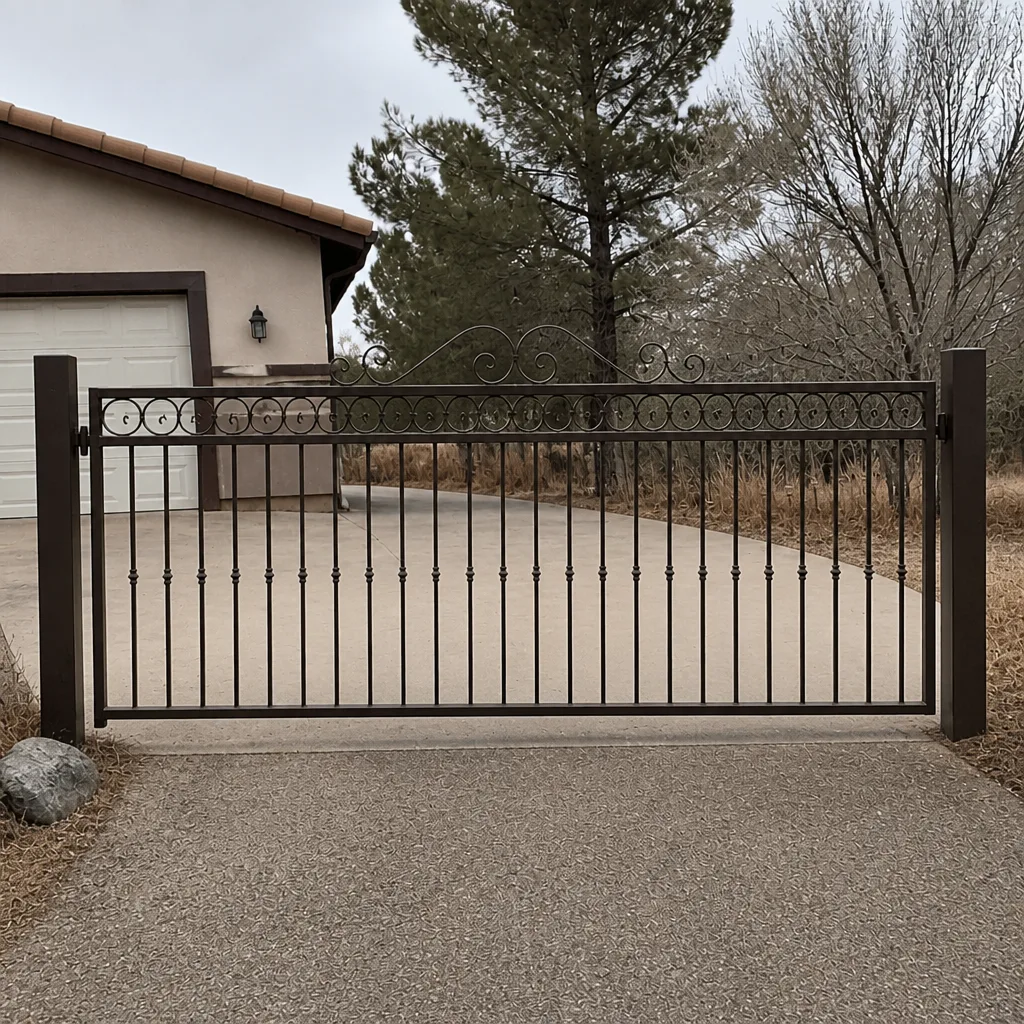 After
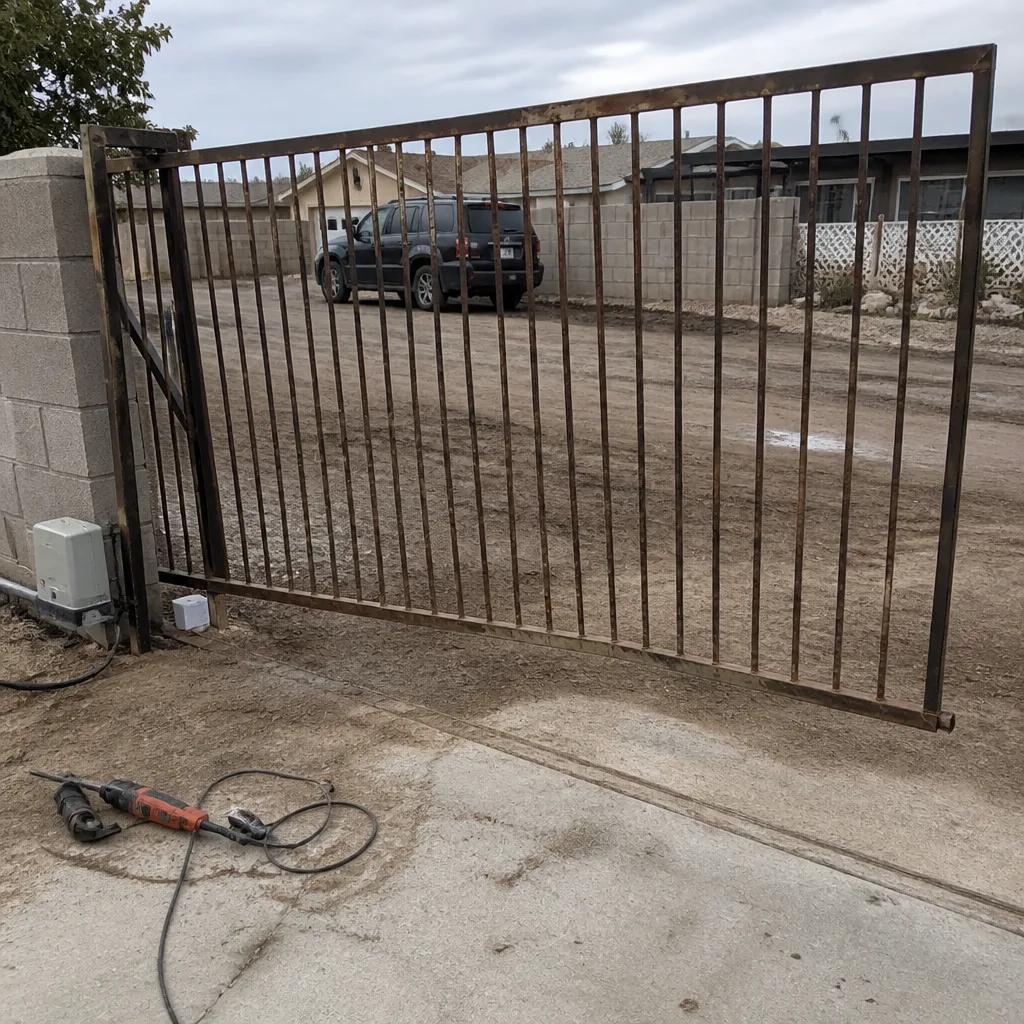 Before
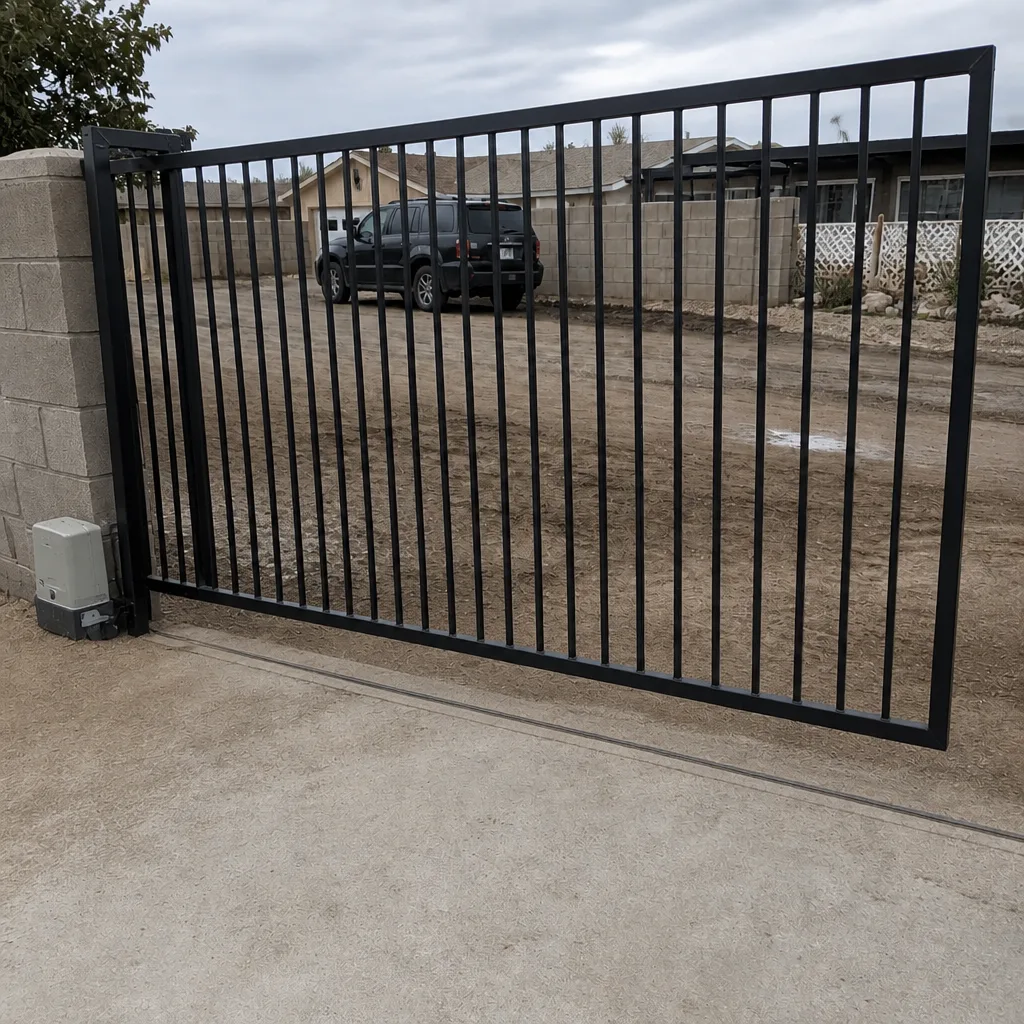 After
When to Call a Professional
Call a professional when the gate sags, twists, or stops mid-travel; when a hinge separates from its post; when you see a fresh crack or rust line in a weld; when the opener reverses inconsistently or not at all; and whenever you cannot clearly see that the part you are touching is holding the gate’s weight. Call before you buy the welder, not after. In Winchester, Ironworks Gate Co. offers free estimates for gate repair, welding, motors, and access control, and a live person answers the phone 24 hours a day, 7 days a week. If you have a written estimate from another company and want a second look, ours is free. Members of the community 65 and older or veterans receive a 5% discount, always.
Frequently Asked Questions
No. A gate hinge plate carries the weight of the gate leaf every time it swings, and a weld there is a structural weld that requires a 220-volt machine and correct filler on 3/16-inch steel. A hobby welder can produce a joint that looks joined but has shallow penetration and can fail within a year. Call (866) 984-8340 for a free estimate and we will look at the actual joint before you spend the money.
Tightening hinge bolts, greasing rollers and tracks, clearing debris from the photo-eye path, replacing remote batteries, and touch-up painting are all safe maintenance tasks. Anything that involves welding, the gate springs, or wiring inside the opener or power panel should be handled by a professional. If a repair reveals that a part is holding the gate’s weight, stop and call.
No. A bolted bracket is a temporary bridge that can get a gate safely usable while you wait for a proper repair, but it fails on the same load path that caused the original weld to fail. Expect one to two seasons at most from a bolted repair before it loosens or wallows out the mounting holes. Call us for a welding repair that outlasts the gate.
No, not on gate-thickness steel. A 110-volt hobby welder is designed for thin sheet metal and will not achieve proper penetration on 3/16-inch steel, even if the arc looks strong. The joint may hold for a year and then fail under load, which is the worst possible failure pattern. Our technicians bring a properly rated welding setup to every structural gate repair.
Yes, and it is worth the small effort. Keep the invoice with the date, the scope of the work, and the company name. If a gate ever fails and causes property damage, that documentation shows the repair was performed professionally and shifts the liability to the company’s insurance rather than your homeowner’s policy. Our written 90-Day Done Right Promise is part of that documentation.
Structural weld repairs typically range from $180 to $450 depending on the joint, the access, and whether the gate needs to be removed. Mobile repairs on accessible gates tend to sit at the lower end. We quote the price before any work starts, so you know the total before a single bolt is turned. Call (866) 984-8340 for a free estimate.
Whether your gate needs a full hinge-plate weld or a fresh look at its opener, our team works on every part of the system. If you want a broader view of what we handle, our Ironworks Gate Co. Winchester home page lays out the full scope, and if the issue is mechanical rather than structural, our gate repair in Winchester page covers everything from sagging leaves to failing hinges. Homeowners ready to replace a gate that is beyond repair can see what a proper system looks like on our gate installation in Winchester page, and anyone whose gate moves but does not respond correctly should read our gate motor & opener in Winchester guide before calling. Our technicians are trained on LiftMaster, FAAC, and Elite systems and have up to 13 years of experience, and we bring that experience to every job, whether it is a single hinge plate or a full automation setup. When it comes to the safety of your gate, the only wrong move is guessing.
The Bottom Line
Maintenance is yours to do. Structure is not. Tighten the bolts, grease the rollers, clear the track, and know the moment a repair starts holding weight, the job belongs to a professional welder with the right machine and the right insurance behind the work. The cost of a proper weld repair is a fraction of the cost of a failed one, and the difference is not skill as much as it is equipment and documentation. If a quick visual inspection tells you the gate needs more than maintenance, do not wait. That is the honest line, and it is where a trained gate company earns its keep.
Call (866) 984-8340 for a free estimate in Winchester. A live person answers 24 hours a day, 7 days a week, our written 90-Day Done Right Promise backs every job, and the price is settled before any work begins.
Written by the team at Ironworks Gate Co. Winchester.