
Last updated November 18, 2026
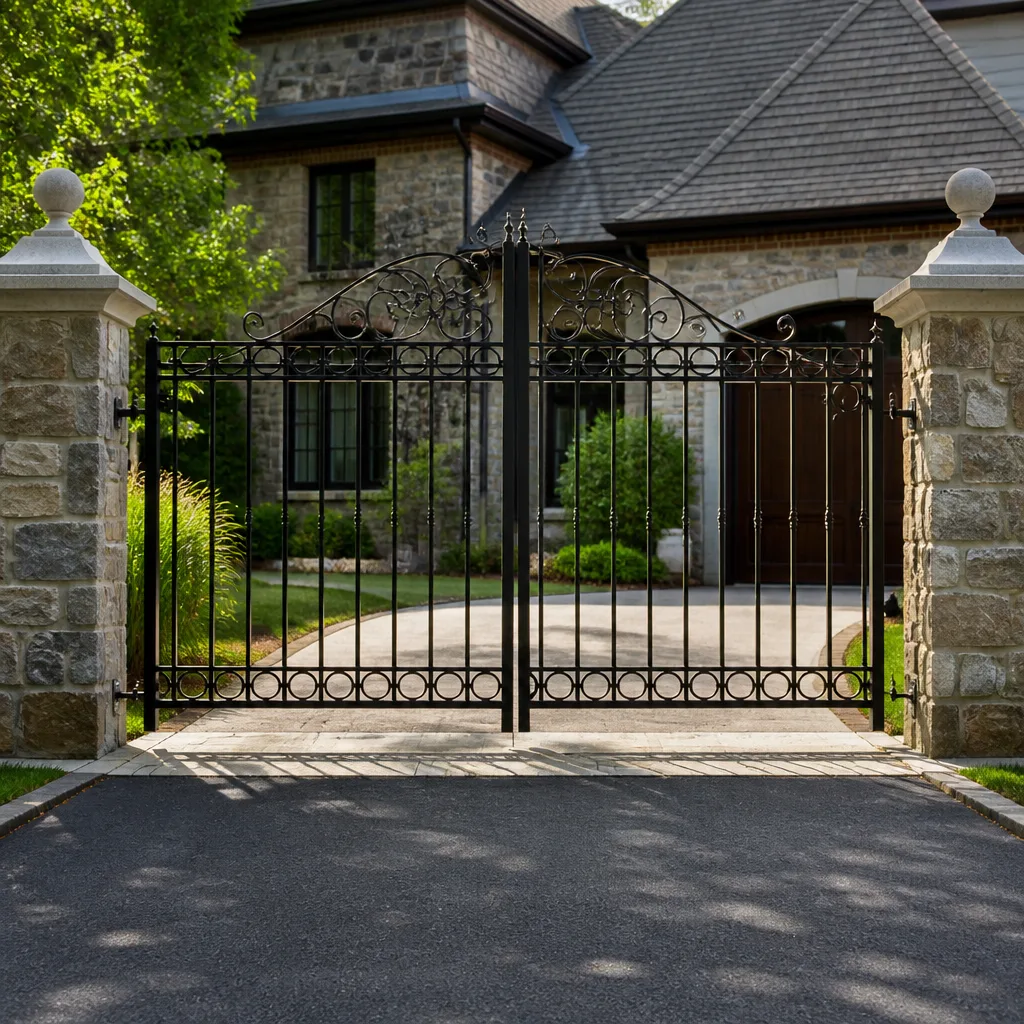 Wrought iron
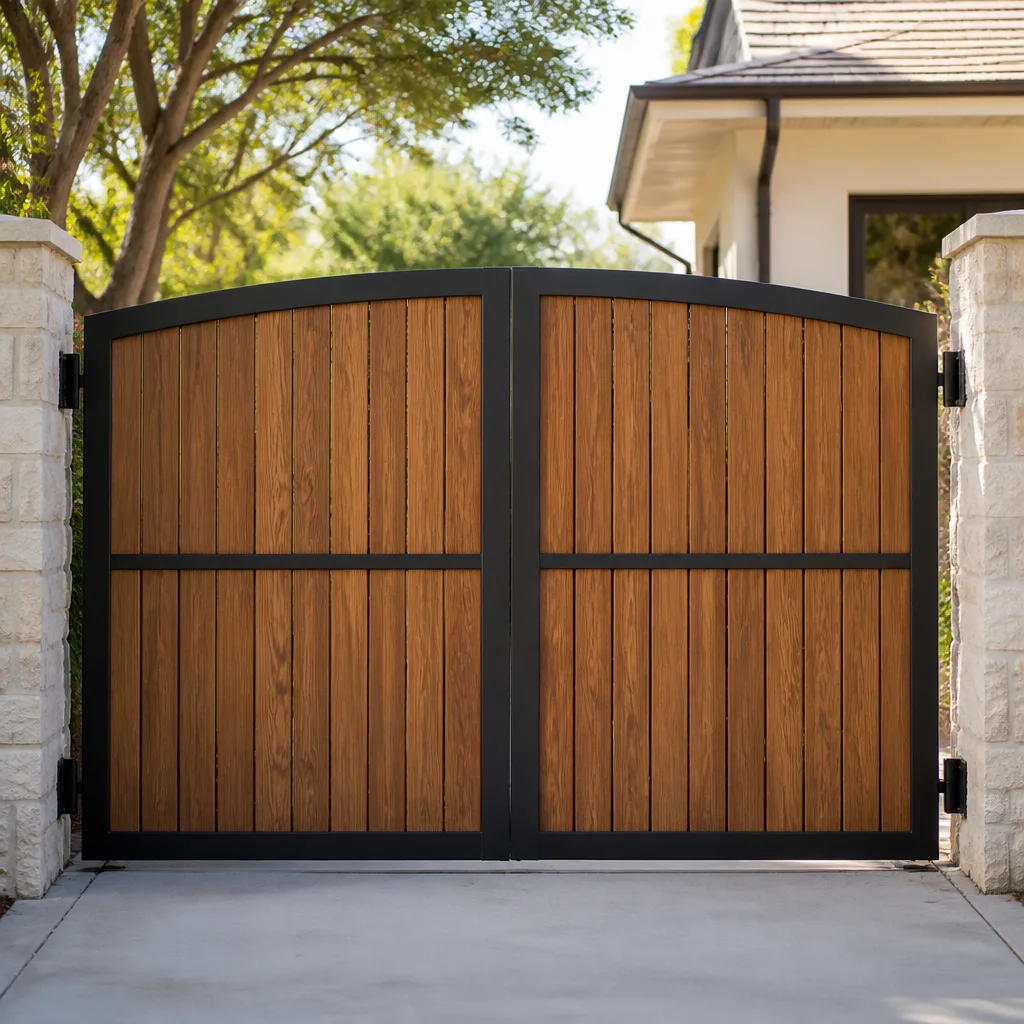 Wood & steel frame
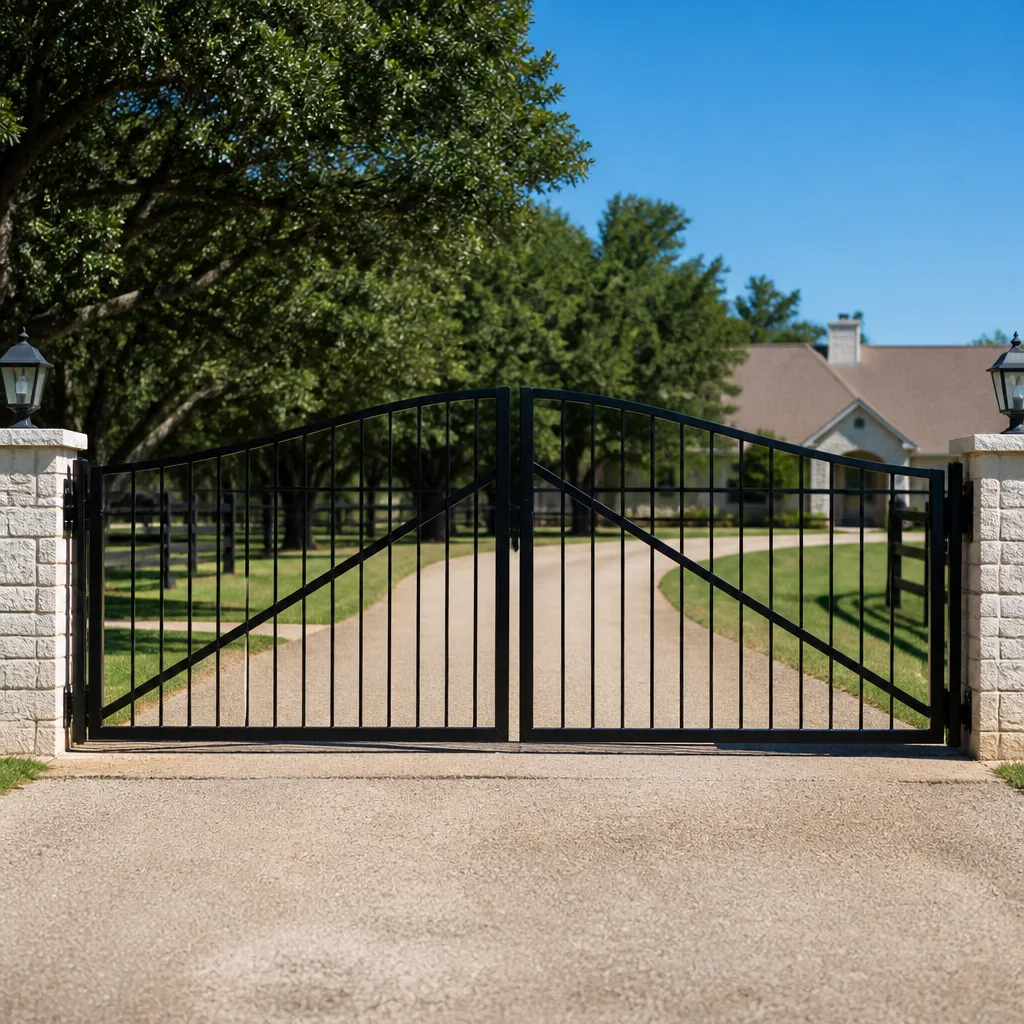 Farm & ranch
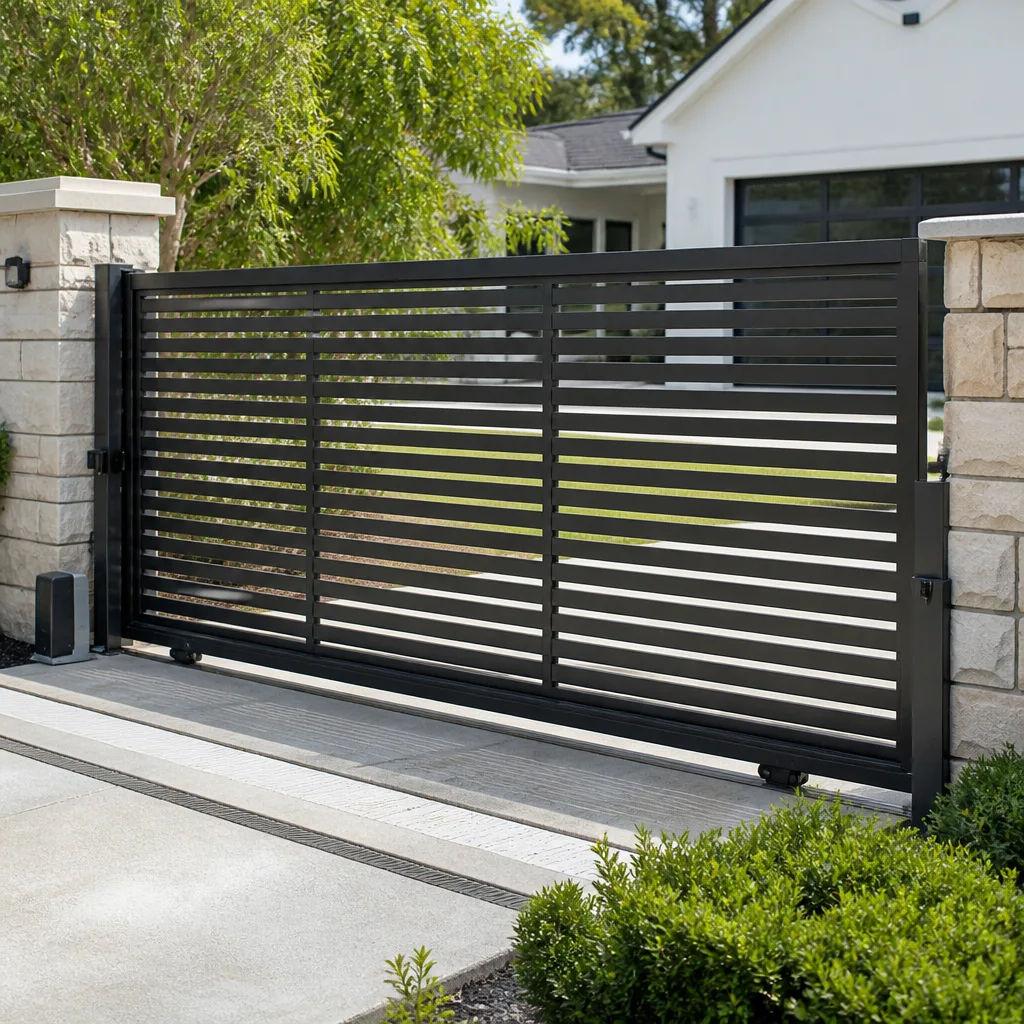 Sliding driveway gates
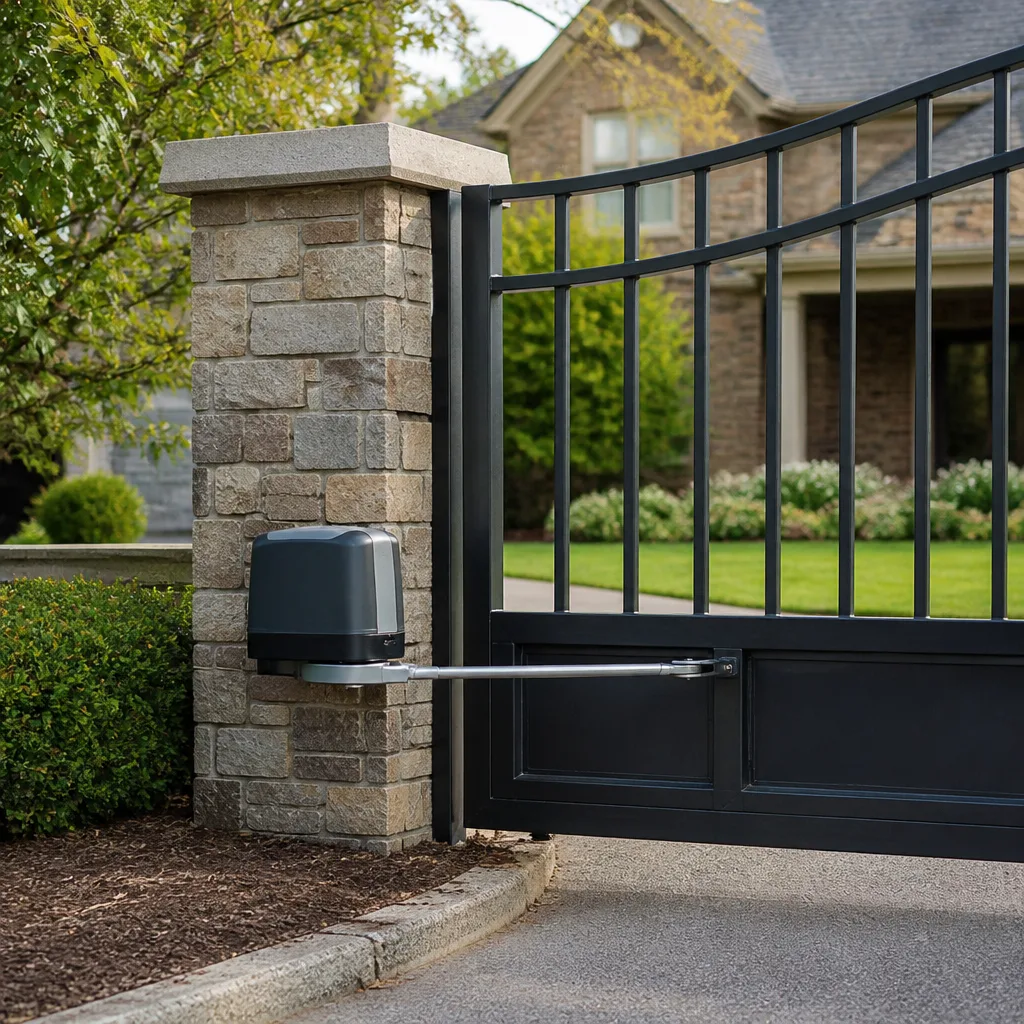 LiftMaster operators
Free on-site gate assessment - hinges, posts, and your LiftMaster or Nice gate operator checked before anything is quoted
The assessment is free and the quote is the invoice.
Get your free estimateThe Complete Gate Repair Guide for Winchester Homeowners
Most gate repairs in the Winchester area fail again within about 18 months. Not because the parts were cheap. Because whoever made the repair ignored what the Mojave Basin climate does to metal, motors, and concrete footings all year long. This valley swings from roughly 20°F on a January morning to 105°F on an August afternoon, and the soil under your gate posts is loaded with alkali. A repair that would last a decade in a milder climate can come apart here in a season and a half if it isn’t built for these conditions. In this guide we’ll walk through the failure patterns that are specific to Winchester, how to tell a cosmetic fix from a structural one, which opener brands hold up in extreme heat, and how to decide between repairing and replacing. It’s long, but by the end you’ll know exactly what you’re paying for.
Quick Answer
Gate repair in Winchester typically runs from about $150 to $650 for common mechanical fixes (hinges, sagging, latches, post stabilization, basic opener service), while structural footing or weld repairs and motor replacement push higher, into the $400 – $1,200 range. The most common failure here is post corrosion and footing heave caused by alkaline desert soil combined with extreme temperature swings, not simple wear and tear. The right repair addresses that root cause, and it should come with a written warranty that spells out exactly what happens if the problem returns.
Styles & brands we work with
- Wrought iron
- Wood & steel frame
- Farm & ranch
- Sliding driveway gates
- LiftMaster operators
Table of Contents
- Why Gates Fail Faster in Winchester’s High-Desert Climate
- Alkaline Soil, Post Corrosion, and Footing Heave
- Which Gate Opener Brands Handle 100°F+ Heat Cycles
- Cosmetic vs. Structural Repair: The Difference That Costs Double
- Repair or Replace? A Decision Framework
- What a Written Repair Warranty Should Actually Include
- Safety: What You Should Not Touch Yourself
- A Seasonal Maintenance Schedule for Winchester Gates
Why Gates Fail Faster in Winchester’s High-Desert Climate
Winchester sits where the desert and the rising foothills meet, and that position puts a lot of stress on metal. The daily temperature swing is the real culprit. In summer, a gate face can sit at 140°F in direct afternoon sun and drop into the 70s overnight. That’s a routine expansion-and-contraction cycle, day after day, month after month. Steel and aluminum both move under that kind of cycling. Welds fatigue, hinge points loosen, and anything mounted rigidly eventually finds the weakest spot.
Then there’s the dust. Alkali dust is fine and abrasive, and it works its way into track rollers, gear boxes, and every pivot you have. Mixed with the occasional monsoon rain, it turns into a gritty paste that wears moving parts down faster than clean wear ever would.
What we see most often on Winchester gates:
- Hinges that develop vertical play within a few years because the pivot bushings dry out and grind.
- Opener arms and chains that stiffen from baked-on dust and old grease.
- Powder-coat chalking and peeling on sun-facing panels, exposing bare steel to the alkaline air.
- Latch alignment drifting out because the posts settle unevenly as the soil dries and swells.
None of this means your gate is doomed. It means the repair has to account for the environment it lives in. A generalist who’s used to milder climates will fix the symptom and leave the cause in place. That’s exactly how a repair comes back in 18 months. Our Gate Repair in Winchester work is built around these specific failure patterns, because we see them every week in this valley.
Alkaline Soil, Post Corrosion, and Footing Heave
The soil in and around Winchester is alkaline and mineral-heavy, and it behaves badly around buried metal. A steel gate post set directly in that ground, with no barrier, begins to corrode from the soil line down almost immediately. The corrosion tends to concentrate just below grade where moisture and oxygen meet, which is why posts often fail invisibly and then lean suddenly.
Footing heave is the second half of the problem. Alkaline clay soils swell when they take on water and shrink hard when they dry out. In this climate that cycle is severe. A concrete footing poured years ago can lift or tilt slightly with each wet-dry swing. Over time, one post rises a fraction of an inch more than its neighbor, and the whole gate frame racks. The latch stops catching. The gate drags. Homeowners often blame the hinges when the real problem is underground.
How we approach a footing problem:
- Diagnose the post, not just the gate. We check plumb and look for corrosion at and below grade before touching hinges.
- Stabilize or reset the footing. Depending on severity, that means re-setting the post with a proper barrier and drainage, or reinforcing the existing footing.
- Re-hang and re-align the gate once the post is true, so the geometry is right from the start.
- Protect the base. We seal and coat the exposed metal so alkaline soil and dust have less to work on.
If a contractor shows up, oils a hinge, and leaves, you’ve paid for a cosmetic fix. The footing problem is still there, and it will win. Getting the underground work right is the difference between a gate that lasts and one that keeps coming back to the top of your to-do list.
Which Gate Opener Brands Handle 100°F+ Heat Cycles
Most homeowners never think to ask how an opener handles heat. It matters more here than almost anywhere. A gate motor in Winchester runs in an enclosure that can bake past 130°F in summer, and it may cycle several times a day. Some brands and models are built for that duty cycle and some simply are not.
In our experience working across nine major opener brands, the ones that hold up best in this climate share a few traits: thermal protection built into the control board, heavy-duty gear designs, and housings that shed heat rather than trap it. Brands like BFT and Viking are common on estate gates here and tend to tolerate the heat cycling well when they’re properly sized and lubricated. Ghost Controls units are popular on lighter residential swing gates and do fine when the duty cycle matches the gate’s weight and use. Linear remains a workhorse on many driveway systems. The brand matters less than whether the unit is rated for your gate’s weight and how often it actually runs.
What to ask before any opener repair or replacement:
- Is this model rated for the ambient heat it will see, and for my gate’s weight and daily cycles?
- Does it have built-in thermal overload protection?
- Are the gears metal, and is the control board rated for this temperature range?
- Is the enclosure shaded or exposed to full afternoon sun?
A motor that’s undersized for the gate will overheat and fail early no matter how good the brand is. For the full picture on motors and controls, see our Gate Motor & Opener in Winchester page. Getting the sizing right the first time is the whole game in this heat.
Cosmetic vs. Structural Repair: The Difference That Costs Double
This is where a lot of Winchester homeowners lose money without realizing it. A cosmetic repair makes the gate look and feel fixed today. A structural repair makes it stay fixed. Confusing the two is the single most expensive mistake we see.
A cosmetic repair is things like tightening a loose bolt, oiling a squeak, or touching up paint. Those are legitimate maintenance. But if the underlying cause is a corroded post, a cracked weld, or a footing that’s shifted, the cosmetic fix just buys time.
A structural repair addresses the load path: the posts, the frame, the welds, and the footings that hold everything true. That’s the work that lets a 40-year-old gate close like the day it was hung.
How to tell which one you’re being sold:
- Cosmetic: fixes a symptom (a squeak, a loose hinge, a sticking latch) without checking the post or frame.
- Structural: starts with a plumb-and-level check on the posts, an inspection of welds and footings, and a look at corrosion below grade.
- The tell: if the quote doesn’t mention the posts or the footing, ask why. A sagging gate almost always has a reason underground.
The double cost comes from paying for the cosmetic fix, then paying again for the structural one when the first fails. Our approach is to diagnose the structural cause first and tell you plainly whether a small fix will hold or whether the real repair is deeper. That upfront honesty is part of the square deal we aim for on every job.
Repair or Replace? A Decision Framework
There’s no single right answer, but there is a sensible way to decide. Look at three things: the age and material of the gate, the actual cost of the repair, and the ten-year ownership cost of each path.
Use this framework:
- Assess material and age. A well-built steel or wrought-iron gate that’s structurally sound can be repaired for decades. A rusted-through light-gauge gate with a failing frame often isn’t worth a major repair.
- Add up the real repair cost. Include structural work, not just the obvious fix. If the repair costs more than about half of a quality replacement, weigh replacement carefully.
- Estimate ten-year ownership cost. A cheap repair that fails every 18 months costs more over a decade than a proper structural repair or a quality new gate.
- Check the hardware. If the opener and hinges are already near end of life, factor replacement of those into whichever path you choose.
- Ask what’s guaranteed. A repair backed in writing changes the math. It’s a known cost, not a gamble.
- Lean toward repair: solid frame, sound posts, localized damage, a gate you like.
- Lean toward replace: widespread corrosion, a racked frame, multiple failed footings, or a gate that never fit its opening well.
When replacement is the honest answer, we say so. Our Gate Installation in Winchester service covers new gates built for this climate from day one, with the right posts, barriers, and hardware. Either way, you get a straight recommendation and a written price before any work begins.
What a Written Repair Warranty Should Actually Include
A warranty is only worth what it says in writing. A handshake and a verbal promise won’t help you when the gate sags again next spring. Here’s what a repair warranty should spell out plainly.
- The length of coverage in writing. We back every job with our 90-Day Done Right Promise, written and honored without arguing.
- What’s covered. The specific repair, and the parts and labor that go with it, should be named.
- What happens if it fails. The remedy should be clear: we come back and make it right.
- No hidden exclusions buried in fine print. Watch for warranties that exclude “normal wear,” “settling,” or “environmental factors” in language broad enough to cover almost anything in this climate.
- No paperwork runaround. A good guarantee doesn’t require you to file forms or argue your case.
Watch especially for warranties from generalist handymen that offer a short verbal guarantee and then blame the desert when the repair fails. In Winchester, “environmental factors” is exactly the excuse a weak warranty uses to walk away. If a contractor won’t put the guarantee in writing, that tells you something. You can see the standard we hold ourselves to on our Ironworks Gate Co. Winchester home page.
Safety: What You Should Not Touch Yourself
Some gate maintenance is safe for a careful homeowner: clearing dust from rollers, keeping the track area clear, and noting anything that looks off. Other parts of a gate system can hurt you badly if you don’t know exactly what you’re doing, and it’s worth being honest about which is which.
Gate openers run on household line voltage, and the wiring, control boards, and disconnects are not a place to experiment. Faulty wiring can shock or start a fire. Gate frames and hinges carry serious stored weight and tension, and a gate that’s being worked loose can swing or drop on a hand or a foot without warning. Automated gates also involve safety edges and entrapment protection that have to be tested and set correctly, because a gate that closes on a person or a vehicle can cause real injury. If you’re unsure of any of this, stop and call a trained professional. The stakes are too high to guess.
Our technicians are background-checked and work in a customer’s home and driveway the way they’d work in their own family’s. That’s the standard, and it’s part of why we handle the electrical and mechanical work ourselves rather than talk a homeowner through it.
A Seasonal Maintenance Schedule for Winchester Gates
A little maintenance at the right times of year goes a long way in this climate. Here’s a schedule built for Winchester’s seasons.
- Spring (before the heat): clear winter grit from tracks and rollers, check hinges for play, and inspect posts for leaning or corrosion at grade.
- Early summer (before the peak heat): have the opener serviced and its duty cycle checked, lubricate moving parts with the right product, and test the safety edges and entrapment protection.
- Late summer: look for powder-coat chalking or peeling on sun-facing panels and touch up bare metal early.
- Fall: check the footing area after the first rains, since wet-dry swings reveal settling, and re-test the opener and controls.
- Winter: confirm the gate still latches cleanly in cold snaps and keep the driveway and track clear of debris.
An $89 seasonal tune-up is a lot cheaper than an emergency repair in July. It’s one of the standing offers we keep for Winchester homeowners, alongside $50 off any repair over $250, a free second opinion on any written estimate, and a permanent 5% senior and veteran discount. Our technicians have up to 13 years of experience, and every brand we service, from BFT and Viking to Ghost Controls and Linear, gets the same care on the 400th job as on the first.
Common Mistakes to Avoid
- Fixing the hinge when the problem is the post. A sagging gate usually points to a footing or corrosion issue underground. Oiling the hinge fixes nothing and wastes money.
- Hiring a generalist for desert-specific work. A handyman used to a milder climate won’t account for alkaline soil or extreme heat cycling. The repair fails fast.
- Accepting a verbal warranty. In this climate, a promise without writing is worth very little. Insist on a written guarantee that covers the specific repair.
- Ignoring powder-coat damage. A peeling panel on a sun-facing section lets alkaline air reach bare steel. Touch it up early, before corrosion spreads.
- Running an undersized opener. A motor not rated for your gate’s weight and cycles overheats and fails early. Match the unit to the gate.
- Skipping seasonal service. Dust and heat build up quietly. A yearly tune-up catches problems while they’re still small.
- Assuming the cheapest quote is the cheapest job. A low bid that comes back in 18 months costs more than a proper repair with a written guarantee.
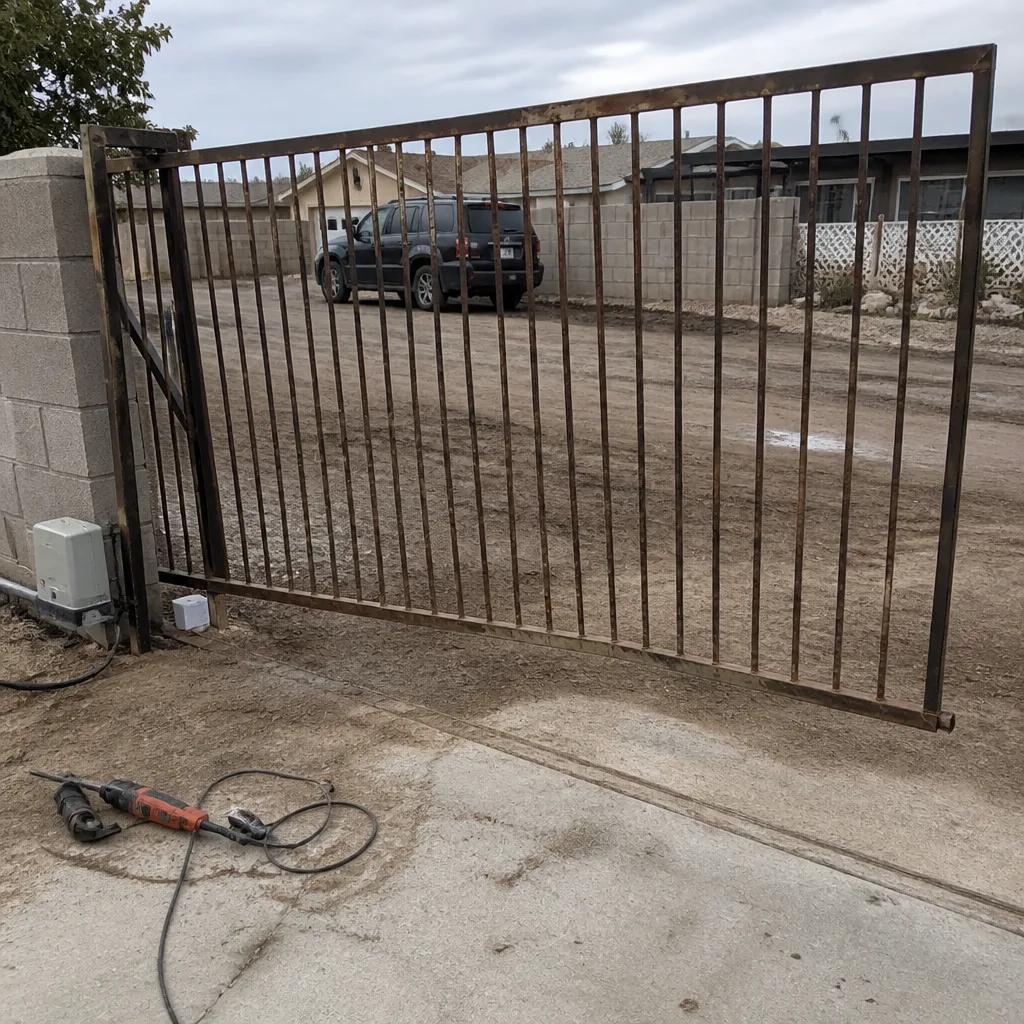
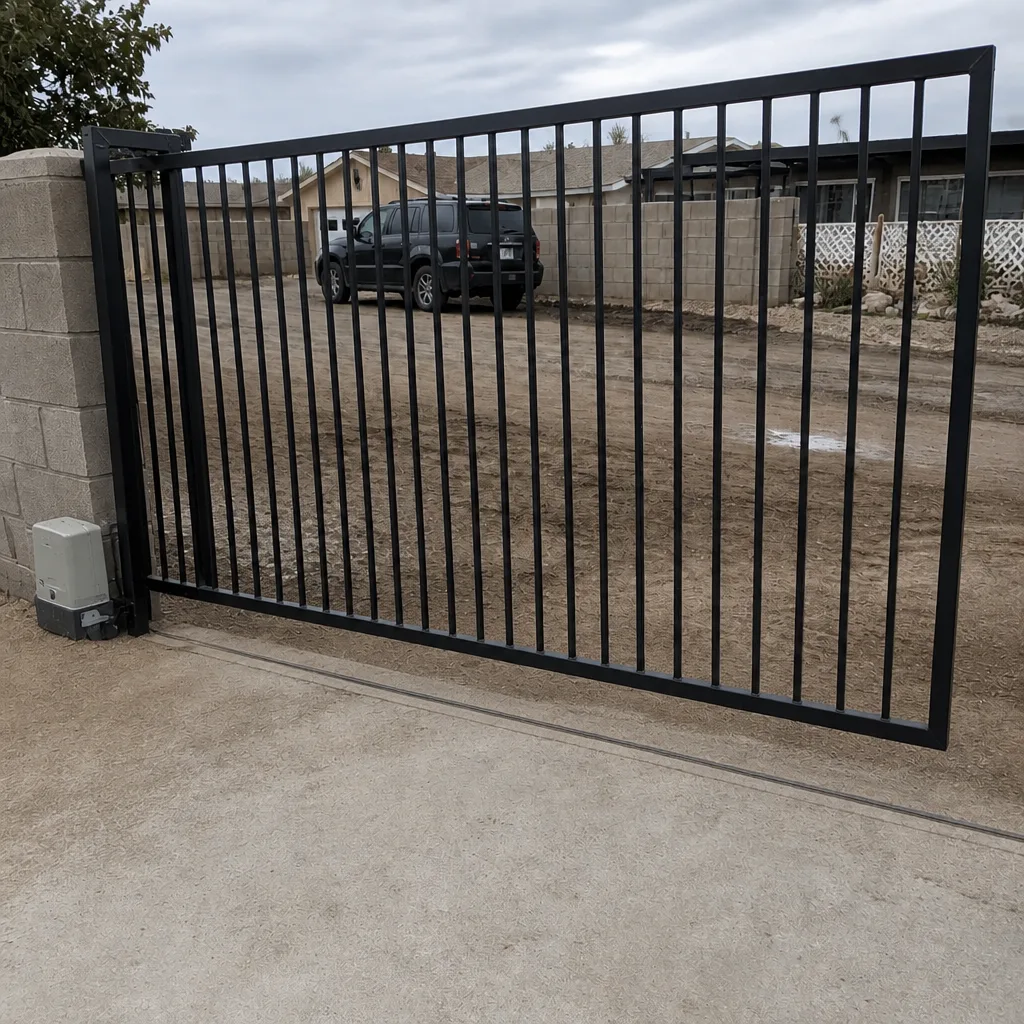
See the difference
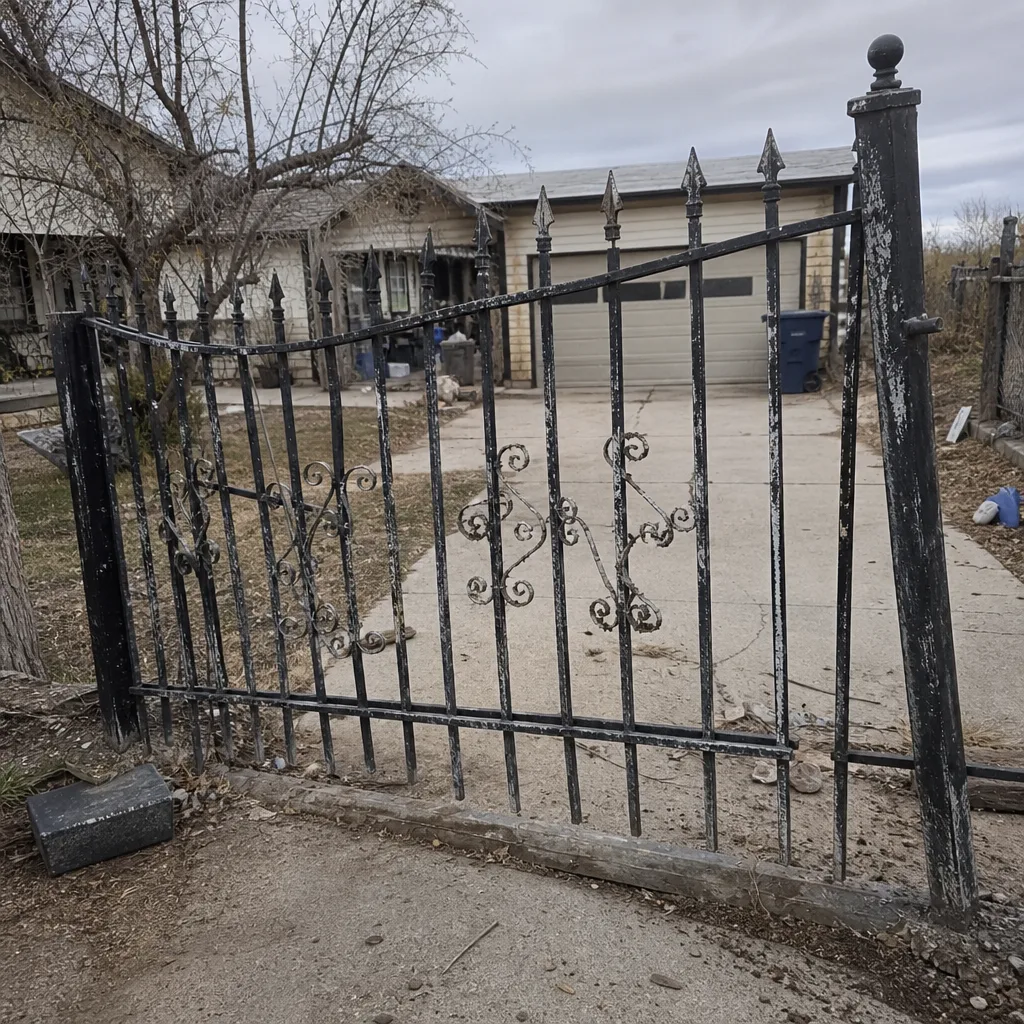 Before
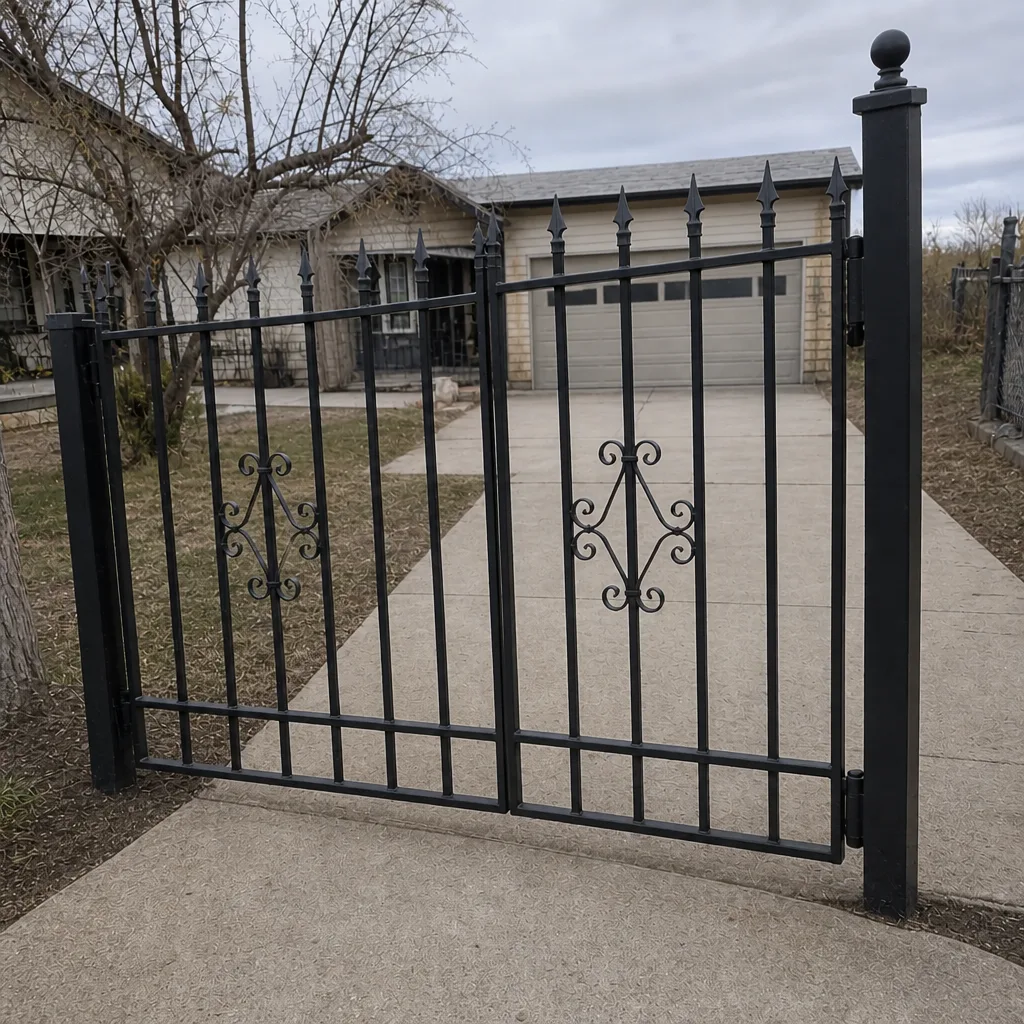 After
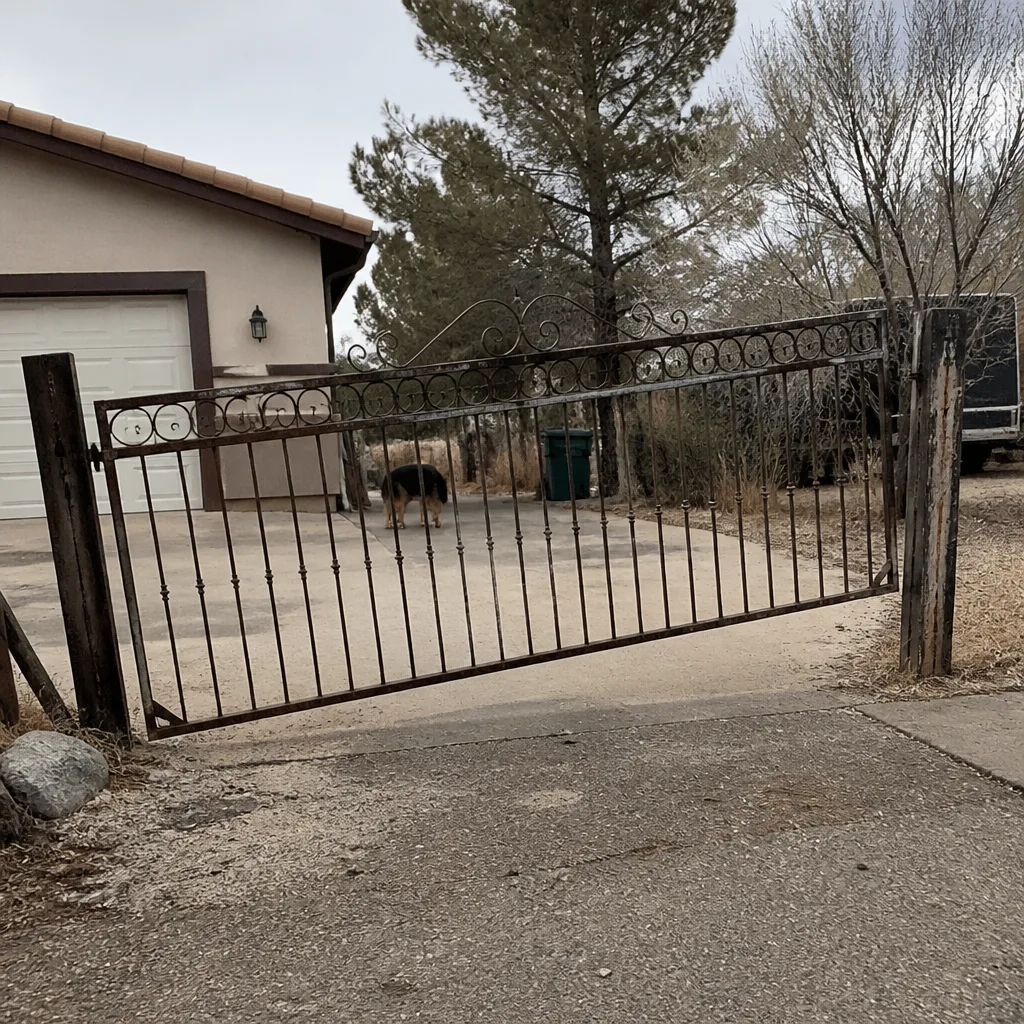 Before
 After
 Before
 After
When to Call a Professional
Some problems are worth a phone call rather than a weekend of your own time. Call a professional if your gate post is leaning or the frame has racked, if you see corrosion at the soil line, if the opener trips its breaker or won’t complete a cycle in the heat, or if the safety edges and entrapment protection need testing. Electrical and safety systems on automated gates are not a place to improvise. If a repair has already failed once, that’s a strong sign the root cause was never addressed, and it’s worth a fresh set of eyes. Ironworks Gate Co. Winchester offers free estimates in Winchester, and a live person answers the phone every time. Call (866) 984-8340 to get started. We quote and agree on the price before any work begins, so there are no surprises on the bill.
Frequently Asked Questions
Most common mechanical repairs in Winchester run about $150 to $650, while structural footing or weld work and motor replacement can reach $400 to $1,200. The price depends on whether the underlying cause is addressed, not just the visible symptom. Call (866) 984-8340 for an exact quote; estimates are free.
Alkaline desert soil, extreme temperature swings from roughly 20°F to 105°F, and abrasive alkali dust all speed up wear on metal, motors, and concrete footings. These conditions mean repairs that ignore the climate tend to fail again within about 18 months. A repair built for this environment lasts far longer.
Many common repairs can be completed in a single visit once we’ve diagnosed the cause, and we’ll tell you honestly on the call whether yours is one of them. Some structural or footing work needs to be scheduled. Call (866) 984-8340 and we’ll give you a clear answer and a free estimate.
Brands with built-in thermal protection, metal gears, and heat-tolerant housings do best, and models like BFT and Viking are common on estate gates here for that reason. The fit between the unit and your gate’s weight and daily cycles matters as much as the brand. We service nine major brands, so we make the correct fix on the first visit.
A good repair warranty spells out the length of coverage, exactly what’s covered, and what happens if the repair fails, all in writing with no fine-print exclusions that let the contractor walk away. Our 90-Day Done Right Promise is written and honored without arguing. Call (866) 984-8340 for a free second opinion on any written estimate.
Repair is usually the better choice when the frame and posts are sound and the damage is localized; replacement makes more sense when corrosion is widespread or the frame has racked. Comparing actual repair cost against ten-year ownership cost is the honest way to decide. Call (866) 984-8340 and we’ll give you a straight recommendation with a written price.
The Bottom Line
Gate repairs in the Winchester area fail early for one main reason: the repair doesn’t account for what the Mojave Basin climate does to metal, motors, and footings. Alkaline soil corrodes posts from below, extreme temperature swings rack frames and stress openers, and abrasive dust grinds down every moving part. Get the structural cause right, choose hardware rated for the heat, and insist on a written warranty that means something. Do those three things and your gate will close like it did the day it was hung. That’s the whole idea behind a repair that’s done right and backed in writing.
If you’re ready to stop putting off the repair, call (866) 984-8340 for a free estimate. A live person answers any hour, and you’ll get a fair, upfront price before a single bolt is turned.
Written by the team at Ironworks Gate Co. Winchester.