
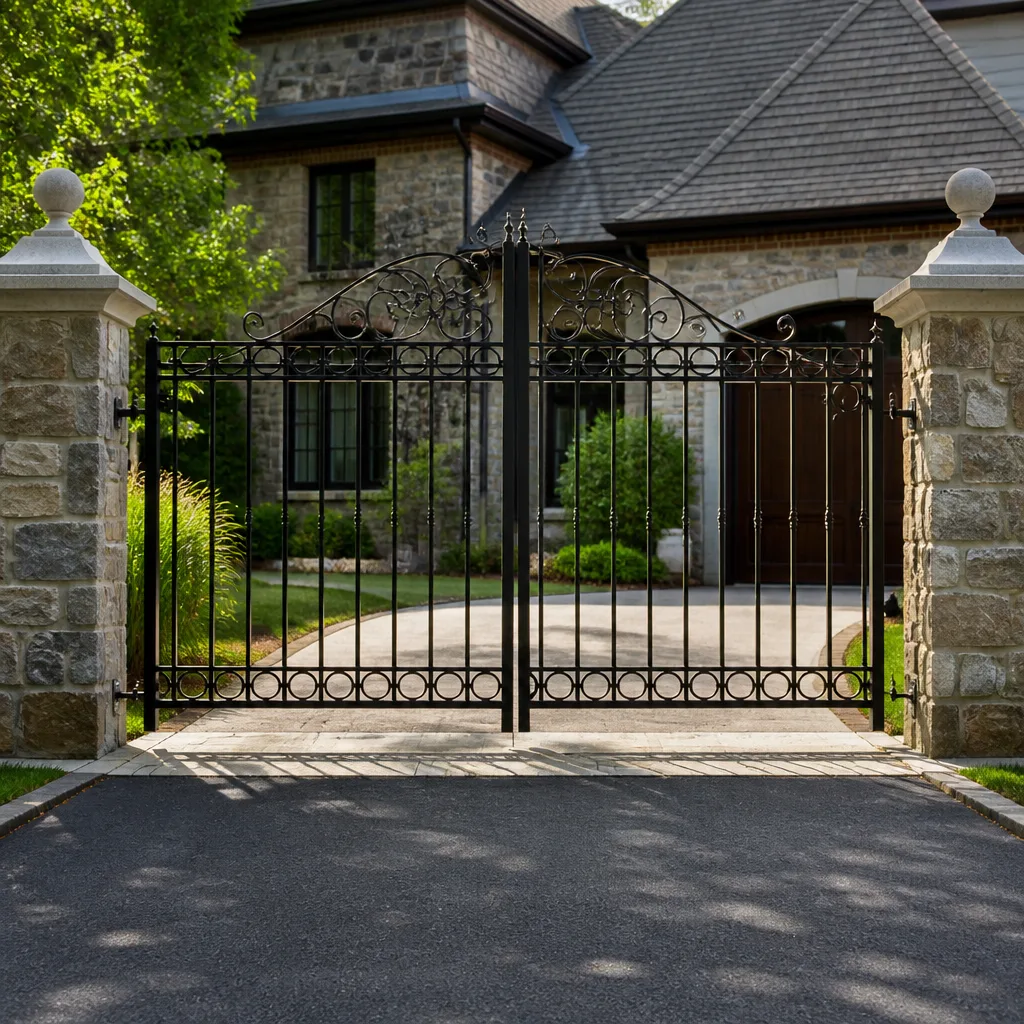
 Wrought iron
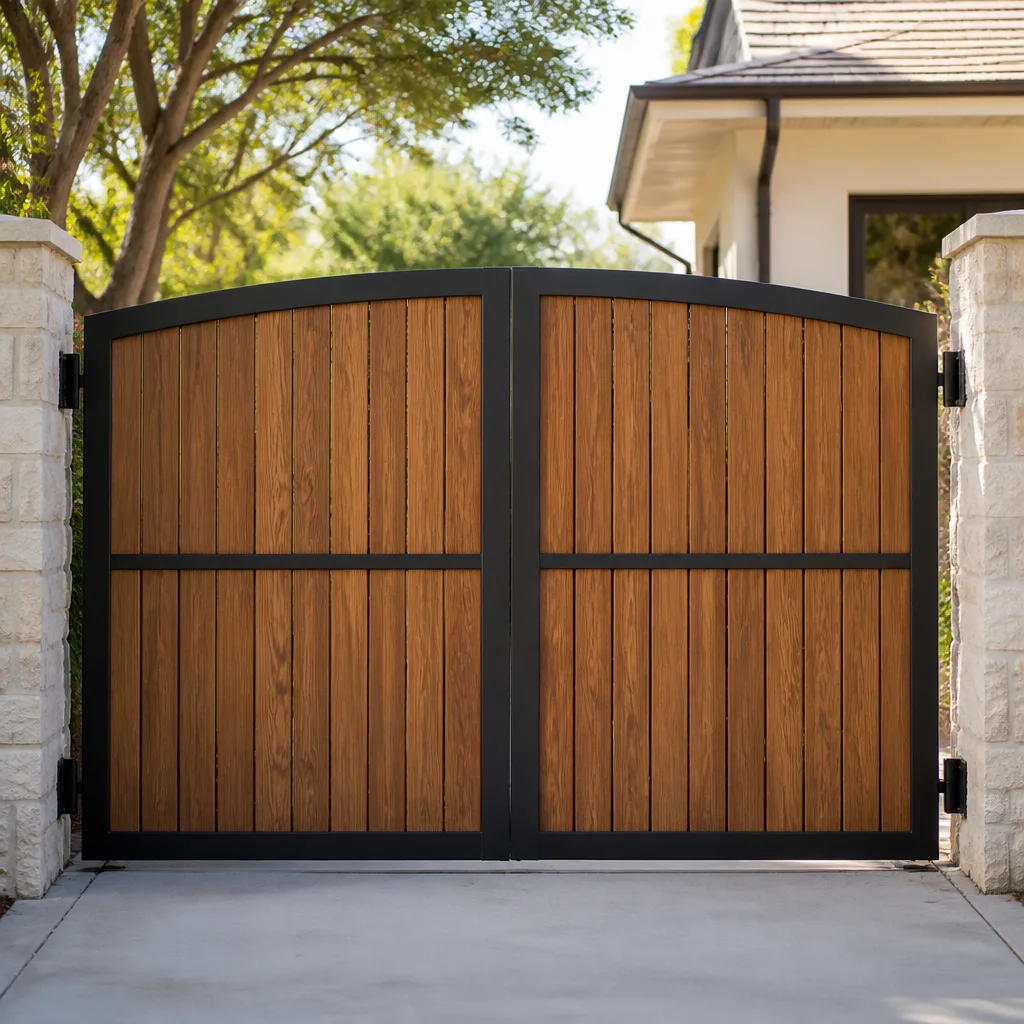 Wood & steel frame
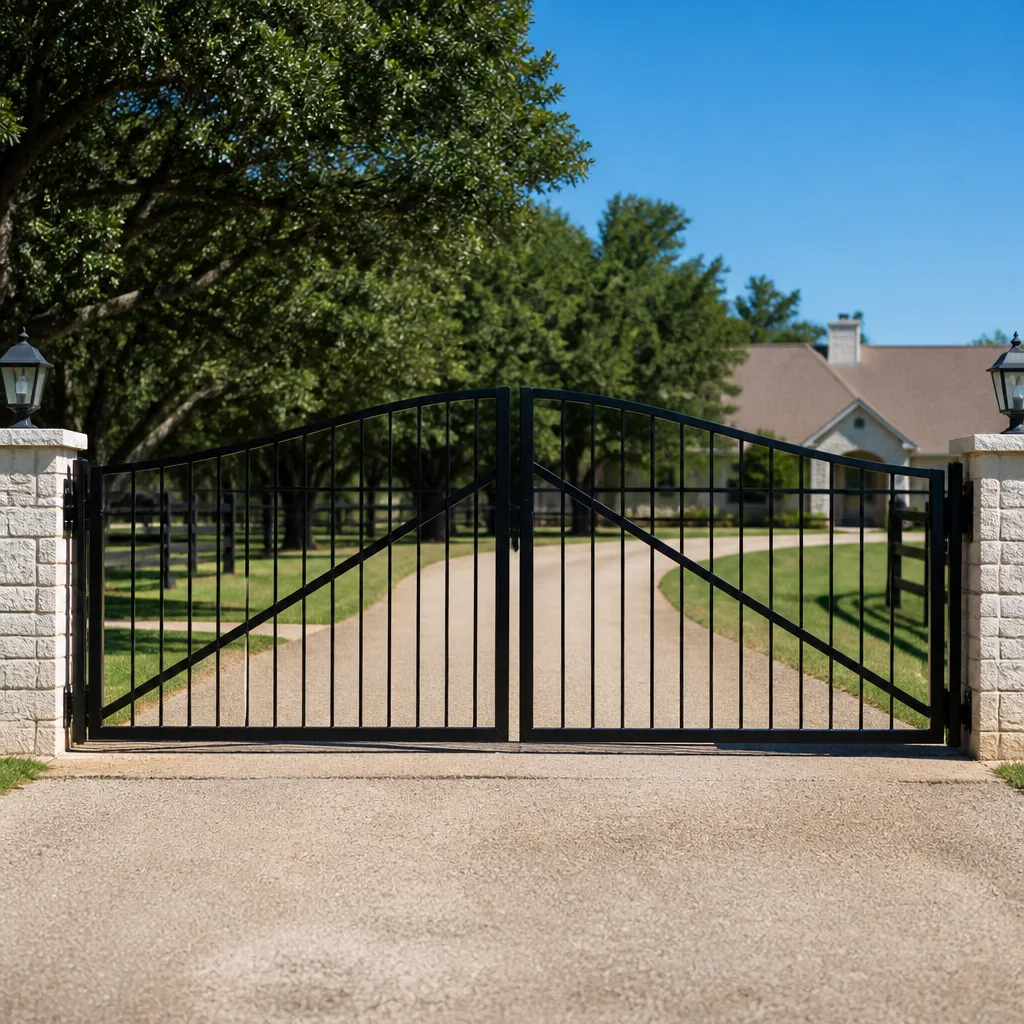 Farm & ranch
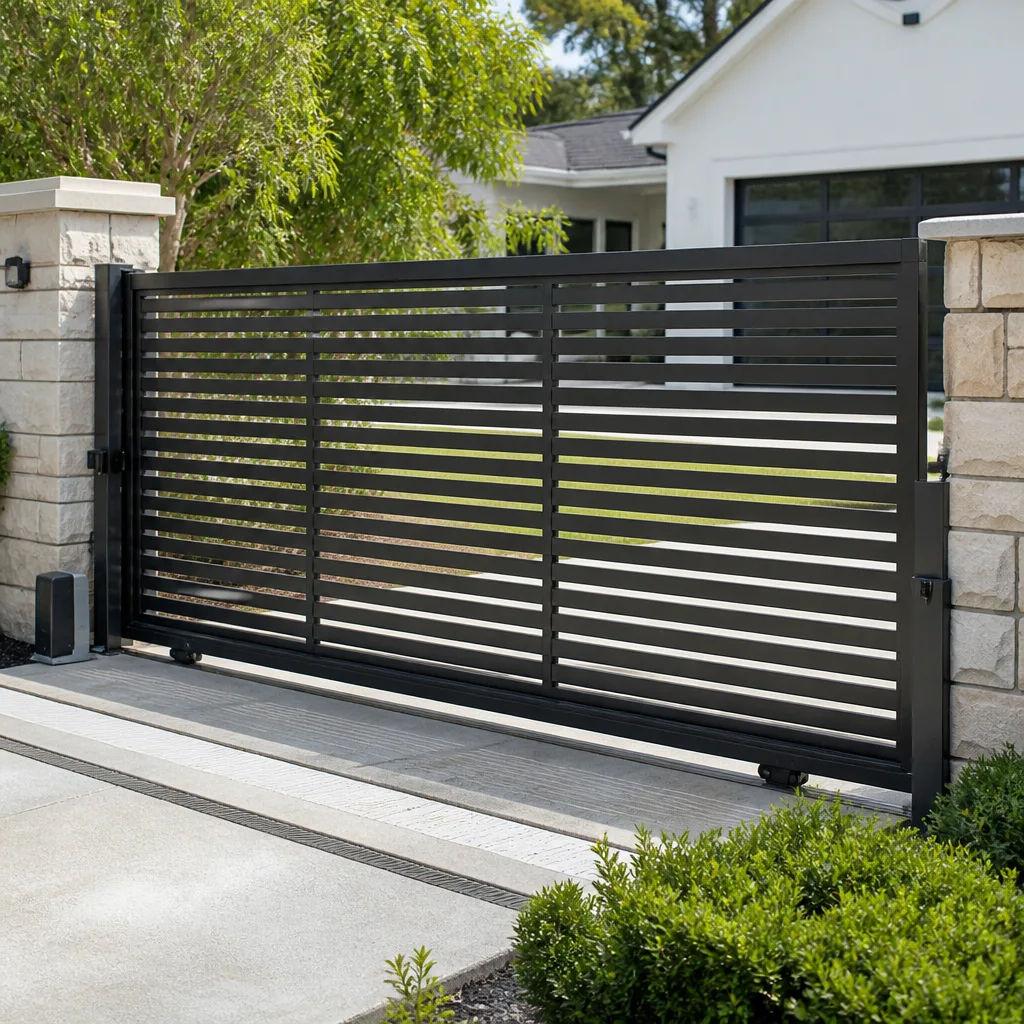 Sliding driveway gates
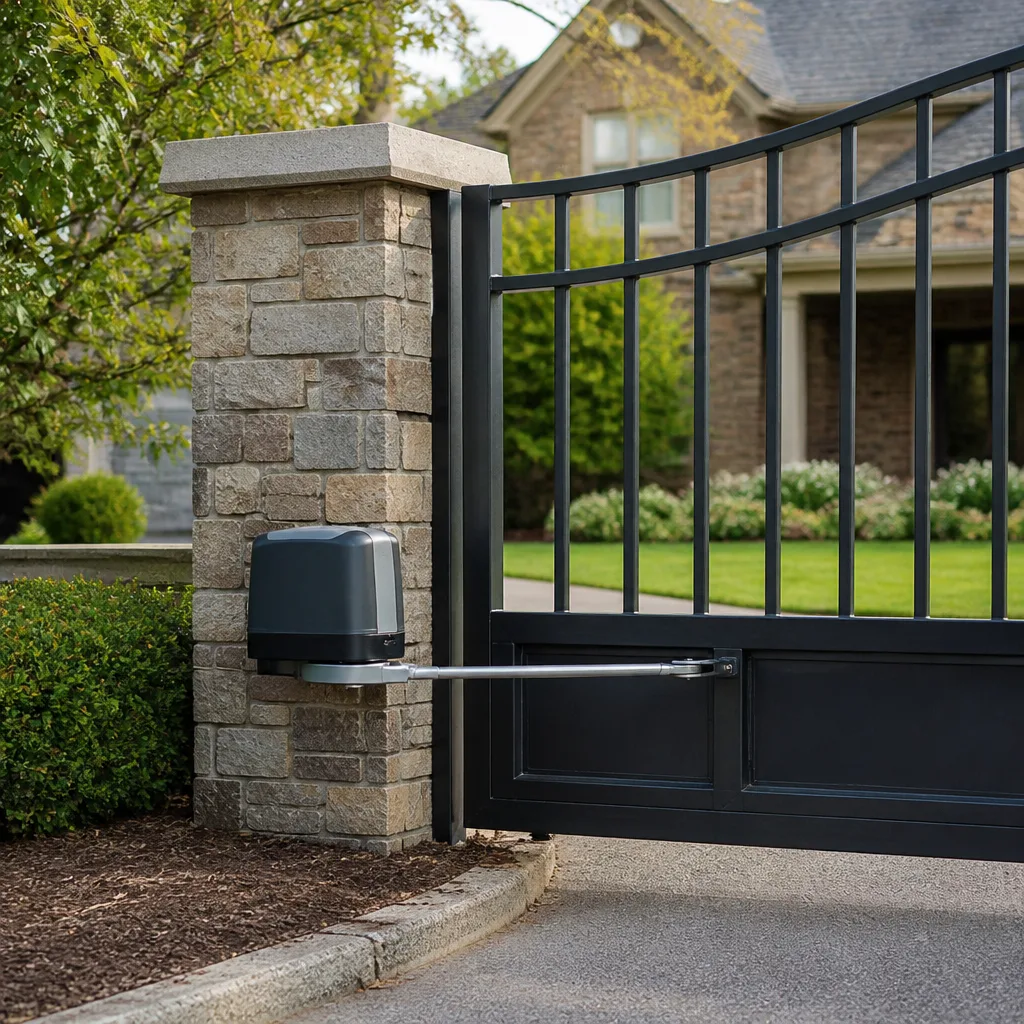 LiftMaster operators
Free on-site gate assessment - hinges, posts, and your LiftMaster or Nice gate operator checked before anything is quoted
The assessment is free and the quote is the invoice.
Get your free estimateStyles & brands we work with
- Wrought iron
- Wood & steel frame
- Farm & ranch
- Sliding driveway gates
- LiftMaster operators
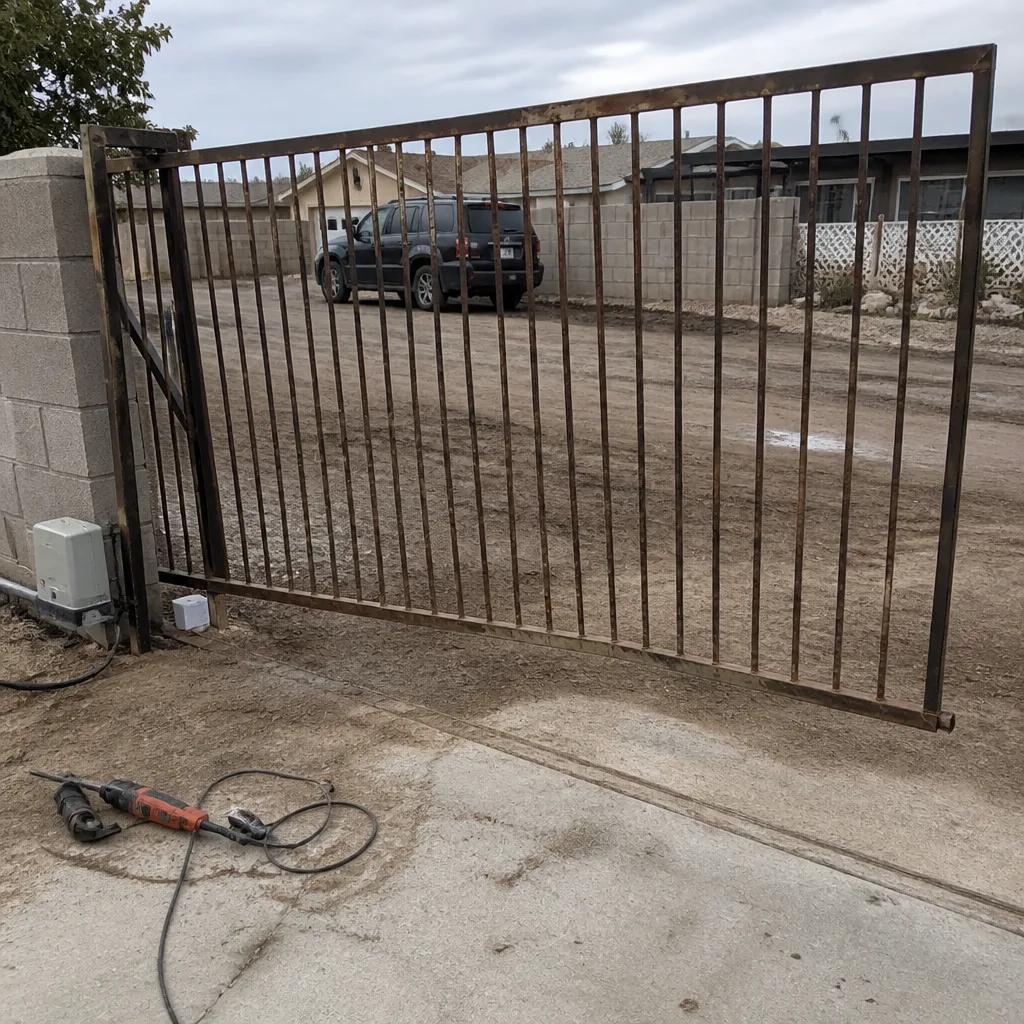
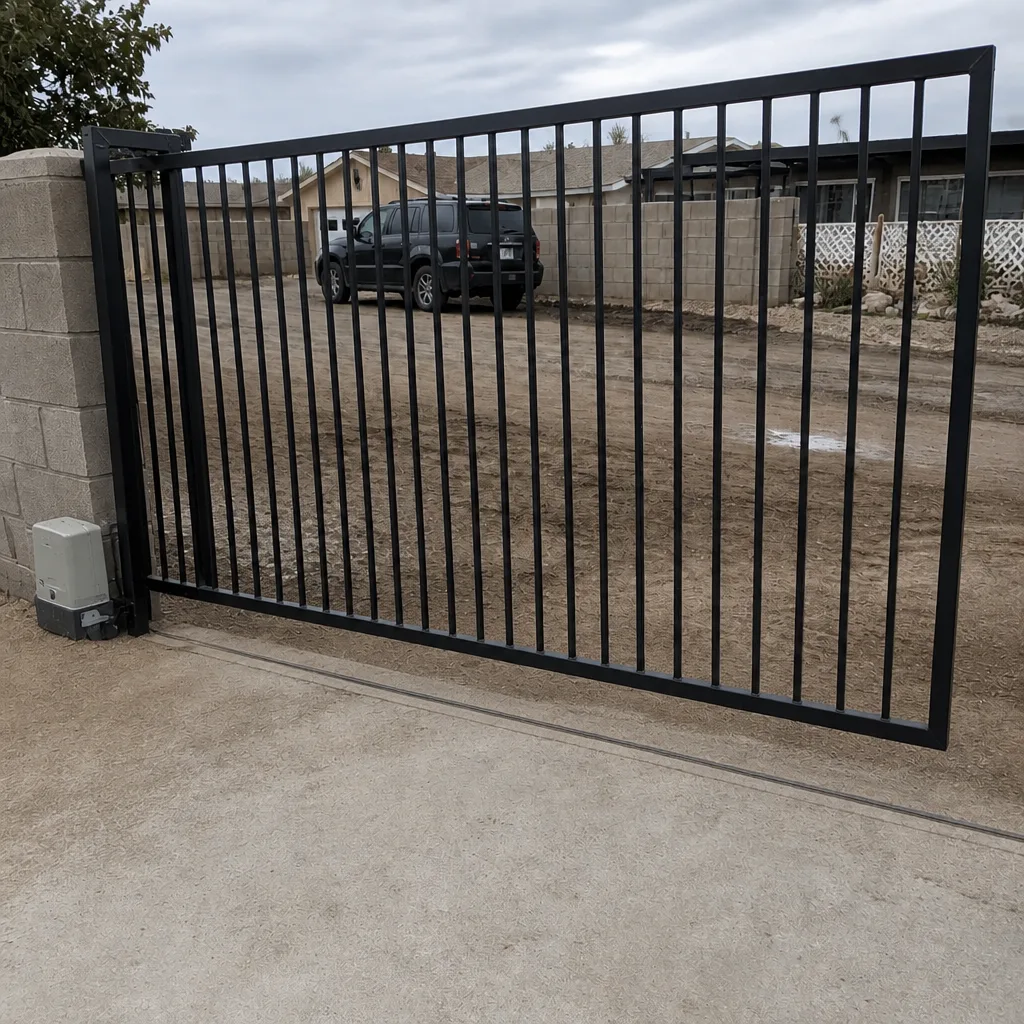
See the difference
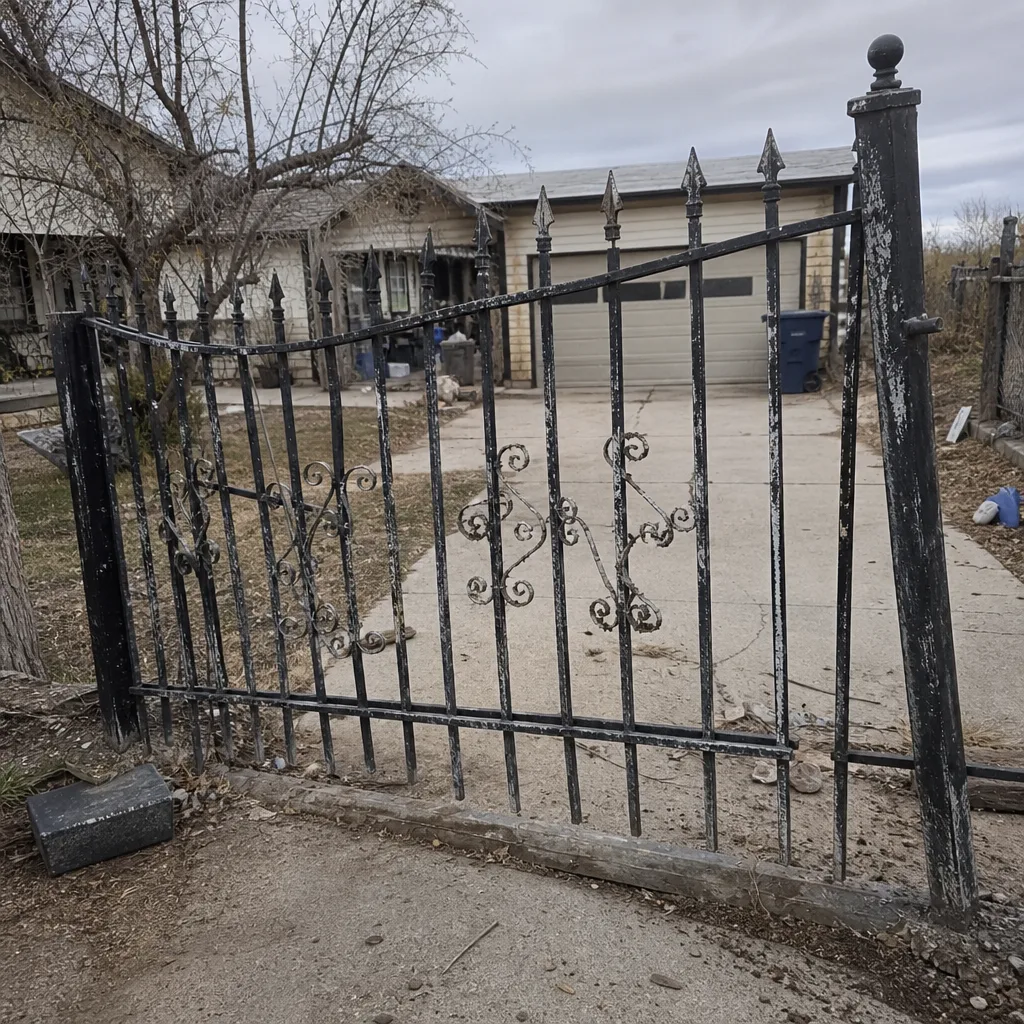 Before
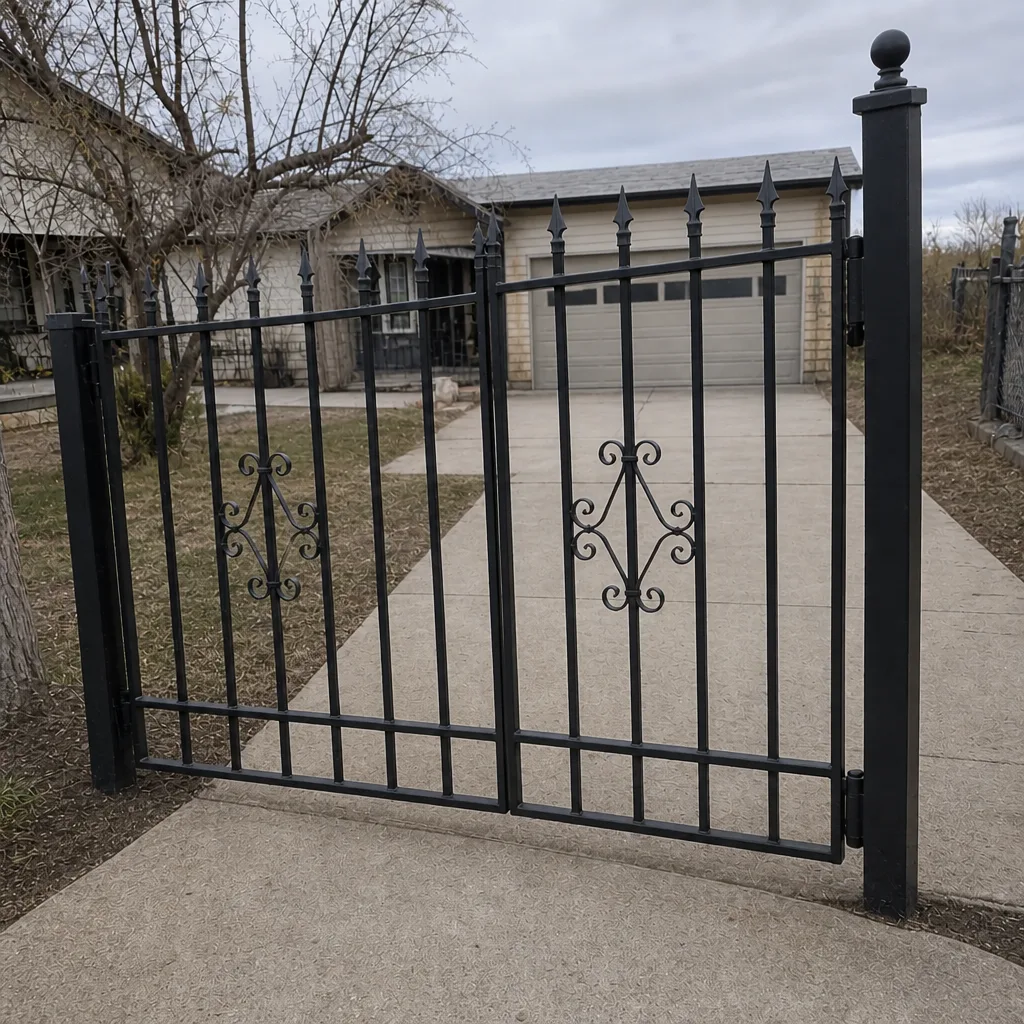 After
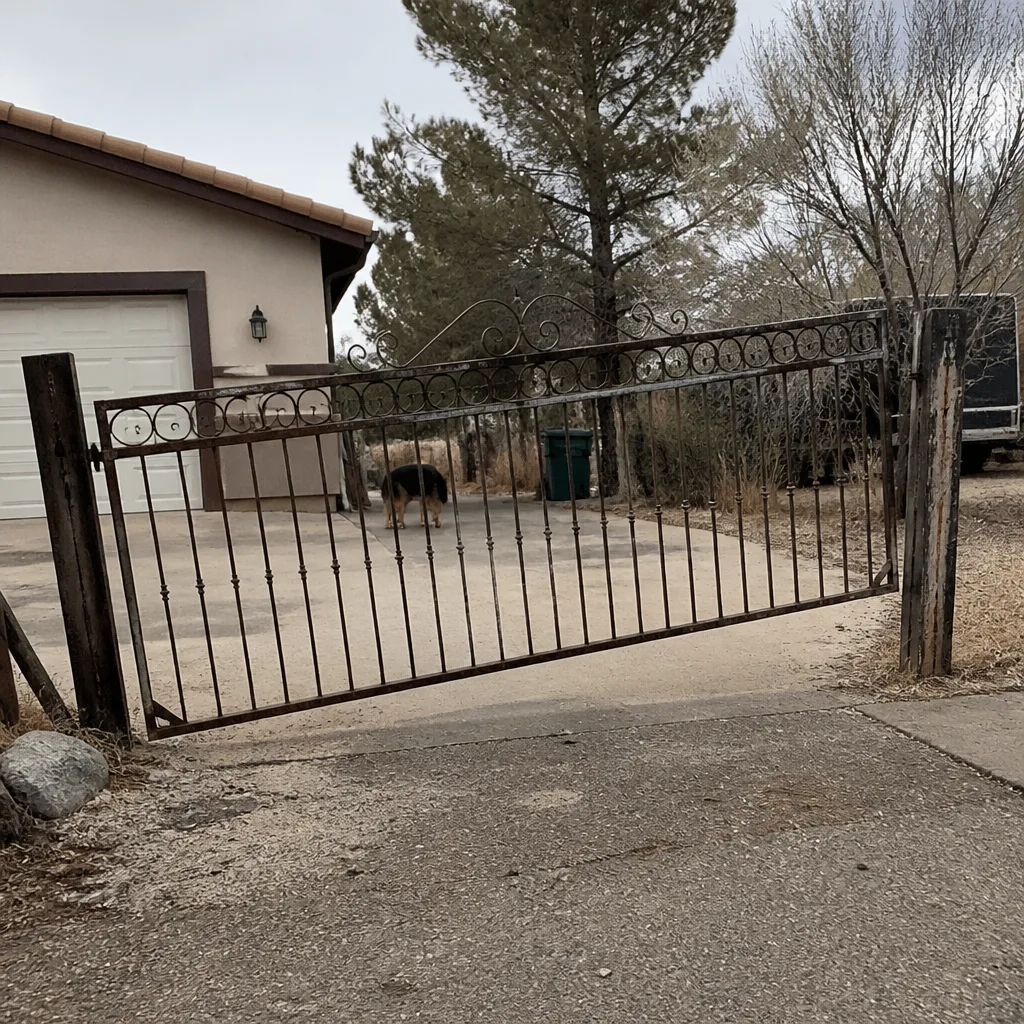 Before
 After
 Before
 After
Wrought Iron vs Aluminum Gate in Winchester, NV: Which One Holds Up Here?
Choose wrought iron if you want a gate that can be welded, reinforced, and re-hung for another generation, and choose aluminum only if you’re buying new construction, the post is sound, and you understand the corrosion points nobody mentions. For most homeowners in Winchester with a gate already on the property, the honest answer is neither “new iron” nor “new aluminum” – it’s a material assessment first, because what looks like wrought iron on a 1962 Winchester lot usually isn’t. Call (866) 984-8340 and we’ll tell you plainly what you have.
Winchester averages roughly four inches of rain a year, which is why rust here is easy to forget about. Then an August monsoon microburst drops two inches in an afternoon and every hinge collar on the block sits in standing water overnight. That cycle – soaked, then baked dry at 105°F – is the whole problem.
The Desert Corrosion Problem Nobody Writes About
Most comparison articles treat rust as a humidity question. That’s wrong for Winchester. Ambient moisture in the Mojave is so low that atmospheric rusting is genuinely slow. The rust that eats gates here happens at contact points where water gets trapped and can’t drain: hinge collars, post base plates, lag-bolt holes, and the joint where the frame meets the bottom rail.
What makes Winchester worse than a damp climate is the cycle. A monsoon storm pools water in those trapped spots. The next morning the sun comes back and the temperature climbs past 100°F. The water evaporates fast, and as it does it concentrates whatever minerals and dust were dissolved in it directly onto bare steel. Repeat that twenty or thirty times over a few summers and you get pitting and seam rust that a coastal climate would take decades to produce.
Three things drive it:
- Zero drainage clearance. Gates hung tight to the ground, or with hinge collars that sit flush, hold water. A quarter-inch of clearance changes the whole lifespan.
- Wind-driven sand. Blown grit packs into collar gaps and holds moisture against the metal like a sponge. It also chews through paint films, exposing bare steel to the next rain.
- Thermal expansion and binding. Metal expands in July heat and gates that closed cleanly in March start dragging. Dragging gates stress hinges, and stressed hinges crack at the weld – which is where rust starts next.
Here’s the part that matters for your decision: aluminum doesn’t sidestep this. Aluminum doesn’t rust the way steel does, but it corrodes at welded joints and at any point where aluminum meets steel fasteners. That’s galvanic corrosion, and it’s the failure mode nobody puts in the comparison chart.
What’s Actually On a 1950s-1970s Winchester Property
Winchester’s housing stock is mostly 1950s through 1970s single-family homes, duplexes, and small motel courts, with a scattering of newer infill townhomes. On the older properties, the original pedestrian and driveway gates are almost always painted black and described by the owner as “wrought iron.”
Most of them are mild steel. True wrought iron was essentially out of production in this country by the early 1970s. What’s on a 1964 Winchester gate is mild steel tubing or bar stock, sometimes with cast finials and hinge hardware, and mild steel corrodes faster and less predictably than real wrought iron. It’s also less tolerant of the sagging that comes from decades of Mojave soil movement – our soils shift, settle, and heave with the wet-dry cycle, and a gate hung in 1968 has been riding that movement its whole life.
This is why a material assessment before any repair isn’t optional in Winchester. A magnet tells you a lot in ten seconds. Whether the post is a 2-inch pipe sunk three feet deep or a 1½-inch post with a half-bag of concrete tells you the rest. Those facts decide whether a repair holds or whether you’re back on the phone in eighteen months.
Side-by-Side: Wrought Iron vs Aluminum in Winchester Conditions
| Factor | Wrought iron / mild steel | Aluminum |
|---|---|---|
| Rust behavior in low humidity | Slow atmospheric rust, severe at trapped-water contact points | No red rust, but pits and oxidizes at welds and in salt/dust films |
| Failure at fasteners | Rust jacking at lag bolts and hinge screws | Galvanic corrosion where aluminum meets steel bolts or a steel post |
| Repairability after 40 years | Weldable – can be reinforced, patched, re-hung | Harder to field-weld; usually needs mechanical fasteners or replacement sections |
| Adding automation later | Operator mounting plates and hinge reinforcement can be welded on | Requires bolt-on brackets or specialized mounting kits |
| Weight and wind load | Heavier – needs a properly engineered post for automation | Lighter – friendlier to marginal existing posts |
| Cost to repair a hinge or collar | Typically $180-$420 including weld and repaint | Typically $220-$500 when brackets and fasteners are involved |
| Best for | Existing gates worth saving, gates being converted to automation | New builds with sound posts, low-maintenance preference |
For a homeowner weighing Gate Installation against repair, the cost table tilts toward repair far more often than people expect. A new automated driveway gate in Winchester runs $3,200 to $7,500 depending on span, post conditions, and opener brand. A hinge rebuild, collar replacement, and post re-anchor on an existing iron gate usually lands under $900.
The Automation Question That Decides It
If you’re planning to convert a manual gate to an automated one – and a lot of Winchester owners along the Decatur Boulevard and Desert Inn Road corridors are, because aging manual gates on small commercial parcels get hard to manage – the material choice matters more than the opener brand.
Iron and mild steel can be welded. That means we can add hinge reinforcement, weld on an operator mounting plate for a LiftMaster or FAAC arm, and stiffen a gate that was never engineered for a motor. Aluminum gates require bolt-on brackets, and those brackets become the next corrosion point at the aluminum-to-steel interface. It’s workable. It’s just less forgiving, and it costs more in labor to do right.
There’s a second issue specific to this area: because Winchester is unincorporated, gate permits and inspections run through Clark County rather than the City of Las Vegas. We regularly see gates installed by Las Vegas-licensed contractors that fail county inspection for missing right-of-way clearance or insufficient wind-load anchoring. If you’re automating, that inspection is coming. Get the post and the gate rated for it before the motor goes on.
How We Assess a Gate Before Recommending Anything
- Check the material. Magnet test and a look at the weld style separates true wrought iron from mild steel from aluminum.
- Inspect the post. Diameter, depth, concrete condition, and whether it’s plumb. A post that’s moved two inches rules out automation without work first.
- Map the corrosion. We photograph every hinge collar, base plate, and fastener so you can see exactly what’s failing and where.
- Test the swing and the clearances. Ground clearance, latch alignment, and drain paths at each hinge.
- Give you a written recommendation. Repair it, reinforce it for automation, or replace it – with a price for each, settled before a bolt is turned.
Our technicians have up to 13 years of experience with both materials on Winchester’s specific housing stock, and we’ve worked on enough of these short-setback lots to know which repairs hold and which ones come back. When you’re ready to look at a fresh gate rather than a repair, our Gate Installation in Winchester page covers what new construction involves here.
FAQs
No – aluminum is not automatically better here, and in some cases it’s worse. Aluminum won’t rust, but it corrodes at welded joints and anywhere it contacts steel fasteners or a steel post, which is precisely the galvanic failure point most comparison articles leave out. For an existing gate worth saving or a gate being converted to automation, iron and mild steel are usually the more repairable choice.
A new aluminum driveway gate in Winchester typically runs $2,400-$5,800 installed, and a comparable wrought iron or steel gate runs $3,200-$7,500 once you account for the heavier post and anchoring required. Repair on an existing iron hinge or collar is usually $180-$420. Call (866) 984-8340 for an exact quote – estimates are free.
A magnet tells you most of it in seconds, since true wrought iron and mild steel both attract strongly while aluminum does not. What matters more is that nearly all original gates on Winchester’s 1950s-1970s housing stock are mild steel, not true wrought iron – which corrodes faster and sags more under Mojave soil movement. That’s why we assess before quoting any repair.
We can automate either, but aluminum requires bolt-on brackets or specialized mounting kits rather than welded reinforcement, which adds labor cost and creates a new corrosion point at the aluminum-to-steel interface. Iron gates can be welded directly – hinge reinforcement and operator plates go on cleanly. We service LiftMaster, FAAC, BFT, and Mighty Mule among other brands, so the right opener is matched to what you actually have.
If you’d rather have it looked at, Ironworks Gate Co. Winchester offers a no-pressure assessment in Winchester – call (866) 984-8340. We’ll tell you in plain terms whether your gate is worth repairing, worth reinforcing for automation, or due for replacement, and we’ll put the price in writing before we start. Every job is backed by our 90-Day Done Right Promise.
Written by the team at Ironworks Gate Co. Winchester, serving Winchester, NV.