
Last updated November 18, 2026
 Wrought iron
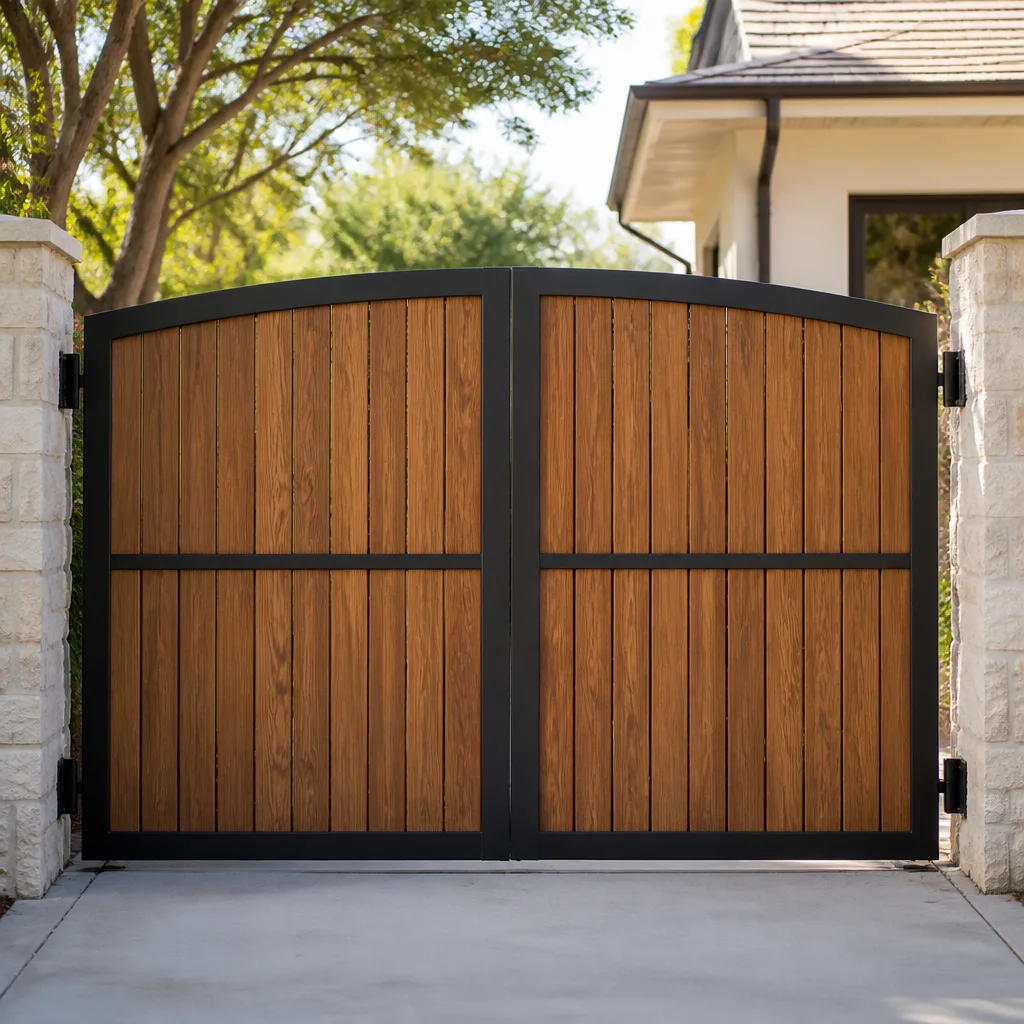 Wood & steel frame
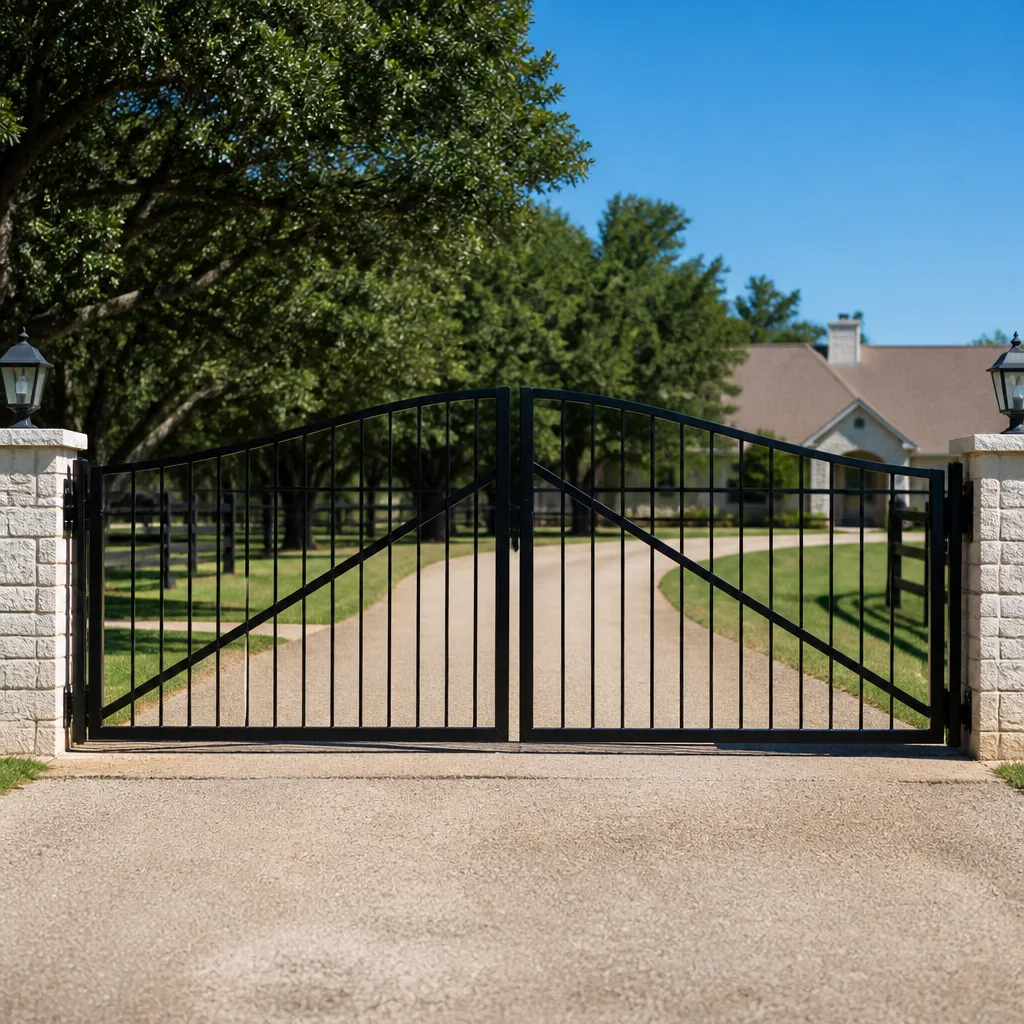 Farm & ranch
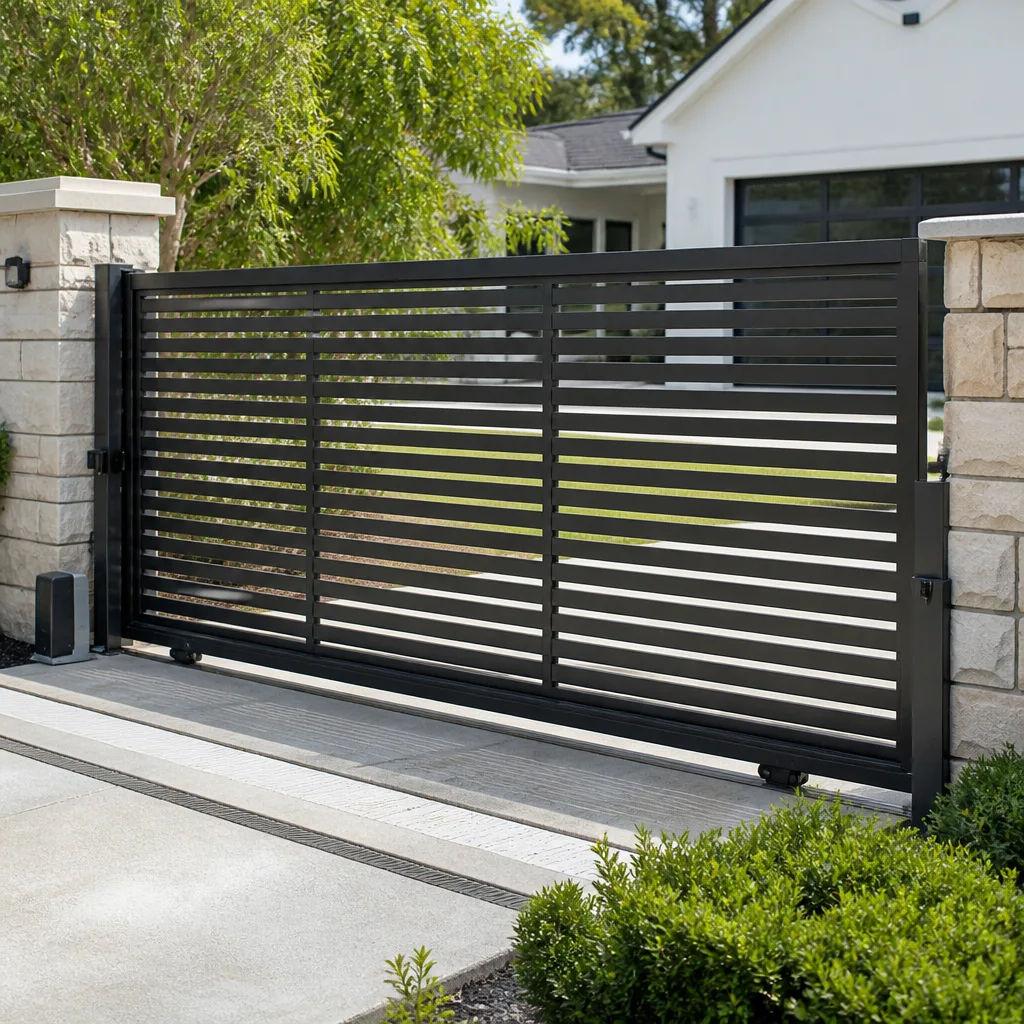 Sliding driveway gates
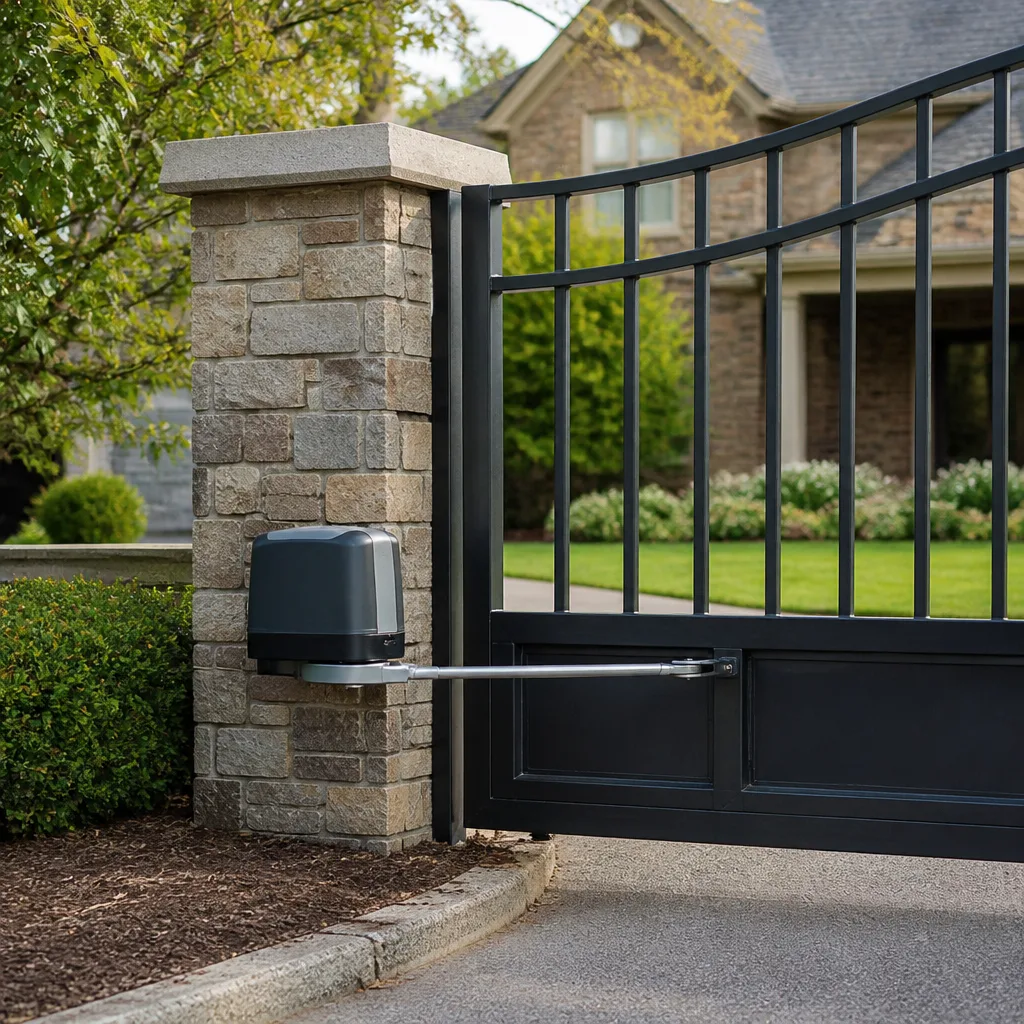 LiftMaster operators
Free on-site gate assessment - hinges, posts, and your LiftMaster or Nice gate operator checked before anything is quoted
The assessment is free and the quote is the invoice.
Get your free estimateGate Parts & Welding Maintenance Schedule: What to Do and When
The hinge pins on a residential swing gate complete somewhere between 1,500 and 3,000 cycles per year. That is the equivalent of roughly 25,000 miles on a car. And yet almost no homeowner has ever lubricated them. Most gates in Winchester are maintained on the “wait until something breaks” schedule, which is no schedule at all – it is a countdown. This guide lays out a plain calendar with specific tasks, specific products, and specific things to look for at each interval. What follows is the maintenance plan you should have received on installation day but almost certainly did not.
Quick Answer
Lubricate every gate hinge, roller, and drop rod with a lithium-based or silicone grease twice a year, inspect welds and posts for movement every spring and fall, and clean and test your operator each season. Welded joints and posts need a trained eye – if a weld shows cracking, rust bleed, or the post has shifted, stop using the gate and call a professional. Maintenance is a homeowner task; structural repair and welding are not.
Styles & brands we work with
- Wrought iron
- Wood & steel frame
- Farm & ranch
- Sliding driveway gates
- LiftMaster operators
Table of Contents
- Why Your Gate Needs a Schedule (Not a Repairman)
- Spring Tasks for Winchester Gates
- Summer Tasks: Heat, Dust, and Operator Care
- Fall Tasks: The Most Important Season
- Winter Tasks: Cold, Wind, and Low Sun
- The Right Lubricant for Each Gate Component
- The 10-Minute Structural Inspection That Catches Weld Fatigue
- Your Maintenance Log: What to Record and Why It Matters
Why Your Gate Needs a Schedule (Not a Repairman)
A gate is a machine made of metal and mechanical joints. Machines have service intervals. Cars get an oil change every 5,000 miles. Furnaces get a tune-up every fall. A gate should get the same treatment, but it almost never does, because no one tells the homeowner what to do. When we service gates across Winchester, one of the first things we hear is “we didn’t know we were supposed to do anything.”
The result is predictable. A gate that could have run for twenty years on a simple maintenance routine goes down at year seven or eight because of a hinge that seized, a drop rod that rusted in place, or a weld that fatigued because the post shifted half an inch five years ago. The repair cost multiplies. And the homeowner is left wondering where the money went.
In our experience servicing homes throughout Winchester and the surrounding valley, most gate failures we see are not the result of bad materials. They are the result of mechanical neglect that piled up slowly. A lubricant applied twice a year would have prevented most of them. A visual inspection in spring and fall would have caught the rest before they became expensive.
The schedule below is built for Winchester’s climate specifically. The desert Southwest is not the same as the East Coast; the dust, the dry heat, the wind, and the occasional freeze all interact with gate metal in ways a generic national checklist will not address. Use this as your reference and keep it where you will actually look at it.
Spring Tasks for Winchester Gates
Spring is the reset season. Winter wind and the first dust storms of the year have worked sand and grit into every joint on your gate. The first warm weekend of the season is the time to clean the slate. If you’ve ever wondered how to keep your gate from sounding like it is grinding when it opens, this is the answer.
Here is what to do in spring:
- Wash the entire gate with a garden hose and mild soap. Not a pressure washer – high pressure drives water into the operator housing and behind powder-coat edges where it causes rust. A soft brush and garden hose pressure are enough.
- Lubricate every hinge pin and roller. Use a lithium-based grease or a silicone spray on hinge pins and wheeled rollers. Wipe off excess so it does not become a dust magnet.
- Test the operator, photo-eye safety sensors, and keypad. Open and close the gate three full cycles. If a Mighty Mule or LiftMaster operator hesitates, reverses without command, or the keypad fails to respond, note it now.
- Walk the entire gate line and inspect for loose bolts, cracked welds, or wobble in posts. Push hard against each post. If the top of the post moves more than a quarter inch, that post has shifted and needs investigation.
- Clean the track if you have a sliding gate. Sweep debris off the track and clear any vegetation growing along the track line.
We routinely see gate hinges seize in April because they were not lubricated in October. The dry Nevada air does not cause rust the way coastal humidity does, but it does cause lubricant to dry out and turn into a gummy paste that traps dust and grits up the joint. A thorough spring service stops that cycle before it starts. If your gate hasn’t had any service in years, it usually needs a professional reset – see our Gate Repair in Winchester page for the full scope of what that involves.
Summer Tasks: Heat, Dust, and Operator Care
Winchester summers are tough on gate automation. Afternoon temperatures push past 100 degrees, and metal gates expand enough that the swing arc or track alignment can shift by a fraction of an inch. On a tight gate, that is the difference between smooth operation and a motor straining against a jammed hinge. Summer is the season to watch the operator more than the metal.
Key summer tasks:
- Check operator housing for heat buildup. Operators in direct sun run hotter. If yours is mounted in full afternoon sun, consider a shade bracket or service visit to verify the motor is not running beyond its rated temperature.
- Clean photo-eye sensors and keypad glass. Dust settles on the safety sensor lenses, and a partially obscured sensor can cause nuisance reversals. A soft cloth and glass cleaner once a month is enough.
- Listen for changes in motor sound. If your operator starts running louder, slower, or with any grinding noise, something is loading the motor – usually a hinge or roller that dried out in the heat. Address it now, not in the fall.
- Test the manual release. Every operator has a manual release. Test it in summer while the gate is still functioning so you know how it works before you need it. If you cannot get the gate to release manually, that is a service item.
- Inspect the operator battery backup if your model has one. Batteries age faster in high heat, and a backup that fails in an emergency is no backup at all.
If your operator is one of the brands we service most – LiftMaster, FAAC, BFT, Mighty Mule, and the rest – we carry the specific test procedures and parts to verify it is running within spec. That coverage is one reason we can usually resolve an operator issue in a single visit rather than ordering parts and returning later. For a full operator tune-up, the Gate Motor & Opener in Winchester service page lays out what we test.
Fall Tasks: The Most Important Season
Fall is the single most important maintenance window of the year, because it is the last one before winter’s wind and cold work on the gate. What you do in October decides how the gate behaves in January. Skipping the fall service is the most common reason we get called out on cold mornings.
The fall checklist:
- Full lubrication pass. All hinge pins, rollers, drop rods, and the operator drive chain or arm pivot. Use the product list in the next section – not just whatever is in the garage.
- Tighten every accessible bolt and screw. Vibration loosens fasteners over a season. Bring every gate hardware fastener back to snug. Do not overtighten – cracked powder coat around a bolt is a rust start point.
- Inspect welds at all joint locations. Look for rust bloom along a weld bead, tiny cracks in the weld itself, or a change in the paint around a joint. Any of those is a sign the weld is fatiguing. This is a call-a-professional item, not a homeowner task.
- Clear vegetation from the gate arc and posts. Roots and vines can push on posts, and vegetation traps moisture against the metal.
- Test the full system end to end. Keypad, remote, safety sensors, auto-close timer, manual release. Note anything that hesitates.
- Book any needed repair before winter. Cold weather makes welding and painting harder to schedule. Getting a repair handled in October means the gate is whole before the cold settles in.
We typically see a spike in calls right after the first strong wind event of the season – usually late October or November in Winchester. That is not coincidence. A gate with a slightly loose post or a fatigued weld can survive summer and fail the first time the wind pushes against it. Fall service is how you avoid being part of that spike. If you’d like it done by a professional, our seasonal tune-up is one option – see the Ironworks Gate Co. Winchester home page for what’s included.
Winter Tasks: Cold, Wind, and Low Sun
Winchester winters are mild compared to most of the country, but they are not warm. Overnight freezes crack hardened grease, and the dry winter wind pushes fine sand into every mechanical joint your gate has. Winter maintenance is light, but it matters because winter is when gates fail without warning.
Winter tasks:
- Re-lubricate any hinge or roller that sounds dry. Cold weather thickens grease, so the first sign of a failing joint is often a squeak that only happens in the morning.
- Check the operator for cold-start behavior. If your gate is slower to open on cold mornings than in summer, that is normal to a degree, but hesitation before movement is a sign the operator or a hinge needs attention.
- Keep the gate path clear of debris. Winter wind brings sand and yard debris that can pile up behind a sliding gate or under a swing gate, causing the operator to labor.
- Visually inspect the gate after any high-wind event. Look for a gate that suddenly hangs crooked, a post that has shifted, or any new noise. High-wind failures often show up as a slow drift rather than a sudden break.
- Do not force a gate that is stuck. If the gate will not open by hand with the operator released, or if the operator strains, stop. Forcing it turns a small repair into a large one.
Cold-weather failures are the most expensive kind because they happen at the worst time – usually when you are leaving for work or arriving home late. Winter is a check-and-observe season, not a repair season. If you see anything concerning during a winter inspection, that is the moment to call. A small issue found in December is a fraction of the cost of a failed weld found in February.
The Right Lubricant for Each Gate Component
Not all lubricants are interchangeable, and the wrong product can do more harm than good. In our experience, three products cover almost every homeowner-accessible component on a residential gate. Everything else is a professional task. Here is the short list.
Hinge pins and swing gate pivots: Lithium-based grease or a heavy silicone spray. Lithium grease clings well and does not run off in summer heat. Apply twice a year with a small brush or a grease gun, and wipe away any excess after the first few cycles. Avoid generic WD-40 as a standalone lubricant on hinges – it cleans well but does not provide lasting protection.
Drop rods and gate latches: Dry-film PTFE spray or a light silicone spray. Drop rods and latches should engage smoothly without attracting dust, which is why dry-film is the right choice. Grease on a drop rod will attract grit and eventually jam the rod in place – a common Winchester problem after a dry, dusty summer.
Sliding gate tracks and rollers: Silicone spray on the rollers, dry lubricant on the track. Never use grease on the track itself; it becomes a grit magnet and will wear through the roller faster than a dry track would.
Powder-coated surfaces: Never use an oil-based or solvent-based product directly on powder coat. Solvents dull the finish and can lift the coating at edges. A clean, damp cloth is the right answer for powder coat. If you must clean a stubborn spot, use a mild dish soap solution and rinse. If your gate has a specific finish you are unsure about, ask before applying.
Operator drive mechanisms: Only lubricant recommended by the operator manufacturer. LiftMaster, FAAC, BFT, and Mighty Mule operators each have specific requirements for the drive chain or arm – the wrong product can cause slip or damage. Always check the operator manual before lubricating a drive mechanism. If you cannot find the manual, that is the moment to call a professional rather than guess.
We stock the correct lubricants for the brands we service, so a homeowner who wants an expert pass twice a year can have it done correctly in one visit. If you’re not sure what your gate needs, our Gate Installation in Winchester team also handles new-gate servicing – a newly installed gate should have its first lubrication pass within three months of installation.
The 10-Minute Structural Inspection That Catches Weld Fatigue
Weld fatigue is the most expensive gate failure on the list, and it is also the easiest to prevent – if you know what to look for. The inspection below takes about ten minutes and requires no tools. Do it every spring and fall.
- Walk the gate line at a slow pace. Look at the entire structure. Note any place where the paint or powder coat has changed – rust bloom, cracking, or a color shift around a weld is a warning sign.
- Push on each post at shoulder height. A post that flexes more than a quarter inch has moved or cracked at the base. Posts are set in concrete; when the concrete cracks or the soil shifts, the post wiggles and the weld has to carry load it was never designed for.
- Grab the gate and try to rock it gently. A properly hung gate should resist rocking. If the free end of the gate can move an inch or more without resistance, the hinges are worn or the structure has flexed.
- Inspect the corners of the gate frame. Look for hairline cracks in the weld bead at every corner. A crack begins tiny and grows. If you can see daylight through a weld, the weld is already compromised – stop using the gate.
- Look at the ground around each post base. Concrete that is cracked, soil that has settled or eroded, or a visible gap between post and concrete means the post is losing its footing.
- Check the gate’s alignment against the posts. A gate that used to sit square in the opening and now hangs slightly crooked has a post or hinge problem. Do not accept misalignment as “just how it is now.”
Any of these findings means the gate should be inspected by a professional before continued use. Welds and post work are not homeowner repairs. Welding hot metal under load, in a driveway, with a gate hanging overhead is dangerous work – there is arc flash, there is hot slag, there is the risk of the gate coming down. A trained welder can evaluate the joint, remove the load safely, and re-weld with the correct penetration. This is not a task for a homeowner with a welding rig from a big-box store. That is one reason the trade has a boundary around it – we’re trained for it, and you should not have to be.
The 10-minute inspection catches these issues at the point where they are still a repair, not a replacement. A gate with a single cracked weld can be re-welded in a visit. A gate that has been running on a fatigued weld for a year will often need a section replaced instead.
Your Maintenance Log: What to Record and Why It Matters
A maintenance log is a simple, powerful tool for a homeowner who plans to stay in their home. It is a sheet of paper (or a note on the phone) with a date column and a task column, and it changes how your gate ages. Here is what a maintenance log should contain, and why each entry matters.
Every maintenance log should record:
- Date of every service or inspection. A gate that has been serviced every six months for ten years will outlast a gate that has been serviced once.
- What was done. Lubricated hinges, tightened bolts, replaced a roller, adjusted the operator limit switch, re-welded a corner. Be specific.
- Who did the work. Self-service, a neighbor, or a professional. If a warranty claim comes up later, this is the first question a manufacturer or installer will ask.
- What was noticed but not fixed. A slightly loose post noted in October and fixed in November is a documented history of diligence. A loose post noted in October and ignored until it fails in March is a damage history.
- Operator behavior and any changes. If the operator used to open in 12 seconds and now takes 16, that change is a fact worth writing down.
- Photos. A picture of the weld at the top hinge every year is a powerful record. If the weld eventually fails, the photos show how it progressed and support any warranty discussion.
Why this matters for a warranty: if a gate component fails and the manufacturer or installer asks whether it has been maintained, a maintenance log is your answer. A gate that shows six-month service intervals on paper is treated differently from a gate with no records at all. And the log helps you catch a pattern before it becomes a problem – if you notice the same hinge on the log every spring, that hinge is telling you something.
The 90-Day Done Right Promise on every Ironworks job means that if something we fix isn’t right, we return and make it right. That promise pairs naturally with a maintenance log – each entry is a date and a fact, and the log lets you look back at what was done and when. A written record of what happened to your gate, kept over years, is worth more than a memory of “I think we had it serviced a while back.”
Common Mistakes to Avoid
- Pressure-washing the gate. A pressure washer drives water into the operator housing, behind powder coat edges, and into weld crevices where it starts rust from the inside. Winchester dust and summer heat make pressure washing tempting, but a garden hose and a soft brush do the job with none of the risk.
- Using WD-40 as a lubricant. WD-40 is a great cleaner and a bad long-term lubricant on gate hinges. It evaporates quickly and leaves the joint dry within weeks. Use a lithium-based grease for hinges and dry-film PTFE for drop rods.
- Greasing a sliding track. Grease on a track attracts dust and turns into a grinding paste that wears through the roller. Use silicone on the rollers and dry lubricant on the track, not grease.
- Ignoring a slight list or sag. A gate that hangs crooked is telling you the post has moved or the hinge has worn. Left alone, the operator ends up fighting the misalignment and the weld takes the load – which is where the expensive repair starts.
- Forcing a stuck gate. If the gate will not open by hand after releasing the operator, stop. Forcing it will damage the operator arm, the chain, or the weld, and the repair cost multiplies. A stuck gate is a call, not a shove.
- Welding a cracked weld yourself. Re-welding a structural gate in place is dangerous work – hot metal, arc flash, load above your head. A trained welder removes the load, evaluates the joint, and re-welds with correct penetration. This is not a homeowner task.
- Skipping the fall service because the gate “seems fine right now.” The gate that fails on the first cold morning in November is the one that got skipped in October. Fall service is the last window before winter wind and freeze land on the structure.
- Not keeping a log. Without a written record, you cannot tell a persistent issue from a new one, and a warranty conversation becomes a memory contest. A simple sheet of paper with dates and tasks solves this.
See the difference
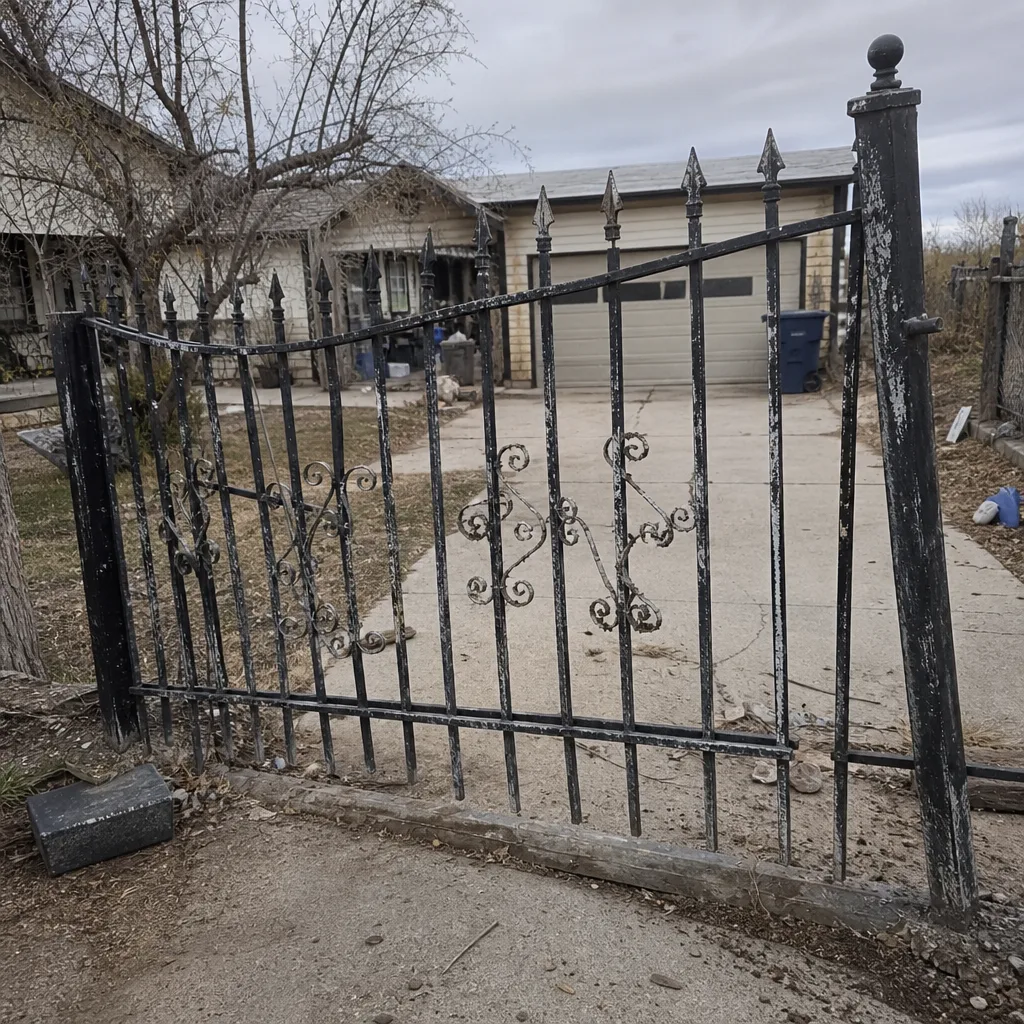 Before
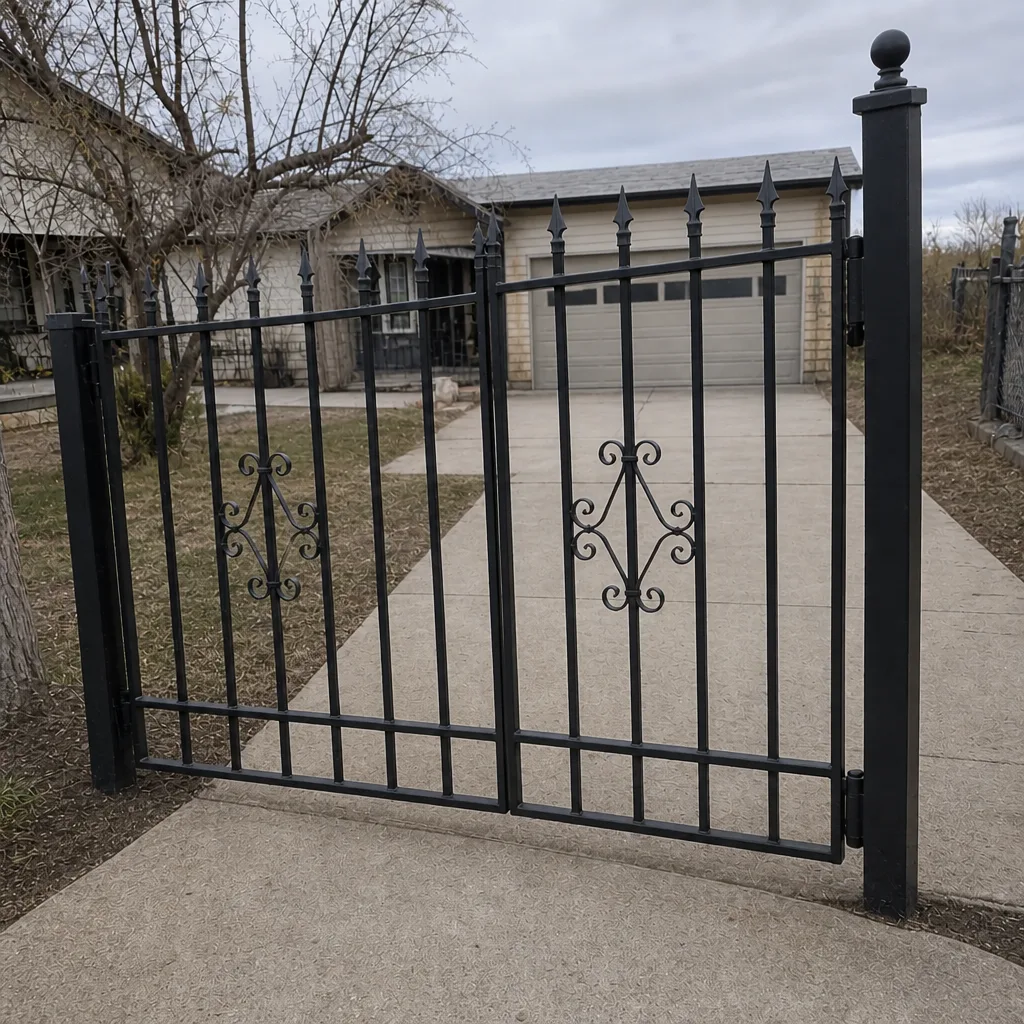 After
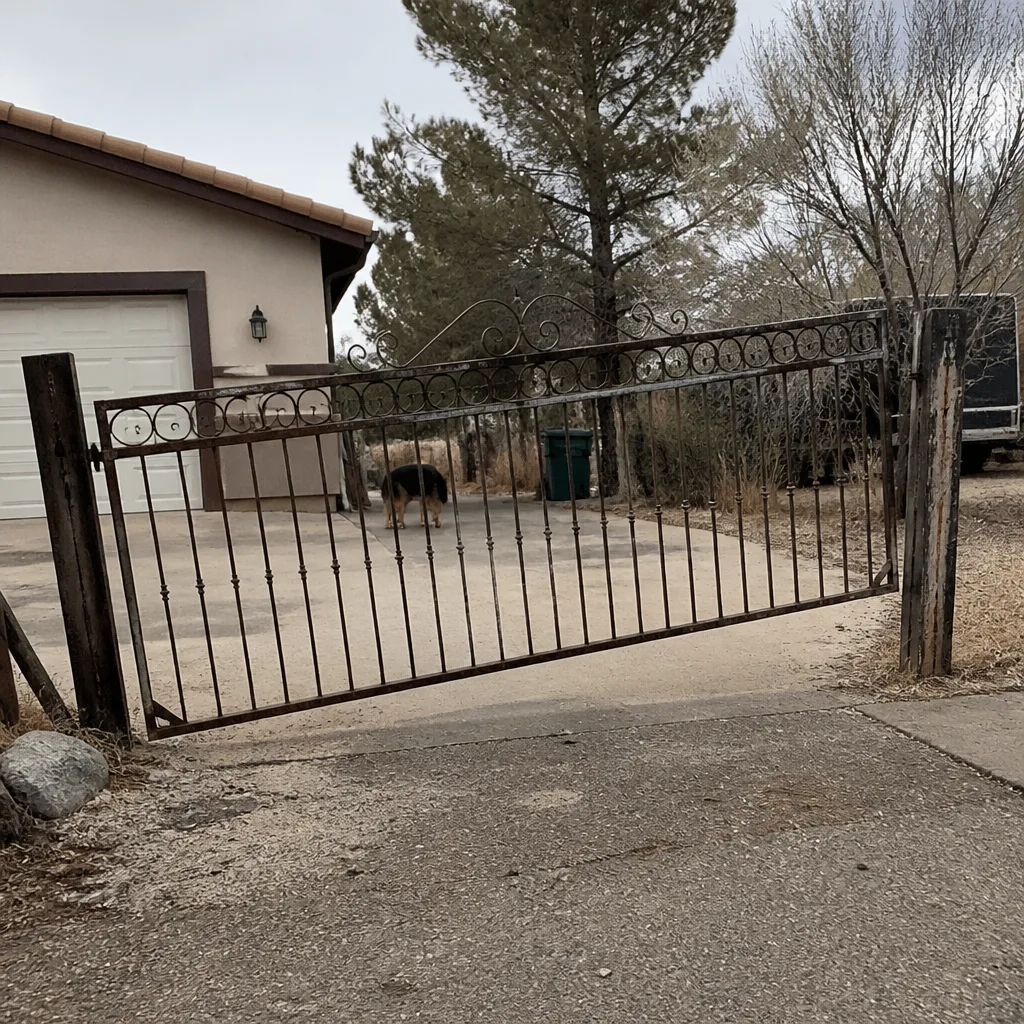 Before
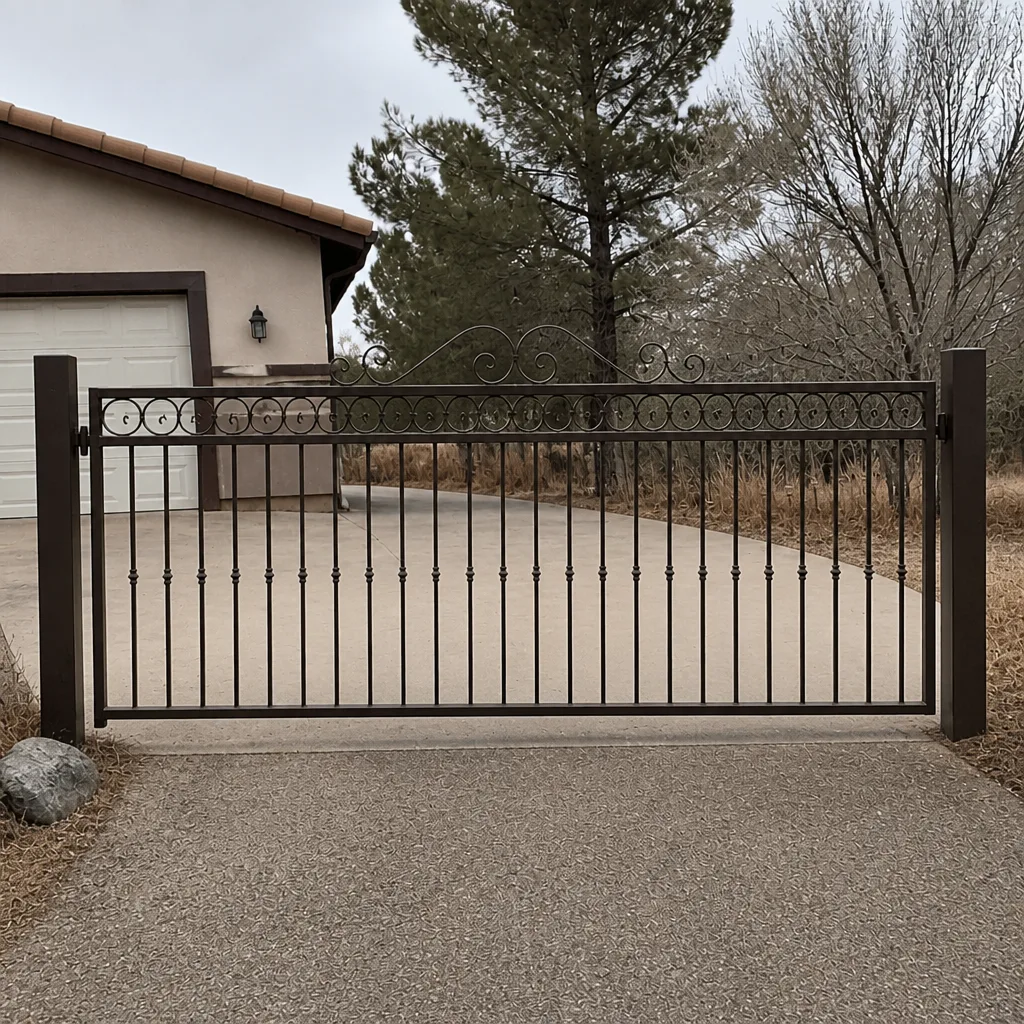 After
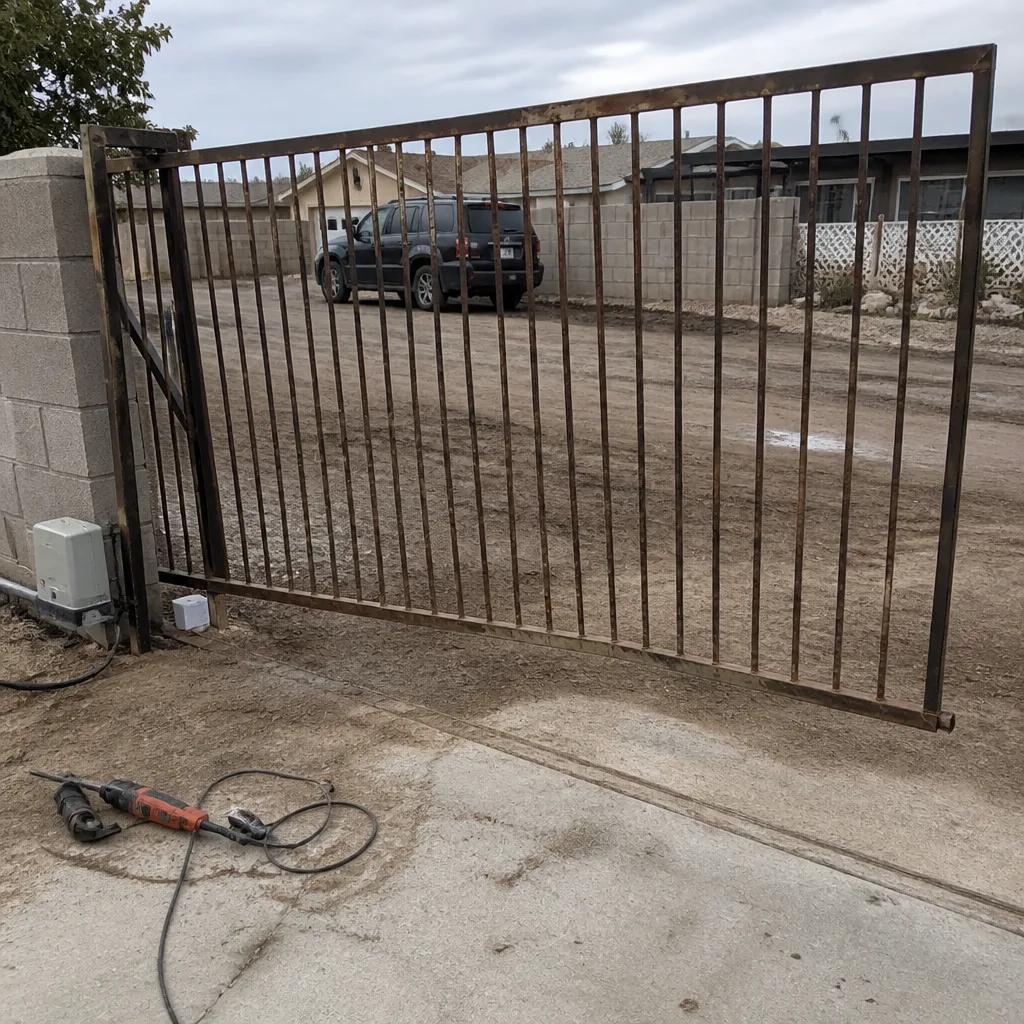 Before
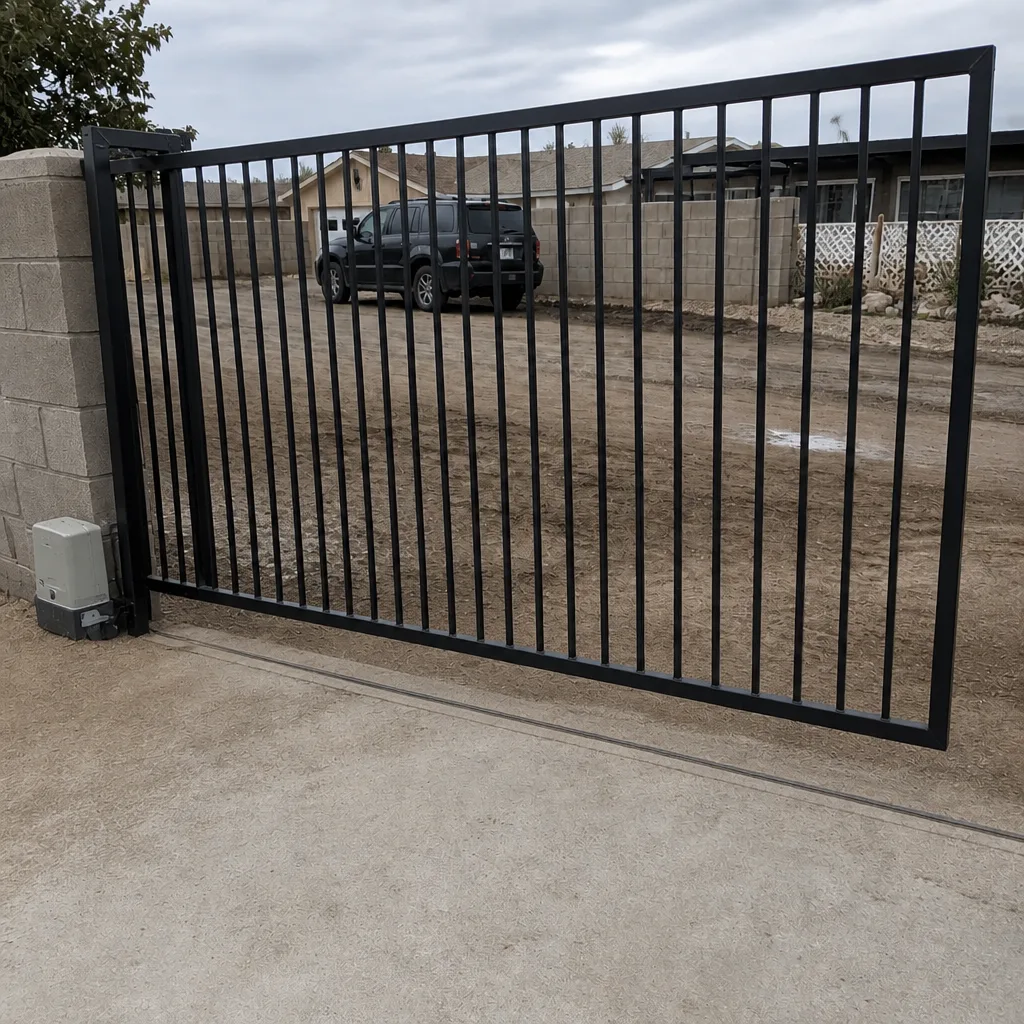 After
When to Call a Professional
Most maintenance tasks – lubrication, cleaning, tightening bolts, testing sensors – are homeowner work. Several tasks are not, and the line between the two matters for both cost and safety. Call a professional gate service promptly if you see any of the following:
- A cracked or visibly compromised weld, or any weld that shows rust bloom at the bead
- A post that wobbles or has shifted, or concrete that is cracked at the post base
- A gate that hangs crooked or has fallen out of square
- An operator that reverses without command, strains, or will not release manually
- A gate that is stuck or will not open by hand after releasing the operator
- Any structural repair, welding, or gate removal work
Beyond the safety line, many homeowners find the twice-a-year service pass is simply better handed off. Our seasonal tune-up is a straightforward way to keep the schedule without adding a job to your own list. Ironworks Gate Co. Winchester offers free estimates in Winchester – call (866) 984-8340. We answer live, 24 hours a day, 7 days a week, and a background-checked technician can evaluate the gate, tell you exactly what needs doing, and quote the price before any work begins. No surprises on the bill.
Frequently Asked Questions
Twice a year – once in spring and once in fall. Winchester’s dry heat and dust dry out lubricant faster than most climates, so two passes a year is the minimum on hinges, rollers, and drop rods. If your gate is heavily used (more than 20 cycles a day), add a summer touch-up on the hinge pins. Call (866) 984-8340 if you’d like a professional to do the seasonal pass for you.
No. Re-welding a structural gate in place is dangerous – there is arc flash, hot slag, and the gate itself can come down during the work. A trained welder removes the load, evaluates the joint, and re-welds with correct penetration. If you see a cracked weld, stop using the gate and call us at (866) 984-8340 – estimates are free.
Use a lithium-based grease or a heavy silicone spray on hinge pins, and a dry-film PTFE spray on drop rods and latches. Never use oil-based products on powder coat, and never use grease on a sliding track – it attracts grit and wears the roller. For operator drive mechanisms, use only the manufacturer’s specified lubricant.
A maintenance log should record the date of every service, what was done, who did it, any issue noticed but not yet fixed, any change in operator behavior, and photos of key welds and hinges once a year. A written record supports any warranty conversation and helps you spot recurring issues before they become expensive.
Look for a rust bloom along the weld bead, a hairline crack in the weld itself, or a color or texture change in the paint around the joint. Push on each post at shoulder height – more than a quarter inch of flex means the post has shifted and the weld is carrying load it was not designed for. Any of these findings is a call-a-professional moments.
Homeowners can clean the gate, lubricate hinges, rollers, and drop rods, tighten accessible bolts, test the operator and sensors, keep the maintenance log, and do the 10-minute visual inspection. Structural repair, welding, removals, and diagnosis of a stuck operator need a trained technician. When in doubt, call (866) 984-8340 – a free estimate will tell you exactly what the gate needs.
The Bottom Line
A gate is a machine, and machines have service intervals. Your gate does not need a service schedule from the factory – but it will last twenty years on one, and it will fail in eight without one. The schedule here is short: lubricate twice a year, inspect in spring and fall, test the operator every season, keep a log, and never force or weld what is stuck or cracked. Winchester’s dust and dry heat make the spring and fall passes the two dates that matter most. Fall is the critical one – what you do in October decides how the gate behaves in January. If any single task feels beyond a homeowner’s scope, the safe line is simple: a licensed professional handles welding, structural repair, and any gate that has stopped working properly. Ironworks Gate Co. Winchester answers the phone 24 hours, quotes the price before any work starts, and stands behind every job in writing with the 90-Day Done Right Promise. For the gate repair side of the equation, our team is a call away at (866) 984-8340 – free estimates, no pressure, no surprises on the bill.
Written by the team at Ironworks Gate Co. Winchester.