
Last updated November 18, 2026
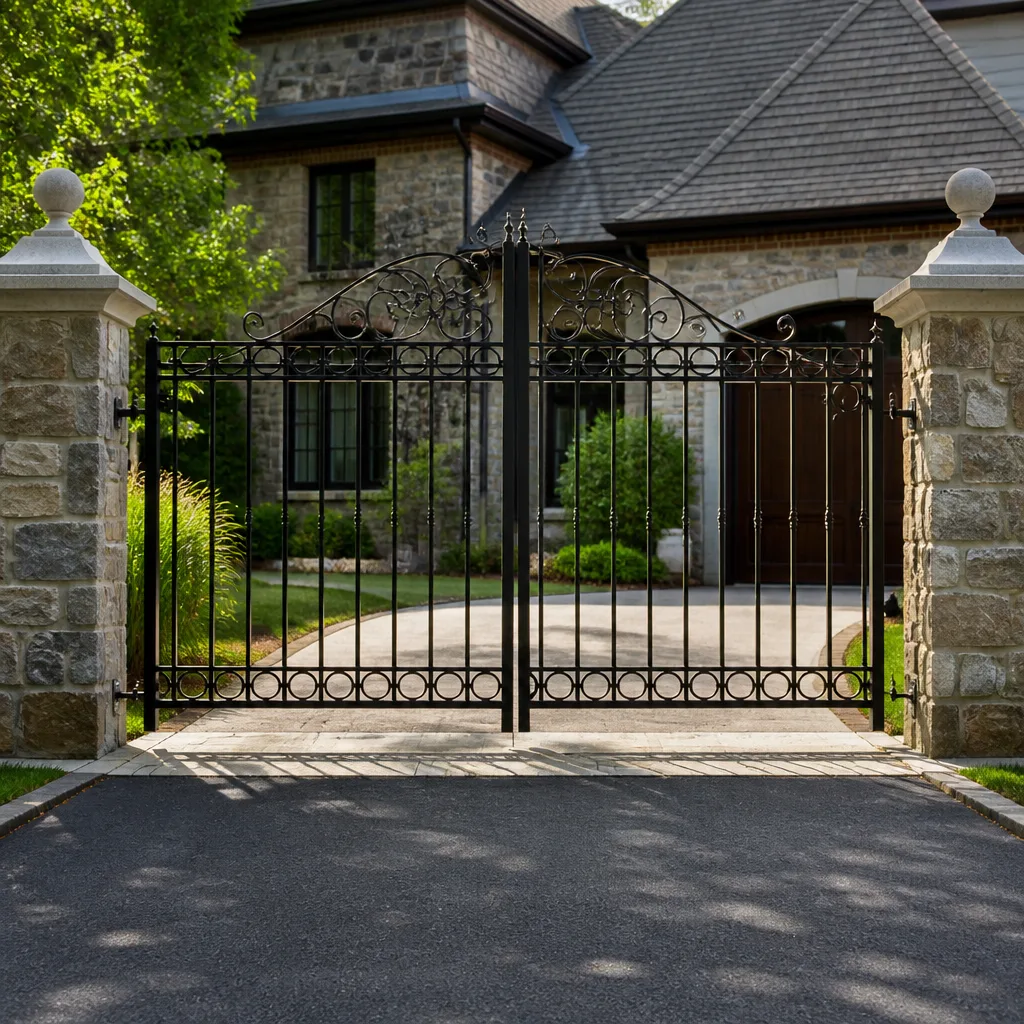 Wrought iron
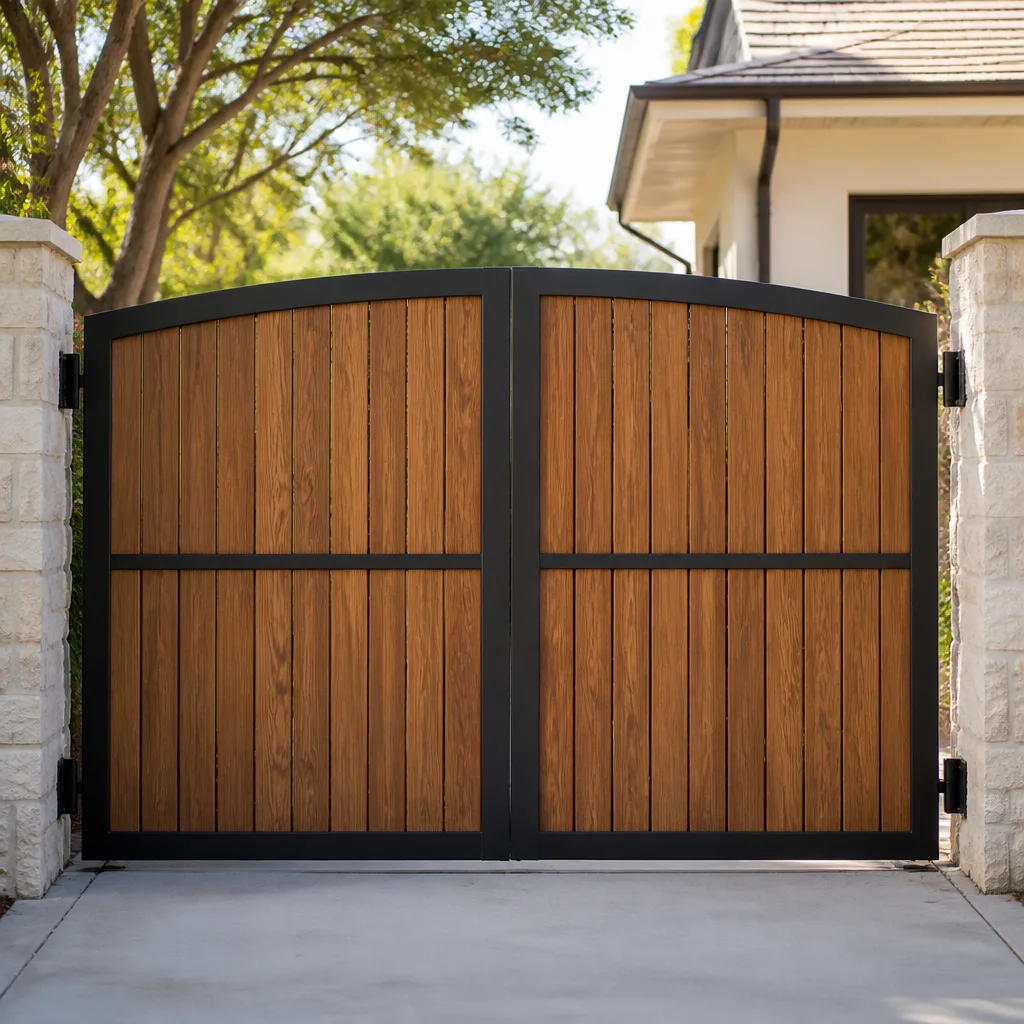 Wood & steel frame
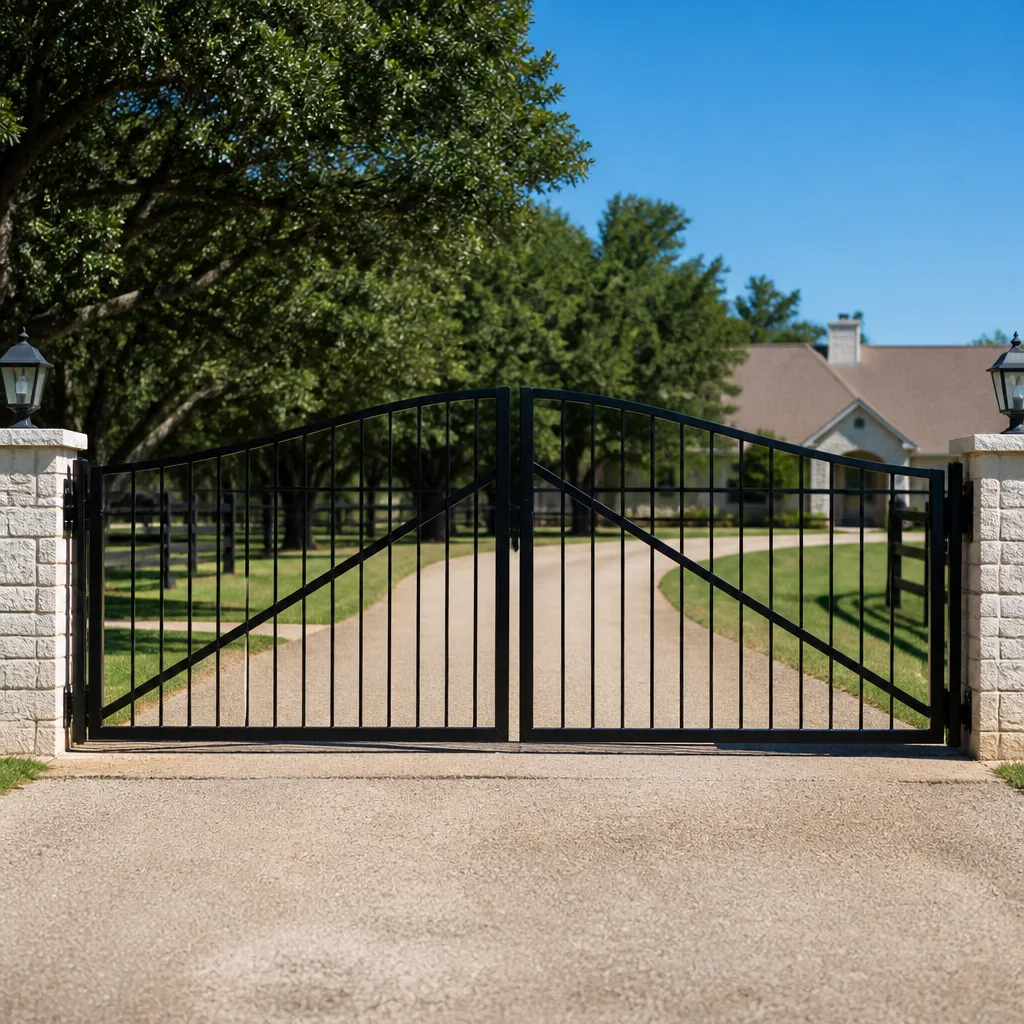 Farm & ranch
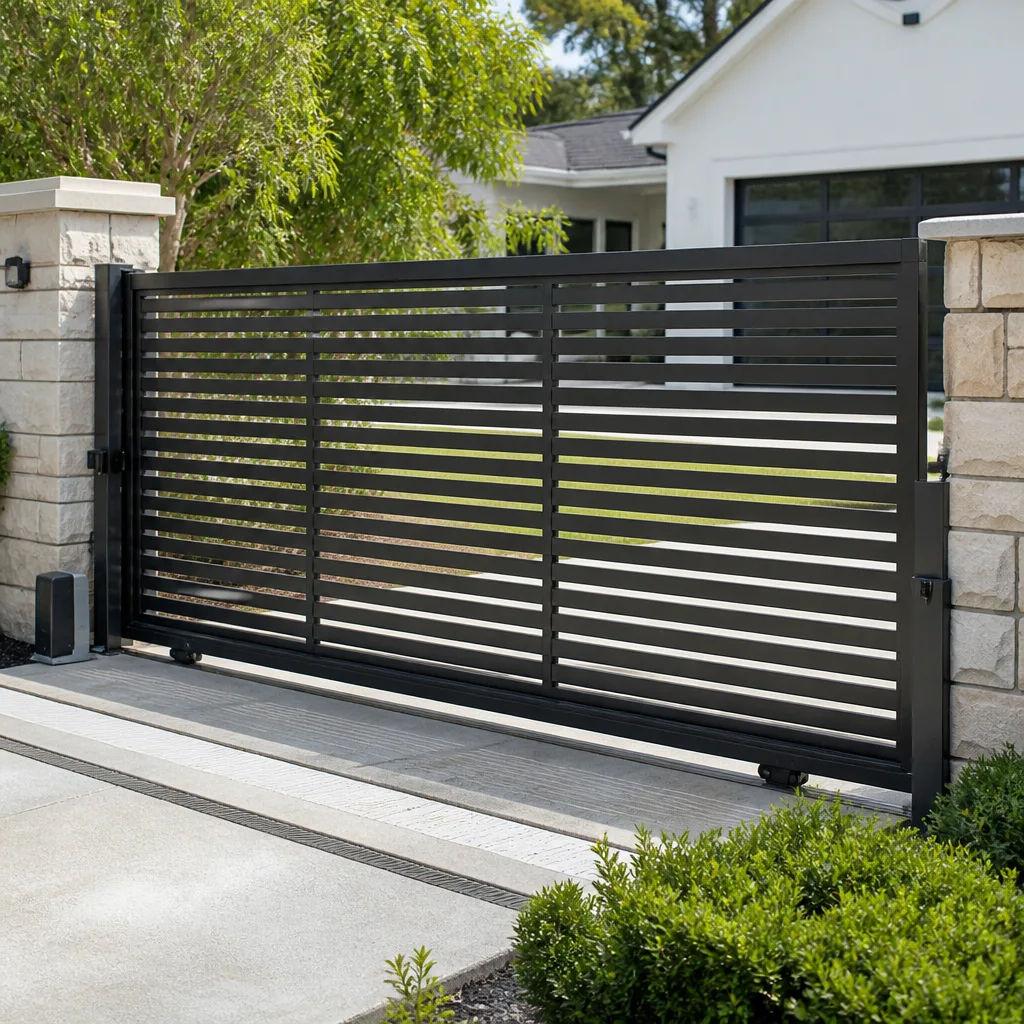 Sliding driveway gates
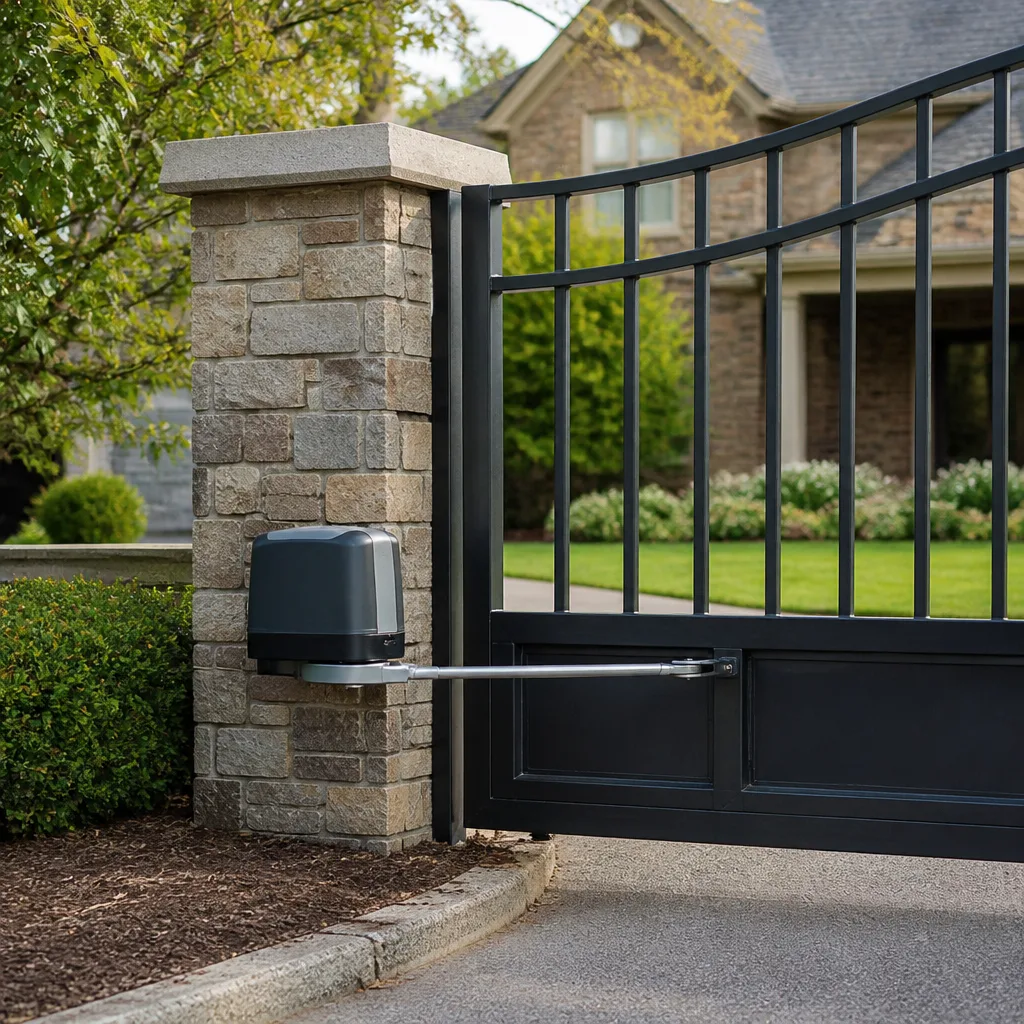 LiftMaster operators
Free on-site gate assessment - hinges, posts, and your LiftMaster or Nice gate operator checked before anything is quoted
The assessment is free and the quote is the invoice.
Get your free estimateThe Complete Gate Parts & Welding Guide for Winchester Homeowners
Here’s something that surprises almost every homeowner we talk to in Winchester: a wrought iron gate sealed with coastal-grade coatings can rust faster here than a bare gate in a rainy climate. Those heavy moisture barriers trap heat-driven condensation against the metal, and in a place that swings from 100-degree afternoons to 40-degree nights, that trapped moisture has nowhere to go. It eats the steel from the inside. This guide is about high-desert gate ownership specifically: which parts hold up in Winchester’s soil and sun, what a cosmetic weld fix hides, and what a proper structural weld looks like on a gate your grandkids will still be swinging open.
Quick Answer
Gate parts and welding in Winchester need to be matched to a high-desert climate: alkaline soil, wide day-to-night temperature swings, and intense UV. The parts that last here are hot-dip galvanized or powder-coated steel with drainage-friendly coatings, structurally welded hinges and posts rated for a vehicle-weight swing, and hardware (collars, drop rods, bracing) sized for thermal movement rather than rigid coastal spec. Cosmetic welds fail early in Winchester; structural welds with proper documentation last decades.
Styles & brands we work with
- Wrought iron
- Wood & steel frame
- Farm & ranch
- Sliding driveway gates
- LiftMaster operators
Table of Contents
- Which Metals Hold Up in Winchester’s Alkaline Soil?
- Cosmetic vs. Structural Welds: The Safety Difference
- A Parts Glossary for Residential Driveway Gates
- UV, Powder Coat, Paint, and Galvanizing: A 5-Year View
- How Temperature Swings Move the Metal
- What to Ask Before You Hire a Welder in Winchester
- What Documentation to Request After a Weld Repair
- The Winchester Seasonal Maintenance Checklist
Which Metals Hold Up in Winchester’s Alkaline Soil?
Winchester sits in a high-desert basin where the soil is noticeably alkaline, and that matters more than most homeowners realize. Post footings, anchor plates, and buried hardware all sit in contact with soil that pushes corrosion in a particular direction. Steel that performs fine in neutral or slightly acidic ground in wetter regions can pit faster here at the soil line, where moisture and minerals meet the metal.
What we’ve seen hold up best in Winchester driveways:
- Hot-dip galvanized carbon steel for posts and structural members. The zinc coating sacrifices itself to protect the steel underneath, which suits alkaline soil better than thin paint or bare steel.
- Powder-coated steel for the visible gate frame, provided the coating is applied over properly prepped and primed metal. Coverage at the weld seams is where cheap jobs fail.
- Wrought iron and cast components for ornamental sections. Look for sound castings with no porosity; the porous pieces pit early in UV-heavy climates.
- Stainless hardware for hinges, collars, and fasteners that sit low and get splashed or buried. It costs more and lasts far longer at ground contact.
What doesn’t transfer well from coastal specs: heavy wax or tar-based sealants designed to shed standing water. In Winchester, they trap condensation. The gate needs coatings that allow the metal to breathe and drain, not seal it in a jacket. That single distinction accounts for a lot of the premature rust we see on gates installed by out-of-area crews.
Cosmetic vs. Structural Welds: The Safety Difference
A cosmetic weld sits on top of a joint and looks tidy. A structural weld penetrates the full thickness of both pieces, fuses the metal at the root, and carries load. On a gate, that difference is not academic. A driveway gate is a vehicle-weight swing mechanism, and a hinge weld that fails while a car is underneath it is a genuine hazard.
Here’s how we explain it to Winchester homeowners:
- Cosmetic weld: shallow fusion, often smoothed and painted to look complete. Fine for a decorative scroll that carries no weight. Dangerous on hinges, post attachments, or diagonal bracing.
- Structural weld: full penetration at the joint, ground and inspected, correct filler metal for the alloy, and proper heat control so the surrounding metal isn’t weakened by the weld itself.
- The tell: a structural weld on a gate frame usually shows a visible bead or a properly dressed joint with no undercut at the edges. A cosmetic weld often looks suspiciously smooth because it never penetrated.
We’ve pulled gates apart in Winchester where a previous repair had been done with a quick cosmetic pass over a cracked hinge. The paint hides it for a season or two. Then the gate sags, the hinge peels away, and a homeowner is looking at a full hinge replacement instead of a weld repair. On any gate heavier than a person can lift comfortably, treat hinge and post welds as structural work and hire accordingly. Do not attempt to weld or re-hang a vehicle-weight gate on your own; a loaded gate frame under spring tension or gravity is a genuine injury risk, and trained professionals should handle it.
A Parts Glossary for Residential Driveway Gates
Half the confusion in gate repair comes from parts nobody explained. Here’s the plain-English version, with the terms you’ll hear when a technician is describing your gate:
Hinges
The pivot points where the gate meets the post. Residential driveway gates use weld-on hinges, bolt-on hinges, or adjustable hinges that let the gate be leveled as the footing settles. Adjustable hinges matter in Winchester because the soil moves slightly with seasonal moisture.
Post Collars
The decorative and functional rings that sit around the post at each hinge. They protect the hinge area from debris and add rigidity. Cheap collars loosen and rattle; quality ones hold their tension.
Drop Rods
The sliding pin that drops into the ground to hold a gate open or shut. Essential on double gates so one side can be pinned while the other swings. Look for a drop rod with a proper receiver sleeve; a bare rod in alkaline soil will seize within a season.
Diagonal Bracing
The angled metal member that keeps a rectangular gate from sagging into a rhombus over time. A gate without proper diagonal bracing will eventually droop, no matter how strong the hinges. Bracing is where many mass-produced gates cut corners.
Truss and Frame Members
The perimeter and internal bars. Heavier gauge steel in the frame means less flex and longer hinge life. Frame gauge is often the biggest hidden difference between a gate that lasts and one that doesn’t.
Stops and Catches
The bumper or stop a gate rests against when closed. Worn stops cause the gate to slam or drift, which wears hinges and, on automated gates, strains the opener. If your gate is powered, the team at Gate Motor & Opener in Winchester will look at the stop and travel limits together, since a bad stop makes a good motor work harder than it should.
UV, Powder Coat, Paint, and Galvanizing: A 5-Year View
Winchester gets the kind of sun that breaks down coatings on a schedule. Paint, powder coat, and galvanizing age very differently under that UV load. Here’s what we see across a five-year window:
- Paint: fades first, usually by year two or three on a south-facing gate. Chalking and mild cracking appear by year four. Paint is the cheapest to apply and the most frequent to redo. Good for budget repairs, not for a gate you want to leave alone.
- Powder coat: holds color well for four to five years in Winchester’s sun if applied thick and properly cured. The failure point is the weld seam and the edges, where coating thins. Touch-up on those spots buys years.
- Raw galvanizing: the zinc coating dulls to a matte gray, which many homeowners don’t love on a decorative gate, but it holds up under UV better than paint or powder. It’s the most durable protection for the structural members and the soil-contact areas, often used underneath the powder-coated frame.
The practical Winchester strategy is layered: hot-dip galvanizing for the parts that sit low or in the ground, powder coat over a proper prime for the visible frame, and annual touch-up at weld seams and collar edges. A gate with that combination routinely lasts decades with light maintenance.
How Temperature Swings Move the Metal
Winchester’s day-to-night temperature swing is one of the toughest things a gate has to survive. Steel expands when it warms and contracts when it cools. A long gate frame can move meaningfully across a hot afternoon and a cool night, and that movement puts stress on every hinge, weld, and pivot.
What we look for when a Winchester gate is binding or sticking seasonally:
- Hinge geometry: hinges installed rigid, without allowance for movement, crack over time. Adjustable hinges let the gate be re-trued as the frame moves.
- Post footing: if the gate sticks only in hot weather, the footing may be slightly under-sized or set in soil that moves with moisture. A larger footing or a re-set solves it.
- Weld stress points: the welds at the hinge side and diagonal brace take the most thermal movement. They should be inspected any time a gate starts to bind.
If your gate has a motor on it, keep the openers’ travel limits up to date as the gate frame moves. Viking and Ghost Controls openers, both of which we service, have adjustable limits that need revisiting when a gate drifts. A binding gate fights the motor, and a motor that fights a binding gate fails early. That’s why we always check the gate hardware before assuming the opener is the problem, and it’s the reason our Gate Repair in Winchester service starts with the metal, not the motor.
What to Ask Before You Hire a Welder in Winchester
Not every welder who can repair a trailer can repair a driveway gate, and the conversation you have before the work starts tells you a lot. Here’s what we suggest asking:
- “Will this weld be structural or cosmetic?” A good answer names which joints need full penetration and why.
- “What filler metal will you use?” It should match the gate’s alloy, not whatever’s on the truck.
- “Will you remove the gate or weld it in place?” Both are valid; the answer should reflect the joint and the load.
- “What documentation will I get?” A written record of the repair matters for warranty and, eventually, resale.
- “Are you insured and bonded?” Any contractor working near your home or a powered gate should carry insurance.
We’re a gate specialist, not a general handyman, and we say so plainly. Every job we do comes with upfront pricing settled before a single bolt is turned, so you know the number before the work starts. We service gates across Winchester and the surrounding neighborhoods, and our technicians have up to 13 years of experience. When you’re ready for an installation or a full replacement rather than a repair, our Gate Installation in Winchester service covers measuring, ordering, and setting the post correctly for this soil.
What Documentation to Request After a Weld Repair
Winchester homeowners who ask for documentation after a weld repair are protecting themselves twice: once against warranty issues and once against a disclosure surprise at resale. A driveway gate is a fixture attached to the property, and a significant repair can be something a buyer’s inspector notices.
Ask for these items after any welding repair:
- A written description of the repair: which joints were welded, whether cosmetic or structural, and what filler metal was used.
- Photos before and after: the crack or failure, and the finished weld. This is the clearest record if questions arise later.
- The warranty terms in writing: any guarantee should state what it covers and for how long. At Ironworks, every completed job is backed by our 90-Day Done Right Promise, in writing.
- A note on coating touch-up: the paint or powder coat applied after welding, so you know how soon to watch the seam.
- Signed sign-off: confirmation the gate was tested and operates correctly after the repair.
Two copies: one for you, one for your home records. If a gate is later sold with the home, that documentation is worth real money.
The Winchester Seasonal Maintenance Checklist
A gate in Winchester needs a light touch-up twice a year, timed to the seasons. Here’s the routine we recommend:
- Spring (before the heat): wash the gate, inspect weld seams and collar edges for coating failure, touch up any bare metal, and check that drain paths aren’t blocked.
- Early summer: check hinge adjustment and diagonal bracing after the winter moisture has settled the footing. Re-true as needed.
- Late summer (post-heat): look for new cracks at hinge welds and post attachments, since that’s when thermal-movement cracks surface.
- Fall: clean and re-lubricate hinges, drop rods, and any sliding parts with a dry lubricant that won’t trap grit. Check the drop rod sleeve for seize.
- Winter: confirm stops and catches are snug, and that the gate hasn’t drifted on its hinges.
Homeowners with automation watch the opener travel limits at each seasonal check. If you’d rather not climb around your gate, our $89 Seasonal Tune-Up is built for exactly this routine, and it’s where most small weld and coating problems get caught before they turn into a hinge replacement.
Common Mistakes to Avoid
- Sealing a Winchester gate like a coastal gate. Heavy wax or tar sealants trap condensation against hot metal. Use breathable coatings that let the steel dry.
- Accepting a cosmetic weld on a hinge or post. A smooth, painted-over weld on a load-bearing joint is a failure waiting to happen. Ask for structural penetration on every hinge and post weld.
- Replacing the opener when the gate is the problem. A binding or drifting gate makes a good motor strain. Check hinges, stops, and bracing first, or ask a crew that services both. Our Ironworks Gate Co. Winchester home page lists the full scope, from hinges to keypads.
- Ignoring the footing. In Winchester’s soil, an under-sized footing shows up as a gate that sticks in the heat. The fix is the footing, not the frame.
- Skipping coating touch-up at the seams. The weld seam and collar edge are where powder coat fails first. A few minutes of touch-up a year saves a re-coat.
- Not asking for documentation. A repair without records is hard to defend at warranty time and harder to explain at resale.
- Letting a handyman weld a vehicle-weight gate. Generalists can do cosmetic work, but structural welds on a powered gate belong with a gate specialist. The safety margin is too small to gamble.
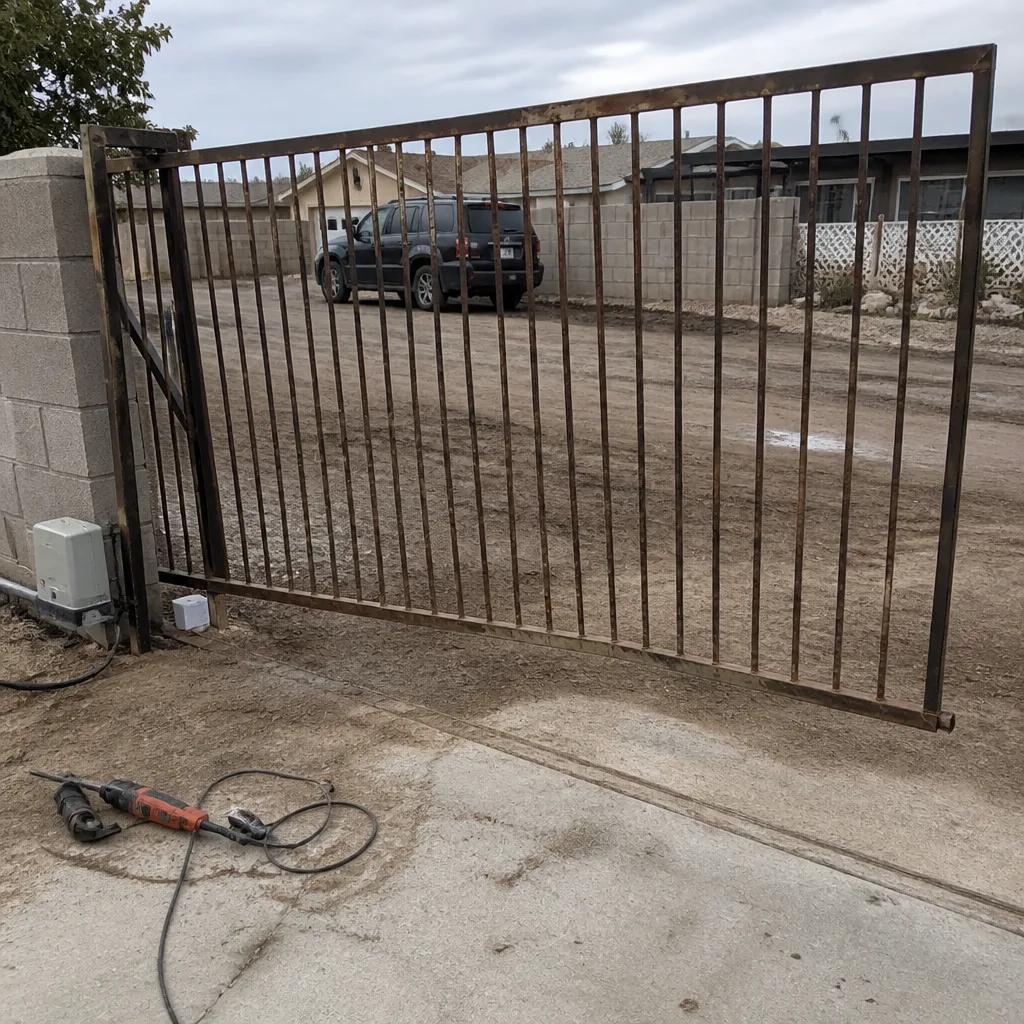
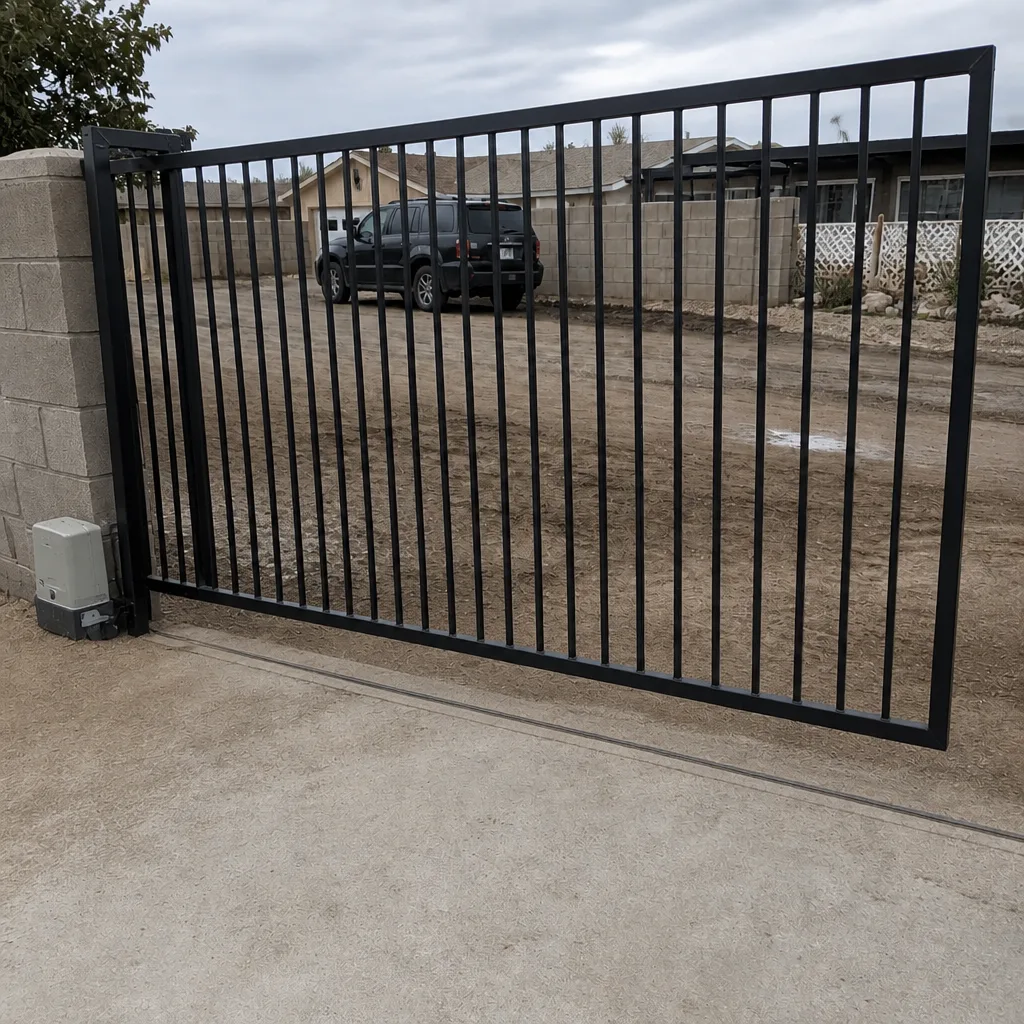
See the difference
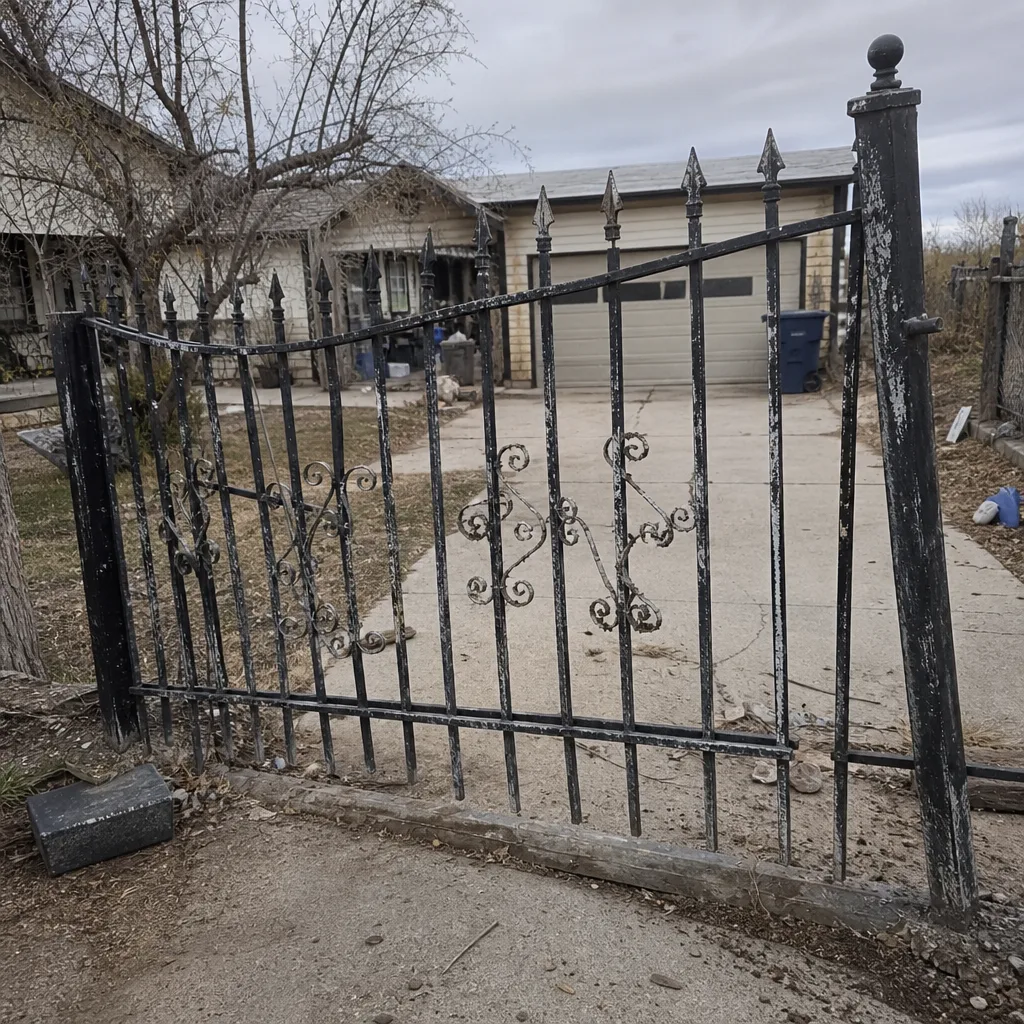 Before
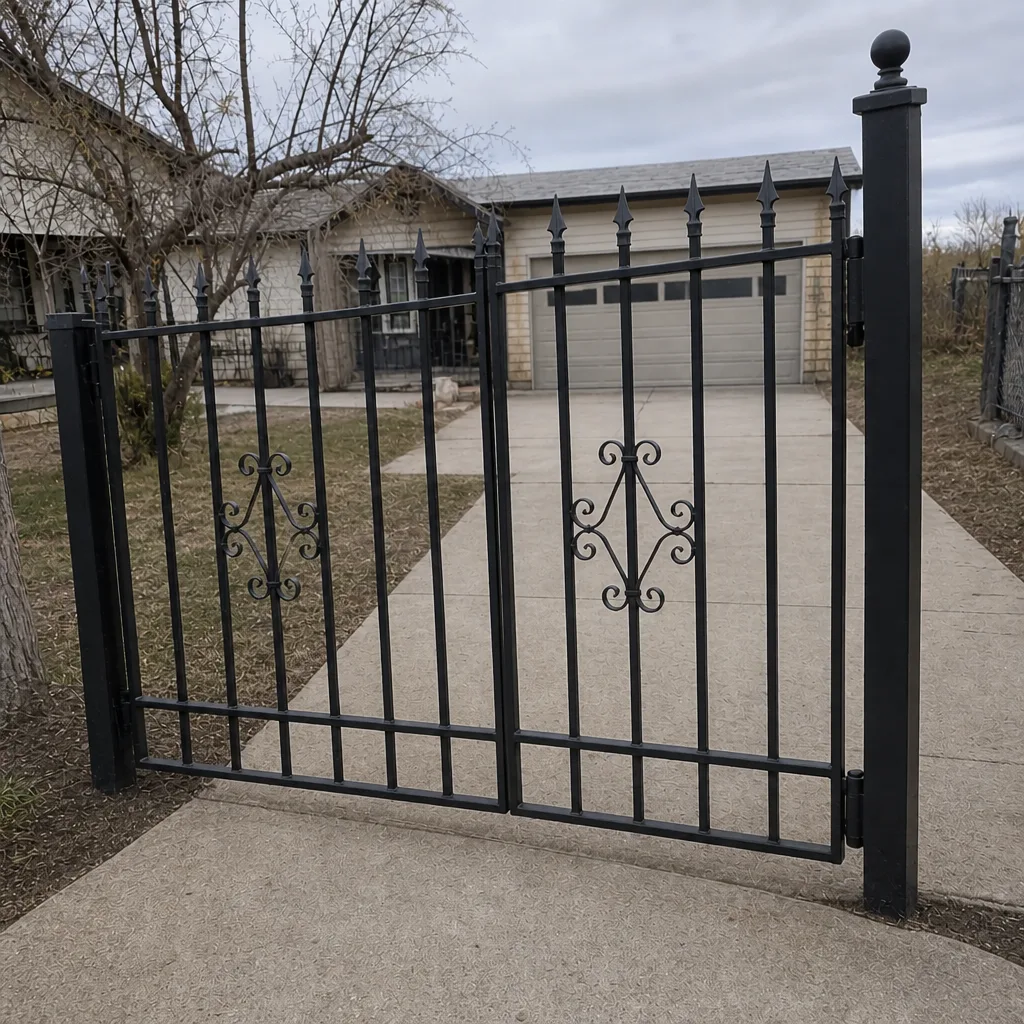 After
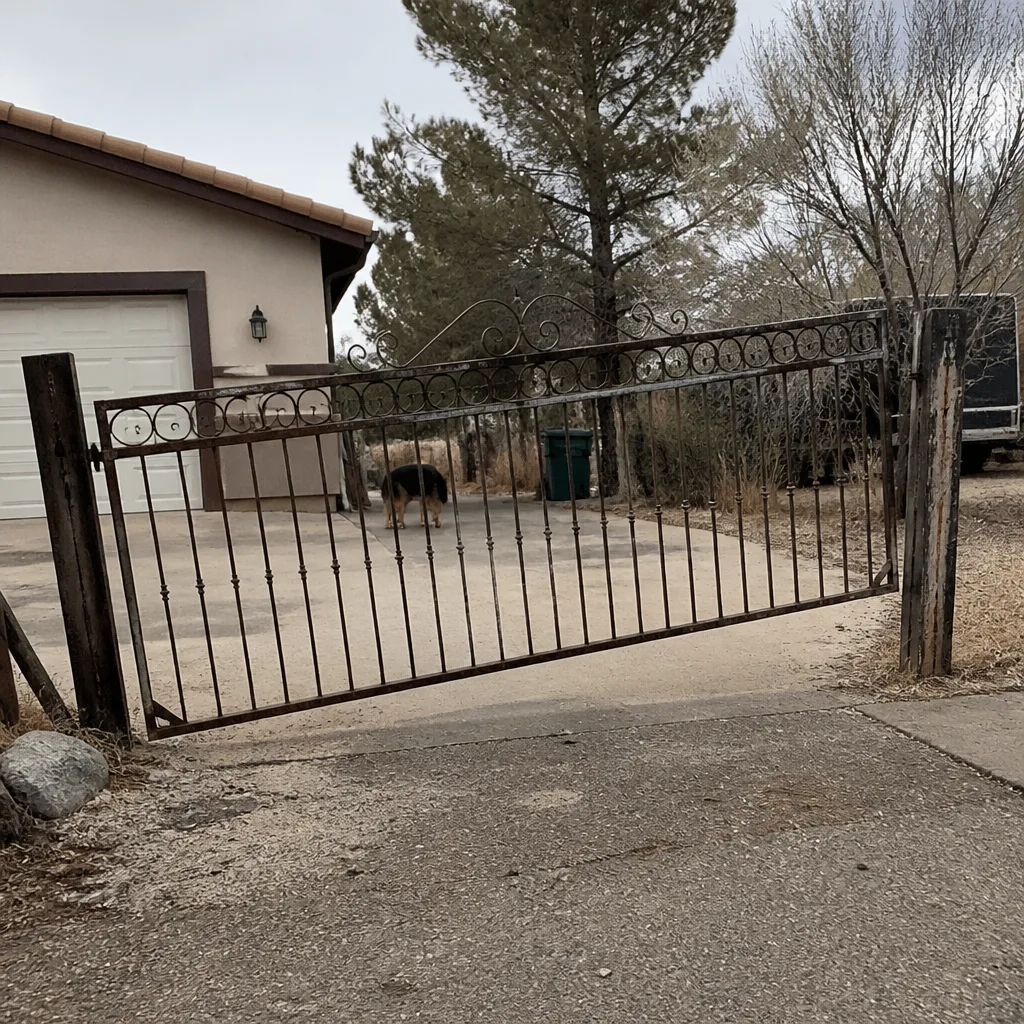 Before
 After
 Before
 After
When to Call a Professional
Call a professional when a hinge or post weld has cracked, when the gate sags and no longer clears its stop, when a hinge pin won’t stay seated, or when a powered gate has drifted and the opener can’t be relied on to stop. Also call when the footing has shifted, when you see rust creeping at the seam, or when a drop rod has seized in its sleeve. Those are the cases where a cosmetic fix will fail quickly and a wrong repair can put a heavy gate in motion while a car or a person is underneath it. Ironworks Gate Co. Winchester offers free estimates in Winchester – call (866) 984-8340. A live person answers every call, 24 hours a day, seven days a week.
Frequently Asked Questions
Check the hinge welds and the post attachment first, then the diagonal bracing. In Winchester’s high-desert climate, sag usually traces to thermal-movement stress at the hinge side or to a footing that has shifted with seasonal soil movement. A quick hinge adjustment and a structural weld inspection usually tells you which. Call (866) 984-8340 for a free estimate before you replace anything.
Not on a load-bearing joint. A cosmetic weld is fine for decorative scrolls, but on hinges, post attachments, and diagonal bracing it can peel away under the gate’s own weight within a season or two. Ask for a structural weld with full penetration on any part of the gate that carries vehicle-weight load.
Hot-dip galvanizing under a powder-coated frame gives the best long-term protection here. Raw galvanizing holds up best against Winchester’s UV and soil, while powder coat protects the visible frame for four to five years before it needs touch-up at the weld seams. Paint fades fastest and needs redoing most often.
Yes, if your gate is automated. A weld repair can change the gate’s alignment slightly, and an opener’s travel limits need rechecking so the gate isn’t fighting the motor. We service nine automation brands, including Viking and Ghost Controls, so we can set the limits correctly after the metalwork. Call for a free estimate.
Ask for a written repair description, before and after photos, the warranty terms in writing, and a note on any coating touch-up applied over the weld. That package protects your warranty and gives you a clean record for future resale. Every job we do is backed by our written 90-Day Done Right Promise.
Start with the hardware. If the gate binds, sticks, or catches on its stop, the hinges, bracing, or footing are usually the cause, and the motor is just working harder. Our Gate Motor & Opener in Winchester service checks both, so you’re not paying to replace a good opener. Call (866) 984-8340 for a free estimate.
The Bottom Line
Gate ownership in Winchester comes down to matching the metal and the moment to the climate. Alkaline soil punishes buried steel, UV punishes cosmetic coatings, and temperature swings punish welds on any joint that carries weight. Get the metals right (galvanized structural steel, stainless hardware, sound cast ornament), insist on structural welds at every load-bearing joint, keep coatings touched up at the seams, and request documentation after every repair. Do those four things and a well-made gate can last the life of the house. We’ve helped Winchester homeowners do exactly that, and we’re happy to look at your gate when you’re ready.
If your gate is sagging, cracking at a hinge weld, or simply due for a look, call Ironworks Gate Co. Winchester at (866) 984-8340 for a free estimate. We’ll tell you straight what the gate needs, and we stand behind the work in writing. For a full look at our services, visit our gate installation page or call today.
Written by the team at Ironworks Gate Co. Winchester.