
Last updated November 18, 2026
 Wrought iron
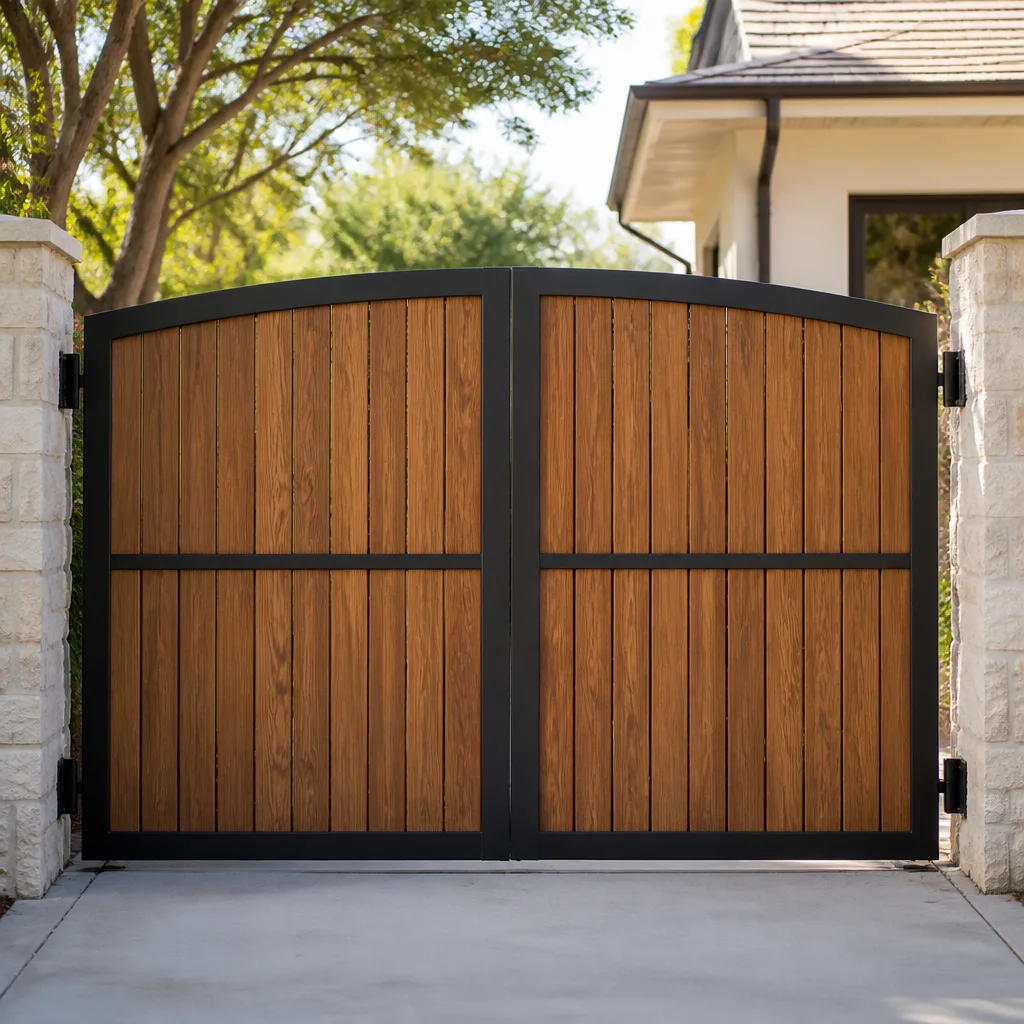 Wood & steel frame
 Farm & ranch
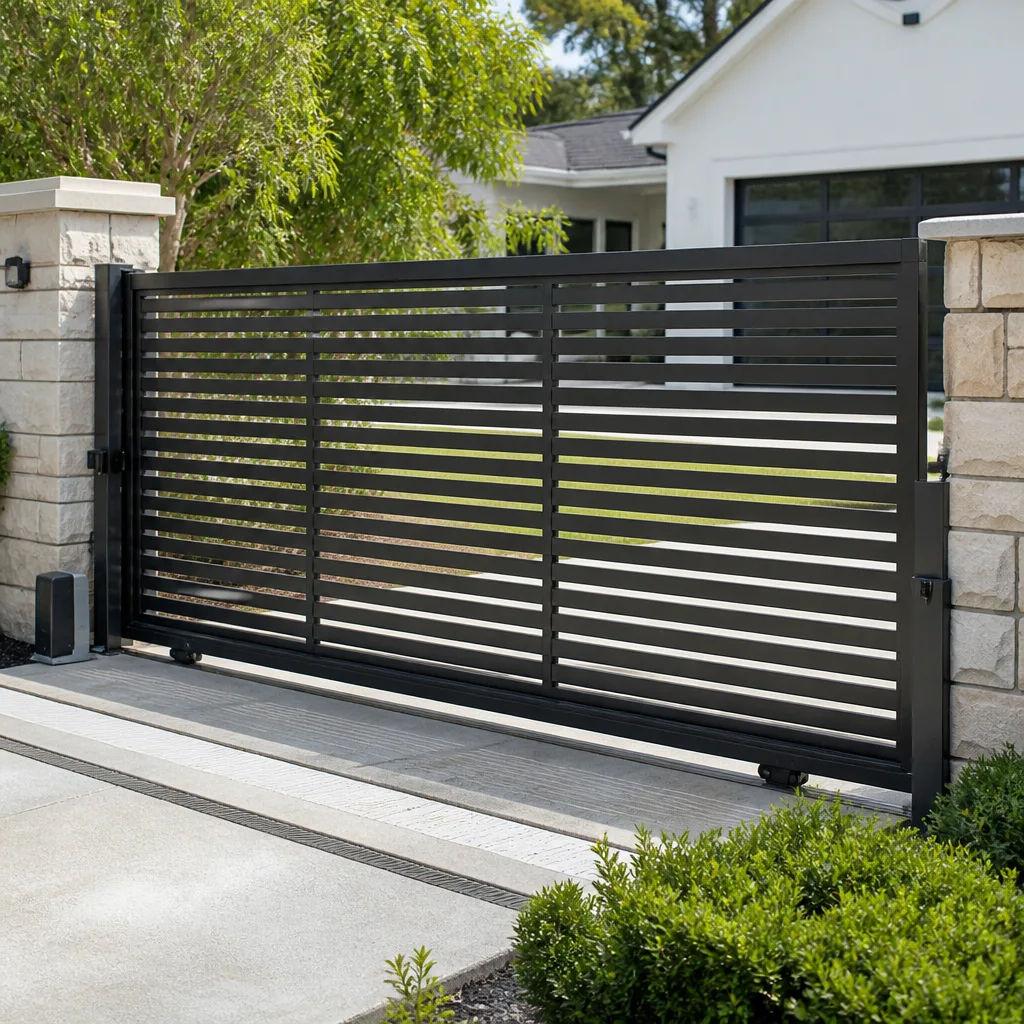 Sliding driveway gates
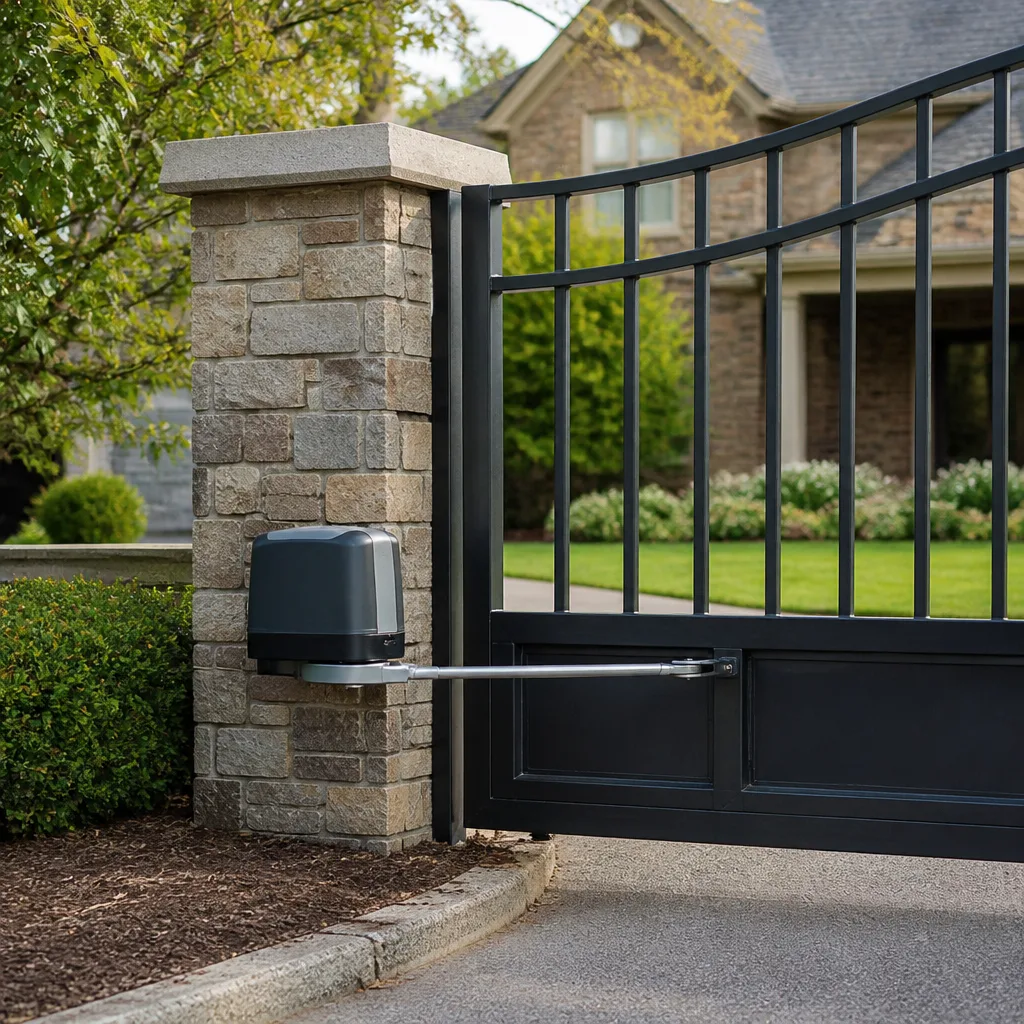 LiftMaster operators
Free on-site gate assessment - hinges, posts, and your LiftMaster or Nice gate operator checked before anything is quoted
The assessment is free and the quote is the invoice.
Get your free estimateGate Repair Permits, Codes & Inspections in NV: What You Need to Know
Here’s the fact that catches Winchester homeowners off guard: if a contractor swapped out your gate opener and never pulled an electrical permit, the liability for that uninspected installation stays with your property, not with the contractor who’s now three jobs and two counties away. We’ve walked up driveways in Winchester where a $1,400 opener replacement quietly became an insurance problem years later. Most people assume gate work is always permit-free. Some of it is. Some of it absolutely isn’t, and the gap between those two categories is exactly where corners get cut. This guide draws a clear line between permitted and unpermitted work so you know what to ask for before the first bolt turns.
Quick Answer
In Nevada, like-for-like gate repair (replacing a hinge, welding a sagging frame, swapping a photo-eye sensor) generally does not require a permit. Installing new electrical service to a gate, replacing an opener that changes the electrical load, or running new low-voltage wiring to an access keypad typically does require an electrical permit and inspection in most Winchester-area jurisdictions. The permit is usually the contractor’s responsibility, and you should ask who is pulling it before work begins.
Styles & brands we work with
- Wrought iron
- Wood & steel frame
- Farm & ranch
- Sliding driveway gates
- LiftMaster operators
Table of Contents
- Where Nevada Draws the Permit Line
- Which NEC Sections Apply to Gate Automation
- How Winchester HOA Rules Stack on Top of Code
- What an Electrical Inspection Actually Checks
- How Unpermitted Gate Work Affects Insurance Claims
- Fixing a Previous Contractor’s Unpermitted Work
- The Step-by-Step Permit Process Near Winchester
- Common Mistakes to Avoid
- When to Call a Professional
Where Nevada Draws the Permit Line
Nevada’s gate permit rules are narrower than fear suggests and wider than most homeowners assume. The state adopts the National Electrical Code with local amendments, and each county administers electrical permits under its own building department. In practice this means the same repair can be permit-free in one jurisdiction and permit-required a few miles away, which is why a contractor who works across Storey and Lyon counties needs to know both.
The dividing line comes down to whether the work changes the electrical system or simply restores it. Here’s how we’ve seen it applied across the Winchester area:
- Usually no permit: welding a cracked hinge, replacing a bent picket, re-hanging a sagging gate leaf, tightening or replacing a mechanical latch, swapping a worn photo-eye, replacing a battery backup in a LiftMaster or Linear operator.
- Usually requires an electrical permit: running new conduit and wire from the house to the gate, installing a new opener where none existed, replacing an opener that changes the amperage or circuit, adding a keypad or intercom on a new circuit, installing a loop detector tied to new wiring.
- Gray area, ask first: replacing a failed opener with an identical model on the existing circuit. Some jurisdictions treat this as like-for-like and skip the permit; others want a permit for any equipment swap on a 120V circuit. In Winchester we ask the building department before we quote, not after.
If you’re scheduling gate repair in Winchester, the useful question to ask your contractor is simple: “Is this a mechanical repair or an electrical change?” If they can’t answer that plainly, that’s information too.
Which NEC Sections Apply to Gate Automation
Gate automation sits at an awkward intersection of code. It’s low-voltage control wiring in most modern installs, but the operator itself ties into a 120V circuit, and the whole assembly lives outdoors where water and weather are constant. These are the NEC areas an inspector will reference, and they’re worth knowing even before you call anyone.
- Article 430 (motors): covers the disconnecting means for the gate operator. An inspector will check that there’s a way to kill power at the gate without walking into the swing path. In our experience, this disconnect is one of the most commonly skipped items on a previous contractor’s install.
- Article 300 (wiring methods): governs how the cable runs from the house to the gate. It must be protected, properly buried at the correct depth if underground, and rated for wet locations. Direct-buried landscape wire that wasn’t rated for the job is a frequent fail.
- Article 250 (grounding): requires the operator and any metal gate posts to be properly bonded where the code calls for it. This matters more than people realize in a lightning-prone high-desert climate like Winchester’s.
- Article 725 (Class 2 and 3 circuits): applies to low-voltage control wiring between the operator, keypad, and safety edges. Undersized control wire or wiring run through unprotected conduit is common in DIY installs.
- UL 325 (safety standard): isn’t a NEC article, but it’s the standard an inspector and insurer will both refer to. It requires photo-eyes, safety edges, or other entrapment protection on any automated gate. No working safety device, no pass.
None of this means you need to memorize code. It does mean that if a contractor shrugs when you mention entrapment protection, they’re not pulling a permit or reading the code.
How Winchester HOA Rules Stack on Top of Code
Here’s what most statewide gate permit guides miss: in Winchester, municipal code is only the first gate. HOA architectural guidelines are the second, and they run on an entirely separate approval track with separate paperwork and separate timelines. A gate that passes county inspection can still be ordered removed by an architectural review committee (ARC) if it doesn’t match the approved design.
What we see regularly in Winchester-area planned communities:
- Material and finish clauses: many HOA guidelines in this market specify wrought iron or steel finish and prohibit chain-link or visible aluminum anywhere on a front elevation. A permit won’t save a gate that violates the color palette.
- Height and setback restrictions: a six-foot gate may be perfectly legal under county code and still be over the HOA’s five-foot cap. We’ve seen homeowners pay for installation and then pay again for a shorter replacement.
- Opener noise and visibility rules: some Winchester subdivisions restrict visible operator housings or specify a brand-neutral housing color. Newer FAAC and BFT operators tend to pass this test more easily than older exposed units.
- Approval before application: the ARC typically wants design drawings before a building permit is pulled, not after. Out-of-order approvals are the single most common HOA problem we’re called about in Winchester.
The practical advice: pull the HOA guidelines first. The county permit process is usually faster and more predictable than the architectural review, so start the longer one first. If you’re planning a full replacement, our gate installation in Winchester page goes into how we route these approvals alongside a scheduled install.
What an Electrical Inspection Actually Checks
If a permit is pulled, an inspector will make one trip to the gate and work through a short list. Knowing what’s on that list tells you whether the contractor did a complete job or a visible one.
- Disconnect accessibility: the operator can be shut off without entering the gate’s path of travel.
- Proper grounding and bonding: the operator chassis and (where code requires it) the metal gate post are tied to ground.
- Cable and conduit protection: wire is rated for outdoor/wet use, buried at the correct depth, or in conduit where exposed.
- Entrapment protection (UL 325): photo-eyes or safety edges are present and actually functioning. An inspector will wave a hand in the beam and expect the gate to reverse.
- Circuit capacity: the breaker and circuit can carry the operator’s load, and the install matches the submitted plans.
- Weatherproofing: enclosures are rated for outdoor use and sealed. In Winchester’s wind-blown dust and summer monsoons, an unsealed enclosure is a fail waiting to happen.
If you’re already dealing with an operator issue, our gate motor and opener in Winchester guide covers how we test and diagnose before we touch a permit. For a house call, call (866) 984-8340.
How Unpermitted Gate Work Affects Insurance Claims
This is the section most people skip past and most need. Say an automated gate injures a child or damages a delivery truck six years after an uninspected install. Your homeowner’s policy responds based on whether the equipment was properly installed and maintained to code. Unpermitted, uninspected work weakens that position significantly.
Two ways this plays out in the real world:
- Liability claims: if the gate’s safety edge never functioned because the wiring was never inspected, the insurer can argue the homeowner failed to maintain a known entrapment risk. Even when the claim is eventually covered, the investigation takes months and premiums climb.
- Property damage claims: if an unwired or improperly grounded operator causes an electrical fault or fire, an adjuster will ask for the permit and inspection record. No record, no clear defense.
The upside is simple: the paper trail from a permit and inspection is the cheapest insurance you’ll ever buy on a gate. It costs the contractor time and the homeowner almost nothing. If you’re reviewing a prior job, ask yourself three questions: did anyone pull a permit, did an inspector walk the system, and did you receive a written record? Our Ironworks Gate Co. Winchester home page summarizes how we handle this on every job.
Fixing a Previous Contractor’s Unpermitted Work
If you discover that a previous contractor did unpermitted electrical work at your gate, don’t panic. Most jurisdictions near Winchester, including those in Storey County and Lyon County, have a retroactive permit process. The work is inspected for code compliance, not punished for the original paperwork gap.
The general sequence, which varies by jurisdiction but follows the same pattern:
- Call the jurisdiction that holds your property. Not the contractor, not the previous owner. Confirm which county building department has authority over your address.
- Describe the work and ask about the retroactive or “after-the-fact” permit. Many departments handle this as a standard over-the-counter permit with an inspection attached.
- Have a licensed electrician or gate contractor assess the existing install. The inspection will flag anything that was done to a lower standard than a fresh install, so a pre-inspection review saves a failed trip.
- Complete any corrections (grounding, safety edges, cable protection), then schedule the inspection.
- Keep the permit and inspection record with your home documents. Future owners, insurers, and buyers will thank you.
In our experience, retroactive permits on gate automation are routine and rarely costly. The delay and stress come from going out of order, so call the county first.
The Step-by-Step Permit Process Near Winchester
For a new install or an opener replacement that changes the electrical system, the process in most Winchester-area jurisdictions looks like this:
- Confirm the classification. Is the work electrical (permit likely) or like-for-like mechanical (permit likely unnecessary)? Ask the county, in writing if possible.
- Check HOA restrictions. Pull architectural guidelines and submit for ARC approval first if your community requires it.
- Have the electrical plan drawn. A licensed contractor will provide the circuit, disconnect, and safety device layout that goes with the permit application.
- File the electrical permit. This is the contractor’s job. If they hand it to you, that’s a red flag.
- Complete the install to code. Grounding, cable protection, and UL 325 entrapment protection all need to be in place before inspection.
- Schedule and pass the inspection. BFT and LiftMaster operators both pass smoothly when installed to spec; the brand isn’t the issue, the install is.
- File the closeout paperwork. Keep the inspection card, permit number, and any HOA approval with your home records.
If any contractor won’t commit to pulling the permit in writing, that tells you what the job will look like in a year. It’s one of the reasons we put a 90-Day Done Right Promise behind every job: if it isn’t right, we come back and make it right.
Common Mistakes to Avoid
- Assuming “gate repair” is always permit-free. Any opener swap that touches the electrical circuit can trigger a permit. Ask the county, not the contractor’s opinion.
- Pulling the county permit before the HOA approval. In Winchester subdivisions this is the most common rework we see. The ARC timeline is longer, so start it first.
- Letting the contractor leave the permit to you. Homeowner-pulled permits shift the inspection risk to you. A licensed gate contractor should own the paperwork.
- Buying an opener online and having it installed “as-is.” The install still needs a permit and a code-compliant safety device. Many online-sourced openers arrive without the required entrapment kit.
- Ignoring a missing safety edge because “it’s been fine for years.” A safety edge failure is the number one cause of gate injury claims in the country. It’s also the most common inspection fail.
- Throwing away the permit and inspection record. When you sell or file a claim, that paper is your proof of a code-compliant install.
- Hiring an unlicensed handyman for electrical gate work. Unlicensed electrical work is the most common root cause of unpermitted gate installs we get called to correct in Winchester.
See the difference
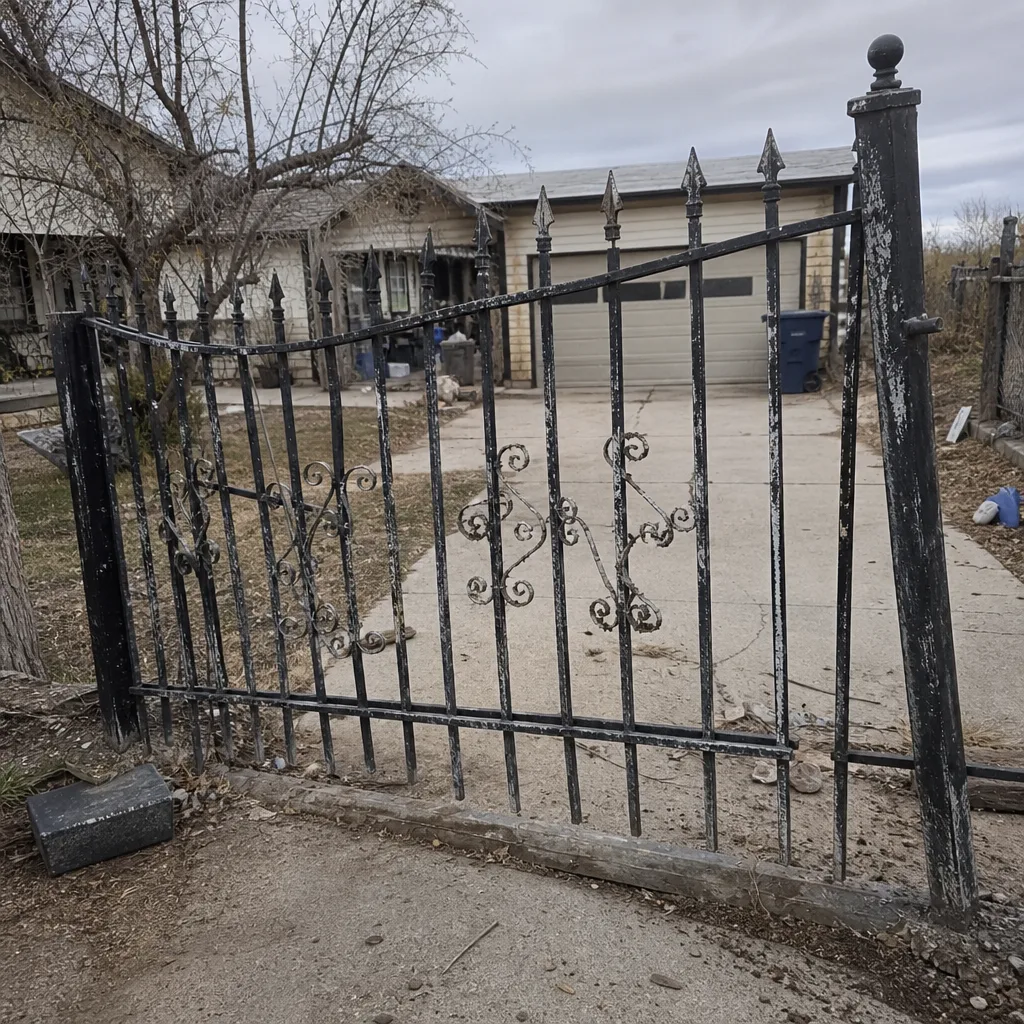 Before
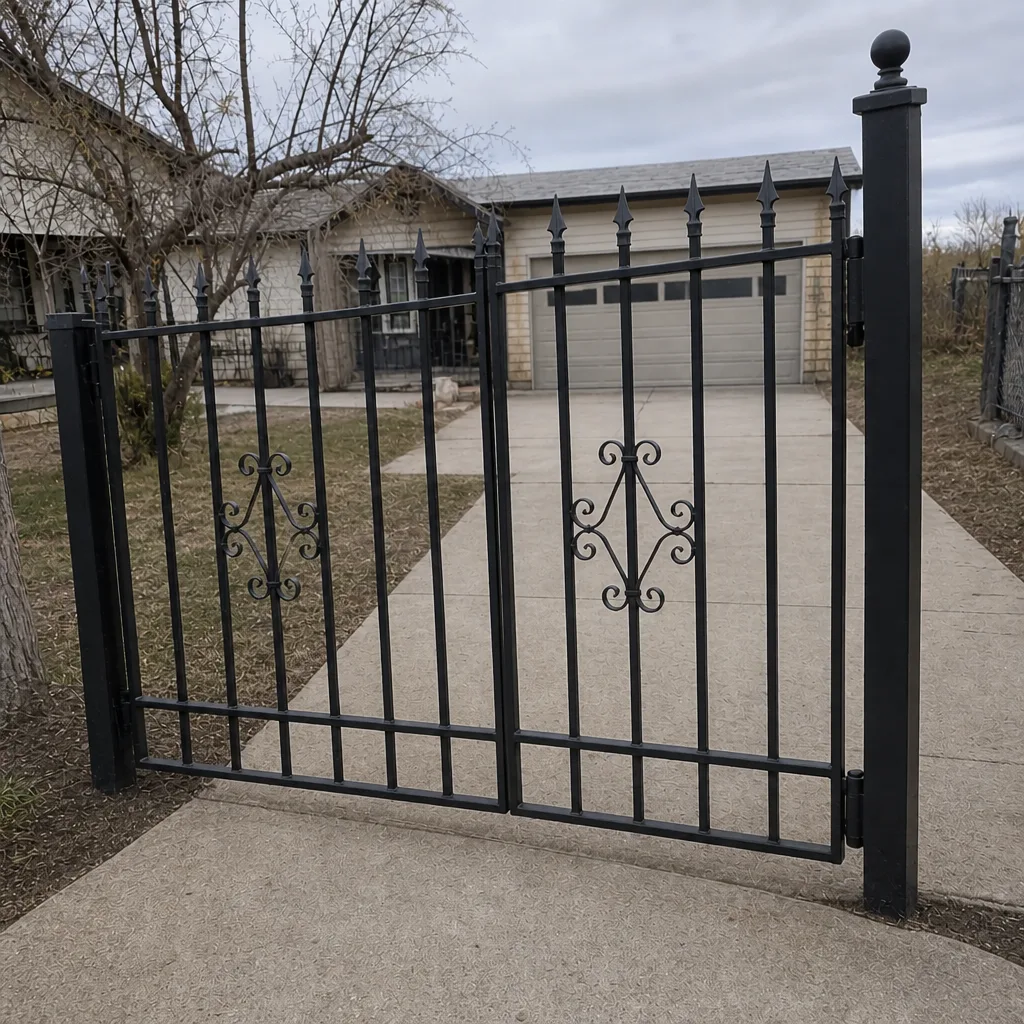 After
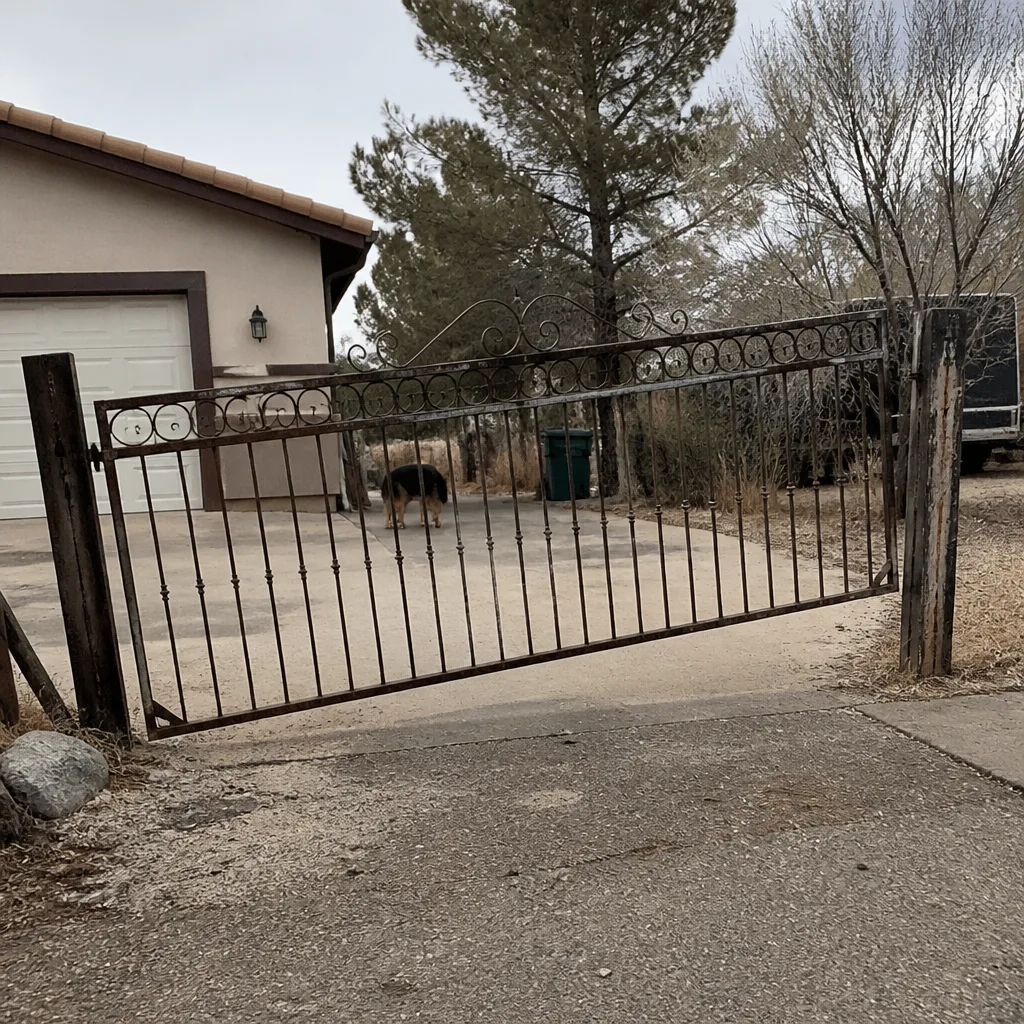 Before
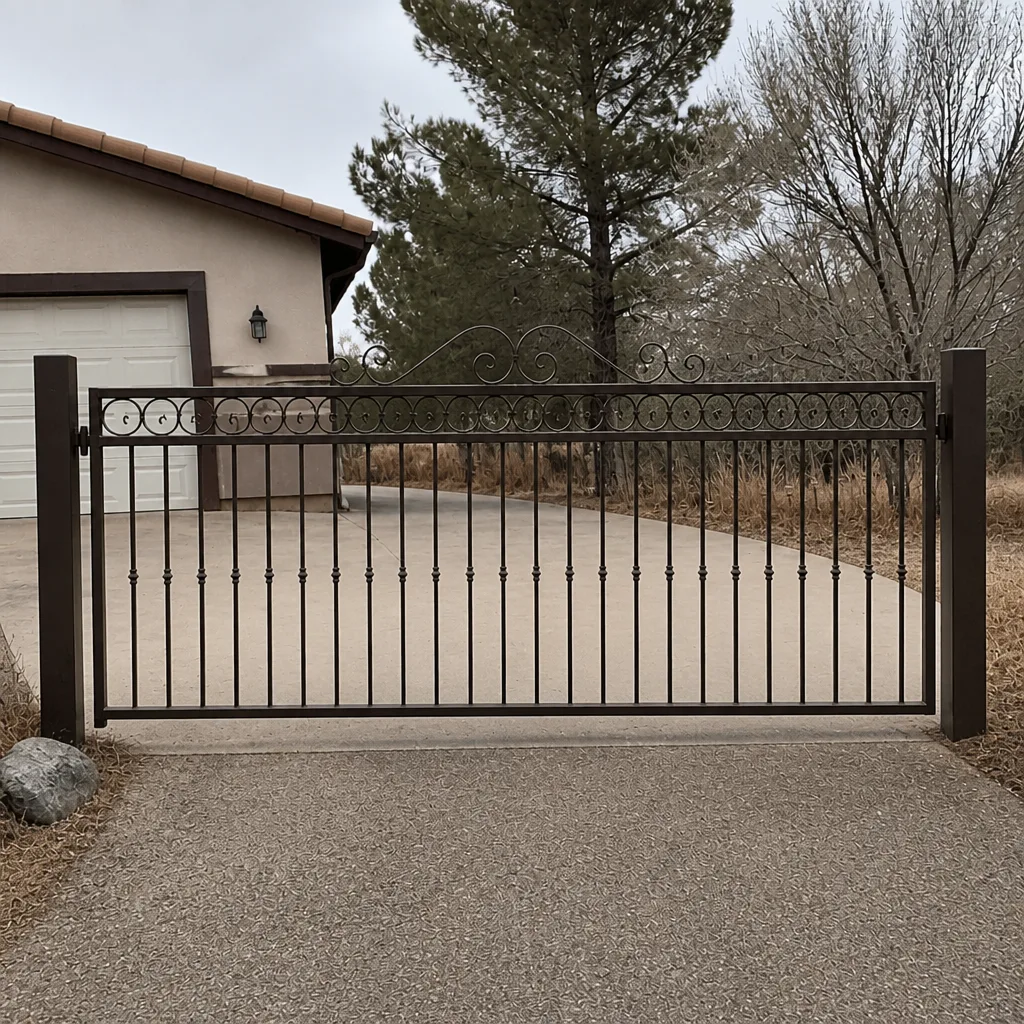 After
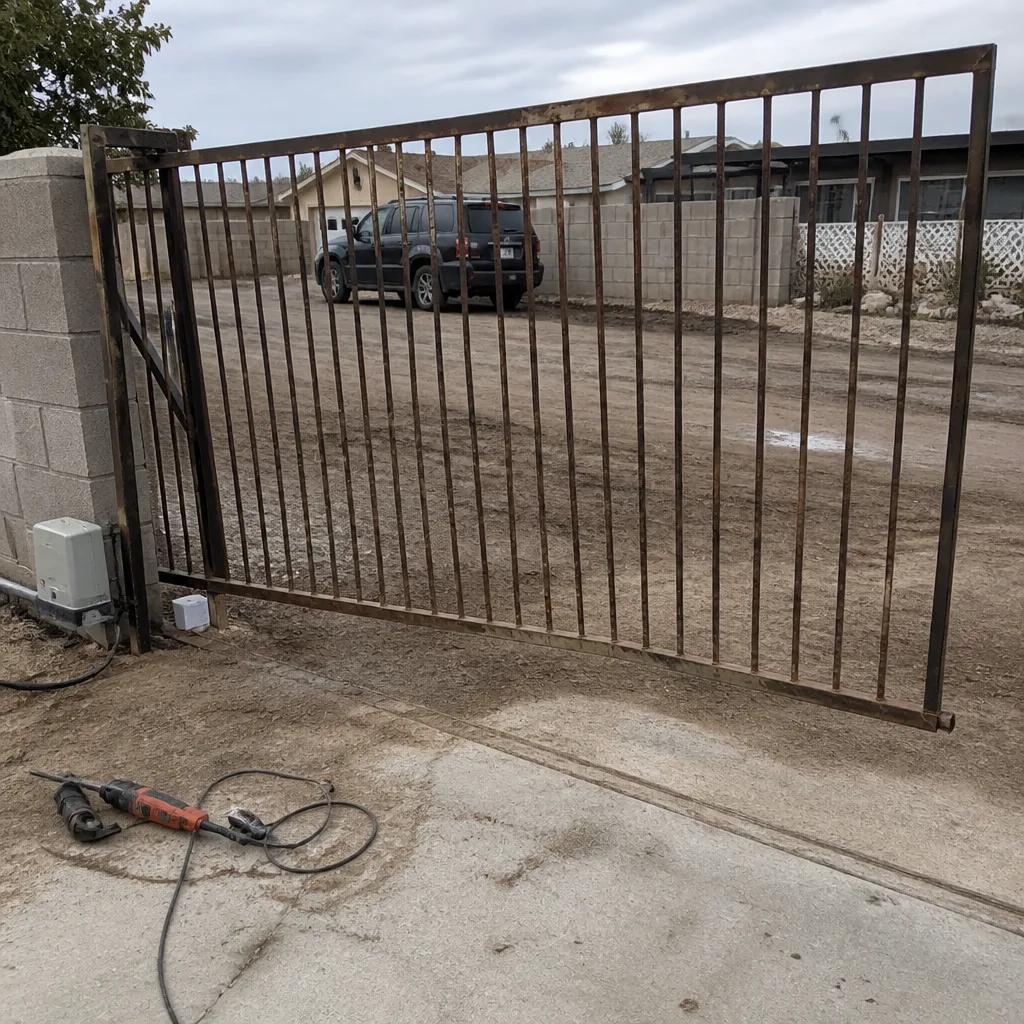 Before
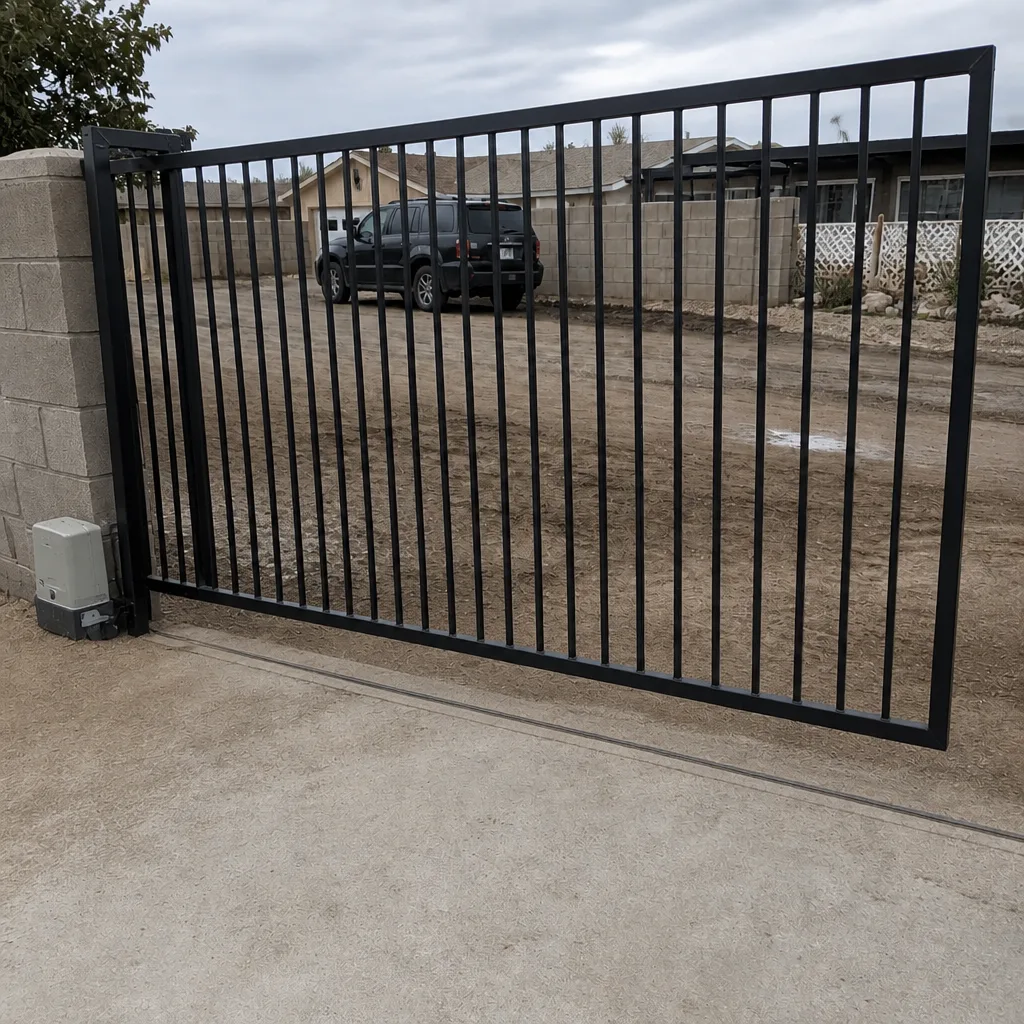 After
When to Call a Professional
Call a licensed gate specialist if you’re planning any work that ties into the electrical circuit, if an opener was recently installed and you have no permit record, if any part of the entrapment safety system (photo-eyes, safety edges) isn’t working, or if your gate is on a 120V circuit and you’ve seen sparking, tripped breakers, or a hot operator housing. Springs, high-voltage wiring, and gate operators are not safe DIY territory: an automated gate that shifts unexpectedly can injure an adult, let alone a child or pet. We handle the permit, the install, and the inspection as one job. Ironworks Gate Co. offers free estimates in Winchester and serves the surrounding Storey and Lyon County communities. Call (866) 984-8340 to schedule.
Frequently Asked Questions
It depends on whether the repair touches the electrical system. Hinge, weld, latch, and photo-eye replacements usually don’t require a permit. New wiring, a new opener install, or an opener swap that changes the electrical load typically does require an electrical permit and inspection. When in doubt, ask your county building department directly, or call us at (866) 984-8340 and we’ll help you classify the job before you spend a dime.
The contractor should pull the permit. That’s the standard in Nevada and it protects you, because the person who did the work carries the inspection responsibility. If a contractor asks you to pull it as a homeowner, treat that as a warning sign and get a second opinion. Our free second opinion on any written estimate is a good place to start.
You can still fix it. Most Winchester-area jurisdictions, including Storey and Lyon County, offer a retroactive or “after-the-fact” permit that lets existing work be inspected for code compliance. Call the county first, have a licensed contractor review the install, correct any issues, then schedule the inspection. It’s routine, and it’s worth doing before a sale, refinance, or insurance claim forces the issue.
Yes, in most planned communities. HOA architectural review is a separate approval track from the county permit, with its own forms and its own timeline. Material, color, height, and visibility rules vary widely across Winchester neighborhoods. Pull the HOA guidelines before the county permit application, not after.
Yes. UL 325 requires that any automated gate have functioning entrapment protection, and an inspector will physically test the photo-eye or safety edge. A dead safety edge is one of the most common inspection failures we see on previous installs. We test and repair the safety system as part of any gate repair call, and our $50 off any repair over $250 applies if your fix lands there.
It can, particularly on liability claims. If a gate injures someone or damages property and the install was never inspected, your insurer will review the maintenance record and can push back on coverage. The permit and inspection record is the easiest defense you can put in the file. Call (866) 984-8340 for a free estimate on correcting an unpermitted install.
The Bottom Line
Nevada’s gate permit rules aren’t as scary as they sound, but the line matters. Like-for-like mechanical repair usually needs no permit. Electrical work, new wiring, and opener swaps that change the load usually do. The three moves that protect Winchester homeowners are: confirm the classification with the county before work starts, route HOA approval before the county permit, and insist the contractor pulls the permit in writing. That paper trail is what makes an insurance claim routine instead of a fight. Get those three right, and the rest of the gate takes care of itself.
If you’re not sure which side of the line your gate job sits on, call Ironworks Gate Co. for a free estimate at (866) 984-8340. We’ll classify the work, pull the permit if it’s needed, and stand behind the install with our written 90-Day Done Right Promise.
Written by the team at Ironworks Gate Co. Winchester.