
Last updated November 18, 2026
 Wrought iron
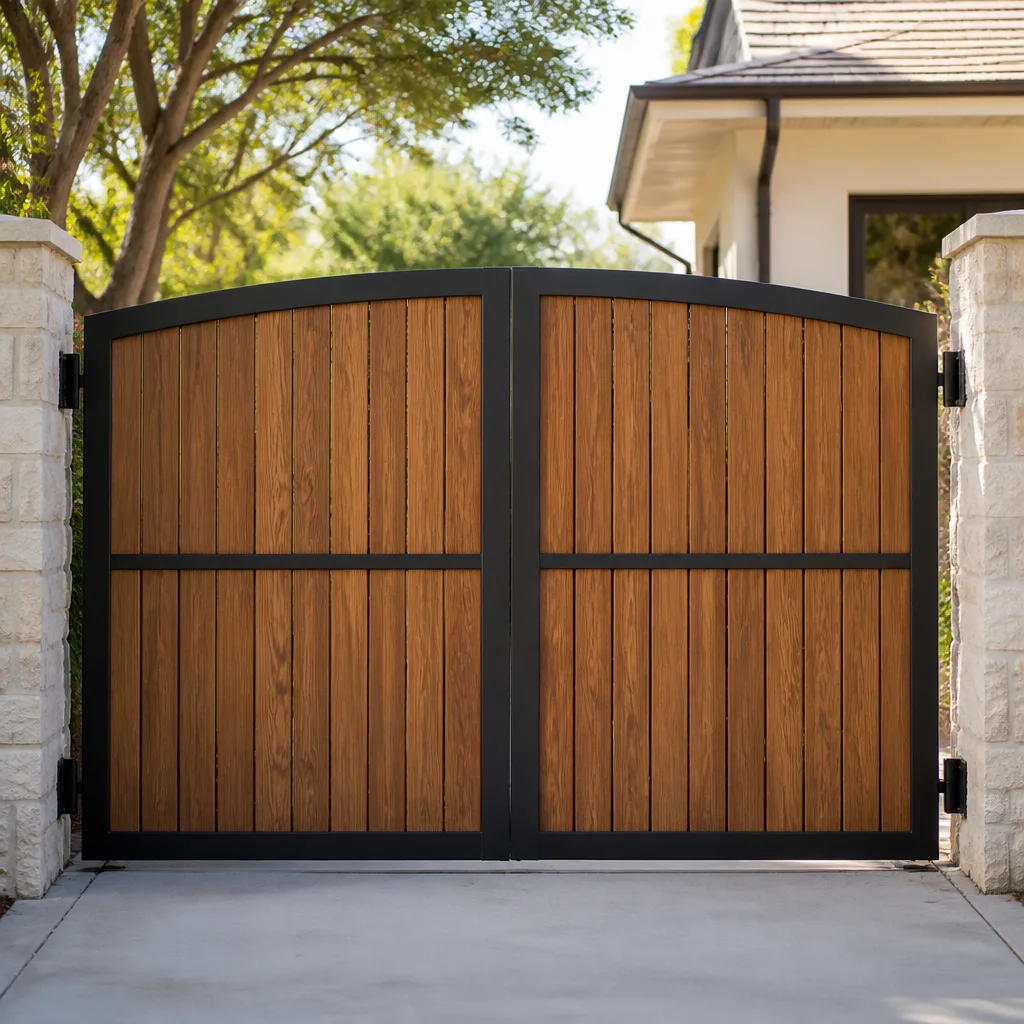 Wood & steel frame
 Farm & ranch
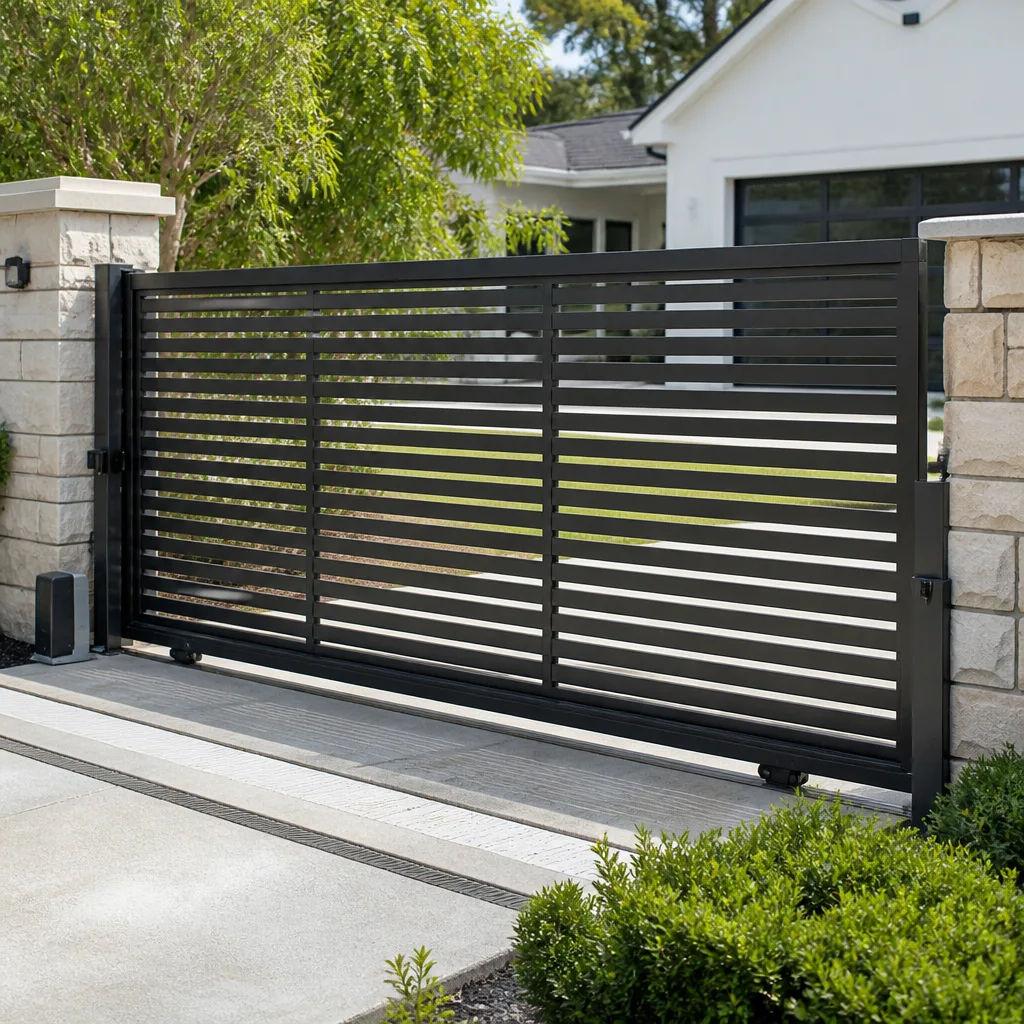 Sliding driveway gates
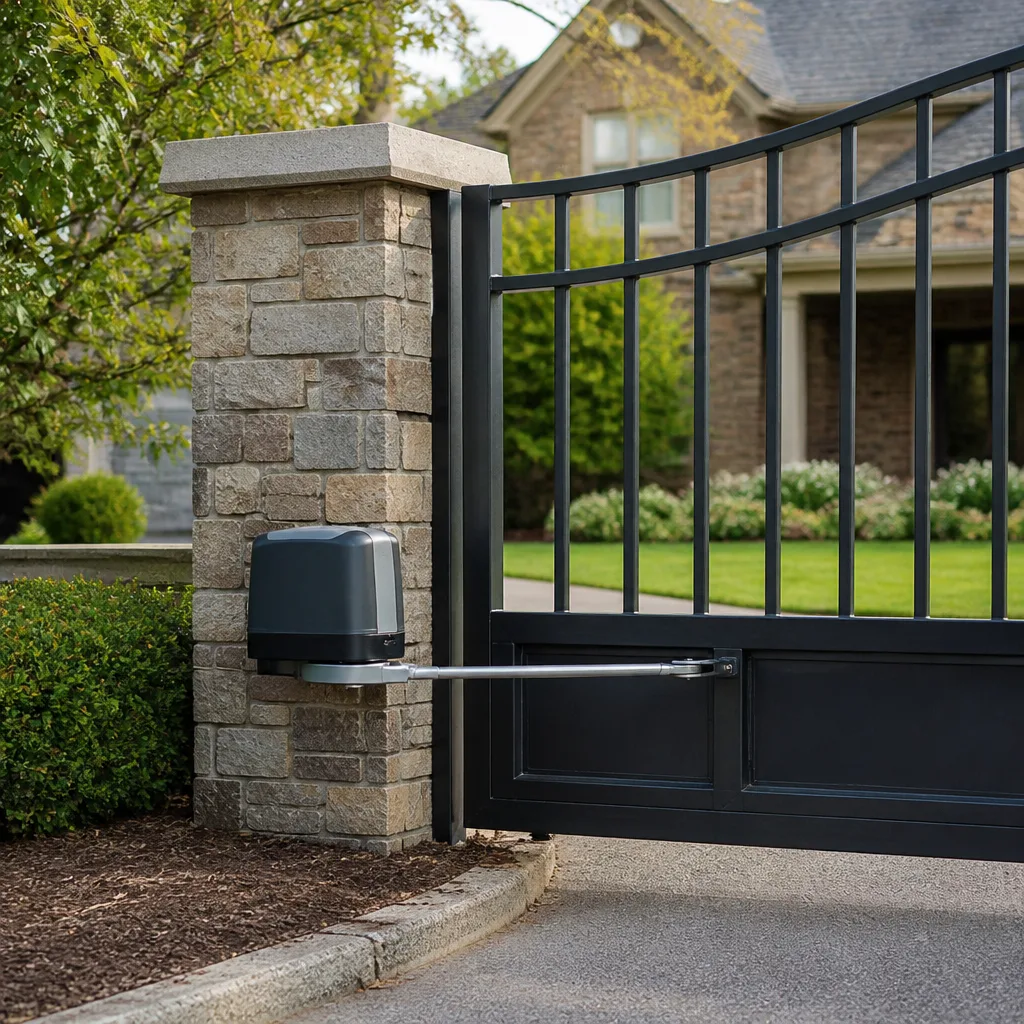 LiftMaster operators
Free on-site gate assessment - hinges, posts, and your LiftMaster or Nice gate operator checked before anything is quoted
The assessment is free and the quote is the invoice.
Get your free estimateGate Repair Troubleshooting: Common Problems and How to Fix Them
A gate that stops mid-cycle and reverses looks identical whether the cause is a $12 safety sensor knocked out of alignment or a failing $380 control board. We’ve pulled up to gates in Winchester where the homeowner had already called two other trades, convinced the motor was dead, only to find a single loose photoelectric eye bracket. The diagnostic steps that separate the cheap fix from the expensive one take less than four minutes if you know the sequence. This guide teaches that sequence: a symptom-first method that starts with what your gate is doing, branches to the probable cause, and tells you exactly where to stop before you risk your fingers or your warranty. You’ll learn the three checks any homeowner can safely do, how to read error codes without a manual, why intermittent failures are never random, and how to describe the problem so the first technician visit is a repair call, not a guessing game.
Quick Answer
Most gate problems fall into four categories: power and control (gate won’t move at all), safety devices (gate runs then reverses), mechanical wear (grinding, dragging, sagging), and operator faults (beeping, error codes, false triggers). Start your diagnosis by observing exactly what the gate does – or doesn’t do – the moment you press the remote. That single observation eliminates half the possible causes before you open a panel. Anything involving springs, 120-volt wiring, or the arm of a swing operator should stop there and go to a trained technician.
Styles & brands we work with
- Wrought iron
- Wood & steel frame
- Farm & ranch
- Sliding driveway gates
- LiftMaster operators
Table of Contents
- The Symptom-First Diagnostic Tree
- Three Checks You Can Safely Do Yourself
- How to Read Gate Opener Error Codes
- Why Intermittent Failures Are Never Random
- How to Describe the Problem to a Technician
- Desert Heat, Wind, and Winchester Gate Wear
- What Repairs Actually Cost
The Symptom-First Diagnostic Tree
Forget model numbers and brand names for a moment. Start with behavior. The gate tells you what’s wrong before any meter does, and in our experience across Winchester, roughly eight of ten calls fall into one of four symptom groups. Match your gate to the group below, then follow the branch.
Symptom 1: The gate does not move at all
No sound, no hum, nothing. This points to power or control before anything mechanical. Check whether the operator has power at all – a tripped breaker in the main panel, a GFCI outlet on the driveway post that tripped during a summer monsoon, or a battery backup that has finally quit. If the unit hums but the gate doesn’t move, the control board is receiving power but the drive is locked or the arm is disconnected.
Symptom 2: The gate starts, then reverses
This is the safety-device branch almost every time. Photoelectric sensors, safety edges, and current-sensing sensitivity all can trigger a reverse. A dirty lens on a sensor post, a spider web strung across a beam, or a sun-angled sensor that sees the glare all produce the same result: the gate runs three feet and backs off.
Symptom 3: Grinding, scraping, or dragging
Mechanical. The chain is loose or worn, the rollers have seized on a sliding gate, the hinges have sagged on a swing gate, or the track has shifted. These repairs are rarely expensive but they get worse fast. On a sliding gate, one seized roller puts four times the load on the operator and eventually burns out the gearbox.
Symptom 4: The gate beeps, chirps, or codes out
Beeping is a diagnostic language. LiftMaster and Linear units typically beep a set number of times to indicate a fault – obstructions, limits, low battery, or a motor overload. The pattern matters more than the pitch. Count the beeps before you call anyone; that number is the beginning of the fix.
Three Checks You Can Safely Do Yourself
Before you pick up the phone, three checks are safe for any homeowner and solve a surprising share of no-start calls. Do them in order and write down what you find.
- Confirm power at the operator. Check the breaker, then any GFCI outlet on the gate post. Press the reset button. Look for a status light on the operator housing – many Linear and Viking units show a solid LED when powered and a different pattern when faulted. No light means no power, and no power means the motor isn’t the problem.
- Inspect the safety sensors. With the gate stopped, look at the small photo-eye sensors at the base of each post. Clean the lenses with a dry cloth. Confirm the small LED on each sensor is lit and steady – on most brands a steady light means aligned, and a blinking light means the pair has lost sight of each other. A visible spider web or a small branch across the beam will do exactly what a bad motor does.
- Listen to the operator. Press the remote and listen for the first half-second. A click and nothing else is a control or limit issue. A hum and no movement points to a drive or brake problem. Silence points to power. The sound gives the technician the branch immediately.
Where DIY stops: the moment you need to open the operator housing, unbolt a hinge on a swing gate (the gate can fall), touch anything near 120-volt wiring, or work on a torsion spring or counterweight with tension on it. Those four are injury work, not homeowner work. The Gate Repair in Winchester page lists the repairs we run routinely in Winchester for exactly those cases.
How to Read Gate Opener Error Codes
You don’t need the manual to start decoding. Gate opener brands share a diagnostic language almost across the board, and the count of blinks or beeps – not the brand – is the useful signal. Here’s how the pattern works on the brands we service most often, including Linear, Viking, and DoorKing.
- Two or three beeps at a start attempt: safety device obstruction or a blocked beam. Virtually universal.
- Rapid continuous beeping: low battery on the backup, or a motor overload fault.
- One long beep then nothing: limit switch fault or a stuck remote-learn mode.
- Steady LED, no movement on command: the operator is receiving the command but the control board is holding – usually a safety or limit fault.
- Blinking LED with light on the sensors: sensor misalignment, dirty lens, or interference from a low sun angle.
If you own a Ghost Controls unit, the manufacturer prints a small diagnostic chart on the inside of the control box lid. On a Viking, the LED sequence is the chart. Note the sequence exactly – three beeps versus four beeps changes the diagnosis. If you’d rather not decode it, the Gate Motor & Opener in Winchester page explains how we service each of the nine major brands.
Why Intermittent Failures Are Never Random
When a homeowner tells us the gate “works sometimes,” the word sometimes is the clue. A gate that operates on Tuesday but not Wednesday isn’t random – it’s conditional. Two root causes account for the large majority of intermittent failures we see in Winchester.
Root cause one: heat or sunlight on the sensors. In Winchester afternoons, driveway post temperatures climb past 130°F in the summer. A sensor facing west into the low afternoon sun will trip at 4 p.m. and behave perfectly at 8 a.m. The gate isn’t failing; the sensor is being blinded. Watch for whether the failures line up with a time of day or a sun angle, and you’ll know whether to suspect the sensor.
Root cause two: a loose connection or a marginal battery. Battery-backed operators often lose the ability to hold the gate up on the backup, so they work in steady power but fail during a brownout, or fail after a weekend of reduced use. Loose terminal screws in the control board cause the same pattern – commanding sometimes, then failing after a small vibration.
Write down the time of day, the temperature, and what the gate was doing when it failed. That log turns a “sometimes” mystery into a fixable pattern. It’s also the single most useful thing you can bring to a service call.
How to Describe the Problem to a Technician
The faster the technician can confirm the branch, the faster the fix happens. We’ve seen real time saved when a homeowner reads out four facts before we ever arrive. Here’s the list we ask for on every call.
- What the gate does when you press the remote. Audio and visual, in one sentence. “No sound, no movement” is worth more than “broken.”
- The beep or blink count. Count the sequence, not the pitch.
- When the failure happens. Every time, only in the afternoon, only in the wind, only after a long idle – the condition matters.
- Brand and approximate age. If you can photograph the label on the operator, send it. LiftMaster, Linear, Viking, DoorKing, and the other brands we carry parts for each have model-specific failure patterns.
That four-fact description turns the first visit into a diagnostic and repair visit, not just a diagnostic. It’s the difference between a one-visit fix and a return trip. The Gate Installation in Winchester page notes the same on the installation side: the description you give before the work sets the schedule.
Desert Heat, Wind, and Winchester Gate Wear
Gates in Winchester fail differently than gates in milder climates, and any troubleshooting guide that ignores that is guessing. The specific wear patterns we see in neighborhoods like Summerlin, Green Valley, and Anthem come out of two conditions: heat and seasonal wind.
Metal expands and contracts about three times more over a summer here than it does in coastal states. That expansion reveals itself in three ways – weld stress at hinge brackets on swing gates, chain stretch on sliding gates (a chain tensioned in January will be loose by August), and seal breakdown on operator gearboxes. Wind is the other factor. The late-winter gusts through the west side of Winchester load the motor on every cycle. A gate with a slightly worn roller or a sagging hinge that would last years elsewhere will fail within a season under wind load. If you’re replacing a motor rather than repairing one, ask about duty rating – a cheaper duty cycle burns out faster in this climate.
One more Winchester-specific point: the sun angle. Sensors mounted on the eastern post look directly into the afternoon sun in the summer. Rotating the sensor slightly downward or adding a small sun shield fixes a whole category of false trigger that competitors commonly blame on the control board. We do that on tune-up visits routinely because it prevents the wrong repair from being sold.
What Repairs Actually Cost
The single most common objection we hear is fear of the invoice. Here’s the honest shape of gate repair pricing on a typical residential driveway gate in the Winchester market, based on what these repairs actually run.
- Sensor realignment or cleaning: $75 – $150, usually folded into a service call.
- Battery backup replacement: $110 – $200 depending on capacity.
- Remote or keypad reprogramming: $75 – $125.
- Roller, hinge, or chain replacement on a sliding gate: $150 – $350.
- Operator control board replacement: $280 – $550, part included.
- Gearbox or drive motor replacement: $420 – $900 depending on brand.
- Weld repair at a hinge bracket or post: $180 – $400.
These are ranges, not quotes, and the reason they vary so much is brand and access. A LiftMaster board costs less than a DoorKing commercial board; a gate on a steep slope takes longer than a flat driveway. What matters more than the range is this: we quote and agree the price with you before any work starts, and no surprise on the bill exists in our process. The $89 Seasonal Tune-Up is the cheapest way to catch half of the above before it becomes a bigger job.
If you have a written estimate from another contractor, we’ll give you a free second opinion on it. Compare the line items, the brand of parts, and the guarantee. Call (866) 984-8340 for a free estimate.
Common Mistakes to Avoid
- Assuming the motor is dead. Roughly two-thirds of the no-start calls we run turn out to be sensors, power, or programming. Replacing a motor for a $75 sensor fix is the most expensive mistake on this list.
- Forcing the gate past a hard stop. A gate that has jammed on a track will bend its own operator arm if you push through it by hand. Stop and diagnose.
- Disconnecting the safety sensors “just to test it.” That test disables the one device that stops the gate on a child, a pet, or a car. Never leave the sensors bypassed even overnight.
- Tightening a chain in January in Winchester. The chain will be loose again by August. Set tension for the hot month, not the cold one.
- Buying a replacement board online without matching the model. Linear and Viking boards look similar and are not interchangeable. A wrong board is a wrong diagnosis plus a wrong part.
- Ignoring a small drip of water on a control board. In our desert monsoons, a single afternoon of rain into an unprotected control box can cost you the whole board. A $20 cover prevents it.
- Calling a handyman for a safety-device or 120-volt fault. Those are licensed-trade work. A generalist on the wrong fault is a re-do.
See the difference
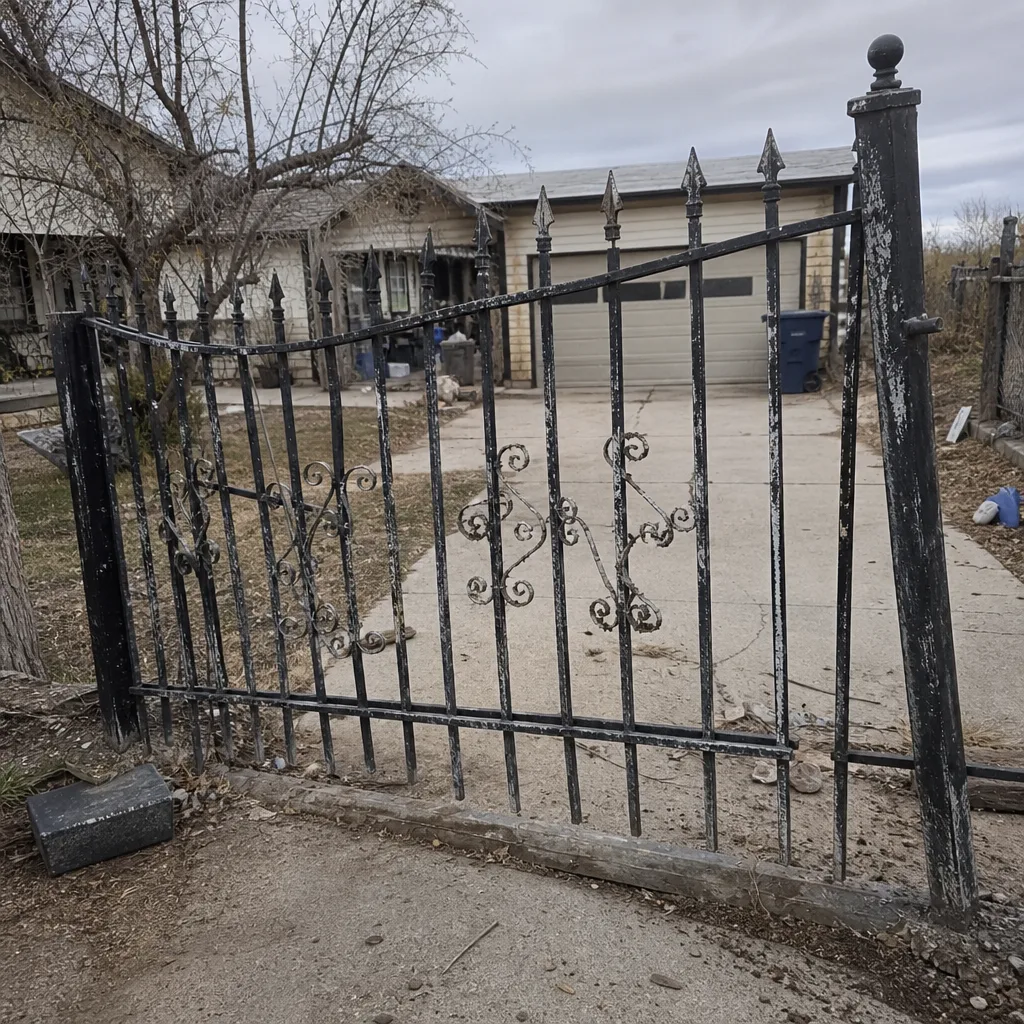 Before
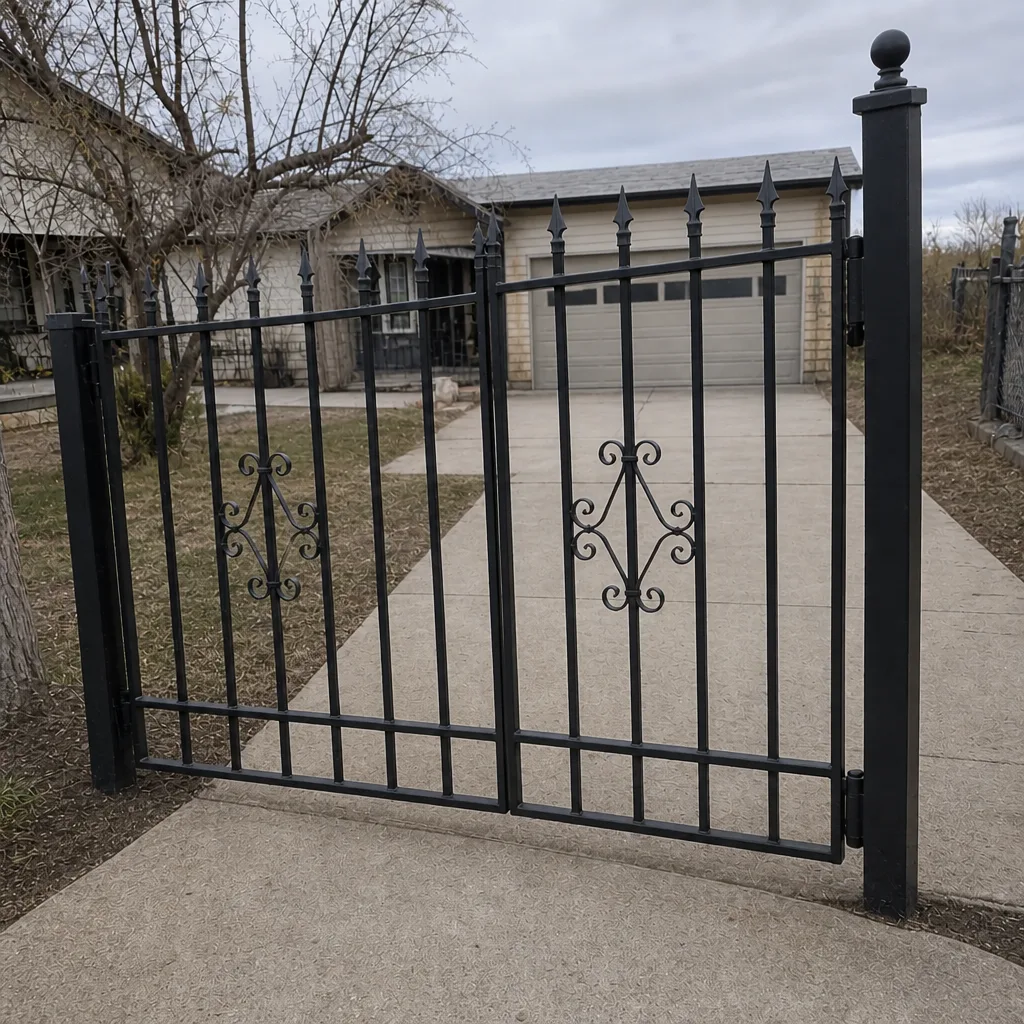 After
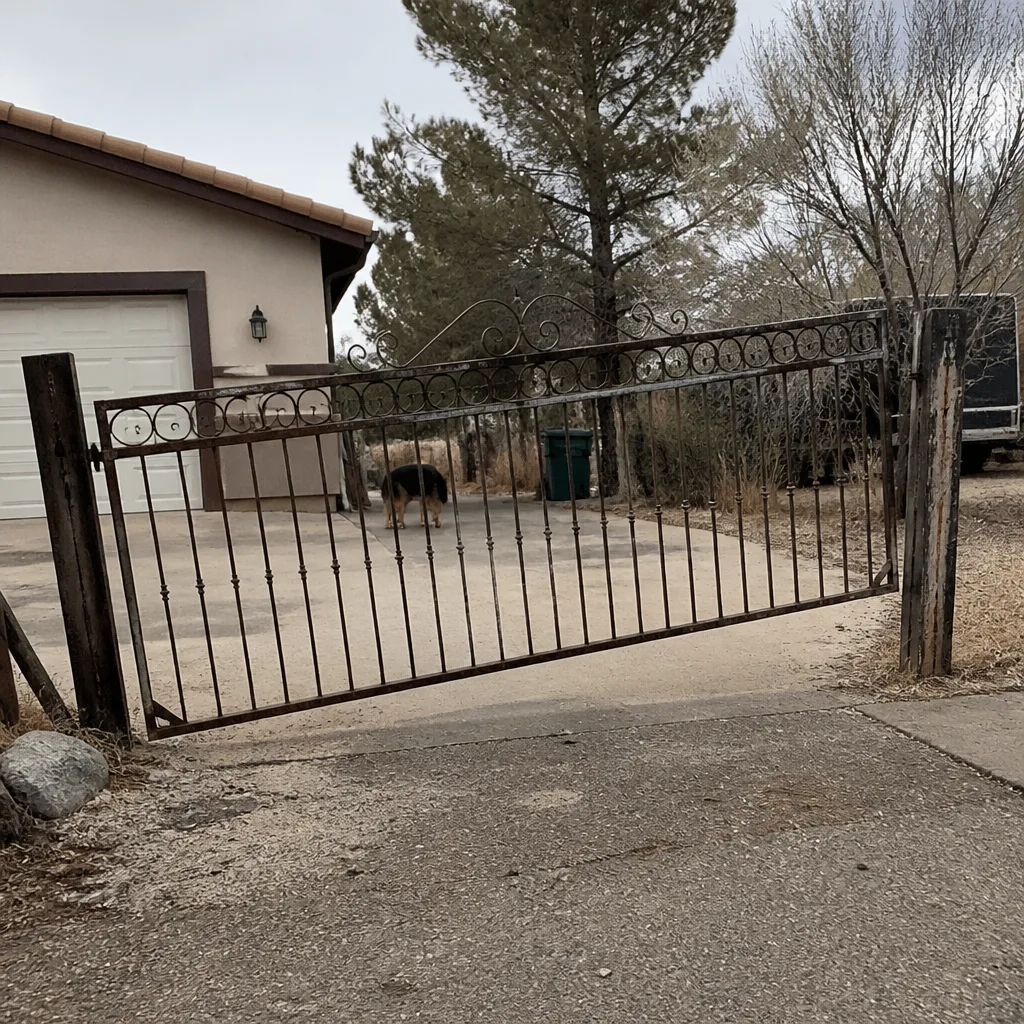 Before
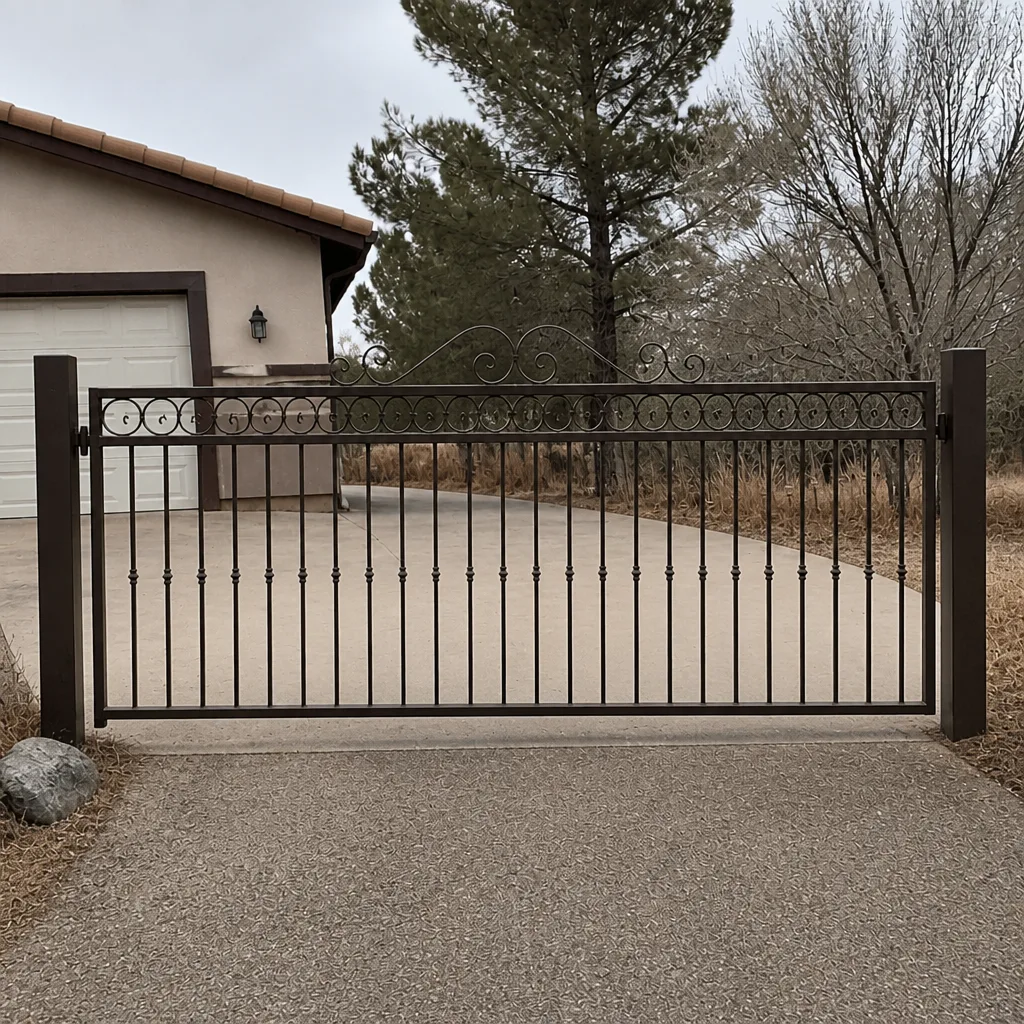 After
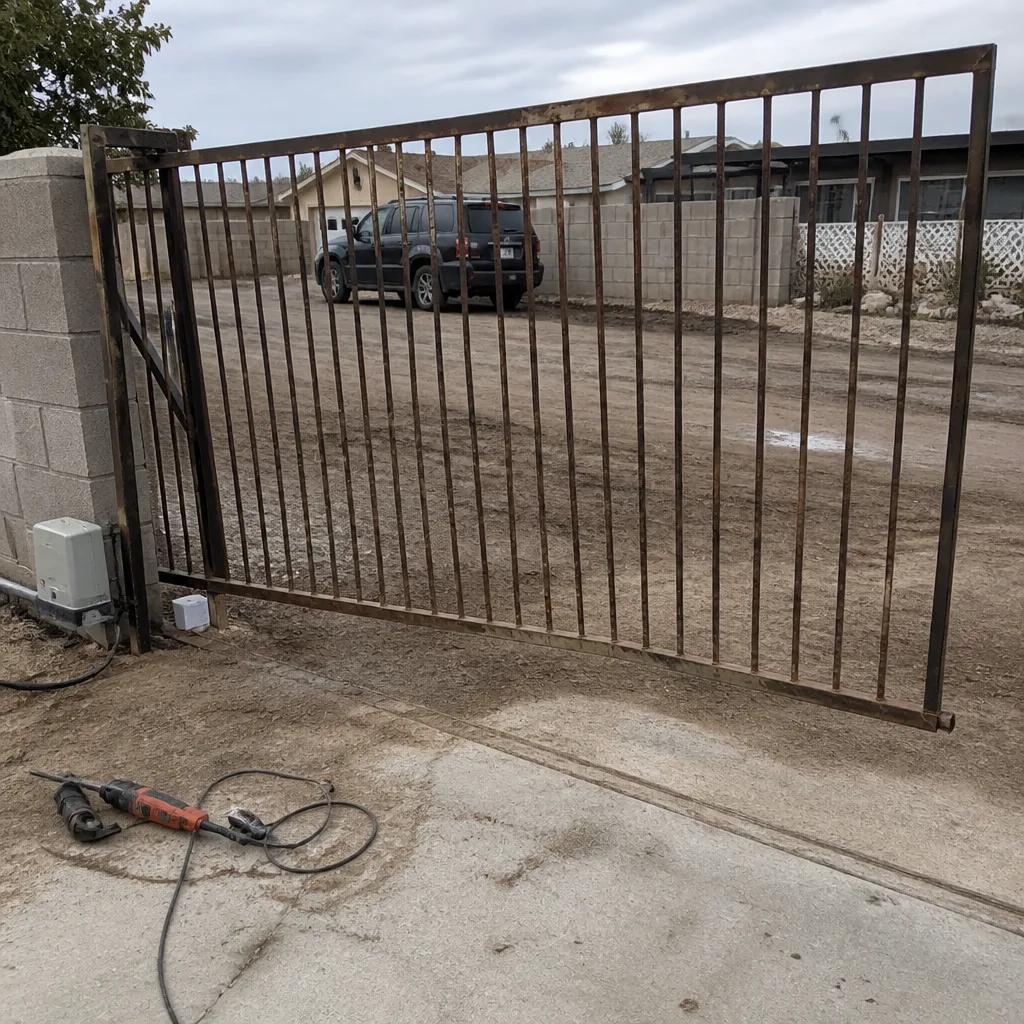 Before
 After
When to Call a Professional
Call us when your gate involves springs, torsion counterweights, 120-volt wiring, a fallen gate that needs to be lifted, or a control board you can’t fully identify. Call us if the gate has reversed on a child or a pet, if you smell burning at the operator, if a gate is sagging at the hinge post, or if the beeps aren’t matching any pattern in this guide. And call us for the jobs that seem simple but can go wrong – anything that requires putting a hand inside the operator housing or unbolting a hinge under load. Ironworks Gate Co. Winchester offers free estimates in Winchester – call (866) 984-8340. A live person answers every call, 24 hours a day, 7 days a week, not a voicemail and not a callback queue.
Frequently Asked Questions
A standard diagnostic visit in Winchester usually runs $75 to $150, and that fee often folds into the repair cost if you approve the fix on the same visit. The repair itself ranges from $75 for a sensor realignment to $900 for a full motor or gearbox replacement, depending on brand. Call (866) 984-8340 for an exact quote – estimates are free, and the price is agreed before any work starts.
A beeping gate is often a sensor or battery issue you can check safely – clean the photo-eye lenses, confirm the LEDs, and check the breaker. But beeping can also indicate a motor overload or control board fault, which is not a homeowner job. If the count of beeps doesn’t match the pattern in this guide, or the fix doesn’t hold within a day, stop and call.
Intermittent gate failures are almost always caused by afternoon sun on the sensors or a marginal battery or loose connection. The gate isn’t random – it’s conditional. Note the time of day, temperature, and what the gate was doing when it failed; that log usually identifies the cause in one service visit.
The brands we service most often in Winchester are LiftMaster, Linear, Viking, Ghost Controls, FAAC, BFT, DoorKing, Elite, and Mighty Mule. Being trained on all nine means the first visit is the right diagnostic and the right part, not a return trip. Call (866) 984-8340 for a free estimate.
Yes – every completed job carries our 90-Day Done Right Promise. It’s a written guarantee: if the repair isn’t right, we come back and make it right, with no paperwork and no arguing. That’s the standard on every job, not just the large ones. Call (866) 984-8340 for a free estimate.
No. Never. The safety sensors are the only thing that stops a moving gate on a child, a pet, or a car, and bypassing them removes that protection entirely. If the sensors are the fault, the correct fix is to repair or replace them, not to disable them. Call us if you’re not sure whether the sensors are working.
The Bottom Line
Most gate problems land in one of four symptom groups – no movement, reverse, grinding, or beeping – and the group tells you the branch before you spend a dollar. Three checks are safe for any homeowner: power, sensor LEDs, and listening to the operator. Everything involving springs, 120-volt wiring, unbolting a hinge under load, or a control board is a professional call and always will be. Write down the beep count, the time of day, and the brand; that log is worth more than any manual. And when the diagnosis points to a real fix, the Ironworks Gate Co. Winchester home page has the full scope of what we service in Winchester, from hinge to keypad.
Our technicians have up to 13 years of experience, and every job is backed by the 90-Day Done Right Promise – done right, and backed in writing. Standing offers: $50 Off Any Repair Over $250, a Free Second Opinion on Any Written Estimate, an $89 Seasonal Tune-Up, and a permanent 5% Senior and Veteran discount. Call (866) 984-8340 for a free estimate in Winchester, today or any day – a live person answers 24 hours a day, 7 days a week.
Written by the team at Ironworks Gate Co. Winchester.