
 Wrought iron
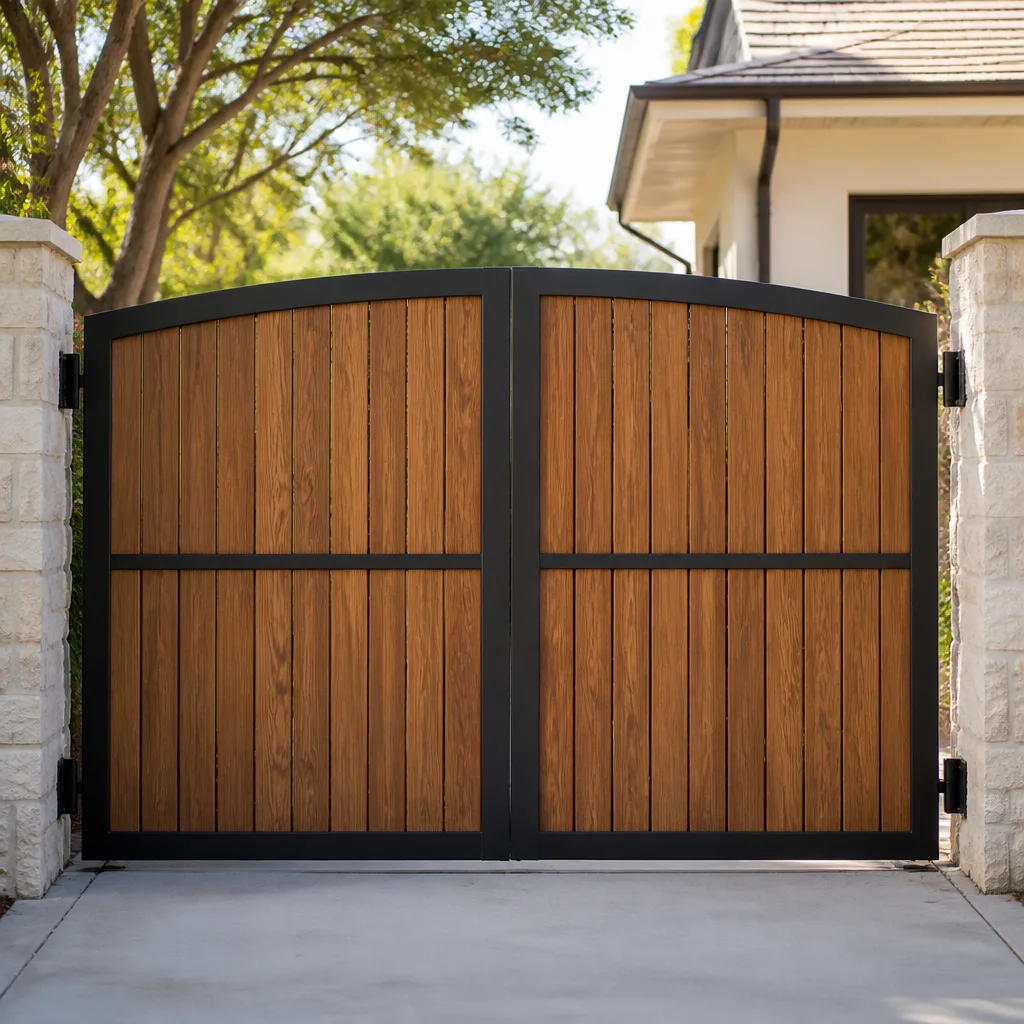 Wood & steel frame
 Farm & ranch
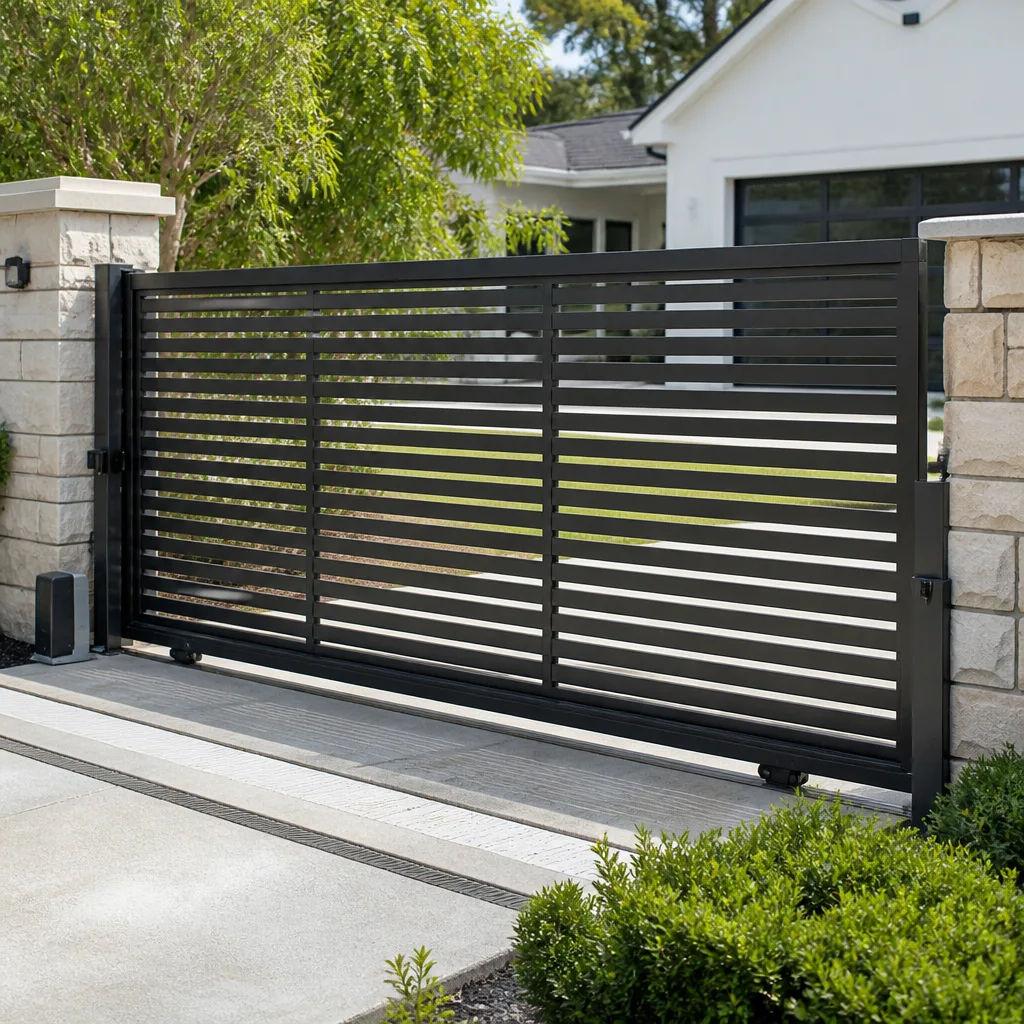 Sliding driveway gates
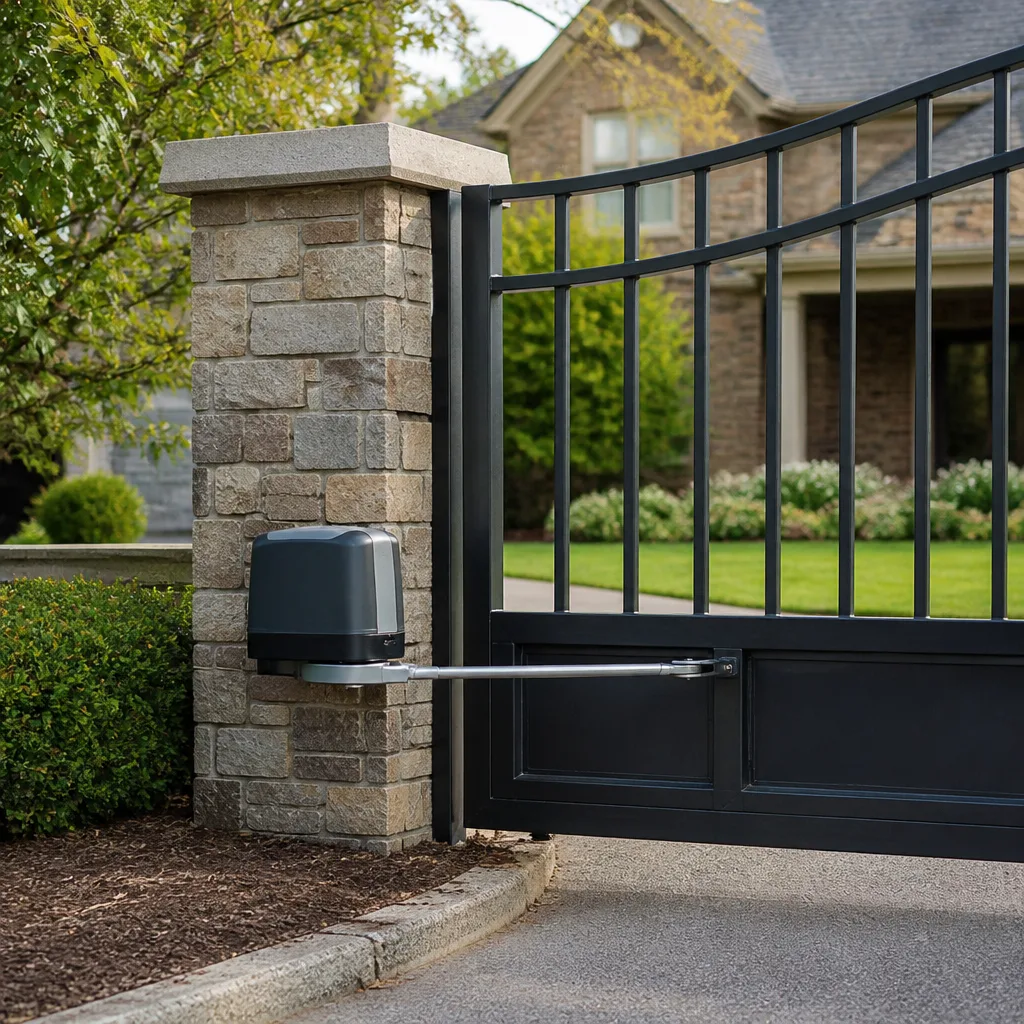 LiftMaster operators
Free on-site gate assessment - hinges, posts, and your LiftMaster or Nice gate operator checked before anything is quoted
The assessment is free and the quote is the invoice.
Get your free estimateStyles & brands we work with
- Wrought iron
- Wood & steel frame
- Farm & ranch
- Sliding driveway gates
- LiftMaster operators
See the difference
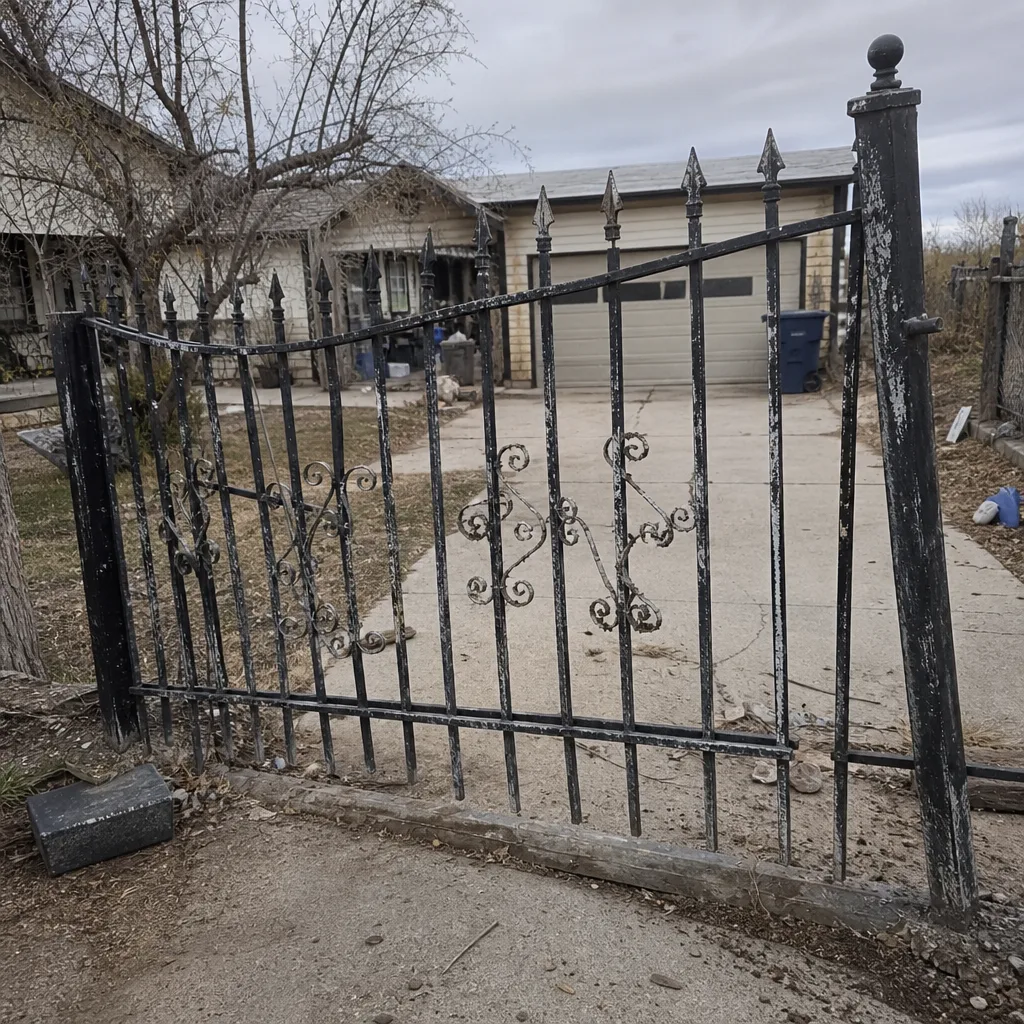 Before
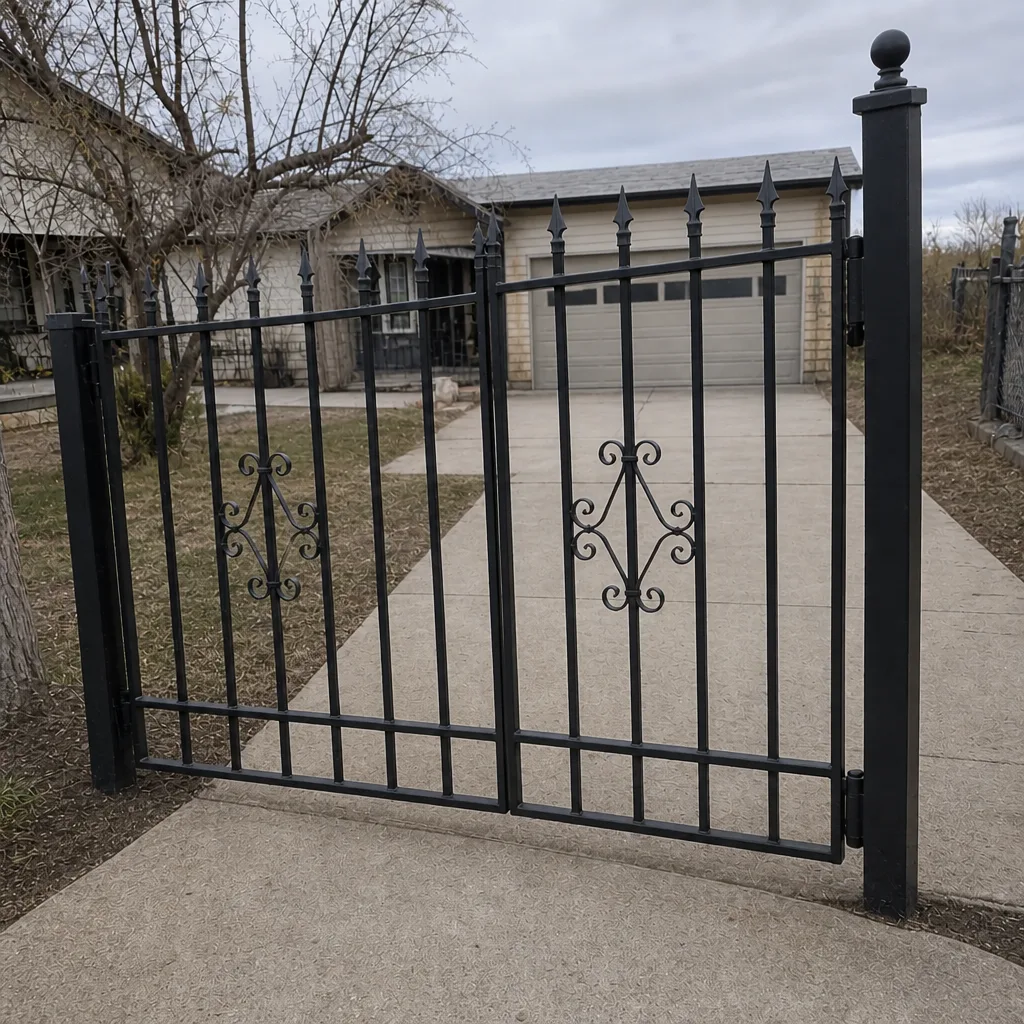 After
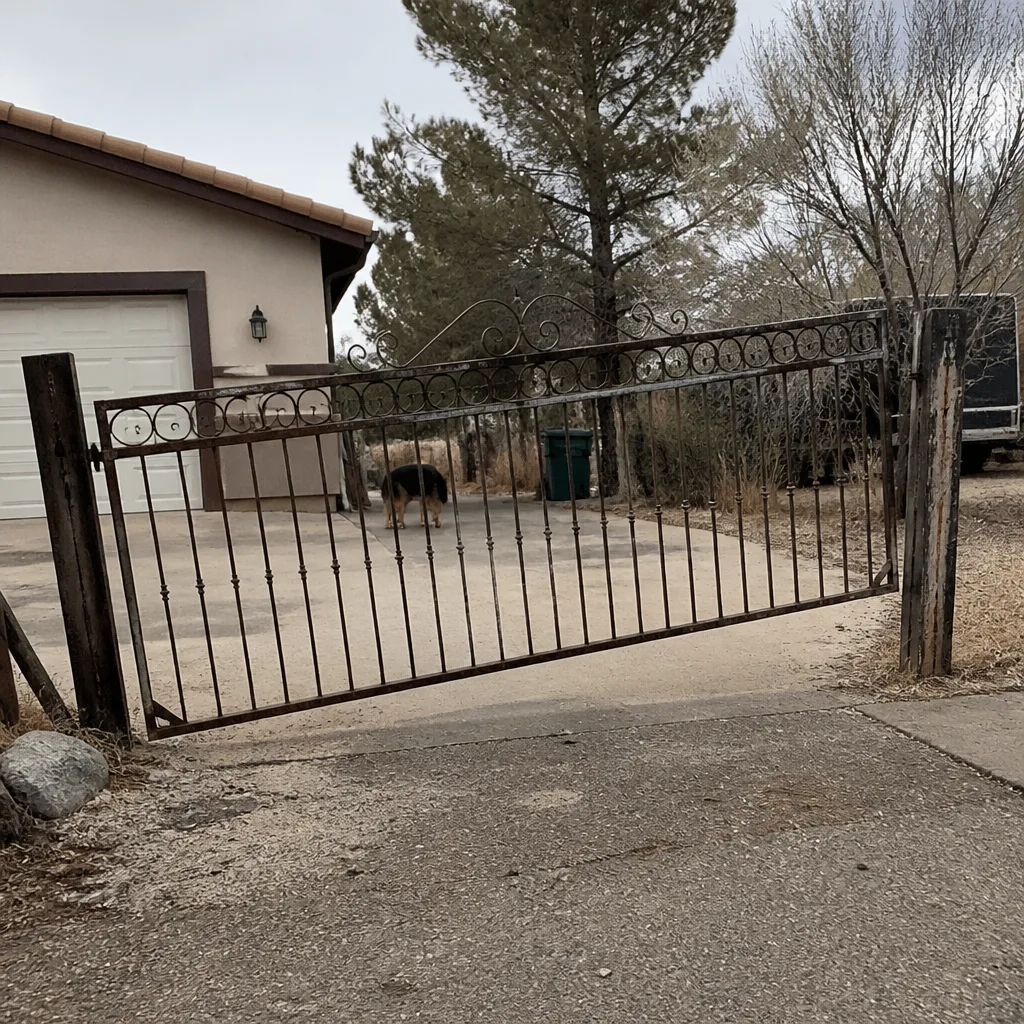 Before
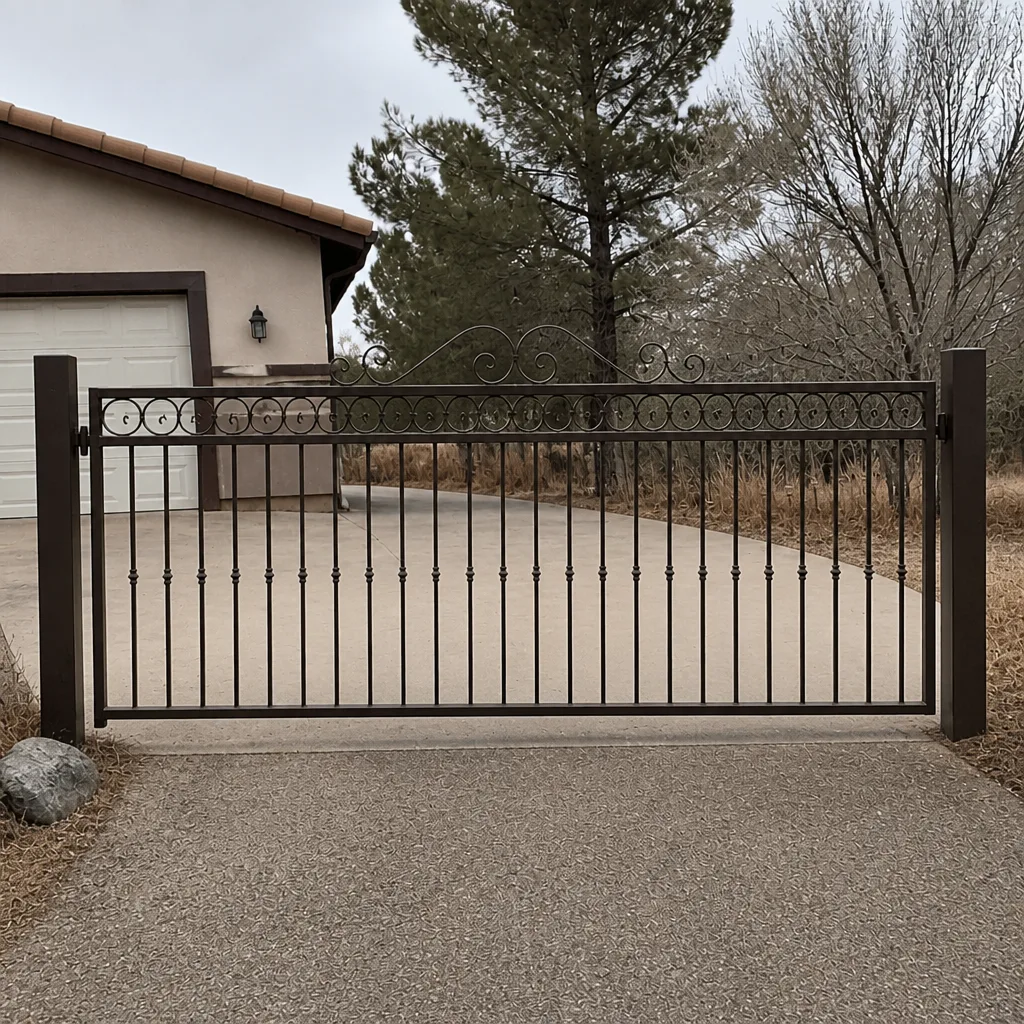 After
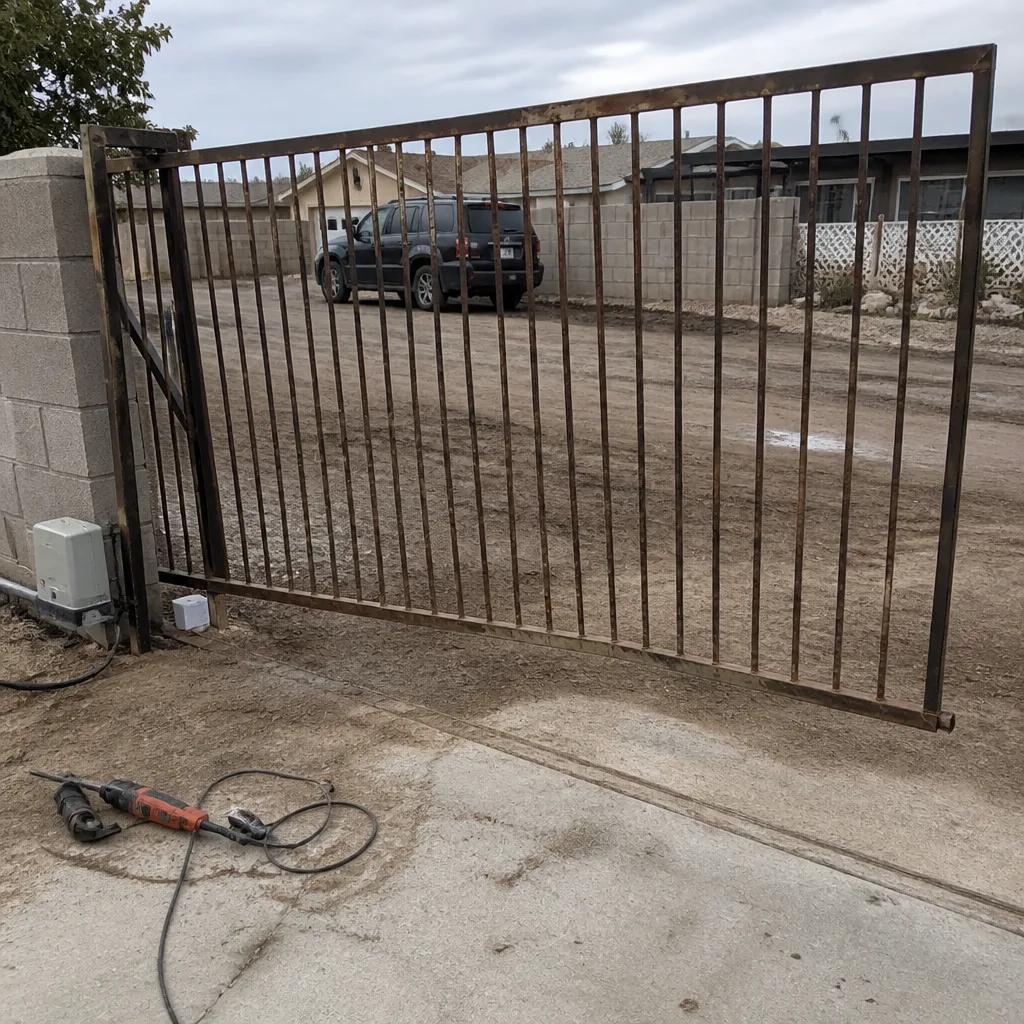 Before
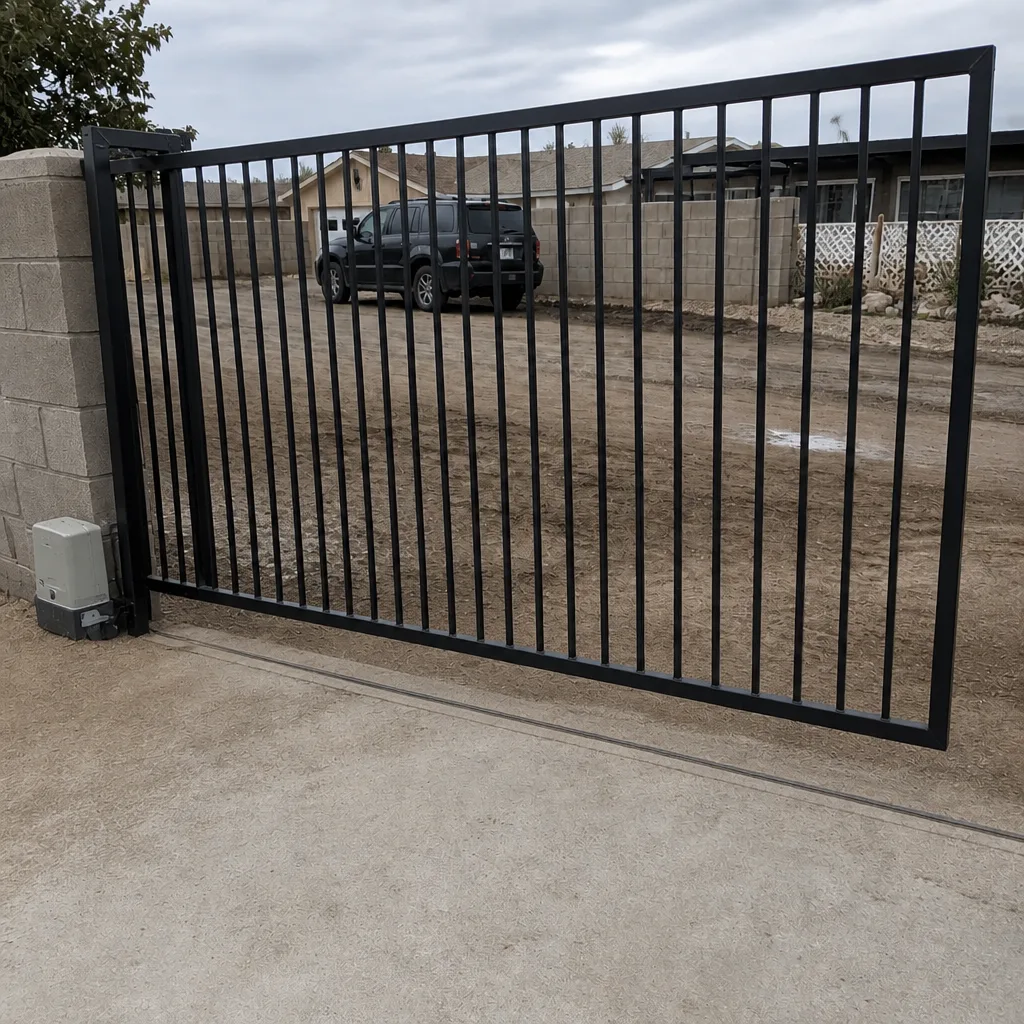 After
Why Won’t My Automatic Gate Open in Winchester, NV?
The short answer: in Winchester, it’s usually heat binding or a dust-fouled safety sensor, not a dead motor. Metal gates expand measurably in 108°F afternoon heat and press against the stop hard enough to trip the opener’s overload protection, and wind-driven Mojave dust coats photocell lenses until the safety circuit thinks something is blocking the gate. If your gate won’t open but the motor hums, clicks, or does nothing at all, call (866) 984-8340 and we’ll walk you through the likely cause before anyone drives out.
Here’s the thing most troubleshooting guides get wrong for Winchester: they’re written for mild climates. A checklist built for Seattle or Atlanta will tell you to check the remote battery, then the wall button, then the motor. All reasonable. But none of that catches metal that’s locked up because the gate has been in full afternoon sun since eleven in the morning, or a photocell lens that looks clear from ten feet away but is actually filmed with fine desert grit.
Key Takeaways
- If your gate opens fine after sunset but not at 3 p.m., suspect thermal binding first.
- Clean the photocell lenses before you call anyone. Thirty seconds, two lenses, one soft cloth.
- Intermittent failures that only happen on hot weekday afternoons can be electrical supply problems, not gate problems.
- A gate that quit after a monsoon storm may have a flooded control box or conduit, not a failed control board.
- Our technicians have up to 13 years of experience on LiftMaster, FAAC, BFT, and six other opener brands, so the right fix usually happens on the first visit.
Heat Binding: The Diagnosis Nobody Runs First
If your Winchester gate won’t open on a 108°F afternoon but opens fine after sunset, your gate isn’t broken. It’s thermally bound. That single fact eliminates the most common misdiagnosis in the valley, which is a bad motor.
Wrought iron and steel expand when they get hot. On a 20-foot driveway gate, a swing arm or slide track that was adjusted with a comfortable gap at 6 a.m. can lose that gap entirely by mid-afternoon. The gate leaf pushes against the stop post, the latch, or the frame, and the opener sees resistance it can’t overcome. Modern openers are designed to stop and reverse when they hit that kind of force, which is a safety feature working exactly as intended. The motor isn’t weak. The metal has simply grown into a tighter fit than the machine is set to allow.
Older gates in Winchester’s 1950s and 1970s housing stock are the worst offenders. Those original wrought-iron leaves were hung on posts that were never engineered for automation, and decades of sun-baked soil movement have shifted them slightly out of plumb. Add summer expansion and a half-inch of sag from a footing that moved in 1998, and you’ve got a gate that fights its own opener every July.
How to confirm it yourself
- Note the exact time of day the gate fails. Write it down for three days.
- After sunset, when the metal has cooled for two hours, manually release the opener per the manufacturer’s instructions and try to swing or slide the gate by hand. If it moves freely at night and binds during the day, you’ve found your answer.
- If the gate binds by hand even at night, the problem is mechanical alignment, a failing hinge, or a worn roller, not heat.
We’d note one safety caveat here: never put your hands near the gate’s hinges, track, or rollers while the opener is powered. Gates carry serious pinch force, and a machine that unexpectedly cycles can injure fingers and hands badly. Release the operator and disconnect power only per the manual, and if you’re not certain how to do that, stop and call us. This is a genuinely dangerous piece of equipment to reach into. We say that plainly because it matters.
Dust and the Photocell Problem
Winchester sits inside one of the dustiest parts of the Mojave, and from roughly May through October, wind-driven grit coats every horizontal surface on the property. The photocell lenses on your gate’s safety beam collect that dust over a matter of weeks. When the beam weakens enough, the safety circuit reads a phantom obstruction and refuses to open, or opens a few feet and reverses.
This failure mode is invisible to the eye. The lenses look clear. They aren’t. The fix is a soft, dry cloth on both lenses, one on each side of the driveway, with a gentle motion that doesn’t scratch the plastic. Thirty seconds. Most homeowners never try it, because it makes no sense that a gate would refuse to open when nothing is in the way.
If you’ve cleaned the lenses and the gate still won’t cycle, check the alignment of the two sensors. Wind can nudge a sensor bracket a fraction of an inch out of line, and that’s enough to break the beam. Sometimes a fallen leaf or a piece of desert scrub has settled in front of the lower lens, and that’s the whole problem.
Power Problems That Look Like Gate Problems
Winchester has a lot of mid-century housing on aging electrical panels. During peak-load summer afternoons, when air conditioners across the neighborhood are running hard, voltage at the outlet feeding your gate transformer can sag enough that the opener’s control board drops out or resets mid-cycle. From where you’re standing, it looks like the gate randomly stops working. The gate is fine. The power isn’t steady.
This is where our Gate Repair service often starts with a meter, not a wrench. We want to see what voltage is actually arriving during the hours the gate fails. If it’s a supply issue, we’ll tell you, because adjusting a perfectly good motor won’t fix a power quality problem.
What the monsoon leaves behind
Every summer, a heavy rain event arrives after weeks of dry heat, and we get a wave of calls from the Decatur Boulevard and Desert Inn Road corridors. A buried control box or wiring conduit with cracked fittings can take on water during a microburst and trip a ground fault. The opener’s self-diagnostics often read this as a control board failure. The real fix is draining the conduit, drying the connections, and resealing the fittings with a proper outdoor-rated compound. If you’ve just had a storm and your gate quit, suspect water before you suspect the electronics.
Where the local permits matter
Because Winchester is an unincorporated urban island, gate permits, inspections, and right-of-way clearances run through Clark County, not the City of Las Vegas. A gate that’s fine in Las Vegas can fail a county inspection here, and we’ve seen gates installed by Las Vegas-licensed contractors that lack the county’s required right-of-way clearance or wind-load anchoring. If you’re troubleshooting an older gate and considering a repair that changes its footprint or anchoring, keep that county distinction in mind. Our home page explains how we work across the region.
When to Stop and Call a Professional
Here’s where the DIY checklist ends. If you’ve cleaned the lenses, confirmed the gate binds by hand, and checked the time-of-day pattern, you’ve done the diagnostic work a homeowner can safely do. Beyond that, you’re looking at spring or actuator force adjustments, hinge and post repairs, control board replacements, or conduit work. Those need tools, training, and in the case of anything electrical, the right precautions.
Ironworks Gate Co. Winchester keeps a live person on the phone 24 hours a day, 7 days a week. That means you can call us on a Sunday evening, describe the symptoms, and we’ll often diagnose it by phone before deciding whether a service call is even needed. We’d rather save you the trip. It’s a square deal, and it’s how we’ve stayed the gate specialists in town. When a visit is warranted, every job is backed by our written 90-Day Done Right Promise. If it isn’t right, we come back and make it right.
FAQs
Almost certainly thermal binding. Your gate’s metal components expand in the afternoon heat and press against the stop or frame hard enough to trip the opener’s overload protection, then contract after sunset and free up. It’s a mechanical fit problem made worse by Winchester’s summer temperatures, and it can usually be adjusted with proper clearances rather than a new motor. Call (866) 984-8340 for a free estimate on the adjustment.
A mechanical bind or a misaligned safety sensor, and in Winchester the bind is often heat-related. If the motor hums or clicks but the gate doesn’t move, the opener is trying and failing to overcome resistance from the gate leaf, a worn hinge, or a roller that’s packed with desert dust. Don’t force it. Call us at (866) 984-8340 and we’ll help you narrow it down over the phone.
Most Winchester gate repairs run $180 to $420 depending on the failure. Sensor cleaning and alignment, force-limit adjustments, and minor hinge work tend to fall on the low end. Control board replacement, actuator work, or conduit repair after a monsoon flood usually lands higher. We give you a no-surprise, upfront price before any work begins, and estimates are free.
In most cases, yes. Our technicians are background-checked and equipped to service nine major brands including LiftMaster, FAAC, BFT, and Mighty Mule, so we can often fix the problem on the first visit instead of ordering a part and returning. Call (866) 984-8340 and a live person will give you a straight answer on timing.
If you’d rather have it looked at, Ironworks Gate Co. Winchester offers a no-pressure assessment in Winchester – call (866) 984-8340. We’ll tell you what’s wrong, quote it upfront, and back the work in writing.
Written by the team at Ironworks Gate Co. Winchester, serving Winchester, NV.