
Last updated November 18, 2026
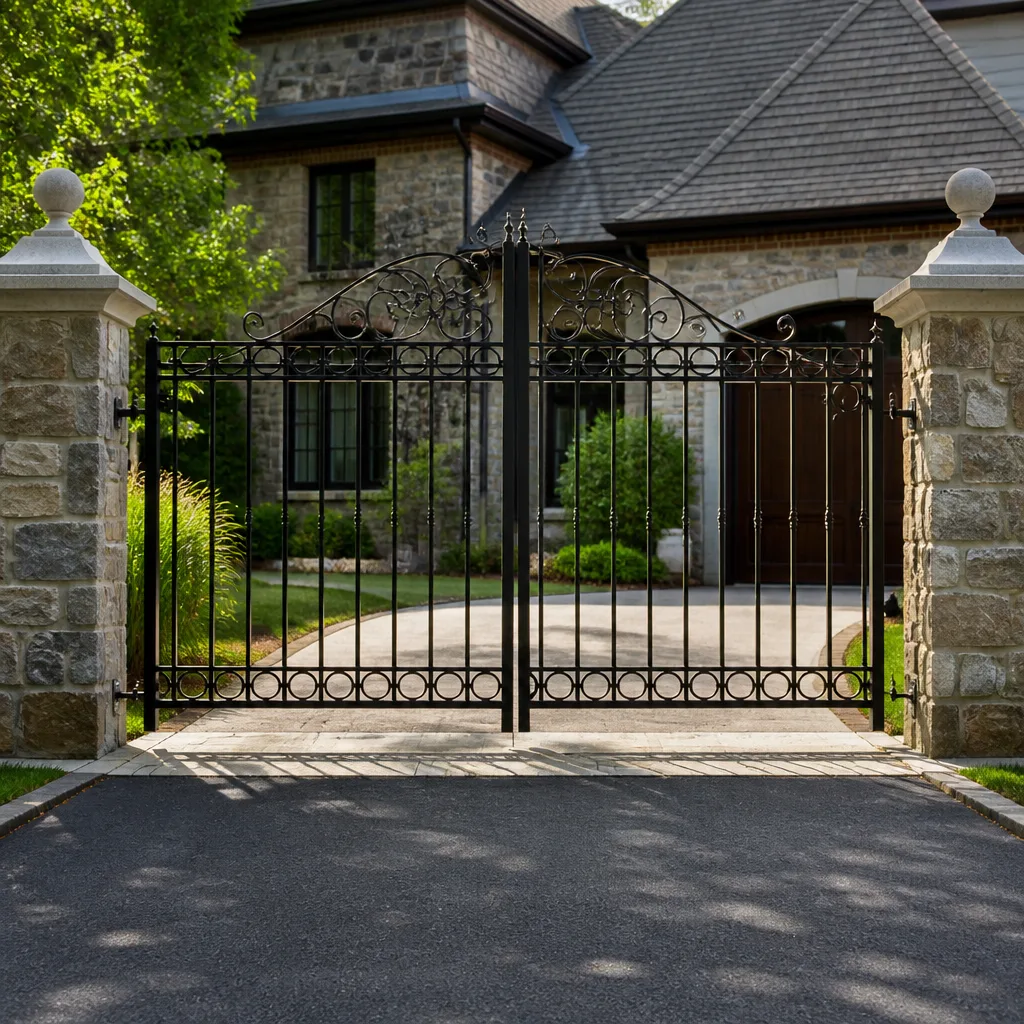 Wrought iron
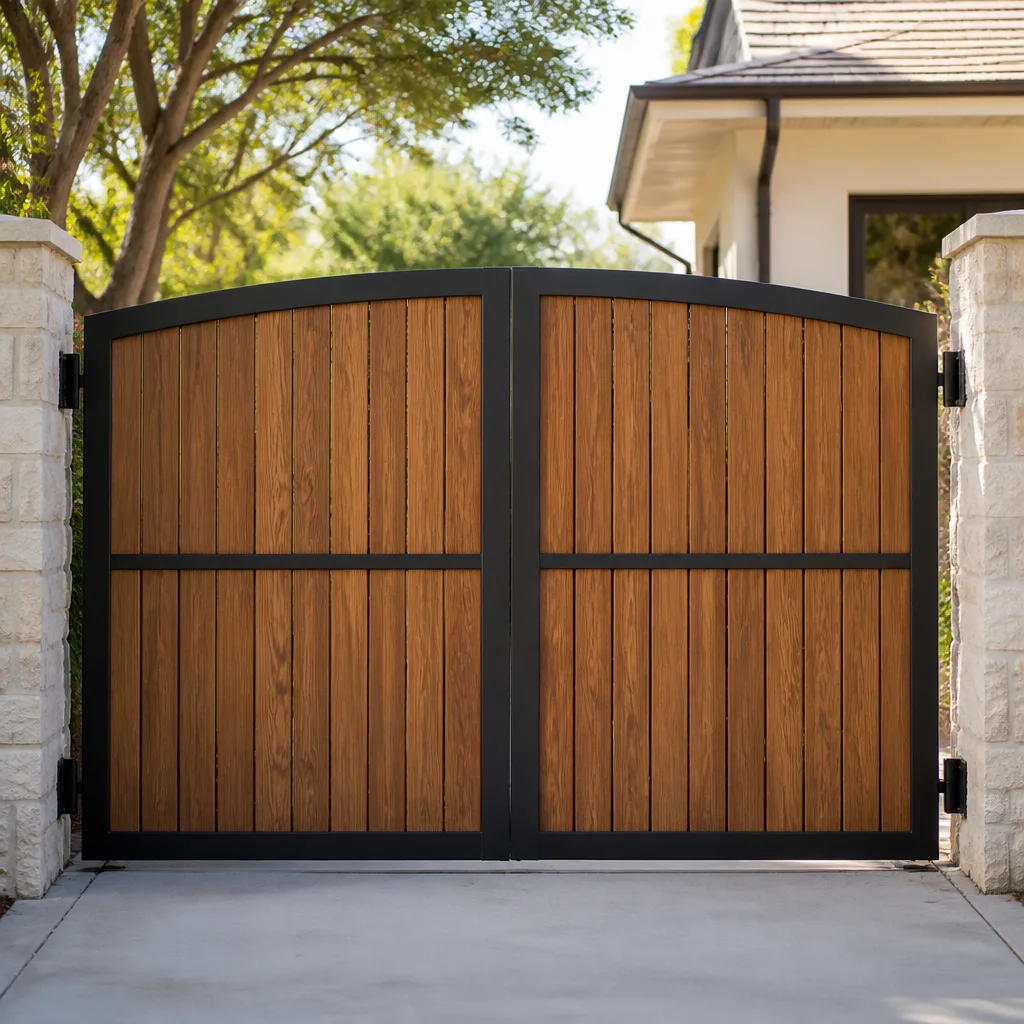 Wood & steel frame
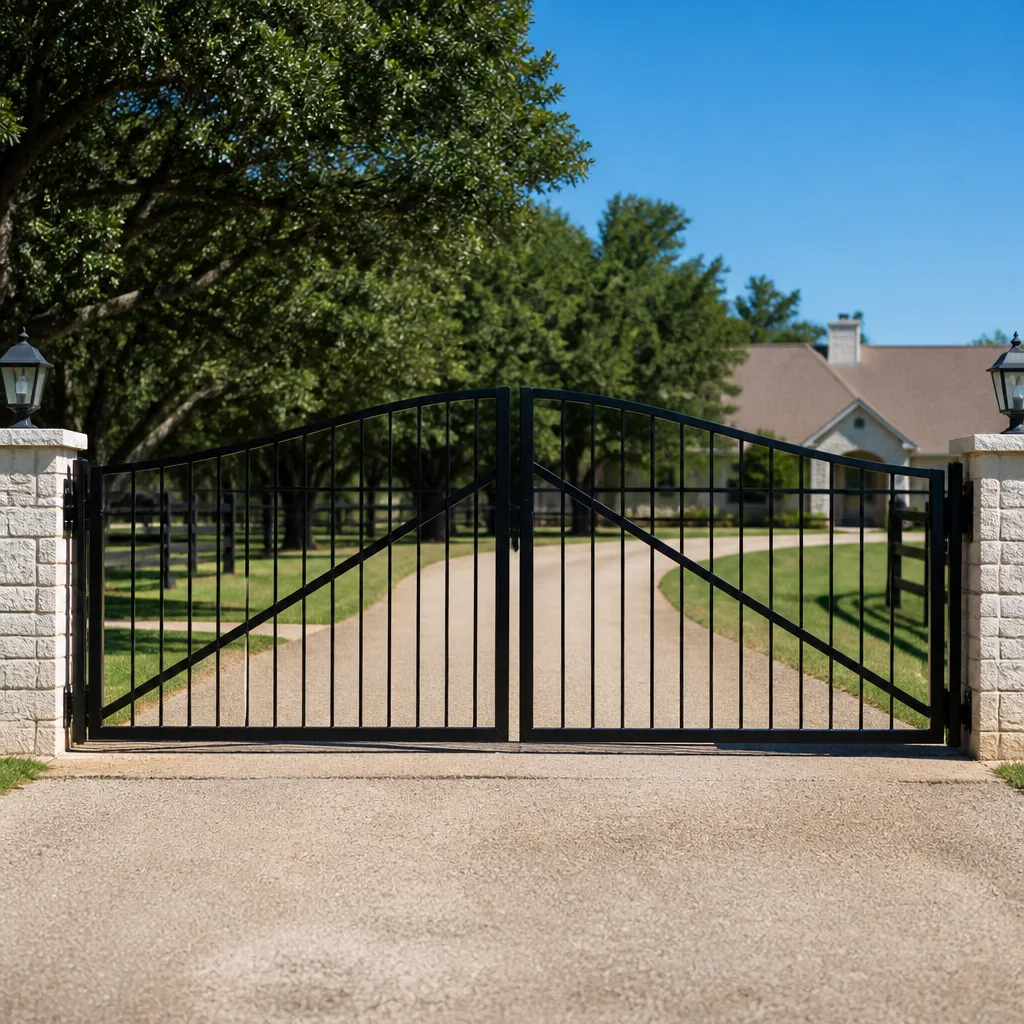 Farm & ranch
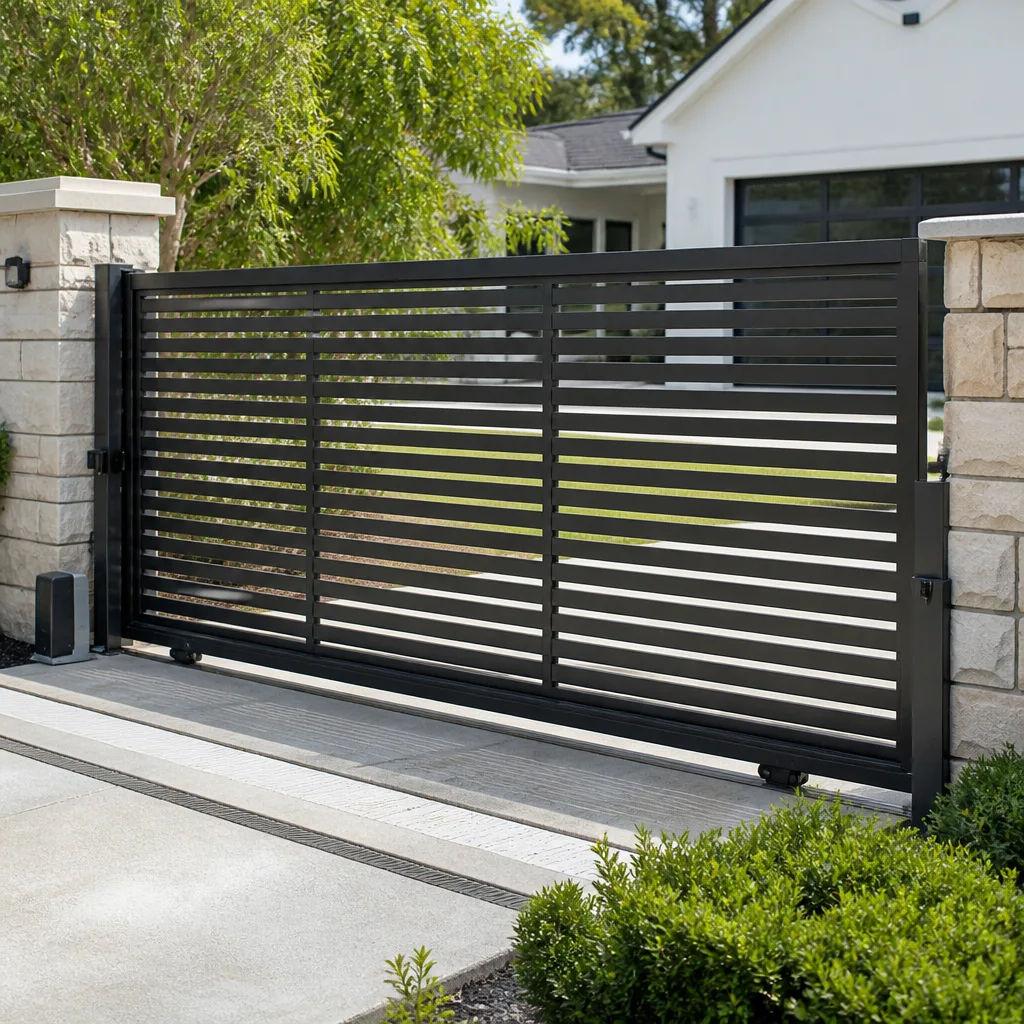 Sliding driveway gates
 LiftMaster operators
Free on-site gate assessment - hinges, posts, and your LiftMaster or Nice gate operator checked before anything is quoted
The assessment is free and the quote is the invoice.
Get your free estimateThe Complete Gate Motor & Opener Guide for Winchester Homeowners
An opener rated for “extreme temperatures” on a product spec sheet is tested to 104°F. Winchester regularly sees 108°F on exposed pavement. That gap is where motors fail, circut boards warp, and homeowners end up replacing a two-year-old unit that was never built for this valley. Most gate opener advice you’ll read online was written for mild coastal climates, and it doesn’t hold here. This guide narrows the field to what actually survives a high-desert summer, a monsoon-season brownout, and the dust that settles on everything by June.
Quick Answer
For most Winchester homeowners, a commercial-duty slide or swing opener with a sealed housing, an IP-rated control board, and battery backup is the right choice, and several popular residential units should be ruled out entirely because they can’t handle 108°F pavement heat and daily family use. The correct motor depends on gate weight, terrain, and how often the gate cycles, not on the brand name on the box. Get the duty cycle and the climate rating right first, and the rest follows.
Styles & brands we work with
- Wrought iron
- Wood & steel frame
- Farm & ranch
- Sliding driveway gates
- LiftMaster operators
Table of Contents
- The Three Opener Categories and Which Fits Your Gate
- Duty Cycle: Why “Residential” Burns Out Here
- Battery Backup for Monsoon Season and Summer Brownouts
- Dust Ingress: Sealed Housings and IP Ratings
- Brand-Locked vs. Open-Protocol Systems
- How We Match an Opener to a Winchester Gate
- Common Mistakes to Avoid
- When to Call a Professional
The Three Opener Categories and Which Fits Your Gate
Every driveway gate opener falls into one of three families, and the terrain around your gate usually decides which one you need before brand or price enter the conversation. In Winchester, we see all three on the same street, because lots vary from flat pads near the valley floor to sloped driveways against the foothills.
Swing openers
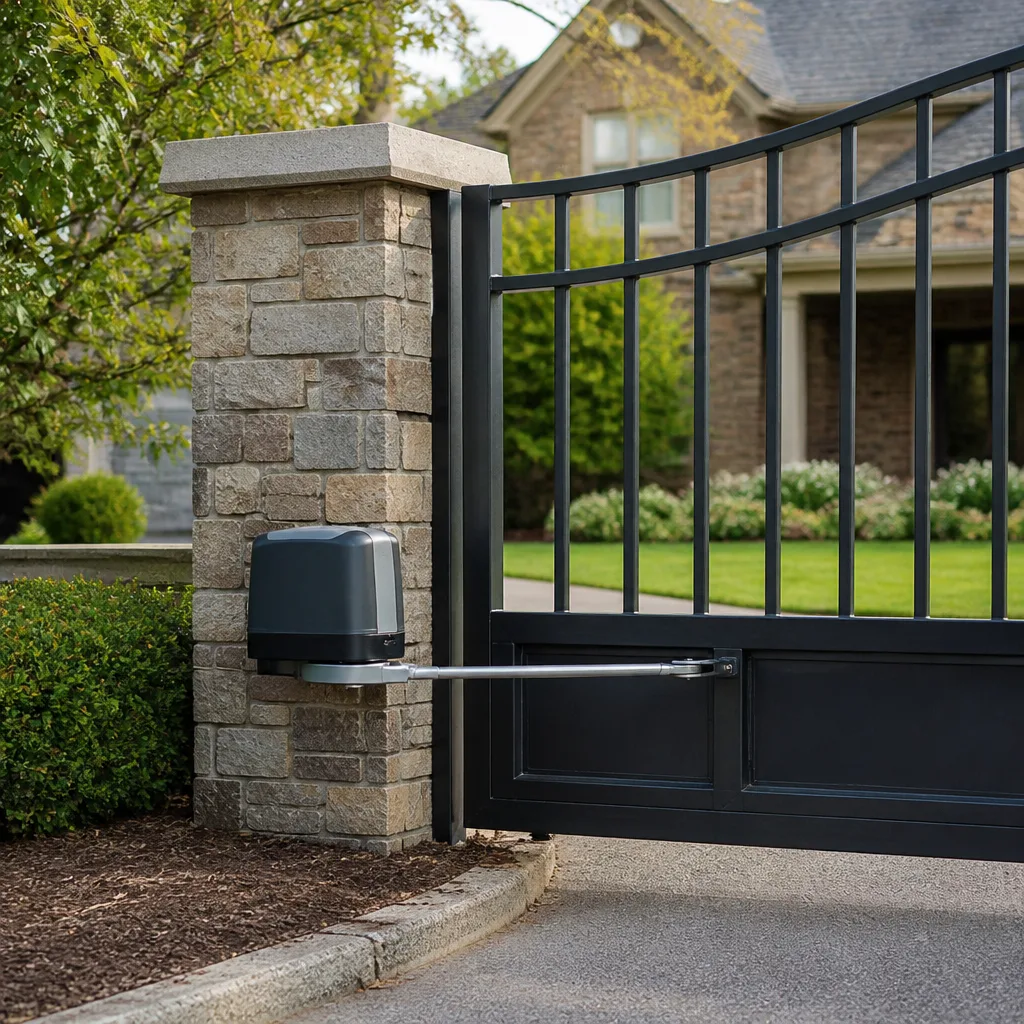
Swing openers push a gate open on its hinges, using an arm mounted to a pillar or a post. They suit single gates up to roughly 12 feet and lighter ornamental iron or tubular steel. The arm style works well on level ground with a solid mounting point. On a sloped Winchester driveway, an arm opener can bind if the gate swings uphill, so the hinge side and grade matter as much as gate weight.
Slide (linear) openers
Slide openers run the gate along a track or on a cantilever rack, and they’re the workhorse for wider openings and heavier gates. They handle a double gate that opens as one leaf, and they don’t need clearance to swing. Most of the heavy wrought-iron driveways we service across Winchester are best served by a slide unit, especially where the driveway is tight against a wall or the property line.
Underground openers
Underground openers bury the motor in a housing beneath the gate pivot, so nothing shows above ground. They suit high-end estate entrances where the look matters, but they’re vulnerable in rocky or poorly draining soil, and a buried unit in a Nevada summer runs hot with less air movement around it. When an underground opener is the right call, we spec a housing that drains and breathes, and we warn homeowners about the service access it needs.
If you’re weighing a new gate along with the motor, our Gate Installation in Winchester page covers how the gate itself gets sized to the opener.
Duty Cycle: Why “Residential” Burns Out Here
A duty cycle rating tells you how often an opener can run before it needs to cool down, expressed as a percentage of time in use. A residential opener is often rated around 25 percent, meaning it can run roughly 15 minutes out of every hour. A commercial-duty opener runs at 50 percent or higher, with heavier gearing and a motor built to shed heat.
Here’s where the spec sheet and real life part ways in Winchester. A family of five with two teen drivers cycles a driveway gate a dozen or more times a day. Add deliveries, a gardener, and a dog that gets let out every two hours, and a “residential” unit spends far more time running than the label assumed, on pavement that’s already at 108°F. Heat is the enemy of every motor winding, and a unit running hot on a hot day has no cooling margin left.
What commercial-duty means in practice, on your gate:
- Heavier gearbox and bearings that tolerate daily family traffic for years, not months.
- A motor that can complete a cycle without tripping its thermal overload on a July afternoon.
- Control boards rated for higher ambient temperatures, so a heat wave doesn’t take the gate offline.
- Serviceable parts, so a worn gear or a failed limit switch gets replaced instead of triggering a whole new unit.
Matching duty cycle to real household traffic is the single most common thing we correct on a first visit. A unit that’s “big enough” on paper but rated for a weekend cabin will not survive a Winchester family’s daily use.
Battery Backup for Monsoon Season and Summer Brownouts
Winchester’s power isn’t unreliable in a dramatic way, but it wobbles in ways that matter to a gate motor. Summer afternoon demand can brown out the line, and monsoon season brings the fast, dusty storms that knock a transformer offline for an hour. A gate that stops mid-cycle and strands a car in the driveway during a downpour is the wrong outcome.
A battery backup keeps the gate working when the grid drops and, just as important, lets the opener finish a cycle cleanly during a voltage sag. When we spec backup, we look at:
- Battery type and capacity. A sealed lead-acid or AGM battery sized to the number of cycles you actually need during an outage.
- Charge controller quality. The battery has to recharge correctly after a brownout, or it sulfates and dies young in the heat.
- Heat tolerance of the battery bay. A battery sitting in a metal housing in full sun loses life fast; ventilation and placement matter.
- A manual release. Every backup system should include a way to disengage the gate by hand, so a dead battery never traps you.
We’ve been called to Winchester gates after a storm where the opener was fine but a two-year-old backup battery had cooked itself in a closed housing. That’s a preventable failure, and it’s why we check the battery bay on every tune-up.
Dust Ingress: Sealed Housings and IP Ratings
Dust is the quiet killer of gate automation in the high desert. Wind-driven grit works its way into limit switches, gearboxes, and control boards, and it turns into an abrasive paste once a little lubricant mixes in. An opener that lasts a decade in a humid climate can fail in half that time here if it isn’t sealed properly.
The IP rating is your guide. IP stands for Ingress Protection, and the two digits tell you how well an enclosure keeps out solids and liquids. An IP-rated control board resists dust and splashing, while an unrated board leaves sensitive electronics exposed to everything the wind carries. On a Winchester gate, dust protection ranks with heat protection, and the two often travel together: a sealed housing keeps grit out and lets the manufacturer control airflow for cooling.
What to look for:
- Sealed motor housing with gasketed covers, not an open frame with a loose lid.
- An IP-rated control board enclosure, ideally IP54 or better for dust and splash.
- Limit switches and sensors that are themselves sealed, since these are the first parts to seize with grit.
- Service access that doesn’t compromise the seal every time the unit needs a look.
Dust also settles on your gate track and hinges, so part of living with automation here is a seasonal clean-and-lube. Our Gate Repair in Winchester page covers the wear points we check most often.
Brand-Locked vs. Open-Protocol Systems
A brand-locked system ties every part to one manufacturer: the opener, the control board, the remotes, the keypad, the safety edges. An open-protocol system uses standard inputs and outputs, so compatible parts from other makers can be added or swapped when something fails.
Why does that matter in a rural Nevada county? Because when a proprietary control board fails and the part is on backorder, your gate sits open or shut until it arrives, and your only option is that one manufacturer. An open-protocol system lets a technician fit a compatible board, a standard safety edge, or a universal receiver and get you running. In our experience serving Winchester and the surrounding rural roads, open systems are the difference between a same-week fix and a two-week wait.
The brands we service most often split both ways. Units like DoorKing and Elite are common on estate entrances and tend toward proprietary integration, while Ghost Controls and Mighty Mule lean more accessible for the do-it-yourself-inclined homeowner. We work on all four, plus LiftMaster, FAAC, BFT, Linear, and Viking, so the right answer is never “whatever we happen to stock.”
When you’re comparing quotes, ask one question: “If the control board fails in five years, what are my options?” The answer tells you whether you’re buying a system or renting one.
How We Match an Opener to a Winchester Gate
Choosing the right motor is a sequence, not a single decision. We walk every Winchester gate through the same steps, and the order matters because each step narrows the next.
- Weigh and measure the gate. Actual leaf weight and width, not the contractor’s guess, decide the minimum motor class. A heavy iron gate with decorative scrollwork can weigh far more than its size suggests.
- Check the terrain and grade. Flat pad, sloped driveway, or cantilever rack all point to a different opener family. Drainage and soil decide whether an underground unit is even viable.
- Estimate real daily cycles. A retired couple and a family of five with two cars need different duty ratings, and we size to the busier household.
- Confirm power and backup. Where the power run lands, whether a battery backup fits, and how the manual release will work.
- Match climate ratings to Winchester. Ambient temperature rating, IP rating on the board, and heat-shedding housing design, all checked against 108°F summer pavement and cold winter nights.
That’s the same process behind every job we quote, and it’s why our Gate Motor & Opener in Winchester work tends to be a single visit: the right unit gets chosen before the first bolt is turned, and the price is agreed before any work starts. No surprises on the bill.
Common Mistakes to Avoid
- Buying on the spec sheet’s “extreme temperature” claim. A 104°F test rating doesn’t cover 108°F pavement. Check the ambient and duty ratings against real Winchester summer conditions before you commit a dollar.
- Putting a residential opener on a busy family gate. A 25 percent duty cycle on a gate used a dozen times a day is a short life. Size up to commercial duty when the traffic is real.
- Skipping the battery backup to save money. A brownout or a monsoon storm strands your car, and a cheap backup battery that cooks in the housing fails right when you need it. Spec the backup and check it at tune-up.
- Ignoring dust protection. An unsealed control board in a windy desert collects grit until a limit switch seizes. Confirm an IP-rated enclosure on the quote.
- Getting locked into a proprietary system with no local parts. In a rural county, a backordered board means a dead gate for weeks. Ask what happens when a part fails in five years.
- Letting anyone with a truck do the install. Gate automation is welding plus electrical plus access control. A one-truck generalist who’s never spec’d a duty cycle will hand you a motor that’s wrong for the gate.
- Not checking the manual release. Every system needs a hand-release so a dead battery never traps you. It’s the first thing we test on a new install.
When to Call a Professional
Some gate work is a homeowner job and some of it genuinely isn’t. When the motor housing is open and live wiring is exposed, when a heavy gate is hanging on a failing hinge, or when a control board needs diagnosis, that’s work for someone trained and equipped, not a Saturday project. A gate that’s dropped a hinge or is cycling erratically under load can injure a person or damage the gate beyond repair. We’d rather you call than guess.
Ironworks Gate Co. Winchester offers free estimates in Winchester. We’re trained and equipped on nine major opener brands, so the correct fix happens on the first visit whatever is on your driveway. Call (866) 984-8340 and a live person answers, day or night.
See the difference
 Before
 After
 Before
 After
 Before
 After
Frequently Asked Questions
Most Winchester homeowners spend somewhere in the low four figures for a quality opener installed, with the exact figure depending on gate weight, opener type, power run, and whether battery backup is included. Underground units and heavy commercial-duty slide openers sit at the top of the range. Every price we quote is agreed before any work starts, so there are no surprises on the bill. Call (866) 984-8340 for an exact quote. Estimates are free.
Opener installation is a measured, ordered, and scheduled job, not a same-day repair. The gate has to be weighed and the correct unit spec’d before it’s ordered, so we schedule the install once the right motor is in hand. We’ll give you a written price up front. Call (866) 984-8340 to get the measure on the calendar.
There’s no single best brand; the right choice depends on gate weight, terrain, and daily traffic. We service LiftMaster, FAAC, BFT, Linear, Viking, Ghost Controls, DoorKing, Elite, and Mighty Mule, and we spec the unit that fits your gate rather than the one that’s easiest to sell. In our experience a well-matched mid-tier opener outlasts a mismatched premium one. Call (866) 984-8340 and we’ll talk through your gate.
Yes, for most households. Summer brownouts and monsoon-season outages can stop a gate mid-cycle, and a backup lets it finish cleanly and keeps working when the grid drops. We check the battery and its heat exposure on every tune-up, because a backup battery in a hot housing doesn’t last. Call (866) 984-8340 to add backup to an existing opener.
Heat plus duty cycle is almost always the cause. A residential-rated unit running a dozen cycles a day on 108°F pavement has no cooling margin, and the motor or control board fails early. The fix is usually a commercial-duty unit sized to your real traffic. Call (866) 984-8340 for a free second opinion on any written estimate before you replace anything.
Yes, if the housing and control board aren’t sealed. Wind-driven grit works into limit switches and gearboxes and turns into an abrasive paste, and an unsealed board fails early. We spec IP-rated enclosures and sealed motor housings for exactly this climate. Call (866) 984-8340 and we’ll check the protection on your current unit.
The Bottom Line
Choosing a gate opener in Winchester comes down to four things: duty cycle matched to real family traffic, a motor and board built for 108°F pavement, battery backup for brownout season, and a sealed, open-protocol system that can be serviced locally instead of waiting on a backordered proprietary part. Get those right and the gate disappears from your worry list. Get them wrong and you’re replacing a two-year-old unit. Start with our Ironworks Gate Co. Winchester home page for the full scope of what we do, and call (866) 984-8340 for a free estimate on your gate.
Written by the team at Ironworks Gate Co. Winchester.