
 Wrought iron
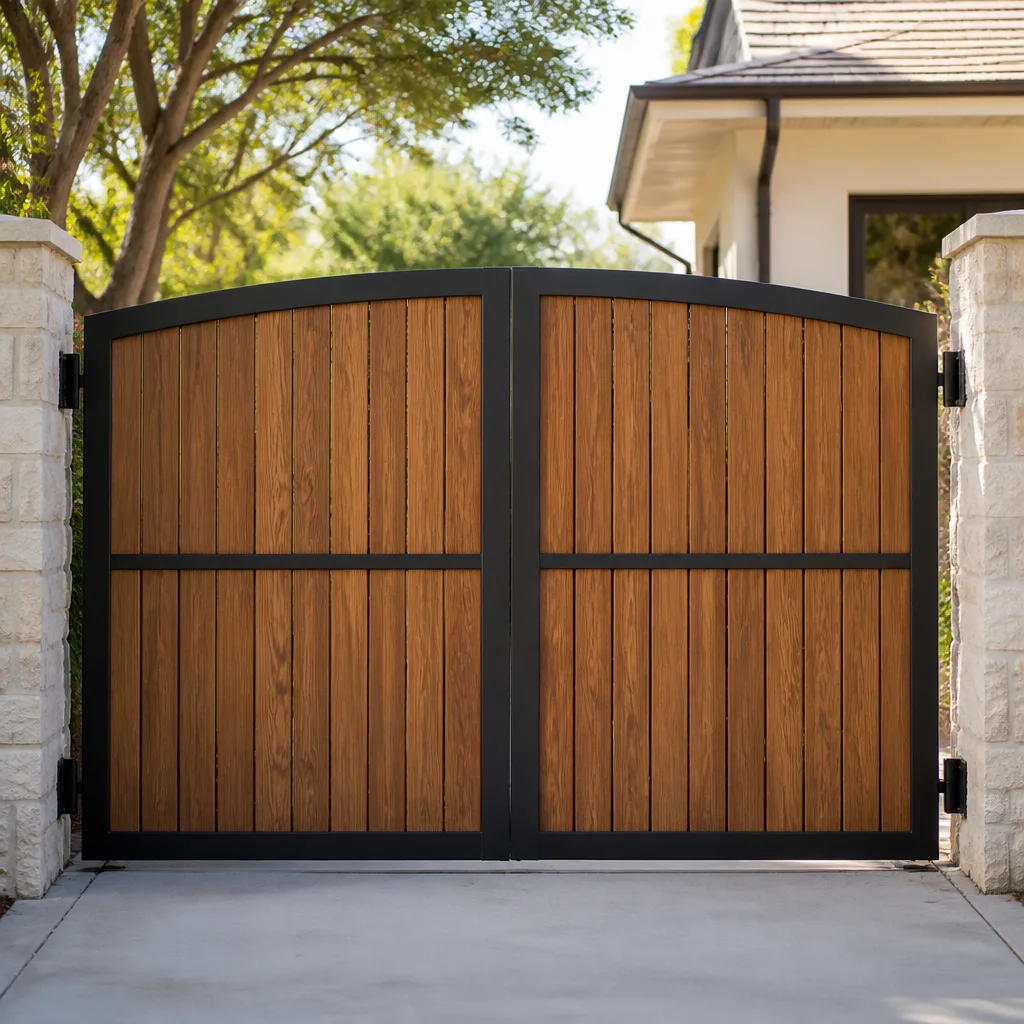 Wood & steel frame
 Farm & ranch
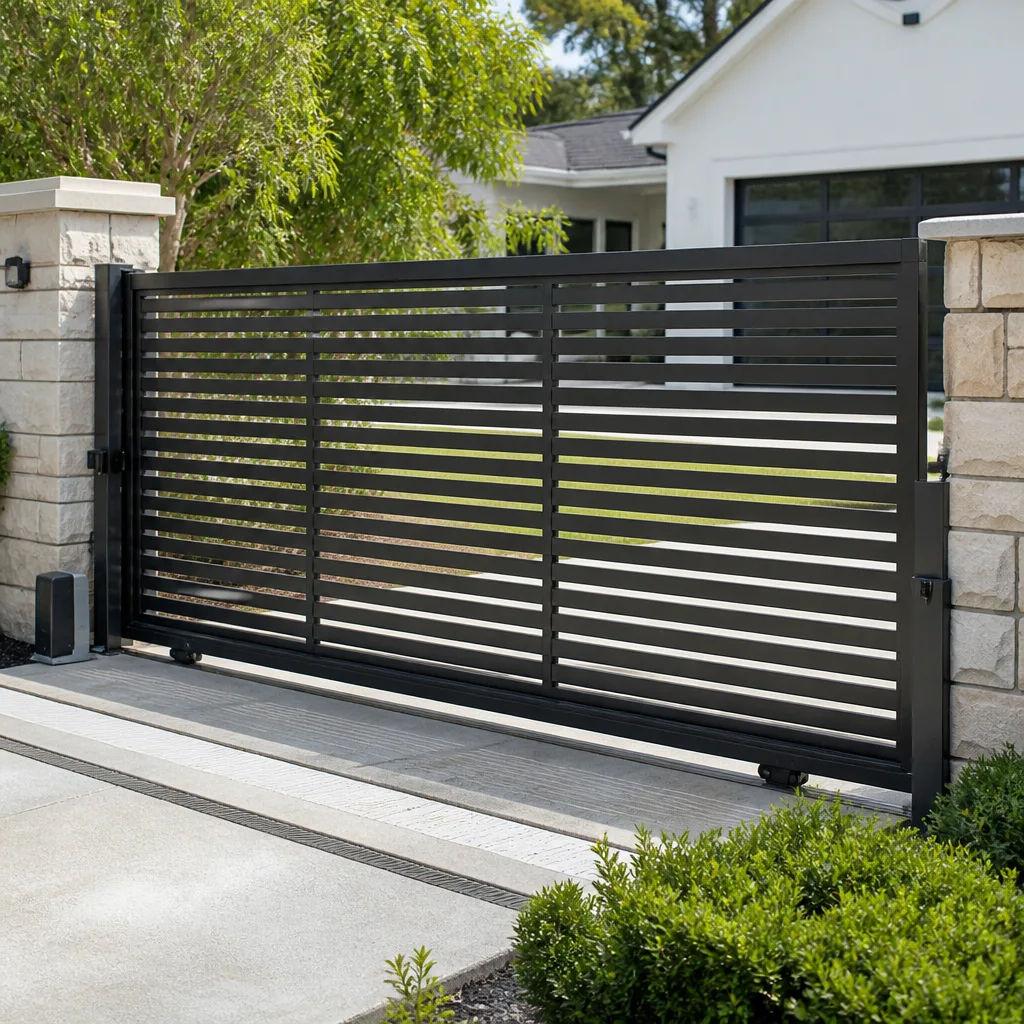 Sliding driveway gates
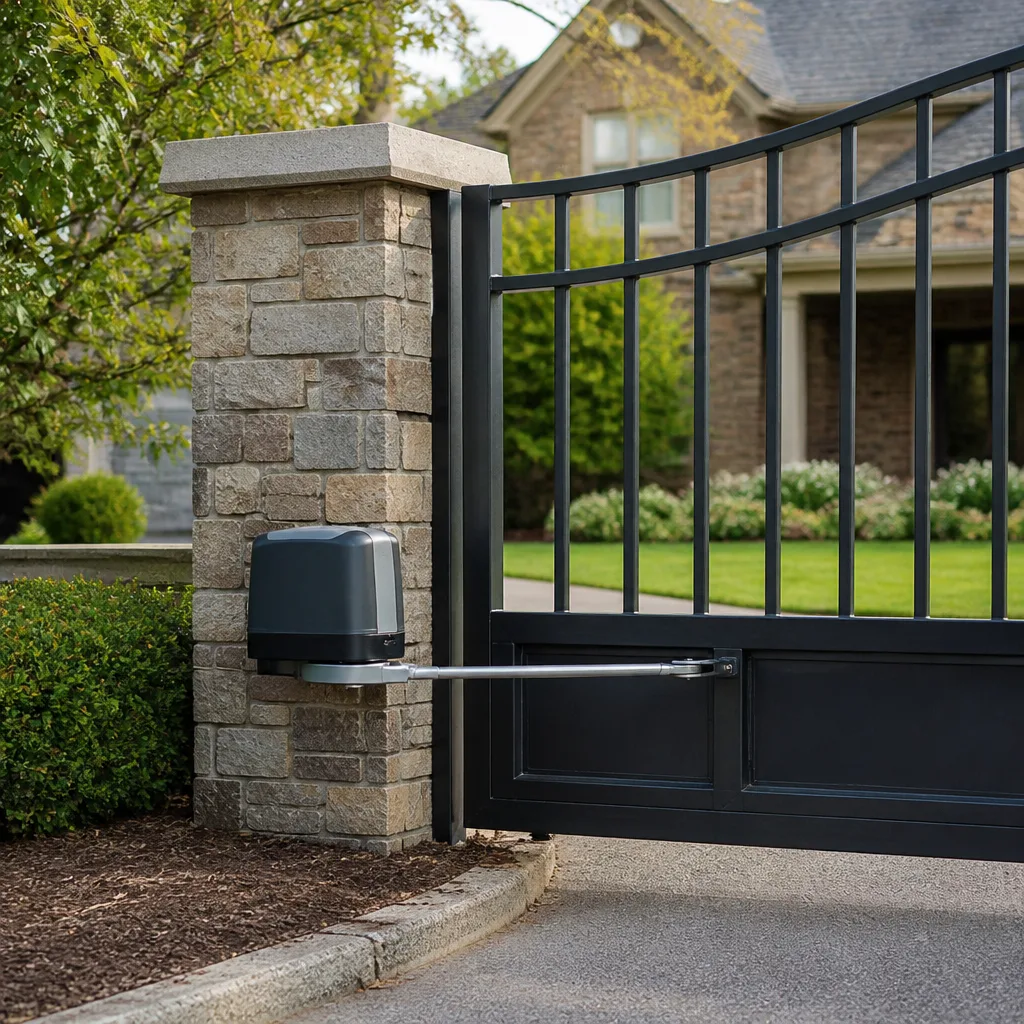 LiftMaster operators
Free on-site gate assessment - hinges, posts, and your LiftMaster or Nice gate operator checked before anything is quoted
The assessment is free and the quote is the invoice.
Get your free estimateStyles & brands we work with
- Wrought iron
- Wood & steel frame
- Farm & ranch
- Sliding driveway gates
- LiftMaster operators
See the difference
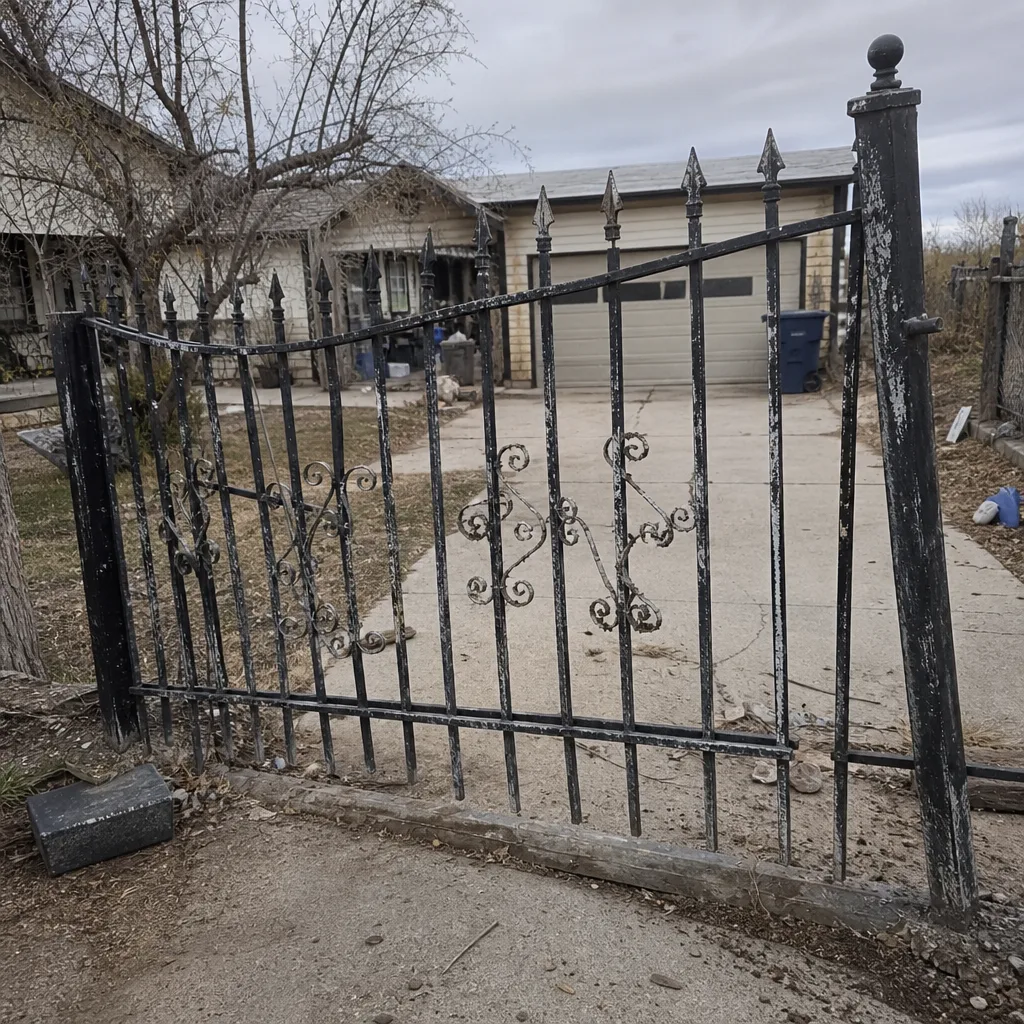 Before
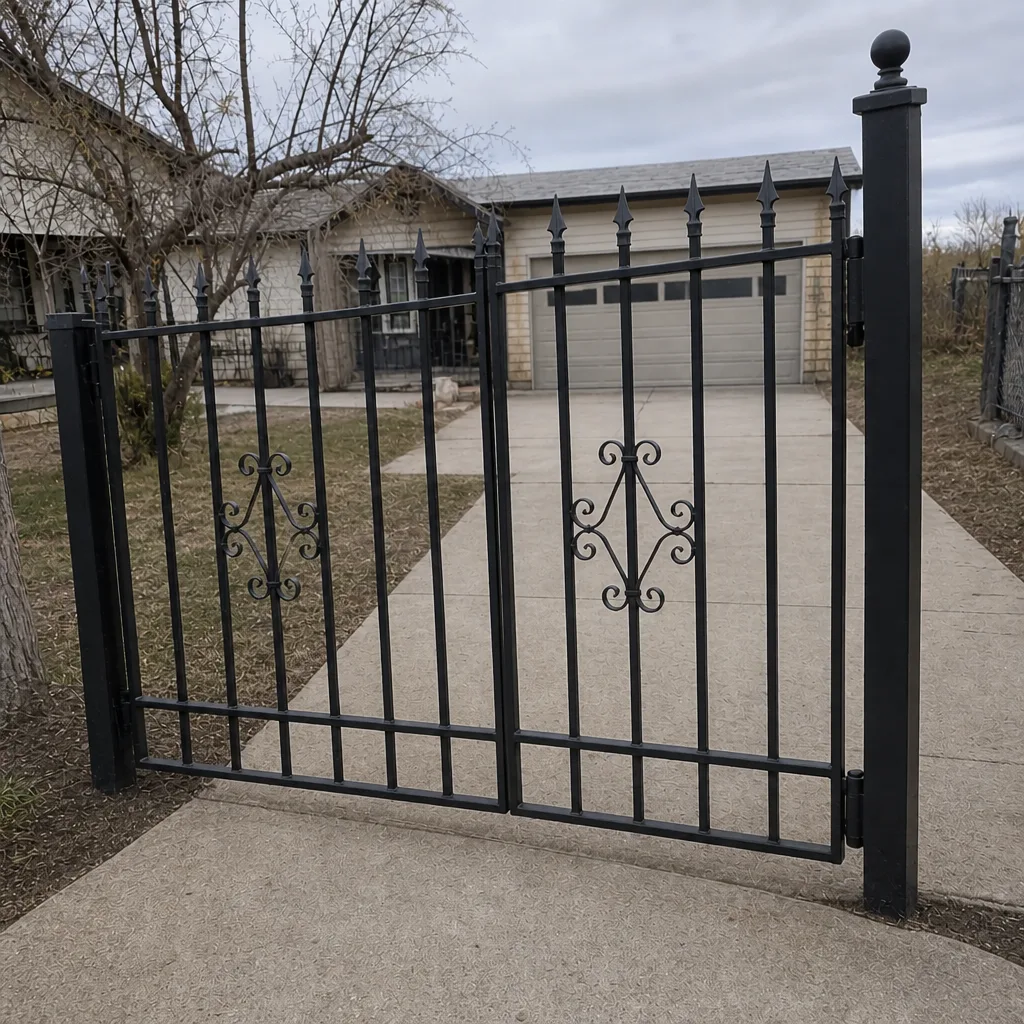 After
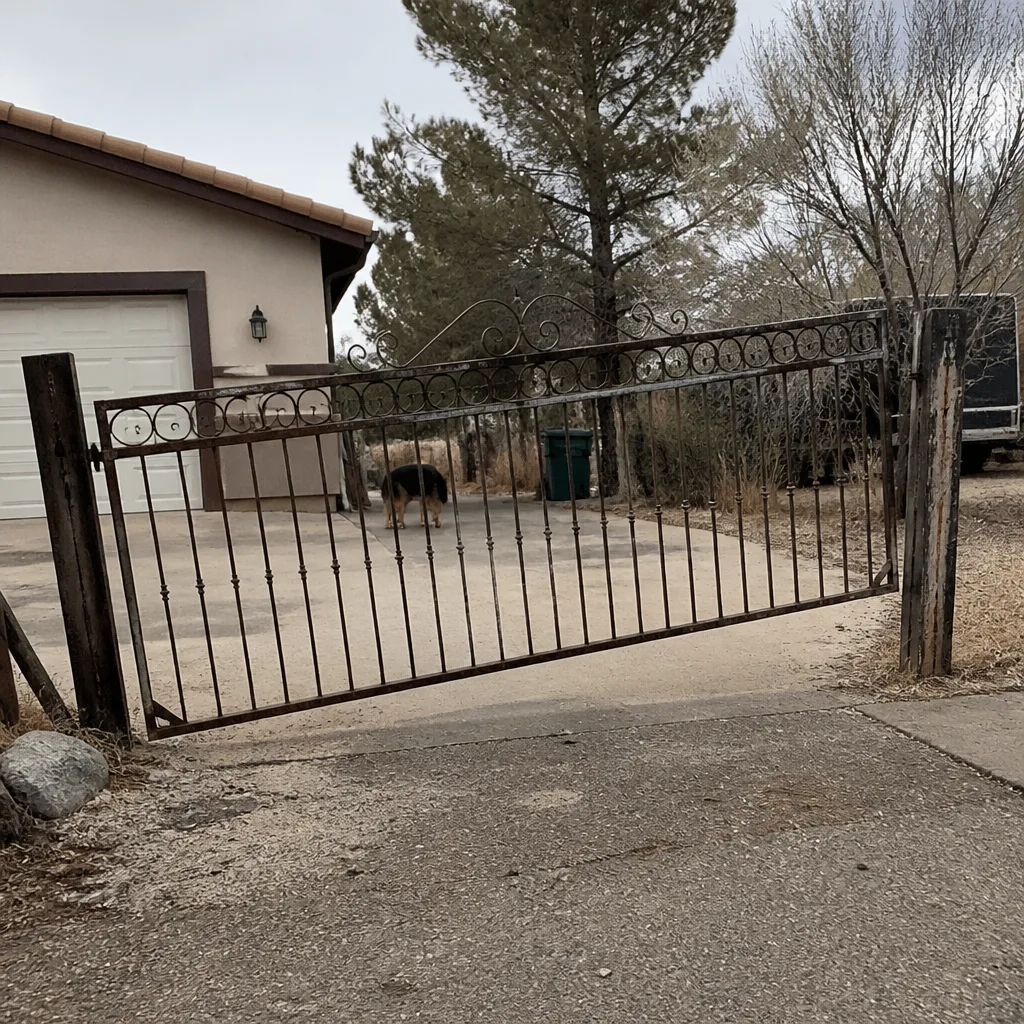 Before
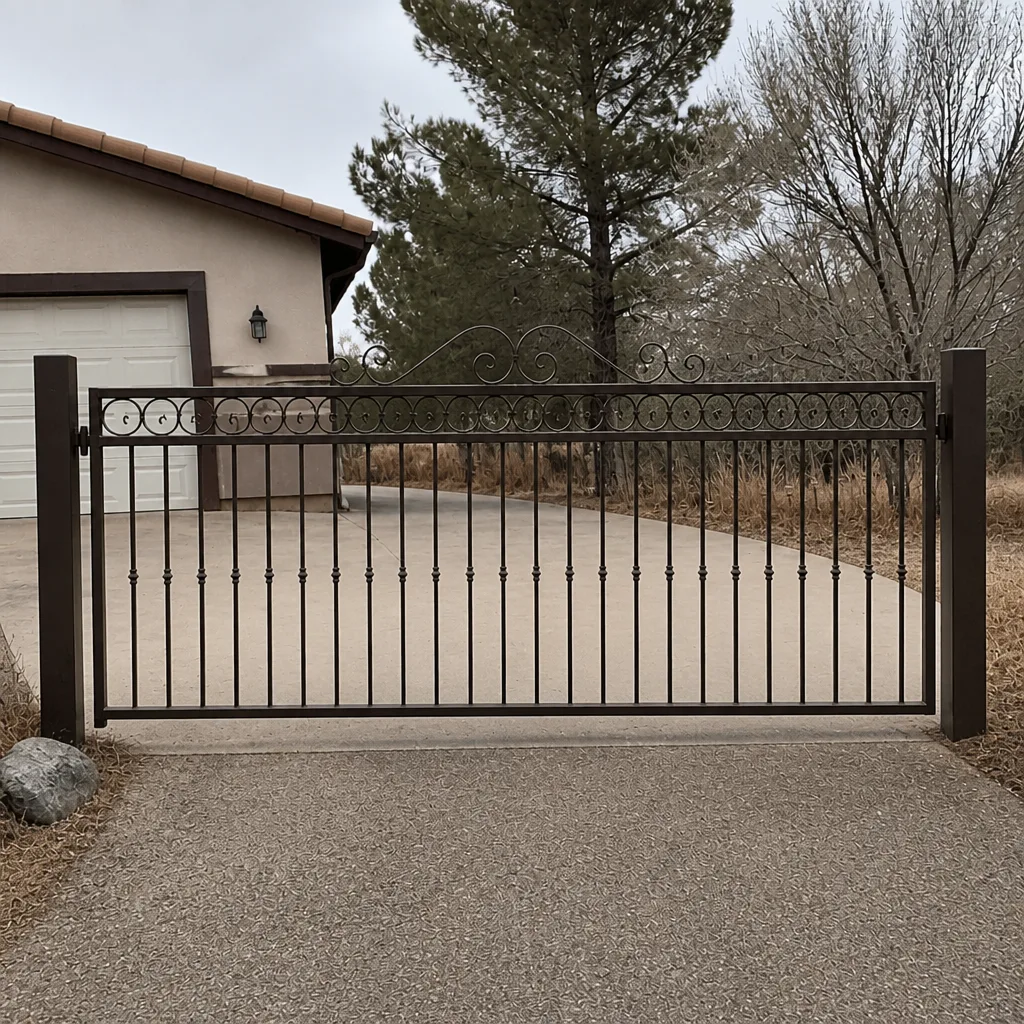 After
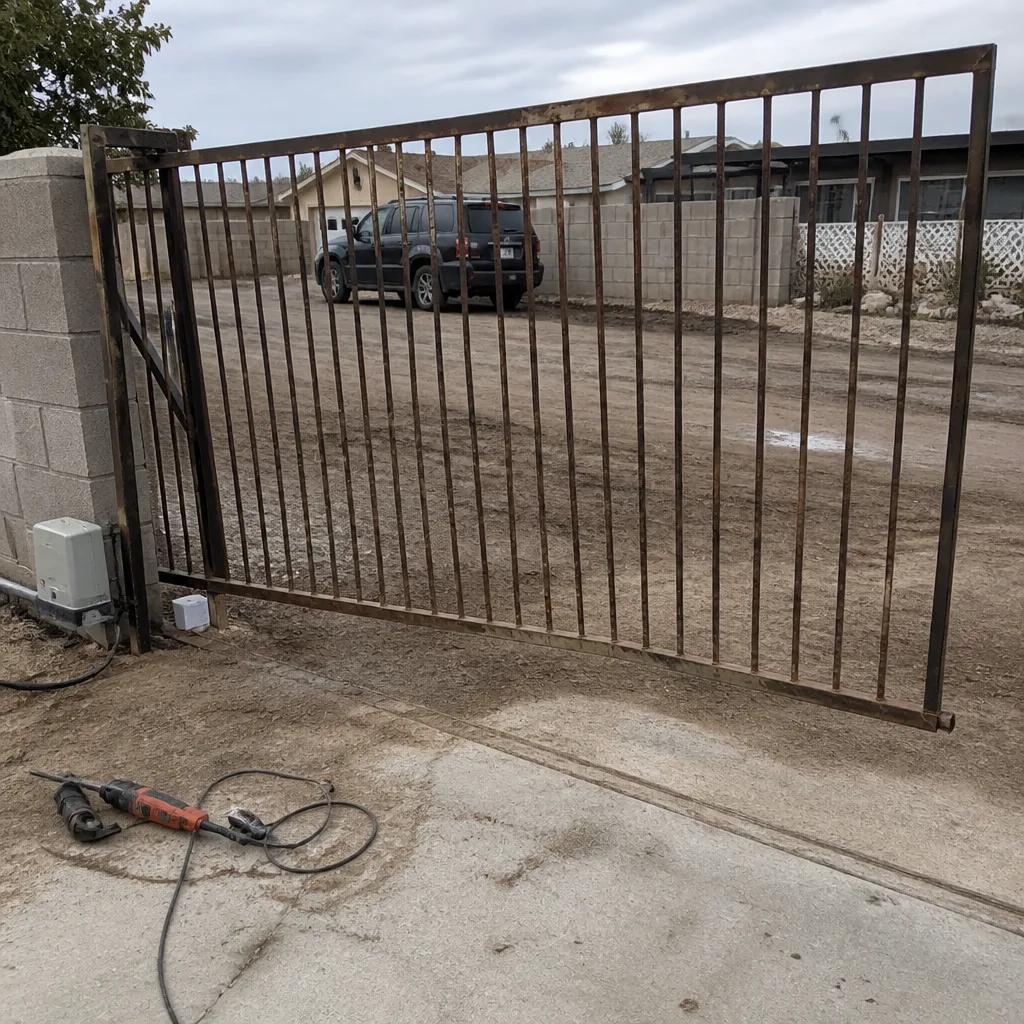 Before
 After
How an Automatic Gate Opener Works in Winchester, NV – and Which Part Fails First in the Desert
An automatic gate opener works through five linked systems: a power supply that converts household current to low-voltage DC, a control board that runs the logic, a motor and drive mechanism that actually moves the gate, limit switches that tell the board where the gate is, and safety sensors (usually photocells) that stop or reverse the gate when something is in the way. In Winchester’s Mojave heat and wind-blown dust, those five parts don’t age at the same rate. The power transformer and control board fail first in summer, limit switches drift out of adjustment in sustained triple-digit heat, and photocell lenses cloud with sand within a season. Knowing that order is more useful to a Winchester homeowner than knowing how the systems work on paper.
If your gate is doing something you don’t trust – stalling mid-swing, reversing for no reason, buzzing and refusing to move – call (866) 984-8340. A live person answers, day or night, and a trained technician can walk you through what’s likely happening before anyone comes out.
Key Takeaways
- Five systems run every automatic gate: power supply, control board, motor/drive, limit switches, and safety sensors.
- In Winchester, the power supply and control board are the first to fail, not the motor.
- Never disable or bend a photocell to “fix” a gate that won’t open. It removes the safety interlock and can create a Clark County compliance problem.
- Force-limit settings on the control board should be calibrated for our climate, not left at the factory default.
- On an unincorporated island governed by Clark County, not Las Vegas, gate permits and right-of-way clearances follow county code.
What Are the Five Systems of an Automatic Gate Opener?
Think of the opener as a small machine with a brain, a muscle, and a nervous system. Here’s the plain-tradesman version, then the Winchester version.
1. Power supply
A transformer drops your household 120-volt current down to 12 or 24 volts DC for the board and motor. In most of the country this is a boring, reliable part. In Winchester, it isn’t. Our transformers sit in enclosures that bake at 100°F+ through June, July and August, and heat is what kills them. When a Winchester gate gets “weak” and stops finishing its swing in the afternoon but works fine in the morning, a tired transformer is one of the first things we check.
2. Control board
The board is the brains: it reads the sensors and limit switches, decides direction, and manages safety reversals. Monsoon microbursts are the enemy here. Very low humidity most of the year means dry dust collects on the board, then a single heavy rain event drives moisture into the enclosure and corrosion starts at the terminals. Boards fail slowly in Winchester – an intermittent fault here, a random reversal there – long before they fail completely.
3. Motor and drive mechanism
The motor turns, and the drive (a chain, a screw, or a hydraulic ram) pushes or pulls the gate leaf. Metal expands in our summer heat, and a gate that’s even slightly thermally bound makes the motor work harder than it was built for. This is where undersized hinge posts on older Winchester properties become a motor problem, not a gate problem.
4. Limit switches
Limit switches are the stops. They tell the board “you’ve arrived, cut power.” Sustained heat and sun-baked soil movement – which is routine on Winchester’s short-setback lots – knock them out of adjustment. A gate that over-travels and slams, or stops a foot short of closed, is usually a limit switch that’s drifted, not a bad motor.
5. Safety sensors
Photocells (or a loop or edge sensor) form the interlock: they watch the gate’s path and tell the board to stop or reverse if something crosses. We’ll come back to these, because they’re the most misunderstood system on the whole machine.
Which Part Fails First in Winchester’s Climate?
The desert doesn’t wear a gate out evenly. Here’s the order we see, and what each failure looks like before it strands you.
| System | Winchester failure mode | Early warning sign |
|---|---|---|
| Power supply | Transformer overheats in summer heat | Gate works in cool hours, stalls in the afternoon |
| Control board | Corrodes after monsoon moisture hits dust-packed terminals | Random reversals, intermittent no-response |
| Limit switches | Drift in sustained heat and soil movement | Gate slams, or stops short of full close |
| Photocells | Lenses cloud with wind-driven sand and dust | Gate hesitates, reverses for no visible reason |
| Motor/drive | Overloads pushing a thermally bound gate leaf | Motor hums, gate barely moves, breaker trips |
Notice the last row. The motor is the most expensive part and usually the last to fail. Most Winchester “bad motor” calls turn out to be a transformer, a drifted limit switch, or a force-limit setting fighting a gate that expanded in the heat. Diagnosing that correctly on the first visit is the whole job.
How Do the Safety Sensors Actually Work – and Why Do People Get Them Wrong?
The safety interlock is simple in principle and confusing in practice. A photocell pair sits across the gate’s path: one eye sends an infrared beam, the other receives it. Break the beam and the board knows something is in the way, so it stops and reverses. An edge sensor on the gate leaf does the same job by feel if it contacts an object.
Here’s the Winchester problem. When a gate won’t open – because a photocell has drifted out of alignment, or its lens is clouded with sand, or the beam is being blocked by a windblown trash can – the tempting fix is to disable the sensors or nudge them out of the way. That “fix” removes the safety function entirely. On a residential driveway it’s a real hazard for kids, pets and visitors. On the small commercial parcels along the Decatur Boulevard and Desert Inn Road corridors, it can create a genuine Clark County code compliance issue, because safety-device requirements on a commercial parcel are stricter than most homeowners realize. We’ve walked up to gates where a previous “fix” was a strategically placed piece of tape over a lens. That’s not a repair. It’s a removal.
If your gate reverses for no reason or won’t complete a cycle, the safe move is to have the sensors tested and realigned, not bypassed. That’s diagnosis work, and it’s exactly what a trained technician does on arrival. You can read more on our Gate Motor & Opener page about how motor and sensor faults overlap.
Electromechanical vs. Hydraulic Underground Openers: Which Suits Winchester?
If you’re choosing a system for a newer infill townhome or a small commercial parcel, you’ll hear two options. An electromechanical underground opener uses a motor and gearbox to drive the gate; a hydraulic opener uses a pump and fluid to push a ram.
- Electromechanical holds up well in our heat, but its control board and transformer are the weak points – the same parts that fail first across Winchester.
- Hydraulic systems handle heavy gates smoothly, but our occasional winter overnight freeze can stiffen hydraulic fluid, and the seals are vulnerable to the same dust that clouds a photocell.
For most Winchester driveways, an electromechanical swing or slide opener on a properly anchored post is the practical choice, with the force limit calibrated to our temperature swing. On commercial parcels where a heavier gate is in play, the conversation changes. Either way, the anchoring and right-of-way clearance matter as much as the opener brand.
Why Force-Limit Calibration Is Climate-Specific, Not Factory-Default
The control board has a force-limit setting: how hard the motor is allowed to push before the board decides something is wrong and trips. Set it too tight and the board trips on hot days when the gate has expanded and bound slightly – even though nothing is broken. Set it too loose and the motor can overload trying to shove a thermally bound gate, which shortens motor life and can damage hinges.
Factory defaults are set for a mild climate and a gate that isn’t warping in 110°F sun. A proper calibration here accounts for how much that particular gate expands on a hot afternoon. This is the kind of adjustment a homeowner can’t eyeball from a manual, and it’s the reason a gate that “worked all winter” starts tripping in July.
Why Brand-Specific Training Matters for Accurate Diagnosis
Every one of the nine brands we service – LiftMaster, DoorKing, Elite, Mighty Mule, FAAC, BFT, Linear, Viking, and Ghost Controls – implements these five systems with different architectures. The way a LiftMaster board reports a sensor fault doesn’t match how a DoorKing board reports one. A technician trained on one brand can read the fault behavior of another brand wrong and replace a part that wasn’t the problem.
Our technicians are trained and equipped across all nine, so the correct diagnosis is made on the first visit – with up to 13 years of experience behind the wrench. That matters most on the aging manually operated gates across Winchester that owners want converted to code-compliant automation without a full rebuild. It’s the same reason a gate that’s fine under Las Vegas code can fail a county inspection here: rules and hardware both need the right read. If you’re considering a conversion, our Gate Motor & Opener in Winchester service covers the full scope, and you can start from our home page to see everything we handle.
What to Check Before You Call
- Note when the gate misbehaves – morning cool or afternoon heat. That single clue points to transformer or force-limit issues.
- Look at the photocell lenses. If they’re clouded with dust, they need cleaning and realignment, not bypassing.
- Watch whether the gate slams or stops short. That’s a limit switch drift, not a motor failure.
- Listen for a hum with no movement. That’s an overload or a bound gate, which is a motor-protection concern.
- Leave the sensors alone and don’t force the gate by hand. Call us and describe what you saw.
Understanding the systems is useful. Diagnosing which one is failing in your specific Winchester gate is a job for someone who does it every day – and one wrong guess can cost you a motor.
FAQs
Limit switches tell the control board when the gate has reached its open and closed positions, and the board cuts power at that point. In Winchester’s sustained heat and sun-baked soil movement, those switches drift out of adjustment, which is why a gate slams or stops a foot short. If yours is doing either, that’s a limit-switch job, and calling (866) 984-8340 gets a technician out to reset it correctly.
Heat is almost always the reason – an overheated power transformer or a force-limit set too tight for a gate that expands in the afternoon sun. This is one of the most common Winchester patterns we see. A proper climate-specific calibration usually solves it, and a free second opinion on any written estimate is available. Call (866) 984-8340 to schedule.
No – and you shouldn’t. Disabling or misaligning photocells removes the safety interlock, creates a real hazard for kids, pets and visitors, and on a commercial parcel it can create a Clark County code compliance problem. The right fix is testing and realigning the sensors, which a trained technician can do in a single visit. Call (866) 984-8340.
For most Winchester gates, repairing a single failing system – a transformer, a limit switch, a control board – is far cheaper than replacement, and it’s the right call when the motor and chassis are sound. Replacement makes sense when an older system can’t be brought up to county safety requirements or the motor is genuinely at the end of its life. We’ll tell you plainly which one you’re facing before any work starts. Call (866) 984-8340 for a straight answer.
Have Your Gate Looked At
If you’d rather have it looked at than puzzle through it yourself, Ironworks Gate Co. Winchester offers a no-pressure assessment in Winchester. We settle the price before a single bolt is turned, back every job with our written 90-Day Done Right Promise, and answer the phone live, 24 hours a day. Call (866) 984-8340 for a free estimate and the correct diagnosis on the first visit.
Written by the team at Ironworks Gate Co. Winchester, serving Winchester, NV.