
Last updated November 18, 2026
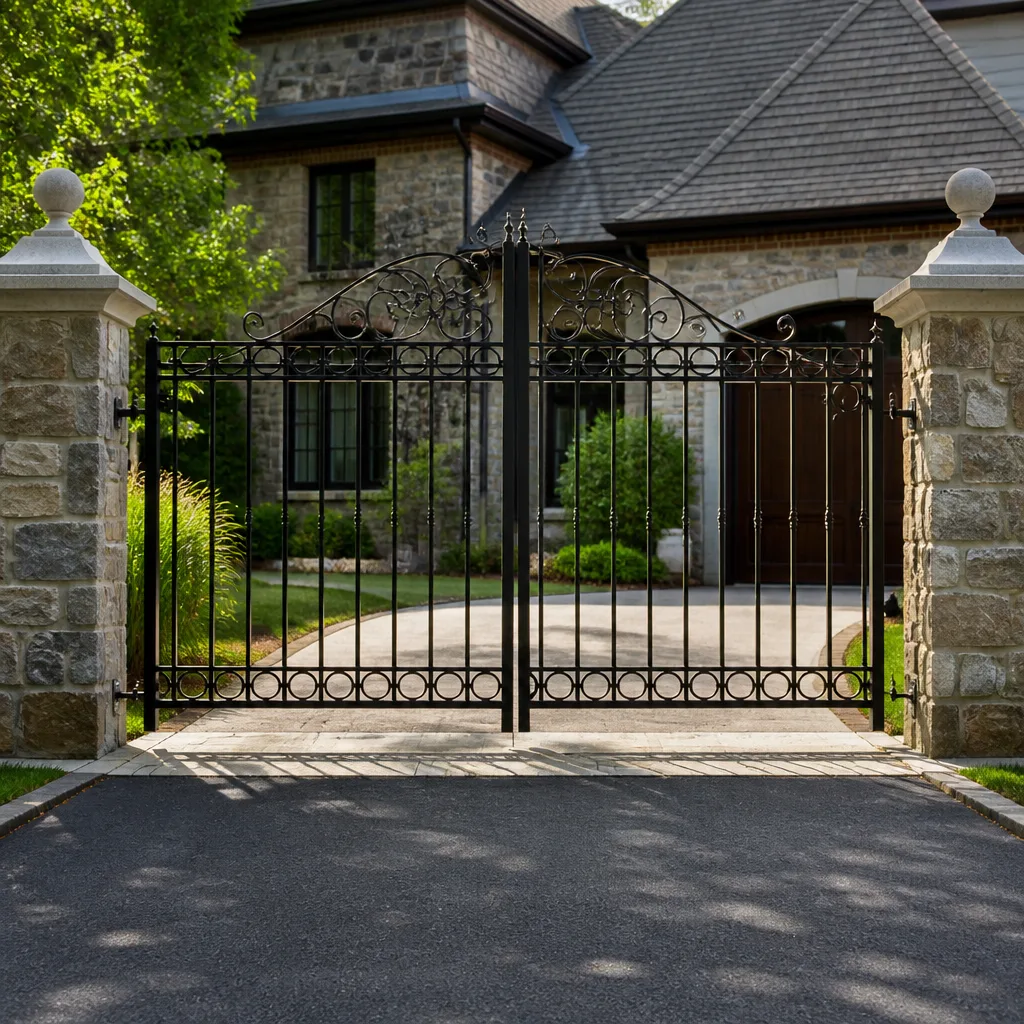 Wrought iron
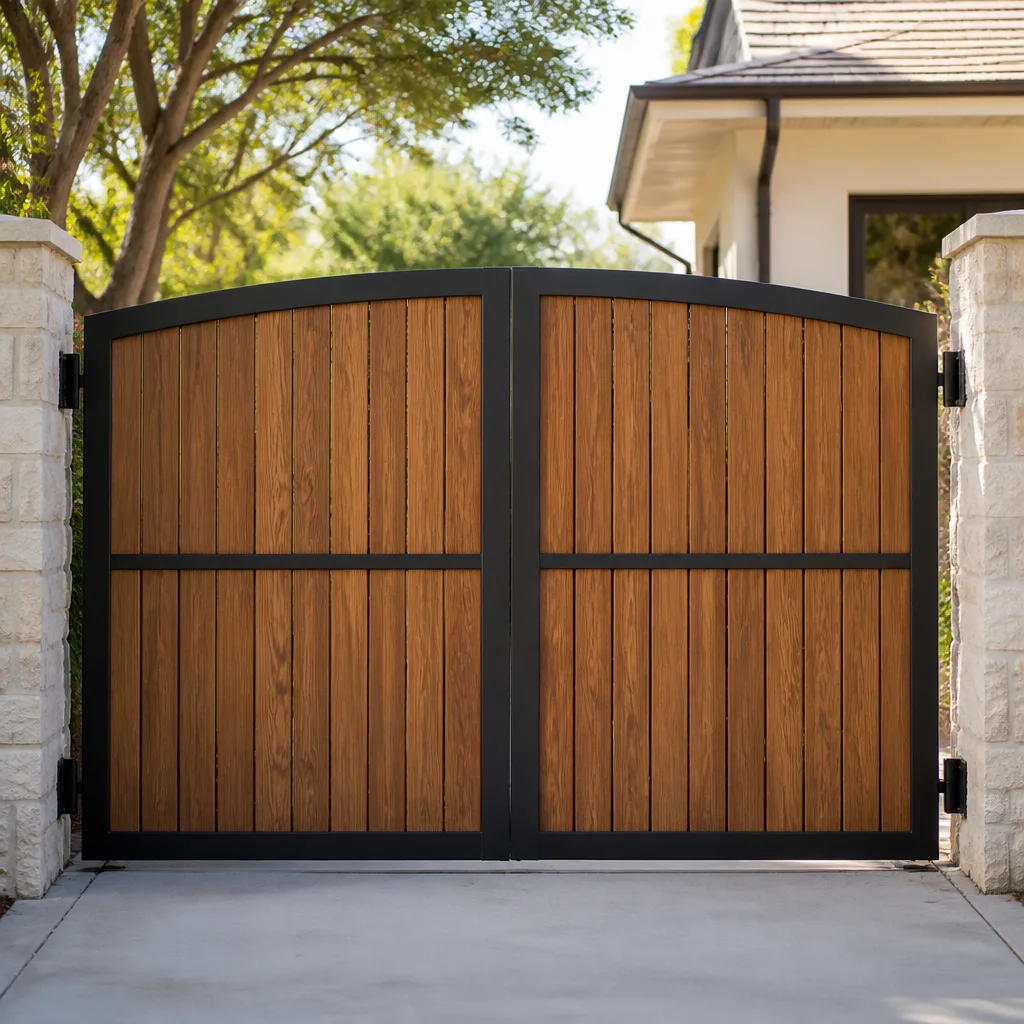 Wood & steel frame
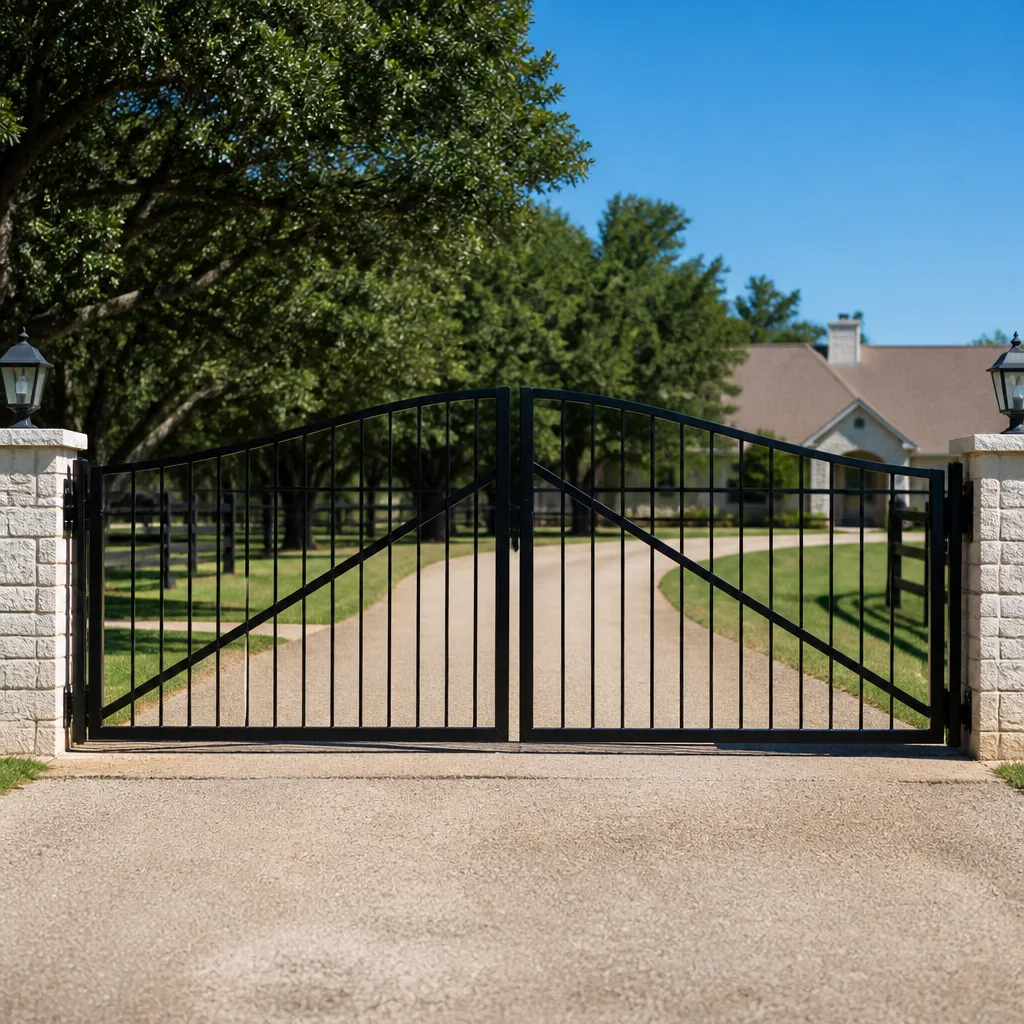 Farm & ranch
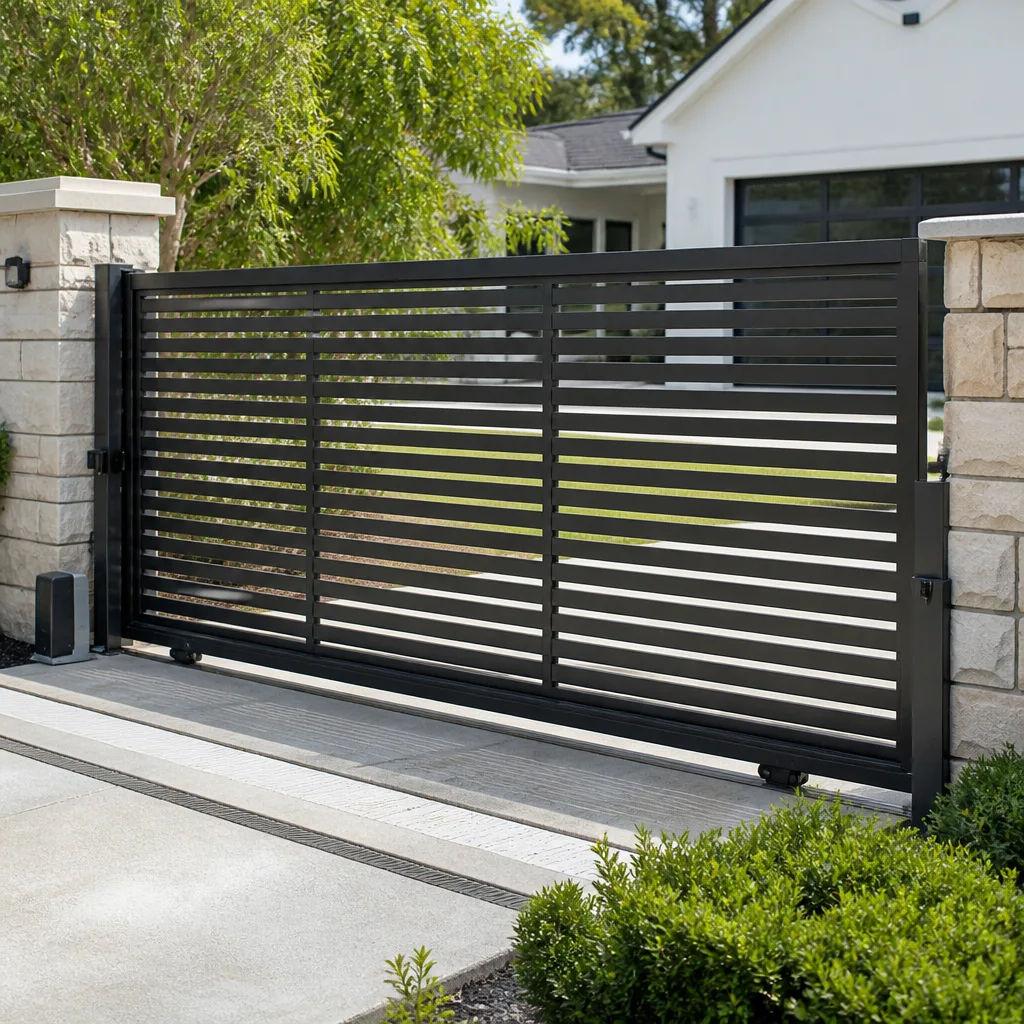 Sliding driveway gates
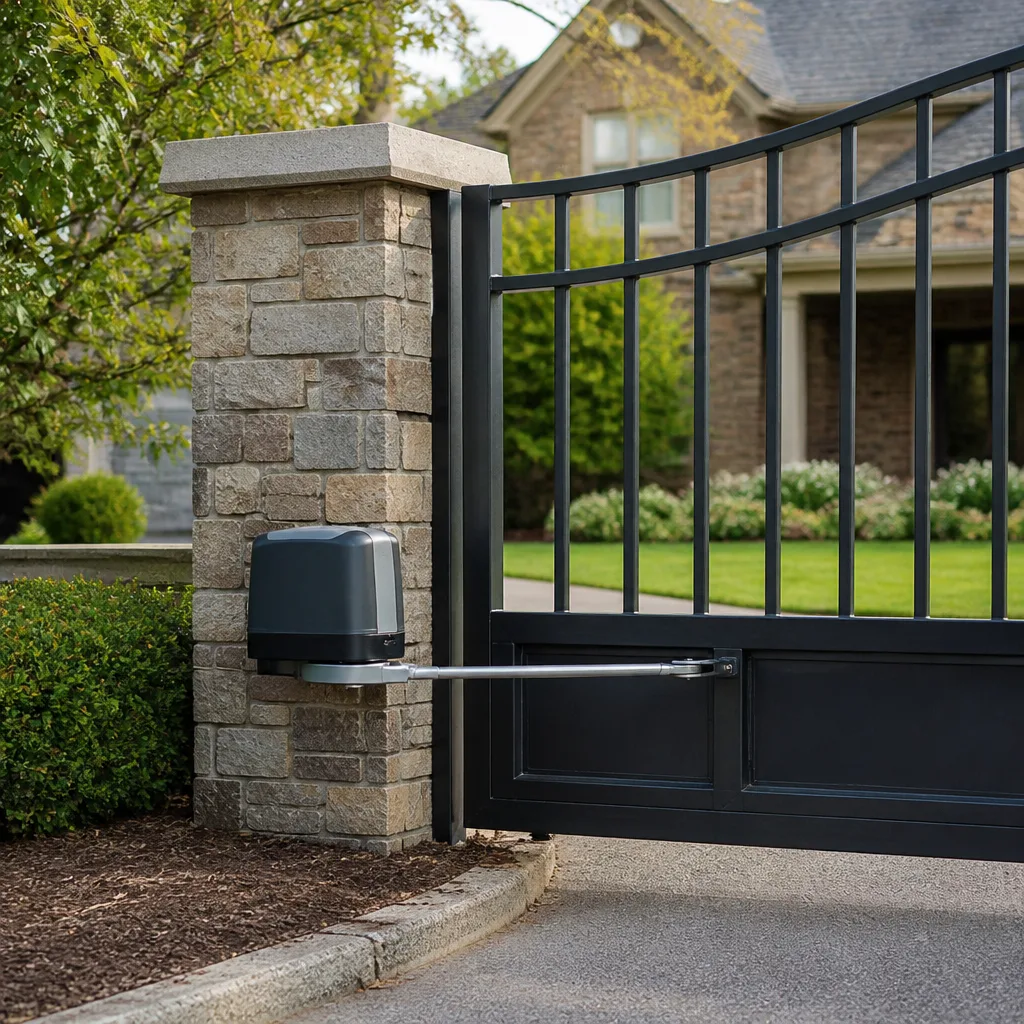 LiftMaster operators
Free on-site gate assessment - hinges, posts, and your LiftMaster or Nice gate operator checked before anything is quoted
The assessment is free and the quote is the invoice.
Get your free estimateGate Parts & Welding Warning Signs Every Homeowner Should Know
Orange rust weeping from a weld seam is not the same problem as surface rust on flat metal. It means water is getting inside the joint, the weld itself is compromised, and that gate is carrying its load on a weakening foundation every time it swings. Most homeowners in Winchester never learn that distinction until a gate is already dragging, sticking, or hanging from one hinge. This guide reads the language a distressed gate speaks – the rust patterns, the sounds, the geometry, and the small quirks we all wave off – and tells you what each sign means and how urgent it is.
Quick Answer
The most serious gate warning signs are orange rust bleeding from a weld seam, new clicking or groaning sounds when the gate moves, sag or gap changes beyond about a quarter inch, hairline cracks in the welds, and a gate that no longer latches without being lifted. Any of these means the gate is telling you something is failing – address the structural ones (welds, hinges, posts) quickly, because a small fix today becomes a much larger repair once the frame twists out of square.
Styles & brands we work with
- Wrought iron
- Wood & steel frame
- Farm & ranch
- Sliding driveway gates
- LiftMaster operators
Table of Contents
- What’s the difference between cosmetic rust and structural rust?
- Why a new sound from your gate deserves immediate attention
- The geometry warning signs: how much sag is normal
- What weld cracking looks like in its early stages
- The one sign homeowners ignore: a gate that won’t close flush
- Parts that wear out first (and what they cost to replace)
- What Winchester’s climate does to gate metal
- Common mistakes to avoid
What’s the difference between cosmetic rust and structural rust?
Surface rust sits on top of the steel like a stain on a shirt. Structural rust comes from inside the metal and from inside the joints, and it’s the one that ends a gate’s life. In Winchester, we see both constantly, and the difference is usually visible within about thirty seconds if you know where to look.
Here’s a test any homeowner can run with a screwdriver and their eyes:
- Look, don’t touch, first. Flat, powdery orange rust on the face of a rail is cosmetic. Rust that crawls out of a corner, a weld, or a joint as an orange streak is water bleeding out of a pocket – that’s structural.
- Poke the rust with a flathead screwdriver. If the blade scratches off a thin layer and finds clean steel underneath, you’re fine. If the tip sinks in and material crumbles away, the steel has thinned from the inside.
- Look at the weld seam specifically. Rust at a weld is worse than rust anywhere else, because the weld is where two pieces become one. A rusty weld is a joint quietly coming apart.
- Check the bottom rail and post bases. These are the first to go – they sit lowest, hold water longest, and get splashed by sprinklers and blown grit.
- Watch for rust-colored staining on the driveway or ground below a weld. That’s rust dust falling out of a joint – a clear sign the metal inside is breaking down.
A gate with cosmetic rust in a few patches is a maintenance item. A gate with a compromised weld is a safety item, and it deserves a professional look before the joint fails under load. If you’re seeing rust streaks at a weld, our Gate Repair in Winchester service is the place to start.
Why a new sound from your gate deserves immediate attention
Metal doesn’t creak for no reason. Every distinct sound a gate makes maps to a specific failure, and once you know the translation, the gate becomes much easier to listen to. When a gate starts making a new sound, treat it like a warning light on your car’s dashboard.
- A sharp click as the gate moves. Usually a loose hinge knuckle or a bolt that’s worked loose, letting metal slap against metal. Cheap and fast to fix now – expensive if the hinge wears the post plate out.
- A scrape, especially near the bottom. The gate has dropped on its hinge side and is dragging on the ground or the driveway apron. Every drag grinds the finish off the metal and starts a rust point.
- A low groan or moan from the operator. The gearbox or drive motor is working harder than it should – a binding gate, failing hinge, or tired motor. On FAAC and BFT units in particular, that groan is usually the gate telling you the mechanism is out of alignment, not the motor failing on its own.
- A rhythmic creak that matches the gate’s swing. A hinge pin is dry and worn. Small fix – but left alone, hinge wear accelerates fast and takes the post with it.
- A sudden bang or pop. Something has given way: a hinge pin, a weld, or a hinge plate. Stop the gate, don’t force it, and call a professional.
If the noise is coming from a motorized gate, it’s worth having both the metal and the operator looked at together – our Gate Motor & Opener in Winchester service handles both as one job. A gate that moves quietly is a gate that will move for a long time.
The geometry warning signs: how much sag is normal
Every gate settles a little in its first year – that’s normal, and a quarter inch of sag across a six-foot gate is usually nothing. Beyond a quarter inch, settling has become movement, and movement means something structural is drifting. Here’s how to measure and what the numbers mean.
Run a level check along the top rail. If the gate’s own frame is out of level by more than a quarter inch, you’re likely looking at hinge wear or post lean. If the frame is level but the gate hangs low at the latch side, the hinges have dropped.
Look at the gaps. Measure the gap between the gate and its latch post at the top and at the bottom. If those gaps differ by more than a quarter inch, the gate is no longer square to the closing plane. That gap change is almost always a sign of post movement, a failing hinge, or a weld that’s started to give.
Check the post with a string line or a level. A post that’s leaning more than half an inch out of plumb in a single season is moving – usually because the footing is settling, the wood or steel post has rotted at grade, or a previous repair was patched rather than done right. Post lean is the one problem you can’t fix at the hinge; it has to be dealt with at the base.
Watch the top rail for a bow. A bowed top rail means the gate is over-spanning its own frame – the diagonal brace is doing too much work. That’s the point where a weld typically cracks, and it snowballs quickly.
What weld cracking looks like in its early stages
Weld failure starts small. In its early stage, a crack looks like a faint dark line running along the toe of the weld – the boundary where the weld bead meets the parent metal. It’s often mistaken for a shadow or a paint crack, and that’s exactly why it’s so frequently missed.
These are the stages we see, in order:
- Hairline crack. A thin dark line at the weld toe, often with a tiny rust halo around it. The joint is still holding most of its strength, but it’s telling you it’s under stress.
- Visible separation. The crack has widened and the two metal faces are starting to pull apart. You can usually see daylight or a rust stain in the gap. This is the point to stop using the gate on its operator and get it welded properly.
- Structural failure. The weld has let go, and the joint is holding by paint, rust, and paint adhesion at best. The gate is now bending the remaining welds wider on every swing. This is when gates drop, twist, and in the worst case fall.
The point of a weld inspection is to catch stage one. A hairline crack at a weld toe can be ground out and re-welded properly for a modest cost. A failed joint usually needs real metal repair, and often a trip to the shop. Cracks tend to show up first at these spots: the hinge-side weld on a swing gate, the bottom rail at the post connection, and the diagonals on a cantilever or double-swing gate.
Welding is not a job to attempt with a homeowner-grade rig. A proper repair means grinding out the crack to clean metal, re-welding with the right process and filler for the steel, and finishing it so it doesn’t rust back in a year. When we repair welds on a gate, we treat it like a structural repair, not a cosmetic touch-up. If you’re seeing cracks at the weld seams, our Gate Repair in Winchester team can take a look – and the estimate is free.
The one sign homeowners ignore: a gate that won’t close flush
This is the warning sign we see ignored the most, because it starts as a minor annoyance. The gate needs a small lift, a nudge, a shoulder to get the latch to catch. Homeowners get used to it. A year later the gate is being dragged closed and the post has leaned half an inch further than it would have if it had been fixed at the first sign.
A gate that won’t close flush without being lifted is telling you the hinges are dropping or the post has moved. Either way, the gate is no longer hanging in its correct plane. That small lift is the audible, physical “check engine light” of a gate, and it’s the single cheapest thing to fix when it’s caught early. Once it’s been lifted habitually, the operator motor burns out faster, the hinges wear faster, and the latch mechanism gets ground down – so a small hinge fix becomes a motor, hinge, and latch job.
If you’re having to lift, nudge or drag your gate to close it, call now rather than later. We’ve written a full breakdown on our Ironworks Gate Co. Winchester home page, and we walk through repairs on same-day availability whenever emergency service is needed.
Parts that wear out first (and what they cost to replace)
Every gate is a set of moving parts, and a few of them wear out before everything else. Here’s where to look, and what a repair typically runs in the Winchester market. These are typical ranges for residential driveway and garden gates – a custom estate gate with heavier hardware will run higher, and the exact price is always quoted and agreed before a single bolt is turned.
- Hinge pins and hinge plates: usually the first to go. Replacing a hinge (or a set) runs roughly $150 to $350 depending on hardware and gate weight.
- Latch and striker: $75 to $200. Often replaced alongside a hinge repair since the two wear together.
- Post footing repair (rot or settlement): $250 to $800 depending on whether the post can be reset or needs replacing.
- Weld repair at a joint: typically $95 to $250 per crack, ground out and re-welded. Multiple cracks at the same joint are usually quoted as one job.
- Bottom rail on a box-steel gate: $200 to $500 including refinishing, since the rail is usually welded in place.
- Operator or gearbox repair (if the motor is groaning): quoted after diagnosis, usually a couple hundred dollars up to a full replacement depending on brand – FAAC, BFT, Linear and Viking parts are all handled the same way.
If the fix is a bigger job than a repair warrants – the frame is bent or rusted through – the more honest option is a new gate correctly hung. See our Gate Installation in Winchester service for a free measure and a written quote before work starts. Whatever the repair, the estimate is settled with you up front, and every job is backed by our 90-Day Done Right Promise.
What Winchester’s climate does to gate metal
Winchester gives gate metal a real workout. The dry summer heat and intense UV we get in the valley crack paint films and expose the steel underneath, and then the winter rains find every crack. Water gets inside hollow box-steel sections and stays there for weeks, quietly rusting the frame from the inside out. Our neighborhoods see it in different ways: gates facing west in the newer subdivisions take the worst UV, while a lot of older homes near the historic district have gates with older welded frames that are already weathering their second or third repaint.
Add the winter temperature swings – cold nights near freezing, warm afternoons in the fifties and sixties – and you get metal expanding and contracting daily. Joints that weren’t welded quite right the first time will show it in the winter. That’s why we recommend a simple walk-around of your gate once a month: look at the welds, run a finger along the bottom rail, listen for new sounds. Twenty seconds of attention catches most problems while they’re still small fixes.
Common Mistakes to Avoid
- Painting over rust. Paint over surface rust traps the moisture in and makes the rust spread faster underneath. Strip and treat the rust first, then prime with a proper metal primer.
- Ignoring a hairline crack at a weld. A weld crack that starts as a hairline is cheap to fix. Left alone, it fails at the joint, and a failed joint on a gate can drop the gate.
- Lifting, shoving or patching a gate to close. Habitual lifting hides the actual problem – a hinge or post moving out of position – and wears out the operator motor while it happens.
- Using the wrong hardware on a heavy gate. A gate that’s had a chain-store hinge bolted in by a previous owner will fail at that hinge. Heavy gates need heavy hinges built for the load.
- Forcing a jammed motor through a binding gate. If the gate drags, the motor isn’t the problem – the gate is. Fix the metal first; then the motor gets a straight, free run.
- Skipping the seasonal check in Winchester’s dry spell. The dry months are when paint fails silently and rust starts. One inspection in the fall prevents most spring repairs.
- Trying to weld a gate with homeowner-grade equipment. A clamp-on weld that hasn’t penetrated the joint is more dangerous than no weld at all – and on gates under spring tension or operator load, this is real structural work.
See the difference
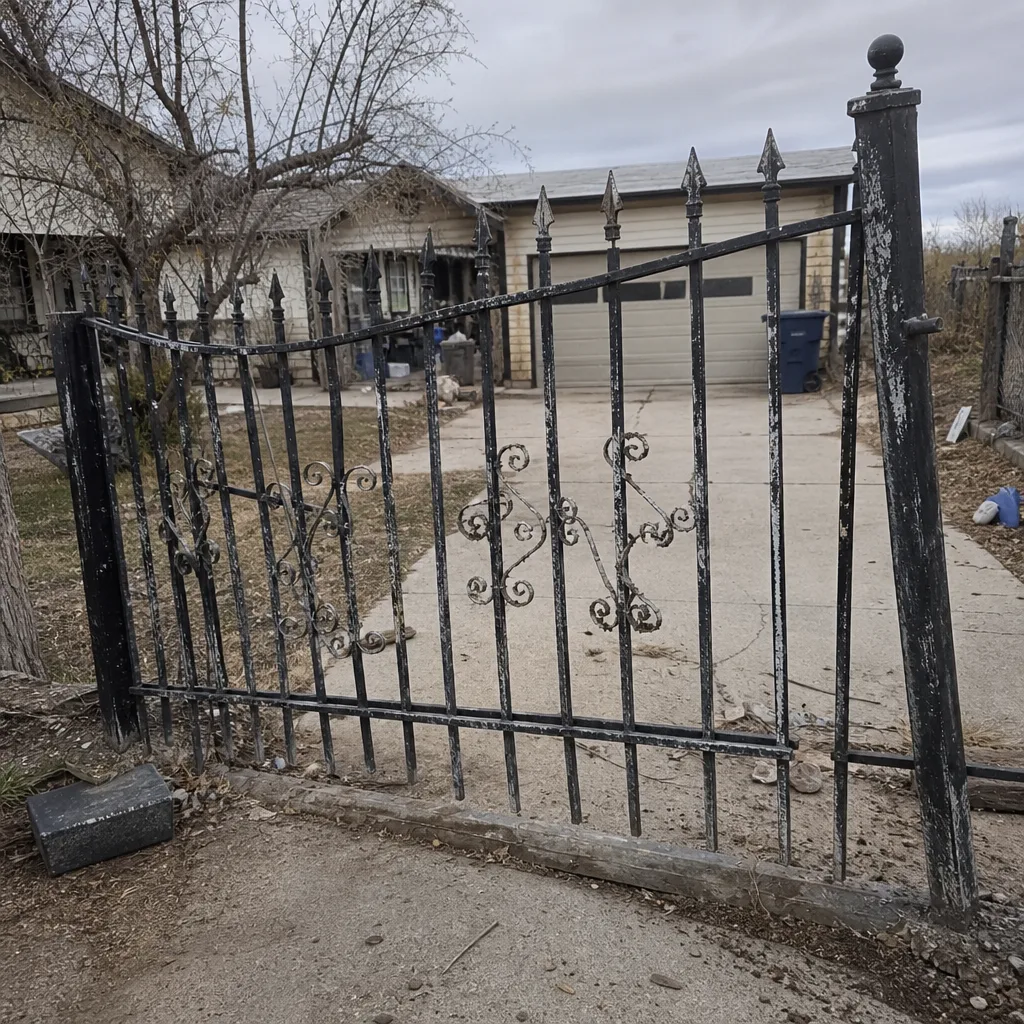 Before
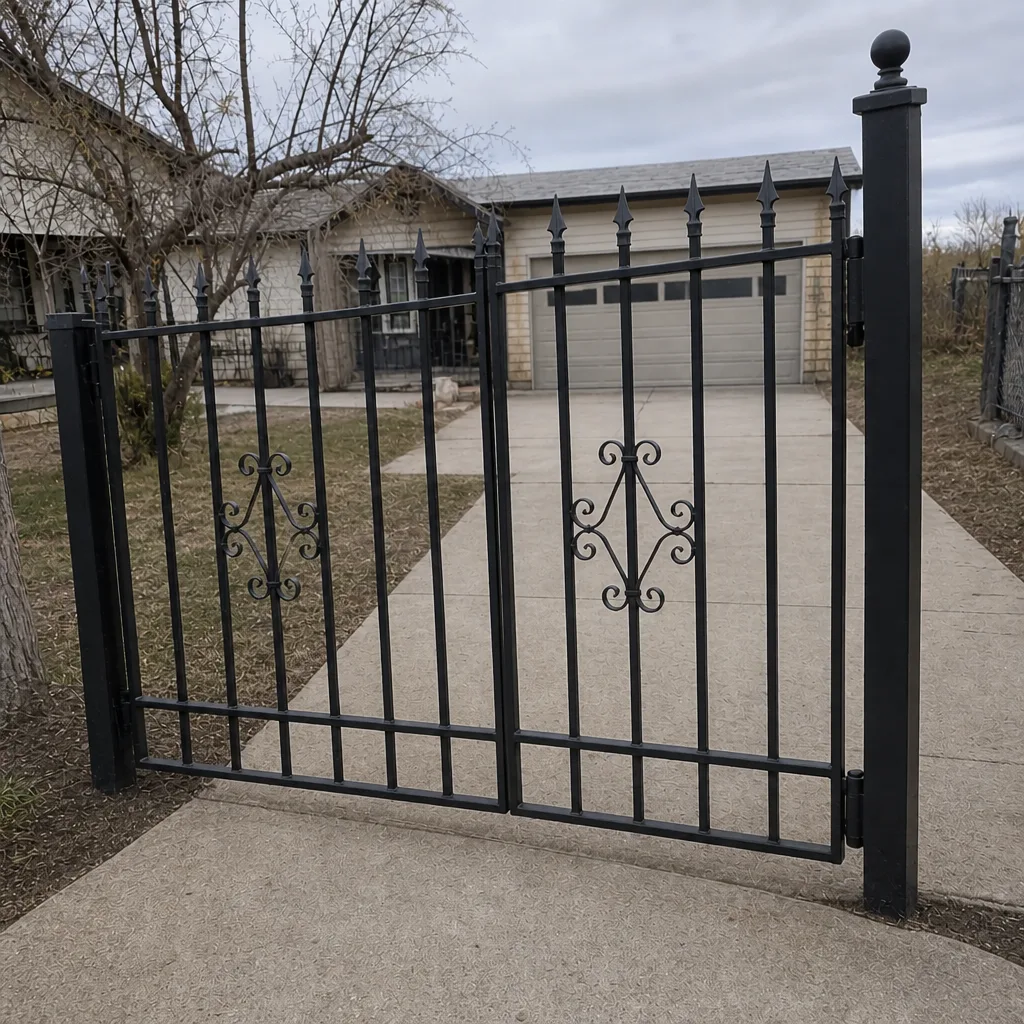 After
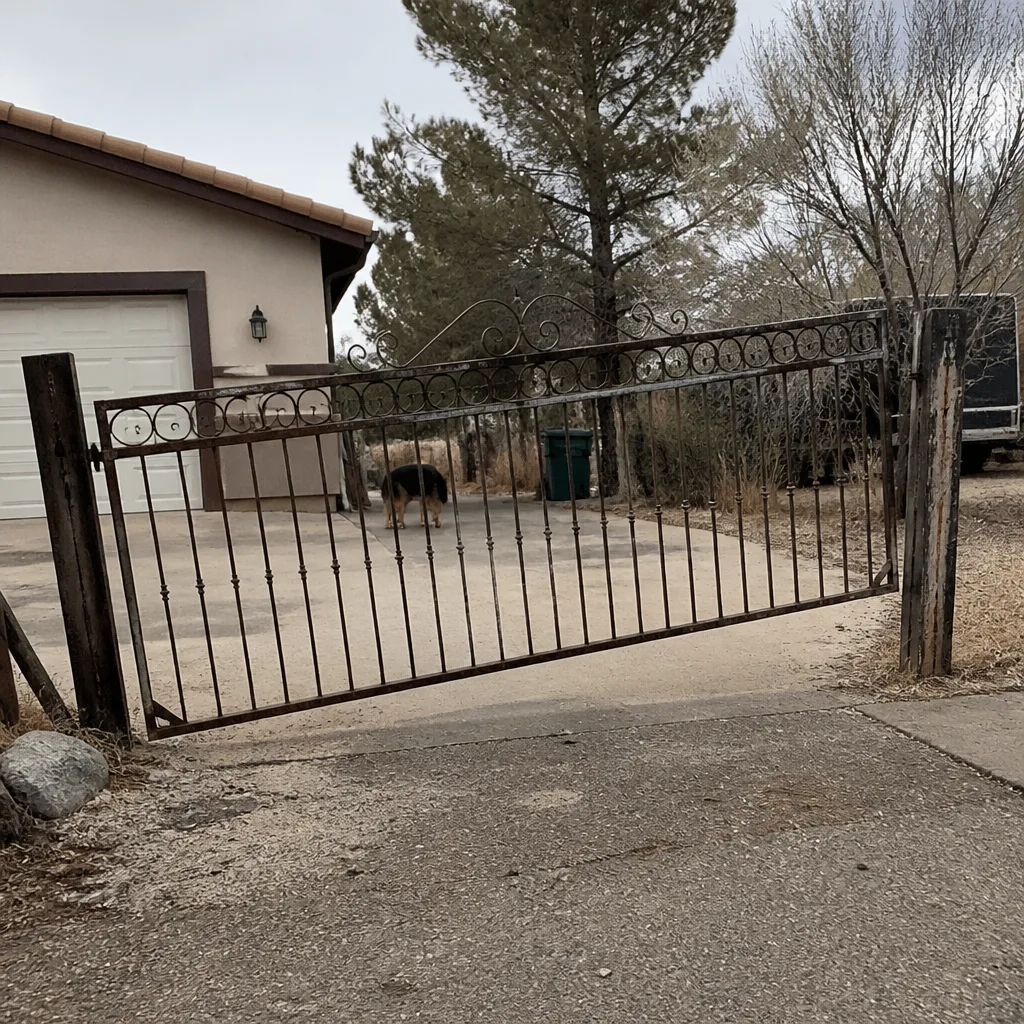 Before
 After
 Before
 After
When to Call a Professional
Call a professional when the crack is in the weld, the post is leaning more than half an inch, the gate drops more than a quarter inch, or the gate needs a lift to close. Call whenever a new sound or a bang has appeared, whenever a spring, hinge or post shows structural rust (not cosmetic), or when the operator motor starts groaning under load. Structural gate repair is real metal work: welds, post footings and hinge geometry all carry load, and a bad repair is more dangerous than the problem it was meant to fix. Ironworks Gate Co. Winchester offers free estimates in Winchester – call (866) 984-8340. A live person answers, and our technicians have up to 13 years of experience working the metal and the motor together.
Frequently Asked Questions
Cosmetic rust is a thin orange film on the surface of flat metal that scratches off with a screwdriver to reveal clean steel underneath. Structural rust comes from inside a joint or a weld seam – it shows up as a rust streak weeping out of a corner, or as metal that crumbles when you poke it. If the screwdriver sinks in or material falls away, that’s structural. When in doubt, have it looked at before the joint fails.
A click usually means a hinge or a bolt has worked loose, or the hinge pin is starting to wear. It’s a small, cheap fix now, and it becomes a hinge-and-post repair if it’s left. Call (866) 984-8340 for a free estimate – we’ll confirm what’s making the noise before recommending any repair.
Most residential gate repairs in Winchester run between $150 and $800 depending on what’s failing – a hinge repair typically $150 to $350, weld repairs roughly $95 to $250 per crack, and a post repair $250 to $800. All prices are quoted and agreed before any work starts. Call (866) 984-8340 for a free estimate – the number is the same whether it’s a hinge or a full post repair.
Usually yes. A gate that needs to be lifted to close is almost always a hinge, latch or post problem, not a reason to replace the gate. The fix depends on what’s moved – hinge replacement, post resetting, or weld repair can all correct it. It’s the earlier it’s fixed, the simpler and cheaper it is.
For any weld that carries the gate’s weight or takes the swing load, use a professional. A weld that hasn’t fully penetrated the joint is a hinge waiting to fail, and gate welds under operator or gravity load can drop the gate. Proper repair means grinding out the crack, welding with the right process for the steel, and finishing so the joint doesn’t rust back in a year.
Once a month for a quick visual and auditory walk-around is our recommendation for most Winchester homes, with a full seasonal check in the fall before the rains arrive. Regular small checks catch rust, weld cracks and hinge wear while they’re cheap to fix. If you want a professional seasonal inspection, our $89 Seasonal Tune-Up covers the walk-around and any minor adjustments found during the visit.
The Bottom Line
Your gate will tell you when it’s in trouble. Orange rust weeping from a weld seam, a new click or groan, a quarter-inch of extra sag, a hairline crack at a weld toe, a gate that needs a lift to close – each of these is a message, and each has an urgency level. The structural signs (welds, posts, hinges) deserve a fast professional response; the cosmetic ones deserve routine maintenance. Catching a weld crack in its first month is a modest repair; catching it after the joint has failed is a full rebuild. And if it’s more than a repair will fix honestly, a proper install is the right answer. Ironworks Gate Co. Winchester is here for both – a written 90-Day Done Right Promise on every job, a live person on the phone 24 hours a day, and a free estimate before a single bolt is turned.
Call (866) 984-8340 for a free estimate. Whether it’s a welded joint, a groaning motor, or a gate that’s started to sag, we’ll come look, tell you the truth, and back the work in writing. Standing offers include $50 off any repair over $250, a free second opinion on any written estimate, an $89 Seasonal Tune-Up, and a permanent 5% Senior and Veteran discount. We will be there when we say, and we stand behind it.
Written by the team at Ironworks Gate Co. Winchester.