
Last updated November 18, 2026
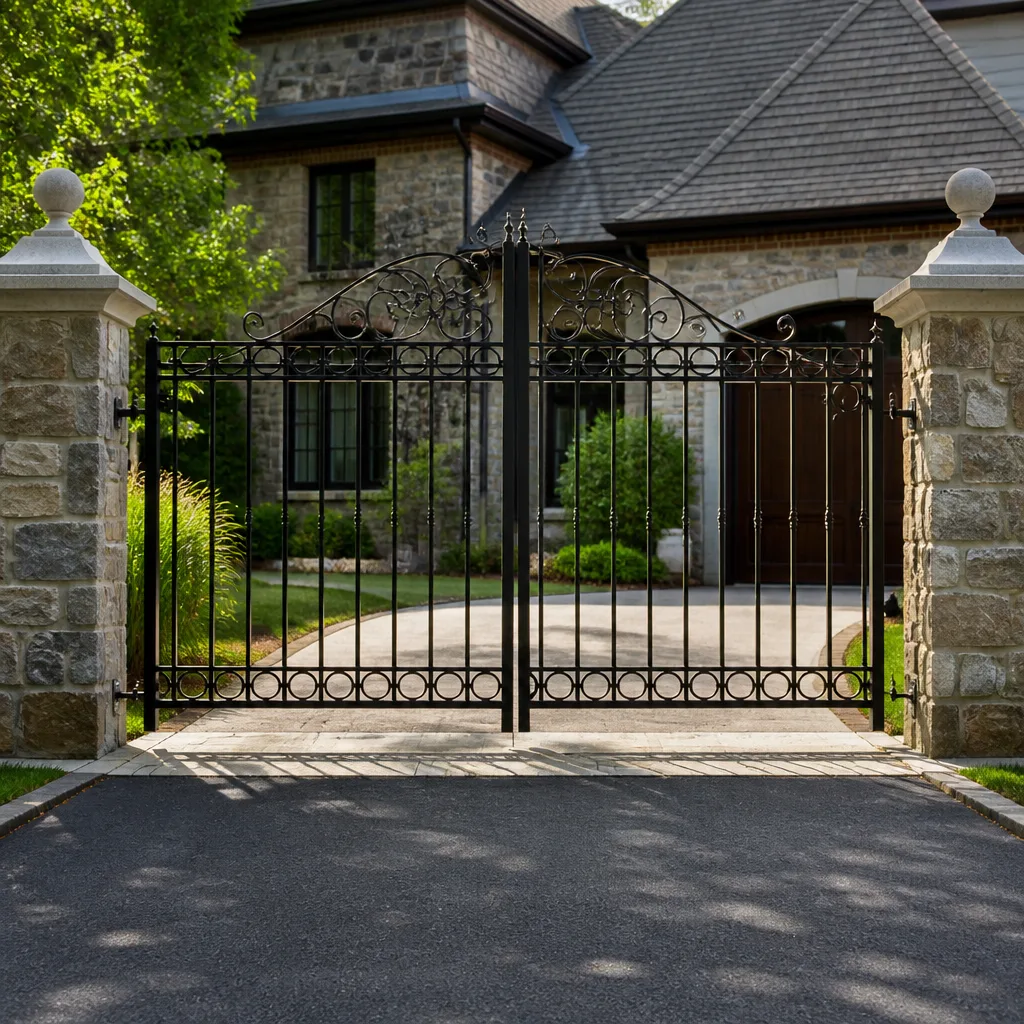 Wrought iron
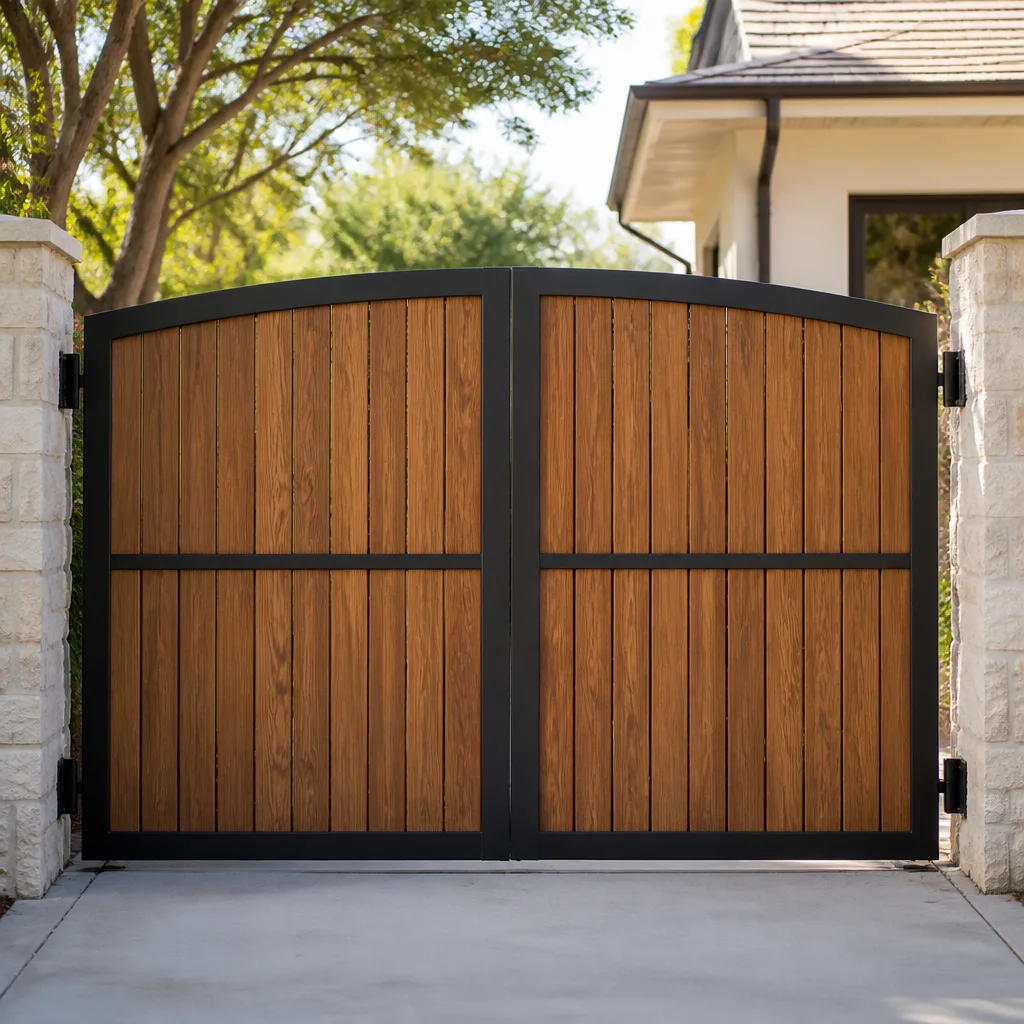 Wood & steel frame
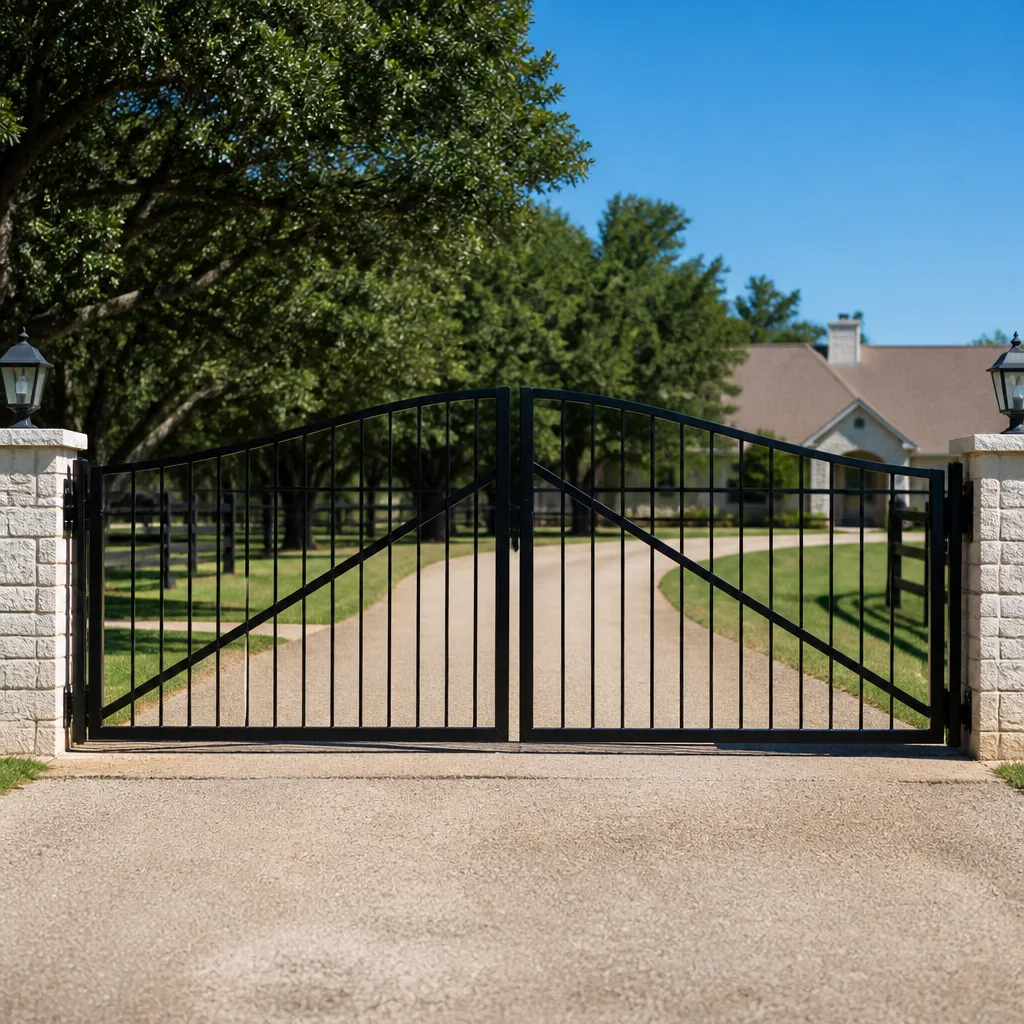 Farm & ranch
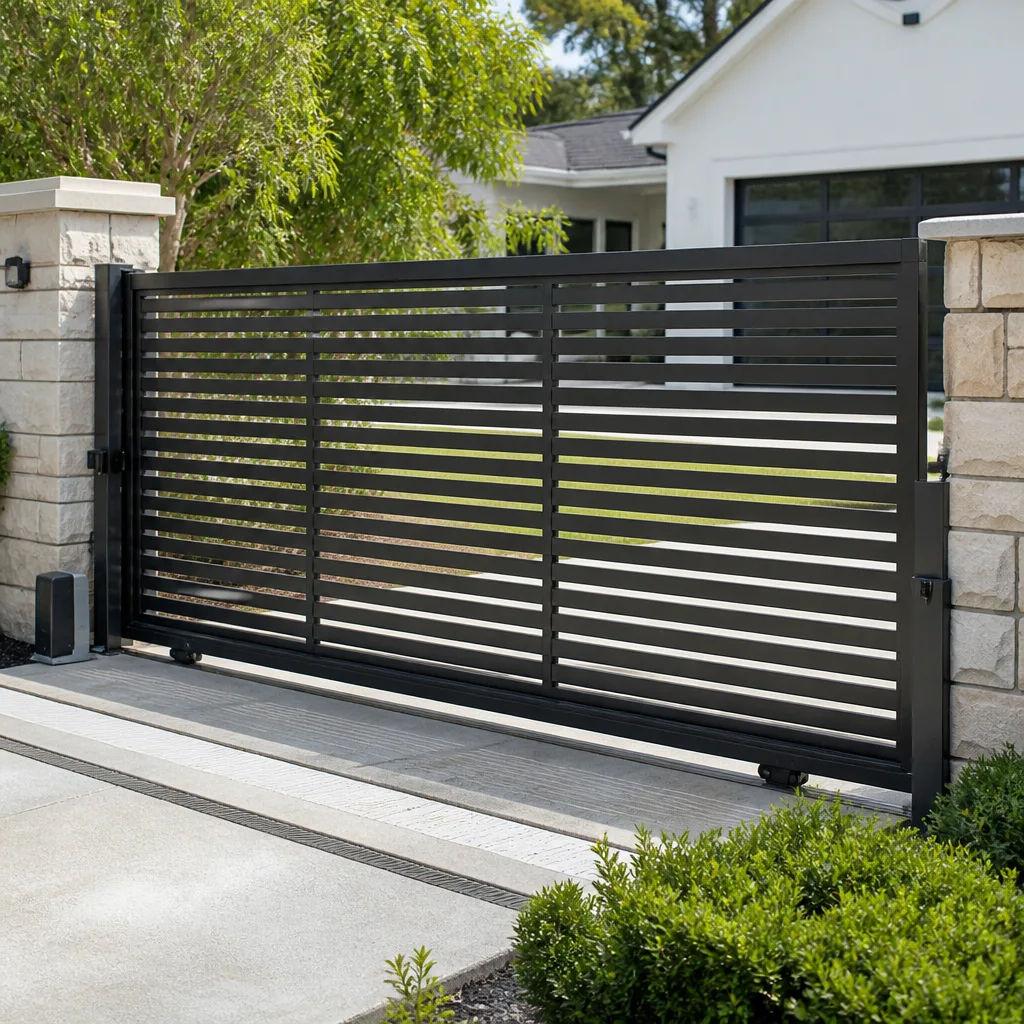 Sliding driveway gates
 LiftMaster operators
Free on-site gate assessment - hinges, posts, and your LiftMaster or Nice gate operator checked before anything is quoted
The assessment is free and the quote is the invoice.
Get your free estimateHow Long Does Gate Parts & Welding Take? Timelines and What to Expect
A hinge reweld that takes 20 minutes of arc time usually needs another 2 to 3 hours of work around it. That is the part nobody explains. Prep grinding, fit-up, cool-down before you dare touch the metal with a grinder, then a proper coating so the repair outlasts the gate. Quote only the arc time and you set an expectation the job can never keep. We’ve watched homeowners in Winchester plan a single afternoon around a weld repair that needed a full day, and we’ve watched them brace for a week when the work was done before lunch. This guide breaks every common gate weld repair into its real time components, so you can plan around what actually happens rather than what the job looks like from the driveway.
Quick Answer
Most gate weld repairs take between 2 and 6 hours of on-site work once a technician is on the job, though a simple hinge reweld can wrap in 90 minutes and a full section replacement usually spans 1 to 3 days. The weld itself is rarely the bottleneck. Metal prep, cool-down, and finish coating usually take two to four times longer than the arc time, and that is the part that determines whether the repair holds for another fifteen years or cracks again by winter.
Styles & brands we work with
- Wrought iron
- Wood & steel frame
- Farm & ranch
- Sliding driveway gates
- LiftMaster operators
Table of Contents
- Why the Arc Time Is the Shortest Part of the Job
- How Long Each Repair Type Really Takes
- Why Coating and Color Matching Add Time
- Which Repairs Shut the Gate Down and Which Don’t
- Why Cool-Down Timing Affects Weld Quality
- What to Prepare Before the Welder Arrives
- Common Mistakes to Avoid
- When to Call a Professional
- Frequently Asked Questions
Why the Arc Time Is the Shortest Part of the Job
When a homeowner watches a welder work, they see sparks, a bright arc, and 20 minutes of disciplined focus. What they don’t see is everything that has to happen before the arc can even start, and everything that has to happen after it stops. That invisible work is where most of the timeline actually lives.
Here is the honest breakdown of what surrounds a hinge reweld on a typical driveway gate:
- Grinding off the old weld and rust: 15 to 30 minutes per hinge, longer if the metal has been layered with previous field repairs.
- Fit-up and alignment: 15 to 25 minutes to position the hinge so the gate hangs square and swings without binding.
- Actual arc time: 10 to 20 minutes.
- Cool-down before any further work: 20 to 40 minutes, non-negotiable, since grinding hot weld steals strength from the joint.
- Finish grinding and dressing the bead: 15 minutes.
- Primer and finish coat: 20 minutes of work plus dry time before the gate can be cycled.
Add up that real sequence and a 20-minute weld becomes a 2 to 3 hour job, sometimes longer. That gap between what it looks like and what it takes is exactly where unrealistic expectations are built. We’ve seen it in Winchester neighborhoods where fences and gates see hard summer heat and cold winter mornings, both of which stress older welds. The metal prep and coating are what keep a repair from failing in the first strong wind after it is done.
How Long Each Repair Type Really Takes
Not all gate welding is equal. A hinge reweld and a full section replacement can differ by two full days of work. These are the ranges we’ve settled into over years of doing this work across Winchester. They assume a technician has clear access, an available power source, and reasonable weather.
- Hinge reweld (single hinge): 90 minutes to 3 hours. Most of the time is prep, fit-up, and cool-down. A pair of hinges at the same post can often be done in one visit.
- Hinge rebuild with plate reinforcement: 3 to 4 hours. Used where the gate post metal is thin enough that a straight reweld would fail within a season.
- Post collar repair or replacement: 2 to 5 hours. The gate usually has to be lifted or supported, which adds rigging time.
- Diagonal brace repair or replacement: 2 to 4 hours. Cutting out the old brace, fitting the new one to the existing frame, welding and dressing the joint.
- Bottom rail or picket section repair: 2 to 4 hours. Easier when the gate is off the hinges and on sawhorses.
- Full section replacement (three or more feet of gate): 1 to 3 days. This is where fabrication, transport, and coating time stack up most heavily.
We usually give a time range on the phone and confirm it after we’ve seen the gate. That isn’t stalling. It’s the honest way to plan. A gate with clean, original weld joints and a post with good metal is a different afternoon than one with four previous patch welds and a rusted hinge post. Our team at Ironworks Gate Co. has up to 13 years of technician experience, and we know the difference before we’ve turned a single bolt. If the scope you need is closer to a rebuild than a repair, the pages on gate repair in Winchester walk through how we scope that work.
Why Coating and Color Matching Add Time
The weld is only half the repair. Bare steel in a Winchester summer, with the sun beating on a black gate, will show rust within weeks if it isn’t coated. That is why every weld repair needs a finish, and why finish matching on an older gate is where a lot of timelines slip.
There are three realistic coating paths, and each has its own timeline:
- Rattle-can touch-up (primed and painted): 20 minutes of work, dry to the touch in under an hour. Best for small welds where a close color match is enough. The color seldom matches a fifteen-year-old faded finish exactly, but it protects the metal and looks fine at a few feet.
- Brush-applied industrial coating: 30 to 45 minutes of work, dry to handle within hours. Tougher than a rattle can, better on visible repairs, and more forgiving on an older gate with a patina.
- Powder coat or full re-coat: days, not hours. The gate section has to be removed, stripped, and shop-coated. Reserved for a full section replacement or a gate being refinished anyway.
The honest truth on older gates: a perfect color match is rarely possible on a small repair. The original finish has faded, and coatings don’t age to the same shade. On a black or bronze gate, that difference is usually invisible from the street. On a custom color, we talk to the homeowner about what is realistic before the job starts, so there’s no surprise. Our full page on gate installation in Winchester explains how new-gate coating is handled, which is a different conversation from a repair.
Which Repairs Shut the Gate Down and Which Don’t
One of the questions we hear most: will the gate be out of commission all day, or can life go on? The answer depends entirely on the repair type. Some jobs let the gate stay in service until the very end. Others need it completely offline for safety and for the quality of the weld.
Repairs that generally allow the gate to stay operational, or go offline only briefly:
- Picket or ornamental repair on a section that doesn’t affect structure or the automation.
- Cosmetic weld dressing where the joint is sound.
- A single hinge reweld, provided the gate can be locked open and supported while the joint cools.
Repairs that need the gate fully offline:
- Post collar or post replacement. The gate has to come off the hinges.
- Structural welding that carries load, like a bottom-rail or top-rail repair.
- Any weld on a frame that needs to be cut and replaced rather than repaired.
- Full section replacement or fabrication of a new section.
If you have a gate that controls access to your home and there’s only one entry, we plan around that. We can often open the gate and leave a temporary manual swing available, but that is a judgment call made on-site, not promised over the phone. In Winchester homes where the driveway gate is the only vehicle access, we work to keep at least a manual open-close available through the day. If the gate is motorized, we often coordinate the weld work with a service on the automation so the gate is down once, not twice. That’s why we train on brands like LiftMaster, Viking, and Ghost Controls; the gate motor and the gate metal are one system, and we’d rather handle both. The gate motor & opener in Winchester page covers how automation interacts with structural repair.
Why Cool-Down Timing Affects Weld Quality
Rushing the cool-down after a weld is like pulling a hot pie out of the oven and cutting it right away. It looks fine until you taste it. Metal that cools too fast on a weld joint builds internal stresses that show up later as a hairline crack. Slow, even cooling produces a joint that can hold against decades of wind, weight, and cycle stress.
The right amount of cool-down depends on three things: the metal thickness, the ambient temperature, and how much heat the joint took. A thick gate post on a cold Winchester morning needs more time than a thin picket on a warm afternoon. That’s a judgment call, and it can’t be shortcut with a water bucket or a fan without consequences down the road.
There are five phases a weld has to move through before it can be considered finished:
- Prepare the joint. Grind to clean, sound metal.
- Fit and tack. Get the pieces aligned and lightly held.
- Weld the joint. This is the arc time. Usually the shortest phase.
- Cool without forced quenching. This is the phase that most often gets rushed and most often fails.
- Dress and coat. Grind the bead, prime, and cover.
A repair that finishes in 45 minutes because the welder skipped the cool-down is not a fast repair. It’s a repair scheduled to fail. We’ve been called back to jobs where the weld looked beautiful and cracked within months, and it is almost always a cooling problem or a prep problem, not the arc itself. Our Ironworks Gate Co. Winchester home page outlines the standard we hold every repair to, including the written 90-Day Done Right Promise that backs the work.
What to Prepare Before the Welder Arrives
A few minutes of prep before the technician pulls up can save billable time on the job. We don’t charge for delay time on purpose, but a rough site adds labor that nobody wants to pay for. Here’s what helps.
- Clear access to the gate. Move cars, recycling bins, and anything else within a few feet of the gate. The technician needs room to stand, kneel, and work on both sides.
- Confirm where the outdoor power is. Weld equipment needs a safe, working outdoor outlet close enough to reach. If the outlet is on the far side of the house, let us know when we book.
- Note the gate’s operating status. Tell us on the call whether the gate motor currently works. That determines whether we plan a coordination with the automation service.
- Photograph the damage. A quick photo of the broken hinge or cracked joint (from a few feet back, in daylight) helps us bring the right stock on the first visit.
- Move pets indoors. Tools, sparks, and strangers are stressful for animals, and a curious dog can slow the work or get hurt.
- Confirm vehicle access. If the repair requires the gate to come offline, make sure your car is parked inside the property or on the street before the technician arrives.
None of this is complicated, and it pays off. A clean, ready site often saves 30 to 60 minutes of billable time on a hinge or brace repair. That’s real money back in your pocket. All Winchester area jobs quoted upfront, in writing, before any work starts, so the agreed price is the price on the invoice.
How Long Do Gate Parts & Welding Take on a Full Section Replacement?
A full section replacement is a different scale of job than a repair. It’s usually planned in thirds, and each third has its own timeline.
- Fabrication: 1 to 2 days. Cutting, fitting, welding, and dressing a replacement section to match the existing gate. If the gate is a custom or old decorative pattern, this is the longer end.
- Installation: 3 to 6 hours on the day. Removing the damaged section, fitting the replacement, welding it in place. If the gate needs to come off its hinges, add rigging time.
- Finish and coordination: half a day to a few days, depending on the coating path. Shop powder coat is on the long side; field primer and paint are on the short side.
Add that up and most gate section replacements in Winchester run 2 to 4 days start to finish, with a 1 to 3 day typical range. Access control and automation work sometimes stretch that, because a new section has to be re-aligned with the opener’s limits and re-tested. We don’t shorten the timeline by running the gate motor before the coating is fully cured. That’s the kind of thing that seems small and shows up later as a scarred finish or a weakened joint. Written pricing on a section replacement is confirmed after the initial on-site measure, not over the phone.
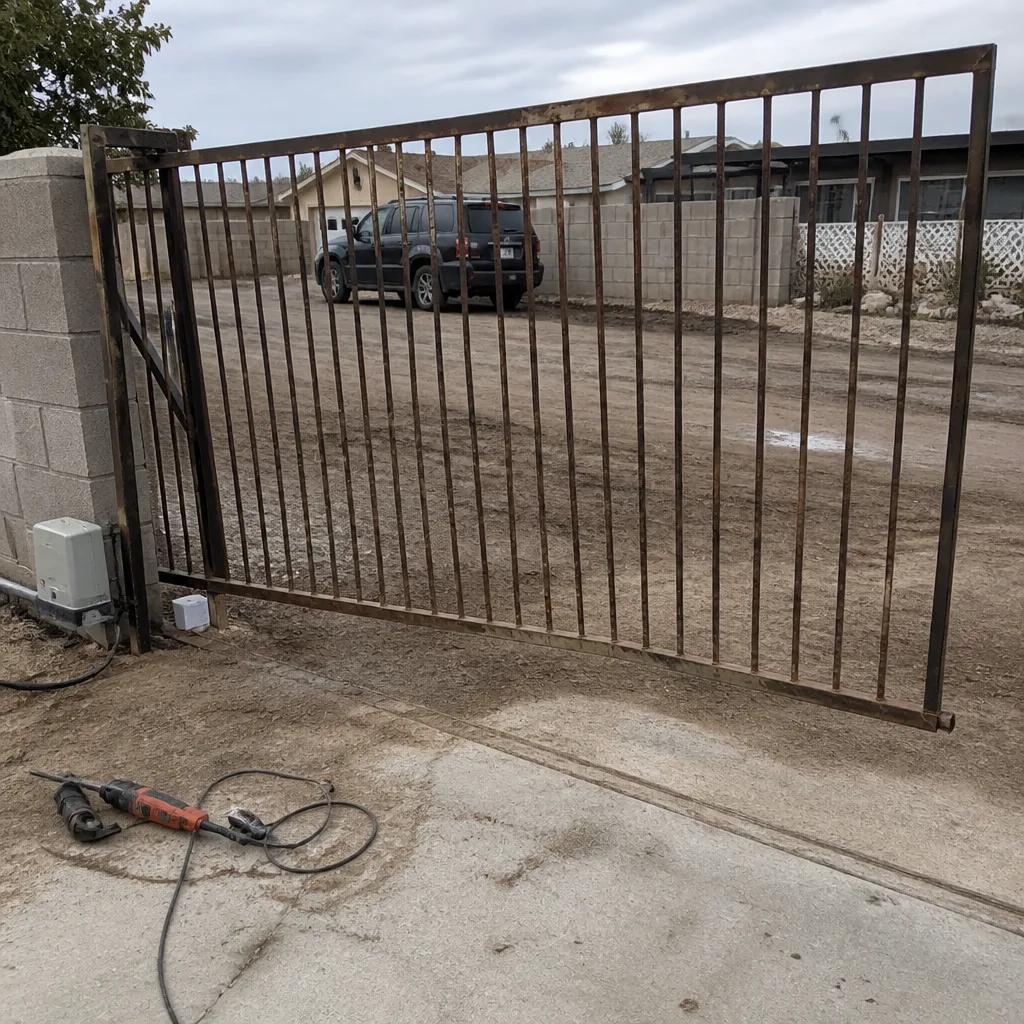
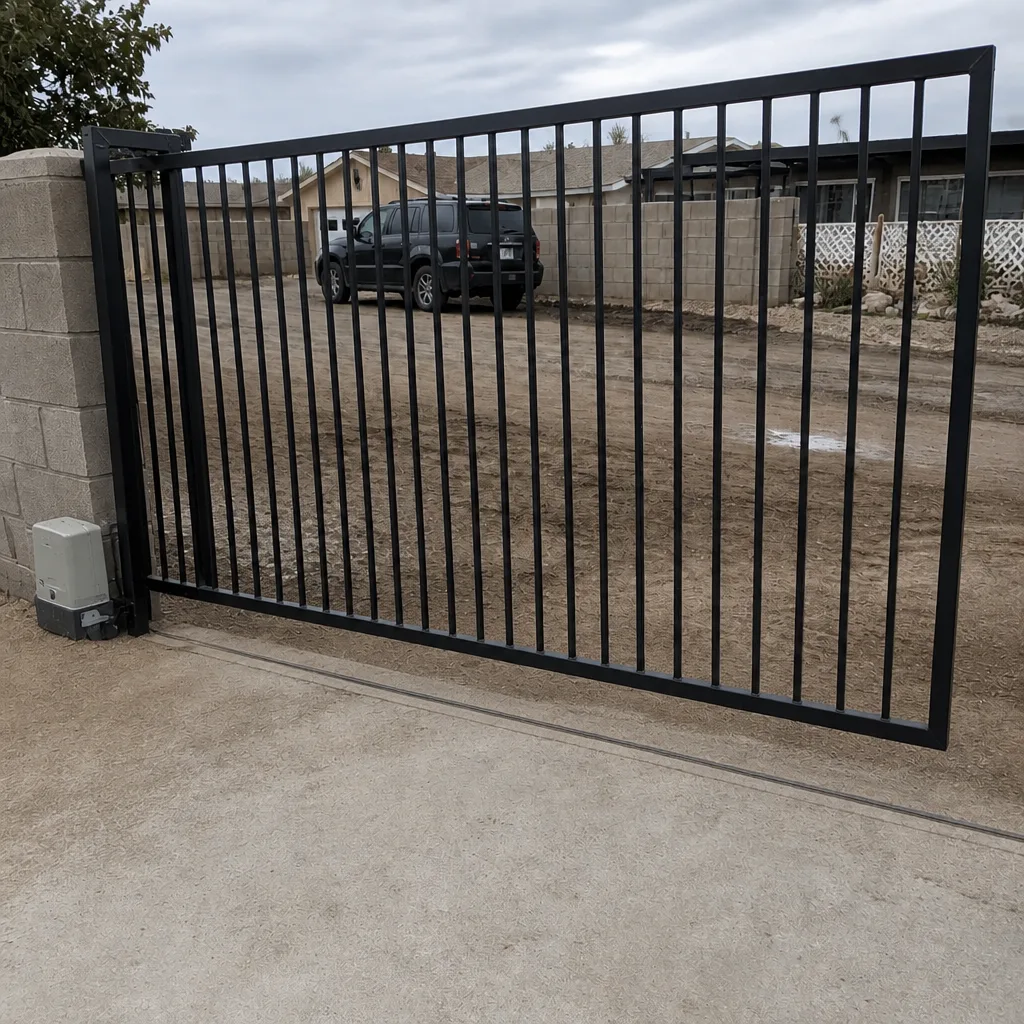
See the difference
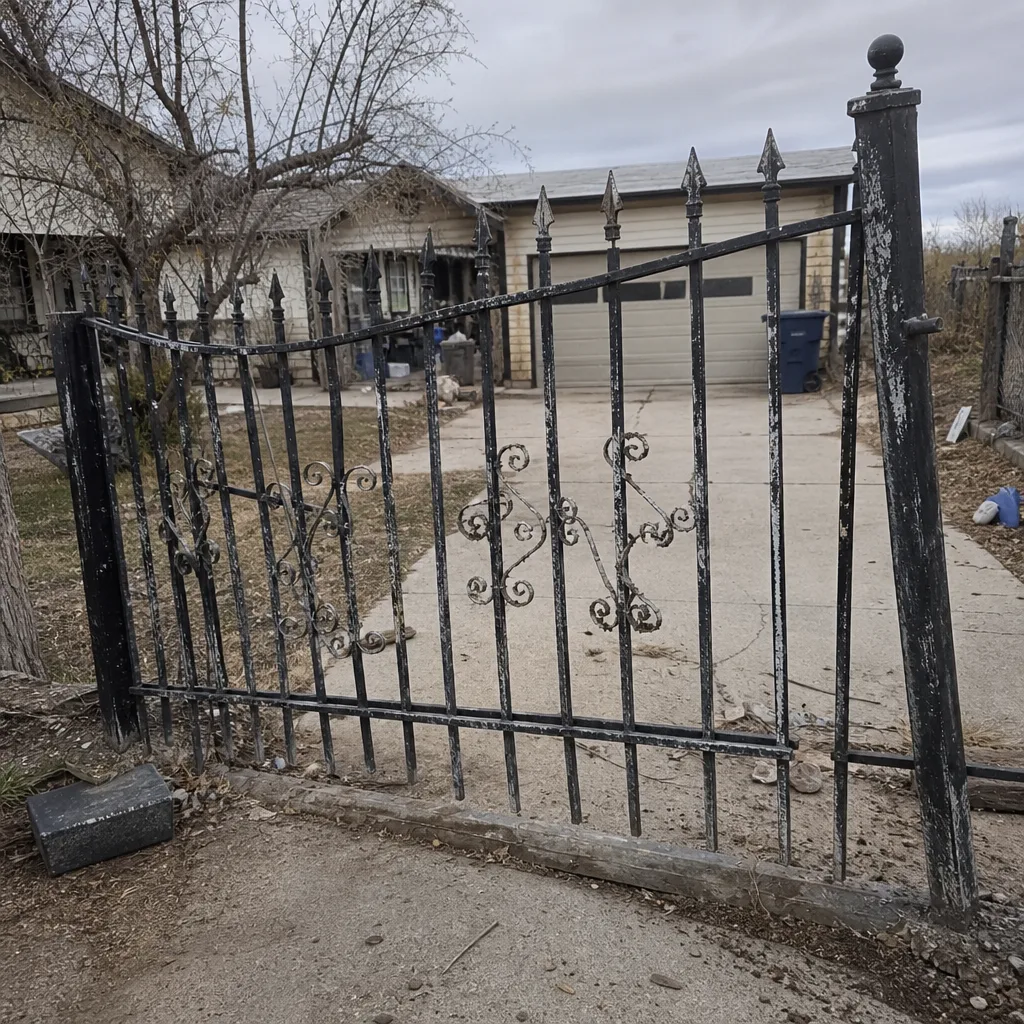 Before
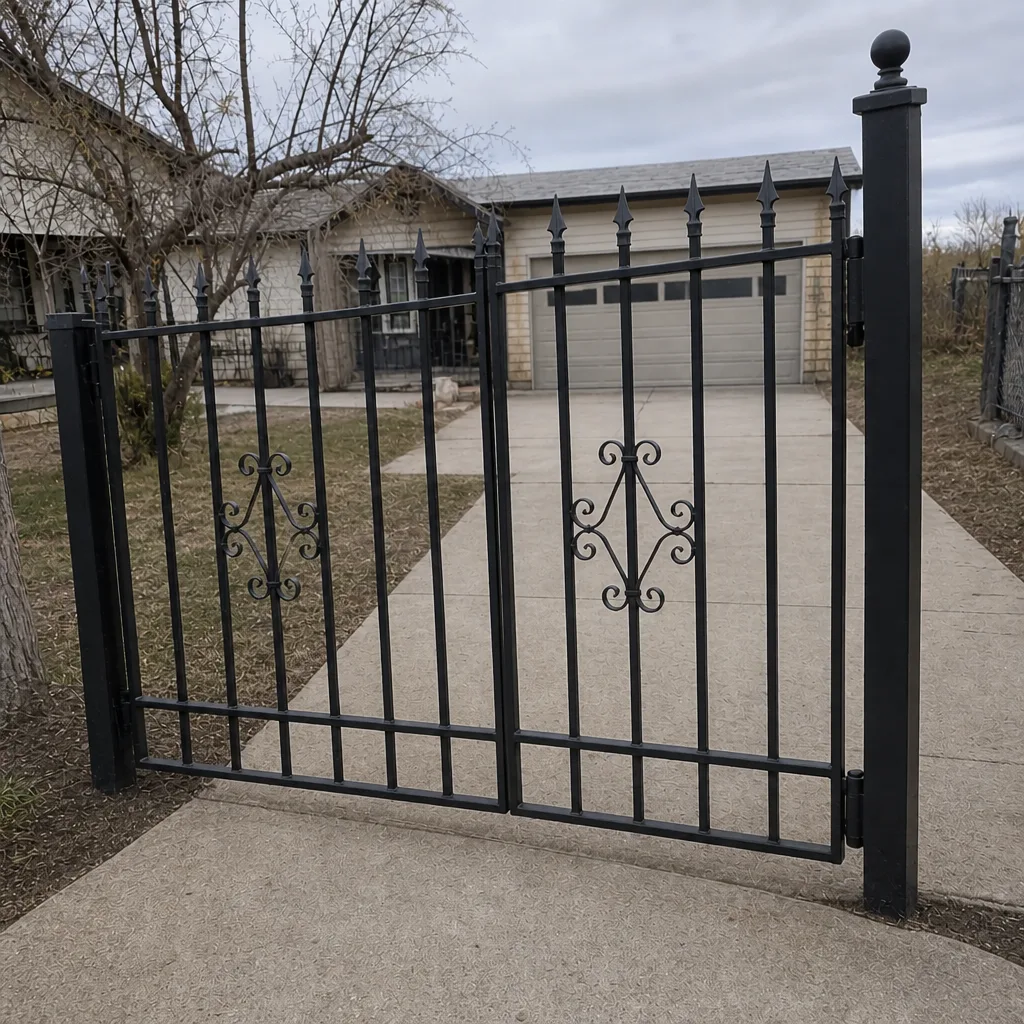 After
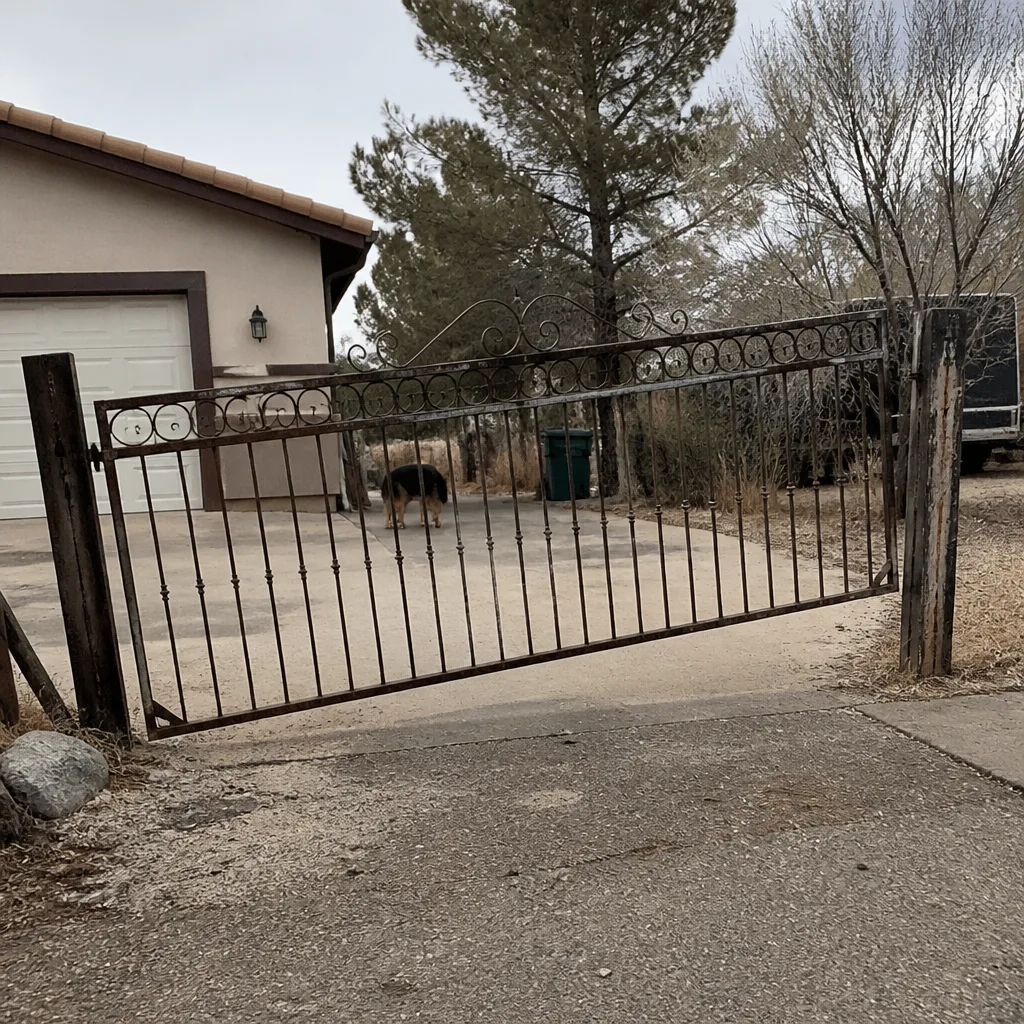 Before
 After
 Before
 After
Common Mistakes to Avoid
- Choosing a bid based on arc time alone. The lowest quote is often the one planning to skip the cool-down and the finish coat. That repair looks fine until it cracks. Ask any contractor how they plan the coating and the cool time, not just the weld.
- Expecting a perfect color match on an older gate. A 15-year-old finish has faded. A rattle-can touch-up will be close, not exact. Treating a slight color difference as a defect is a common source of frustration that could have been avoided on the front end.
- Scheduling the gate down on a busy day. If your gate is your only vehicle access and you have a medical appointment or a delivery coming, plan the repair on a quiet day. A structural weld means the gate doesn’t cycle until cool-down and coating finish.
- Not pulling the car out before the technician arrives. A car parked inside the gate turns an easy repair into a longer one. Move it before the call.
- Letting a rattle-can fix hide a structural problem. A hinge that has been touched up with paint may be one bump away from failing. If the weld joint has cracked twice, it needs reinforcement, not another coat of paint.
- Assuming a generalist handyman can weld gate steel. Gate frames carry real load. A weld that looks fine to a handyman can fail on a hot Winchester afternoon under the weight of the gate. Welding gate steel is a specific trade, and it belongs with someone who does it every week.
- Not asking about the guarantee in writing. A verbal guarantee is one thing. A written promise that the company comes back and makes it right is another. Always get the promise in writing before work starts.
When to Call a Professional
Call for a professional look when the gate has started to sag, stick, or swing out of square. Call when a hinge weld has cracked more than once in the same spot. Call if the gate post has rust bubbles at the base, or the bottom rail is thin enough to flex under hand pressure. Call if a weld has pulled away from the frame, or a diagonal brace has cracked. Call if the gate has stopped closing squarely after a strong wind. These are the signs a weld repair is far enough along to plan properly, and quick enough to avoid a bigger job later. Ironworks Gate Co. Winchester offers free estimates in Winchester, and a live person answers the phone 24 hours a day. Call (866) 984-8340.
Frequently Asked Questions
Most gate welding repairs in Winchester take 2 to 6 hours of on-site work, with a simple hinge reweld finishing in 90 minutes to 3 hours and a full section replacement spanning 1 to 3 days. The timeframe depends on repair type, prep condition, cool-down time, and coating. Call (866) 984-8340 for an exact estimate, always free and quoted upfront.
Sometimes, yes. A single hinge reweld or a cosmetic repair on a non-structural picket can often be done with the gate open and supported. Structural welding, post repairs, and section replacements require the gate offline. If you have only one access point, mention it when you call so we plan around it.
Because the weld is the easiest part. Metal prep, fit-up, cool-down, dressing, and coating make up most of the timeline, and skipping any of them means the repair fails sooner. That’s why a 20-minute arc becomes a 2 to 3 hour job.
Always. Bare steel will rust quickly in a Winchester summer, so every weld gets a primed and painted finish. Color match on an older gate is close but rarely exact, and we talk through that honestly before the work begins.
We can get close, not exact, on an older gate. Options include rattle-can touch-up, brush-applied industrial coating, or a shop powder coat on a full section. The right call depends on the repair size, the color, and how much of the gate is visible. We’ll advise on the best route during the estimate.
Yes. Every repair is quoted and agreed before any work begins, no surprises on the bill. All work is backed by the written 90-Day Done Right Promise, and our team at Ironworks Gate Co. is trained on nine leading gate-automation brands, including LiftMaster, DoorKing, and Elite, so the right fix happens on the first visit. Call (866) 984-8340 for a free estimate.
The Bottom Line
Gate welding timelines are built around prep, fit-up, cool-down, and coating, not around the arc. The arc itself is usually the shortest part of the job, and any repair that finishes in a fraction of the time it should is a repair scheduled to fail. Expect 2 to 6 hours for most repairs, 90 minutes to 3 hours for a single hinge, and 1 to 3 days for a full section. Clear access, a working outdoor outlet, and an honest conversation about coating and color match make the difference between a job done right and a job that has to be redone. If your gate needs welding in Winchester, we’ll give you a fair, upfront price and a repair backed in writing. Call Ironworks Gate Co. Winchester at (866) 984-8340 for a free estimate, and we’ll be there when we say.
Written by the team at Ironworks Gate Co. Winchester.