
Last updated November 18, 2026
 Wrought iron
 Wood & steel frame
 Farm & ranch
 Sliding driveway gates
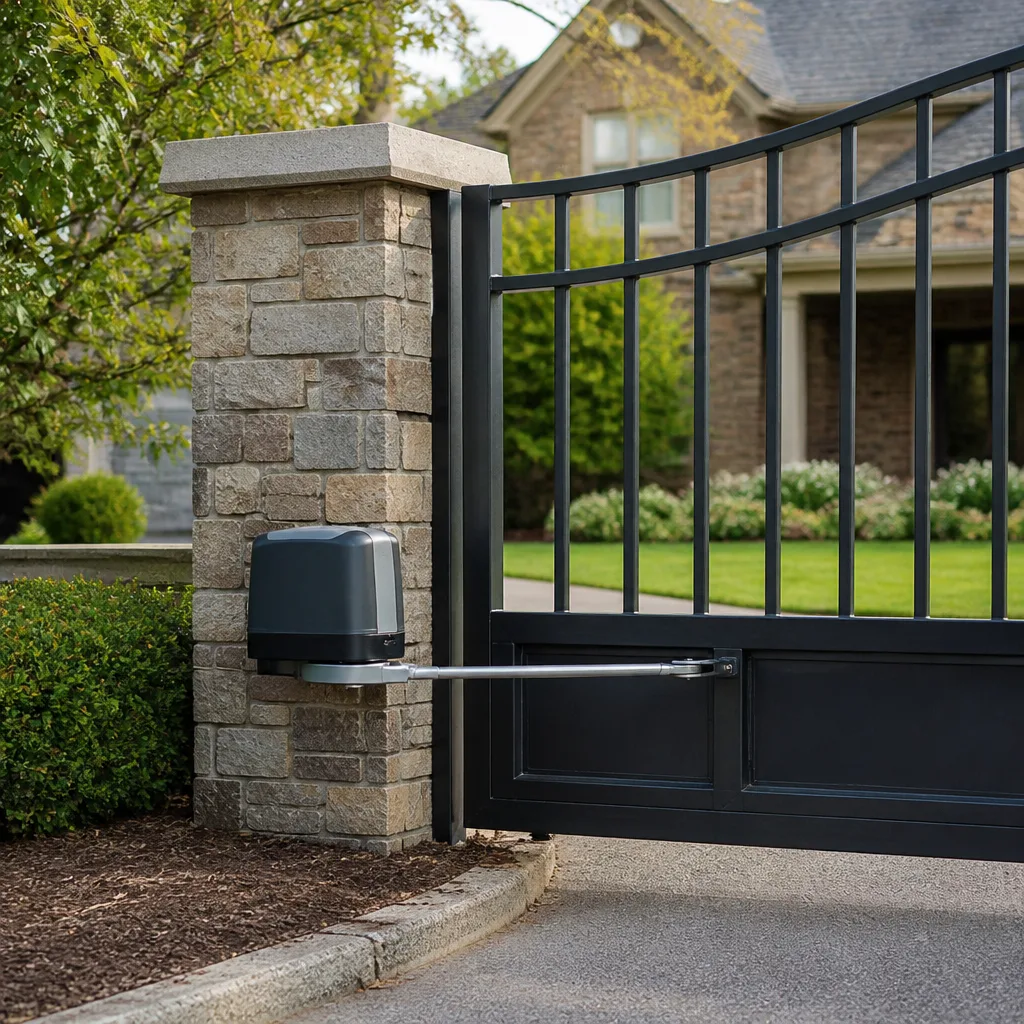 LiftMaster operators
Free on-site gate assessment - hinges, posts, and your LiftMaster or Nice gate operator checked before anything is quoted
The assessment is free and the quote is the invoice.
Get your free estimateGate Access Control Maintenance Schedule: What to Do and When
The number one cause of access control board failure in high-desert climates isn’t age. It’s the 90-degree swing between a February night and a July afternoon, working on the same solder joints year after year until one morning the gate simply won’t open. Winchester sits right in that cycle, where summer pavement climbs past 140 degrees and winter nights still drop near freezing. We’ve pulled failed boards out of keypads in Winchester that were barely three summers old. This guide lays out a month-by-month maintenance schedule built for the high desert, not a checklist copied from a Florida installer.
Quick Answer
A gate access control system in Winchester NV needs inspection and cleaning every 90 days, a full battery backup test each May and October, and an annual board and wiring check before summer heat. The two hard deadlines are late May, before the heat peak, and early October, before the first freeze. Everything else in this guide fits between those anchors.
Styles & brands we work with
- Wrought iron
- Wood & steel frame
- Farm & ranch
- Sliding driveway gates
- LiftMaster operators
Table of Contents
- Why Winchester’s Climate Demands a Different Schedule
- The May Checklist: Getting Ahead of Summer Heat
- The October Checklist: Preparing for Freeze
- Alkali Dust and UV: The Two Silent Killers
- Battery Backup Testing: Why Last Spring’s Pass Means Nothing in August
- The Lubrication Point Everyone Skips
- How to Log Maintenance So a Technician Can Diagnose Faster
- What Your Warranty Coverage Requires You to Document
Why Winchester’s Climate Demands a Different Schedule
National maintenance guides are written for a temperate middle ground that Winchester doesn’t have. A typical schedule assumes a 40-degree seasonal swing, mild humidity, and moderate UV exposure. Winchester sees all three blow past those assumptions. Summer afternoons regularly top 105 degrees. Winter nights in the outlying neighborhoods drop into the high 20s. That daily and seasonal swing is what cracks solder joints, fatigues plastic housings, and shortens the working life of keypads and control boards.
There’s a second factor no generic guide mentions: alkali dust. The caliche soil and dry lakebed dust around Winchester is mildly alkaline, and it settles into keypad seams, hinge points, and the vent slots on control boxes. Mixed with the trace morning moisture we get in spring, that dust becomes a thin abrasive paste that works its way into switch contacts. A generic 6-month inspection interval lets that paste sit for half a year. In Winchester, 90 days is the realistic window.
UV intensity is the third piece. At our elevation, the sun hits harder than at sea level, and plastic keypad covers, photo-eye lenses, and wire insulation all degrade faster. We’ve seen access control wiring in Winchester that looked fine on the outside but had brittle insulation inside a conduit run after five summers. The schedule below accounts for all three factors: temperature swing, alkali dust, and UV load.
The May Checklist: Getting Ahead of Summer Heat
Late May is the single most important service window on the Winchester calendar. Whatever you fix now runs through the hottest 120 days of the year. Whatever you skip now fails in July or August, when you least want to be standing in the driveway. Run these tasks in order:
- Open and inspect the control enclosure. Look for cracks in the box, a failed gasket, or any sign of insect nesting. A cracked enclosure lets in the dust that kills boards.
- Clean the interior with dry compressed air, low pressure. Blow dust off the board, away from the connectors. Never use a wet cloth inside a live enclosure.
- Check every wire terminal for tightness. Heat expands and contracts the copper. A terminal that was snug in February can be loose by May.
- Inspect the keypad and card reader housing. Wipe the exterior, check the buttons for stickiness, and confirm the cover seals.
- Test the photo-eye alignment. The sun angle changes with the season. A beam that worked in winter may be off by an inch or two by late spring.
- Test every exit device: keypad code, remote, loop detector, and intercom. Write down which ones work and which hesitate.
- Inspect the gate operator’s cooling vents. If the motor housing is fouled with dust, it runs hotter all summer and shortens motor life.
If your system runs a Gate Motor & Opener in Winchester from BFT or Linear, the May inspection is also the right time to confirm the operator’s onboard diagnostics are reading clean. Call a professional if you see scorch marks, a bulging capacitor, or a board that smells like hot plastic. Do not open a live control enclosure yourself.
The October Checklist: Preparing for Freeze
October is the second hard deadline. The first hard freeze in Winchester typically lands in late November, and everything you do in October has to get the system through it. Freeze damage usually shows up as a cracked housing, a dead battery, or a photo-eye that fogs from condensation. Work through these tasks:
- Replace the control box gasket if it’s cracked or flattened. A tight seal keeps cold night moisture out.
- Drain and check the conduit runs for standing water where they enter the ground. Water in a conduit expands when it freezes.
- Test the heater element if your operator has one. Cold-morning gate failures are often a heater that quietly died in September.
- Load-test the battery backup. See the dedicated section below.
- Lubricate hinges, latches, and the lock actuator. Cold weather thickens grease. A dry lock cylinder can freeze solid.
- Check the photo-eye heaters if you have them. Clean the lens while you’re in there.
- Confirm the manual release works. If the power goes out and the gate won’t release by hand, you have no way out of the driveway.
October is also the correct time to schedule a Gate Repair in Winchester visit if you noticed anything odd during the summer. Catching a failing operator before the freeze saves you an emergency call in January.
Alkali Dust and UV: The Two Silent Killers
Dust is the maintenance problem Winchester homeowners underestimate most. Alkali dust doesn’t announce itself the way a broken hinge does. It settles quietly into keypad seams, the vents on control boxes, and the gaps around the reader faceplate. Once inside, it acts like a slow abrasive against switch contacts and wiper seals. The electrical contacts in a keypad that gets cleaned every six months will last years longer than the same keypad that gets cleaned once a year.
UV exposure is the second silent killer, and it works on different parts. The plastics absorb UV and go chalky and brittle. Wire insulation gets hard and cracks. Photo-eye lenses yellow and fog. All of this happens slowly and invisibly on the outside and dramatically on the inside. A cheap maintenance habit: every quarter, wipe the exposed plastic surfaces of the keypad, reader, and photo-eye housings with a UV-protectant plastic dressing. Skip the silicone sprays; they attract dust. A dry cloth wipe followed by a light dressing is enough.
Where the two meet is on the wiring that runs from the keypad to the control box. That wire takes UV at the exposed end, alkali dust along the run, and heat inside the conduit. In our experience servicing systems across Winchester, this is the single most common failure point homeowners never think to check. If you’re going to peek at one thing between scheduled visits, make it this wire.
Battery Backup Testing: Why Last Spring’s Pass Means Nothing in August
A lead-acid backup battery that tests clean in March can fail in August. This isn’t a defective battery. It’s chemistry. Heat accelerates the internal corrosion inside a sealed lead-acid cell, and the service life of a battery rated for four years at 77 degrees drops to about two years at a steady 95 degrees. A Winchester summer gives you months of steady heat inside the control box. The battery that passed a load test in April may not hold voltage through a July heat wave.
The correct schedule is a quick load test in May and a full test in October:
- May: Disconnect the battery from the charger, measure resting voltage. Anything below 12.4 volts on a 12-volt battery is a red flag.
- May: Reconnect and charge for 24 hours. Then measure under load (the operator opening the gate). A drop below 11.5 volts under load means the battery is on its way out.
- October: Repeat both tests. October’s test is the one that predicts whether you’ll get through the winter power outages.
- Every 18 months: Replace the battery whether it tests clean or not. In Winchester heat, this is the realistic service life.
If your operator uses a Ghost Controls or Viking battery configuration, replacement batteries vary by model. Have the model number handy when you call.
The Lubrication Point Everyone Skips
Electric gate locks have a small internal solenoid plunger that drives the deadbolt. It moves maybe half an inch, thousands of times a year, and most of those movements happen without anyone thinking about them. That plunger needs a single drop of light machine oil twice a year: once in May, once in October. Graphite or a dry PTFE lubricant also works. Heavy grease or WD-40 should not be used inside the actuator; they attract dust and turn into a paste that jams the lock in cold weather.
You almost never see this in a homeowner checklist, and we’ve found plenty of technicians skip it too. The symptom of a dry plunger is a lock that sticks intermittently, especially after a hot afternoon, then suddenly works again. Homeowners often mistake this for a failing motor. Before you swap a motor, check the lock lubrication. On a LiftMaster or Linear lock, this single maintenance step has saved more operators than any other single service point we’ve made.
How to Log Maintenance So a Technician Can Diagnose Faster
Any access control problem that gets diagnosed in five minutes instead of an hour is a problem you save money on. The difference is usually a maintenance log. You don’t need anything fancy. A notebook in the glove box works fine. What matters is that you record four things consistently:
- Date of each test or clean. Even a quick quarterly wipe.
- What you tested (“keypad code 4-digit”, “photo eye”, “manual release”).
- What you saw, positively or negatively, with a short note (“keypad #7 hesitant to respond in cold morning”).
- Any service visit, with brand and model numbers. BFT, Linear, Ghost Controls, and Viking parts aren’t interchangeable, and knowing the model up front saves a trip.
When a technician arrives with a log that says “the keypad started hesitating on cold mornings about three weeks ago, no other changes,” we can usually rule out the board, rule out the battery, and go straight to the keypad’s internal contacts. Without that log, we start from scratch. If you have a clean Gate Installation in Winchester that’s new within the last year, your log will be short and every entry counts more.
What Your Warranty Coverage Requires You to Document
A written 90-Day Done Right Promise covers the work a professional does, but warranty coverage usually gets stronger when the homeowner’s own maintenance log is honest and consistent. If a keypad fails within warranty and the log shows the homeowner never cleaned it, the fault can reasonably be traced to neglect of the dust problem. If the log shows a consistent quarterly cleaning and it still failed, that failure is on the part or the install, and we stand behind it.
The documents worth keeping together: the original installation paperwork, any parts receipts, your maintenance log, and the written warranty from any service call. When you can pull all four out of one folder, no one has to argue. That’s the point of the Keystone Standard behind every job: the promise works both ways, and honest documentation is how you hold us to ours and we hold the parts to theirs. Whether your gate is a hundred feet from the road or a few, the same standard applies across Winchester.
Common Mistakes to Avoid
- Following a national maintenance guide. A schedule written for a mild climate has the wrong inspection interval for Winchester’s temperature swing and dust load. Ninety days, not six months.
- Power-washing the control box. Water forced into a live enclosure destroys boards. Dry compressed air or a soft cloth only.
- Replacing a motor when the electric lock is dry. A plunger that needs a drop of oil looks like a motor failure from the driver’s seat. Check the lock first.
- Assuming the battery that passed in spring will last the summer. Heat degrades lead-acid batteries faster than any other factor in Winchester. Test twice a year and replace every 18 months.
- Skipping the manual release test. In the desert, a power outage in August is common. If the gate won’t release by hand, you’re stuck inside or outside with no way through.
- Using silicone spray on the keypad. It seems like it protects plastic, but it attracts alkali dust and turns into a paste that jams the buttons by the end of the year.
- Not logging service visits. When a future problem appears, a written record of the brand, the model, and the date of the last service turns a mystery into a checklist.
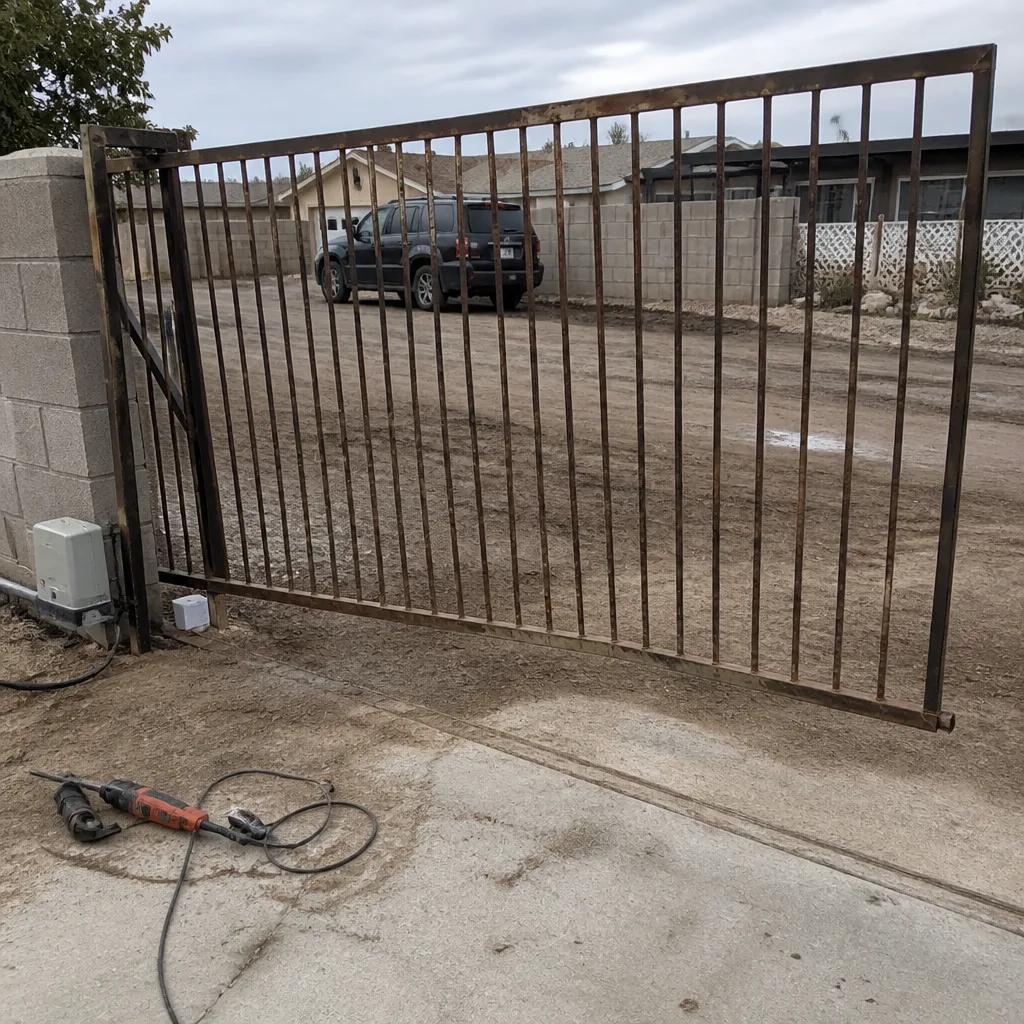
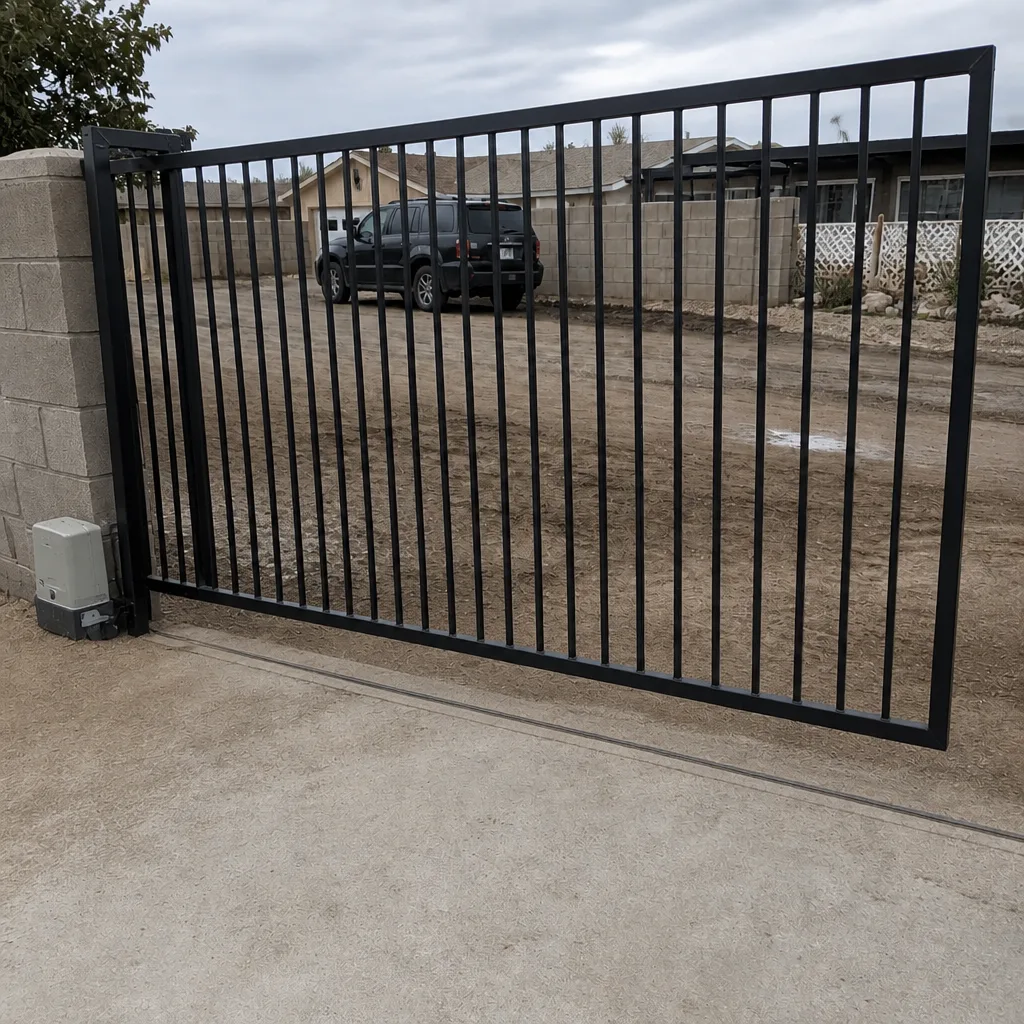
See the difference
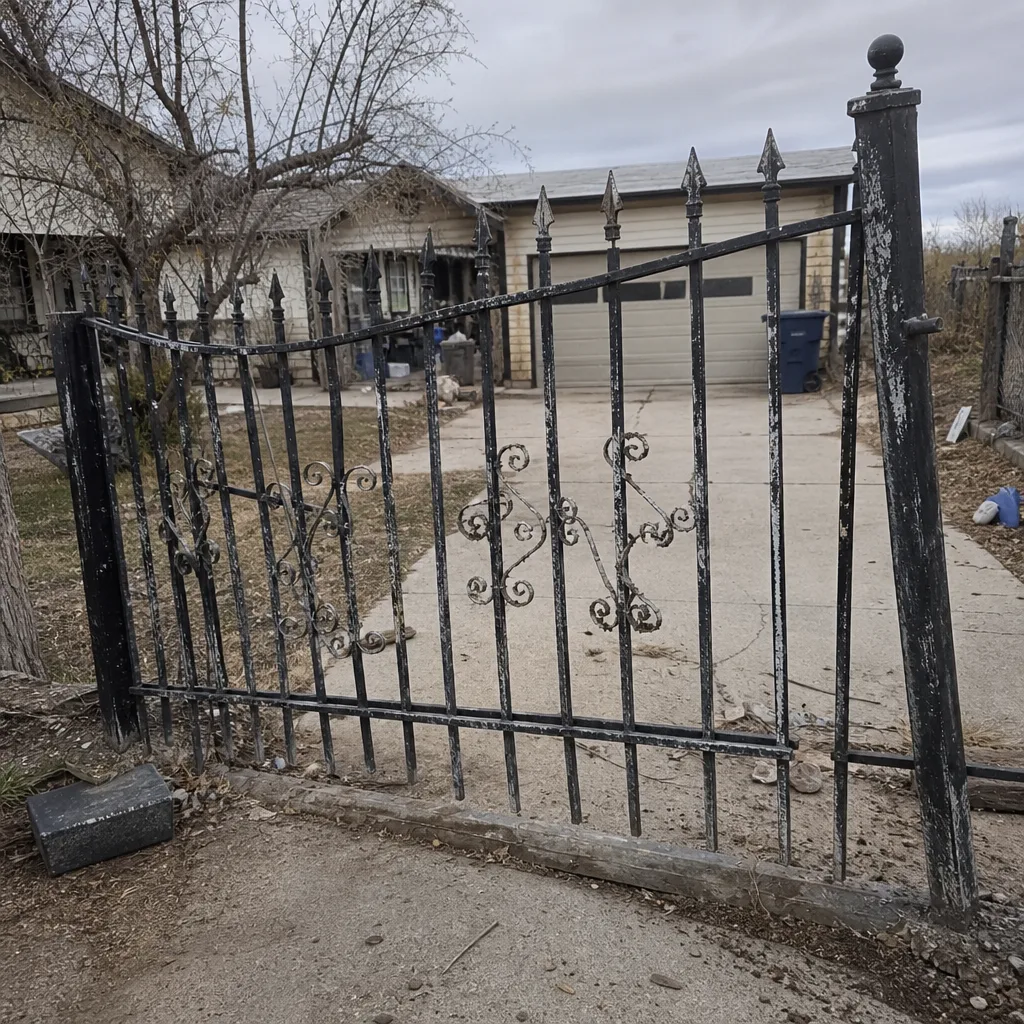 Before
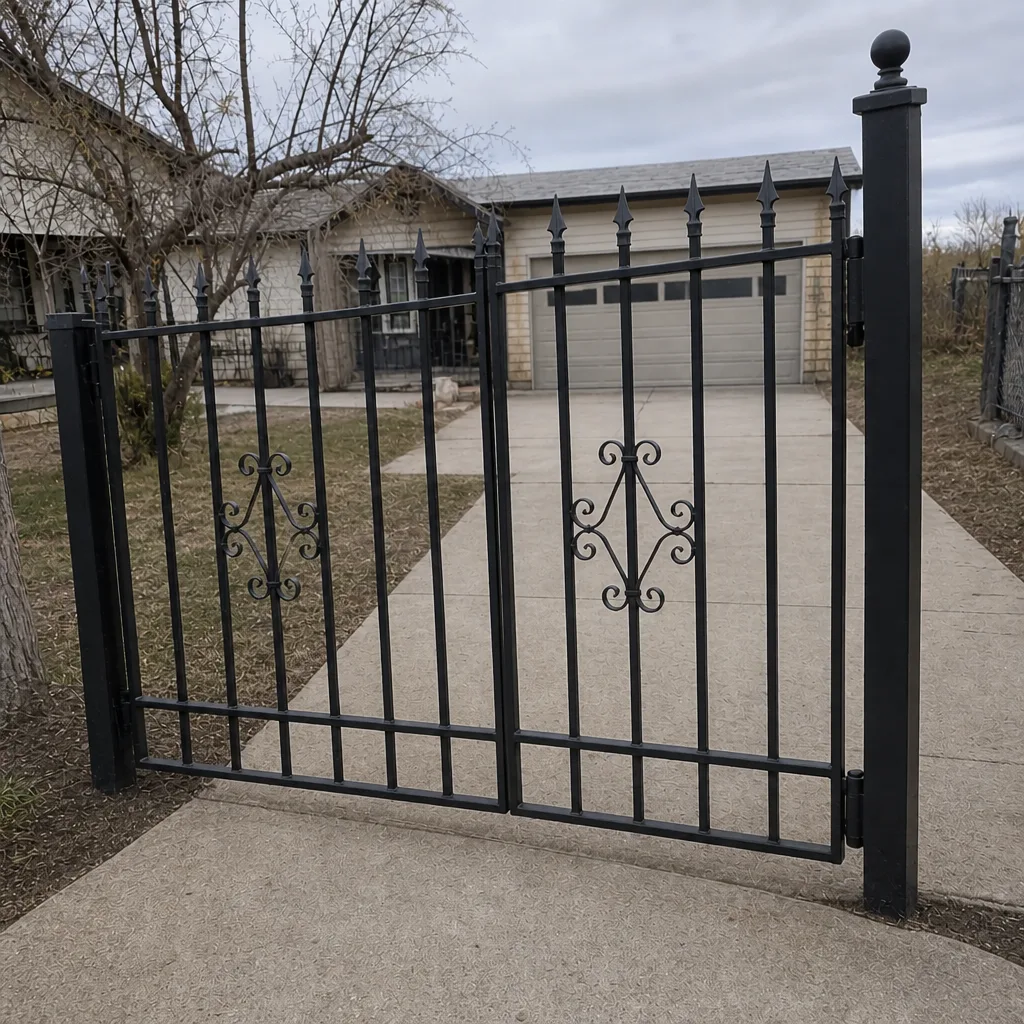 After
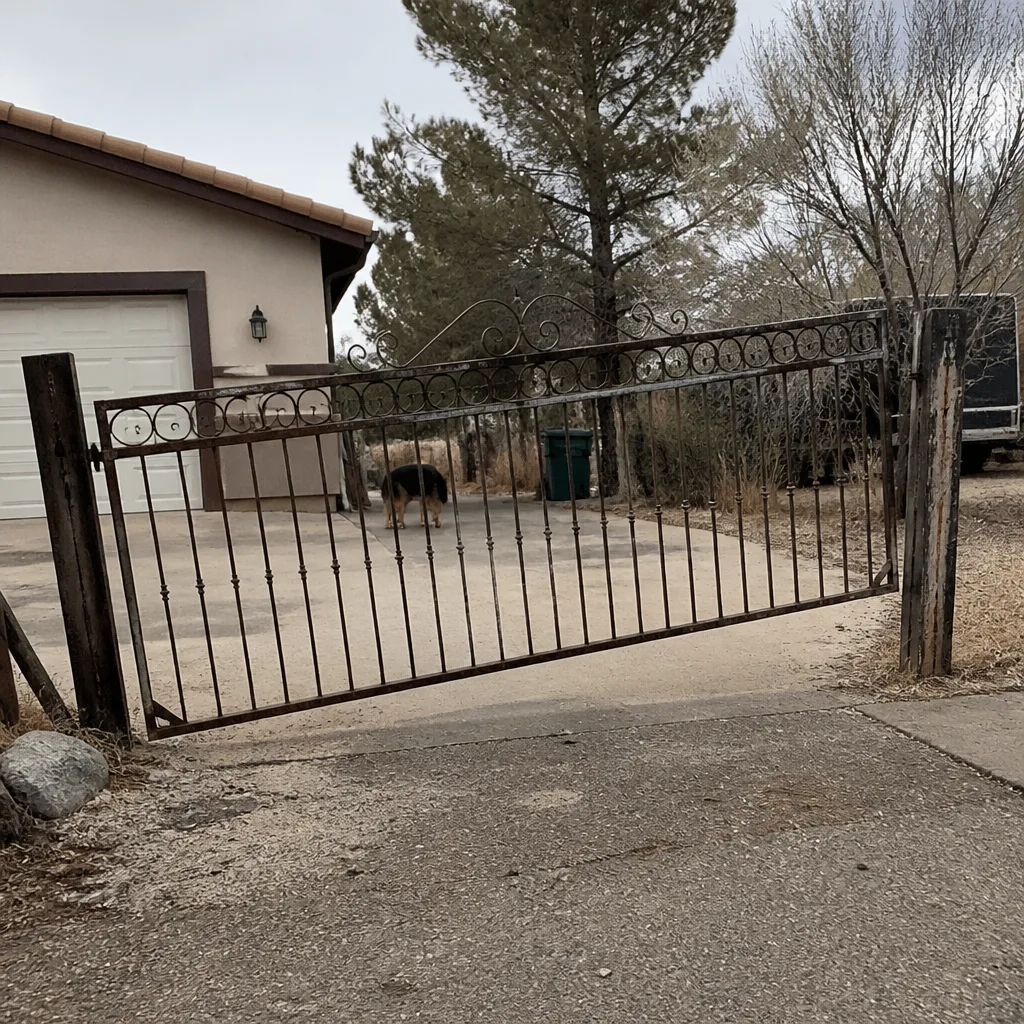 Before
 After
 Before
 After
When to Call a Professional
Call a professional whenever the problem involves a live board, a motor, a solenoid, or anything that could shock you. But even without those, several situations should go straight to a trained technician. If the gate won’t open with a fresh battery and clean terminals, if you smell hot plastic inside the control box, if the operator makes a grinding sound, if the manual release is jammed, or if the keypad hesitates on the same code every time, stop troubleshooting and get eyes on it. Access control boards and gate motors aren’t DIY territory. A wrong jumper or a miswired photo-eye causes intermittent failures that get worse over time and cost more to repair than an early service call.
We’ve serviced enough Winchester homes to know when a system is telling you something. If you’re not sure where the line is, the answer is usually “call.” Ironworks Gate Co. Winchester offers free estimates in Winchester – call (866) 984-8340 and we’ll tell you honestly what you’re looking at.
Frequently Asked Questions
Every 90 days for inspection and dust cleaning, with hard full-service checks in late May and early October. Winchester’s temperature swing, alkali dust, and UV load shorten the safe interval compared with national guides. Call (866) 984-8340 for an exact quote on a scheduled service visit; estimates are free.
Heat expansion opens a weak solder joint or a loose terminal inside the keypad or the control board, so the circuit only fails once the enclosure has warmed up. It almost always points to a connection that needs attention, not a keypad that needs replacing. In Winchester summer heat, we see this several times a week. Call (866) 984-8340 for a diagnostic visit; the written estimate comes first.
Yes, in Winchester you do. The heat inside a control box roughly halves a lead-acid battery’s rated life, so a battery that passed in March may fail during the first July heat wave. Twice-yearly load tests, plus replacement every 18 months, is the realistic interval. Call (866) 984-8340 if you’d rather have us run the test; the visit is quick.
Only if you know how to safely de-energize the system first, and even then only with low-pressure dry compressed air and no liquid. The board holds stored voltage even after the breaker is off. If you haven’t done it before, let a professional handle the interior and stick to the exterior wipe-downs. Call (866) 984-8340 for a service visit; we’ll show you what we’re doing so you can handle it safely next time.
We’re trained and equipped on LiftMaster, FAAC, BFT, Linear, Viking, Ghost Controls, DoorKing, Elite, and Mighty Mule. Our technicians have up to 13 years of experience. Whatever is on your driveway, call (866) 984-8340 for a free estimate.
In writing, on every job. If the work isn’t right within 90 days, we come back and make it right – no arguing, no paperwork, no exceptions. Your maintenance log is what supports that promise on both sides. Call (866) 984-8340 for a free estimate and we’ll explain exactly what the promise covers for your system.
The Bottom Line
The high-desert maintenance schedule boils down to two anchors and a habit. Late May and early October are the two windows when every task on the list has to run. Between them, a quarterly wipe-down, a look at the keypad wiring, and a short maintenance log do the heavy lifting. Test the battery backup twice a year, replace it every 18 months, put one drop of oil in the electric lock twice a year, and you’ll add years to the life of the system. Winchester’s climate isn’t gentle, but it’s predictable. A schedule built for it beats a schedule built anywhere else. When the list gets longer than you want to handle, that’s what we’re here for. Visit Ironworks Gate Co. Winchester home for the full scope of what we service, or call us at (866) 984-8340 for a free estimate. Our team answers live, 24 hours a day, 7 days a week.
Written by the team at Ironworks Gate Co. Winchester.