
Last updated November 18, 2026
 Wrought iron
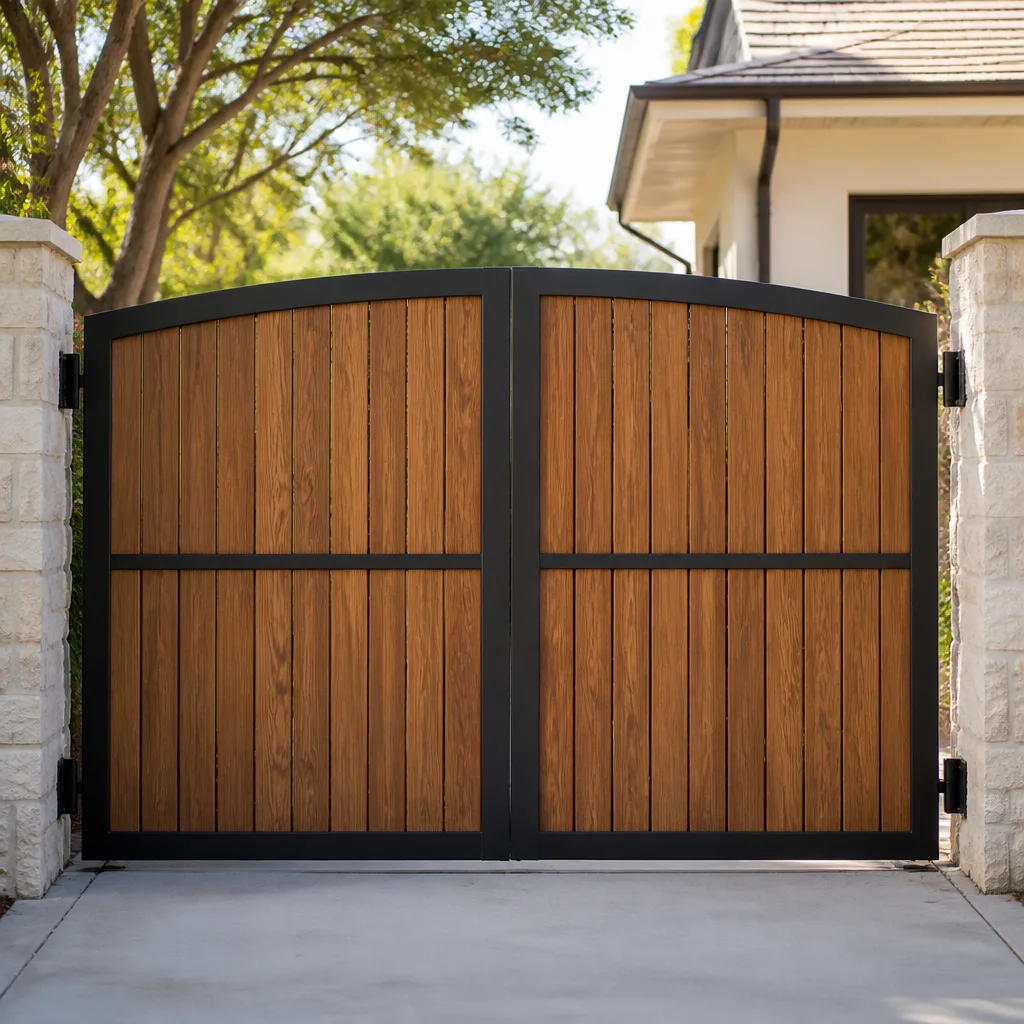 Wood & steel frame
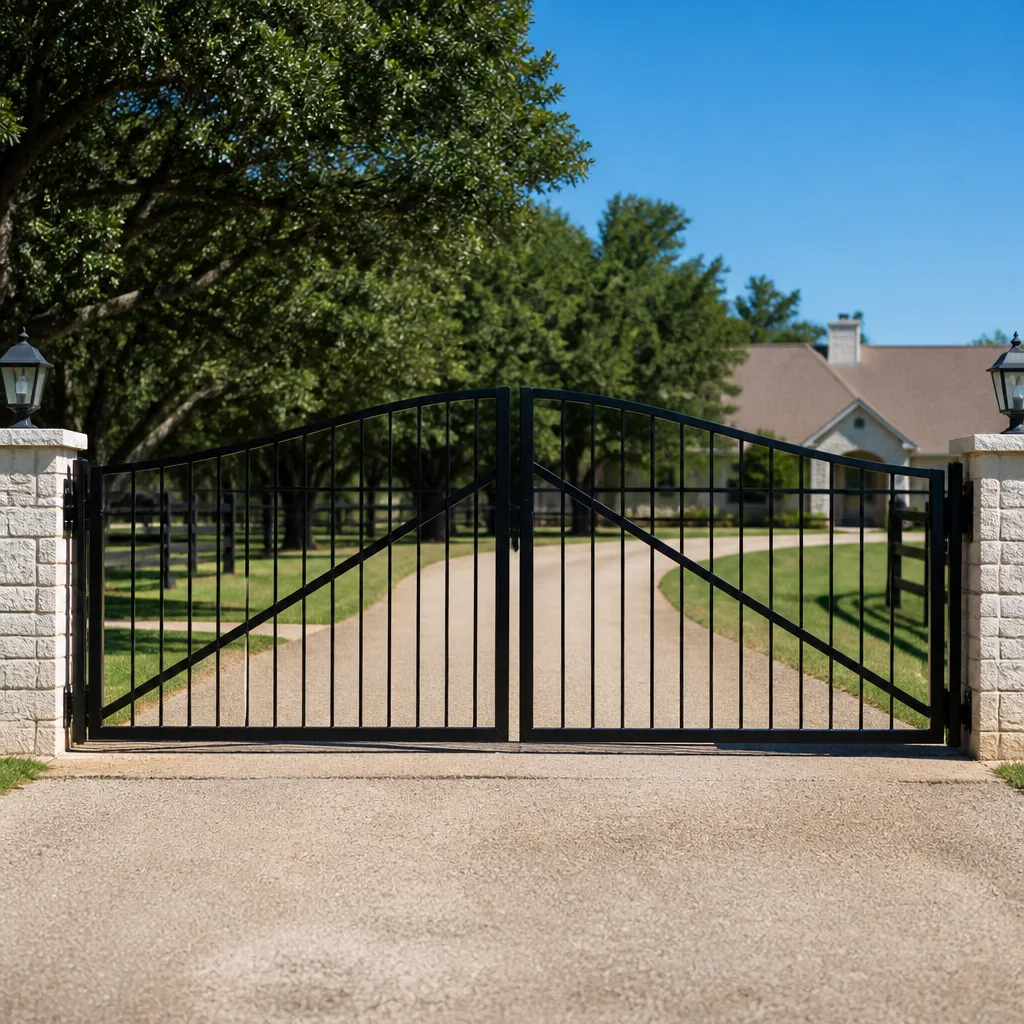 Farm & ranch
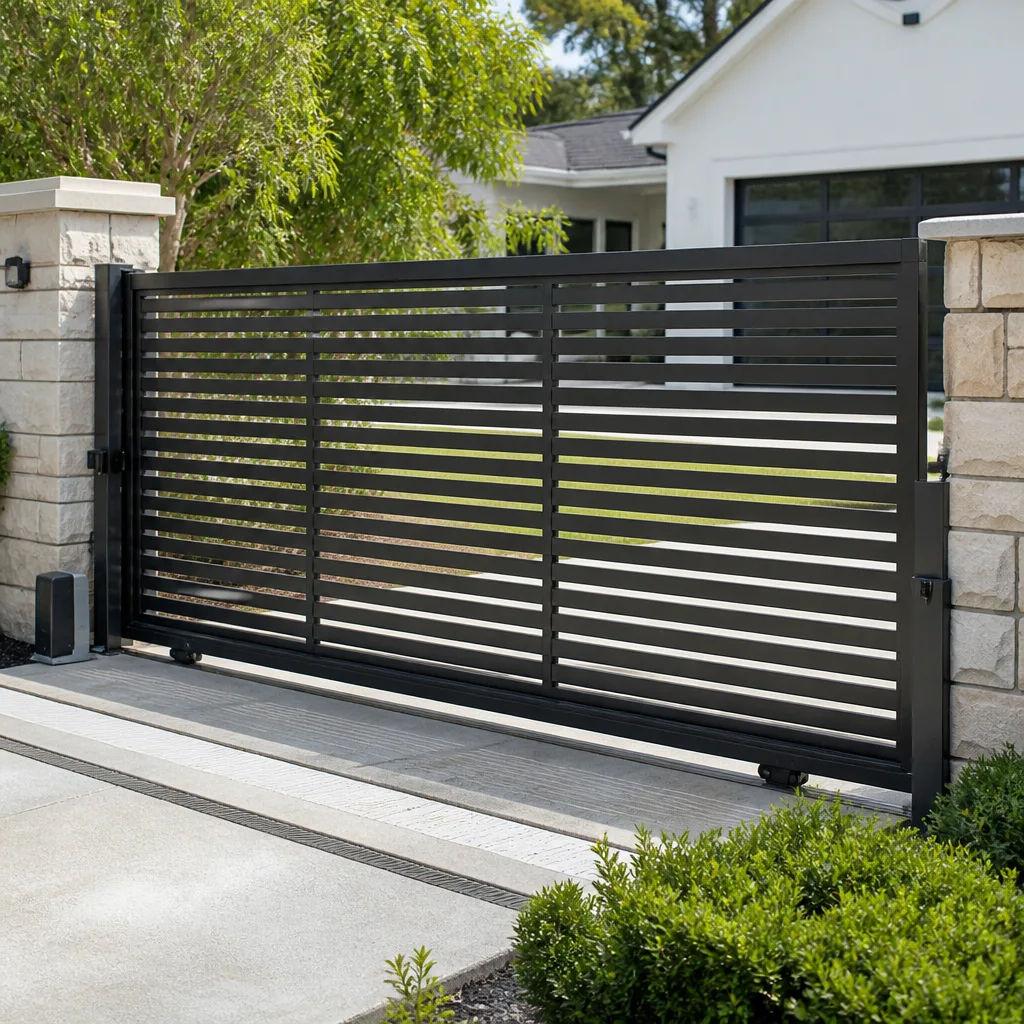 Sliding driveway gates
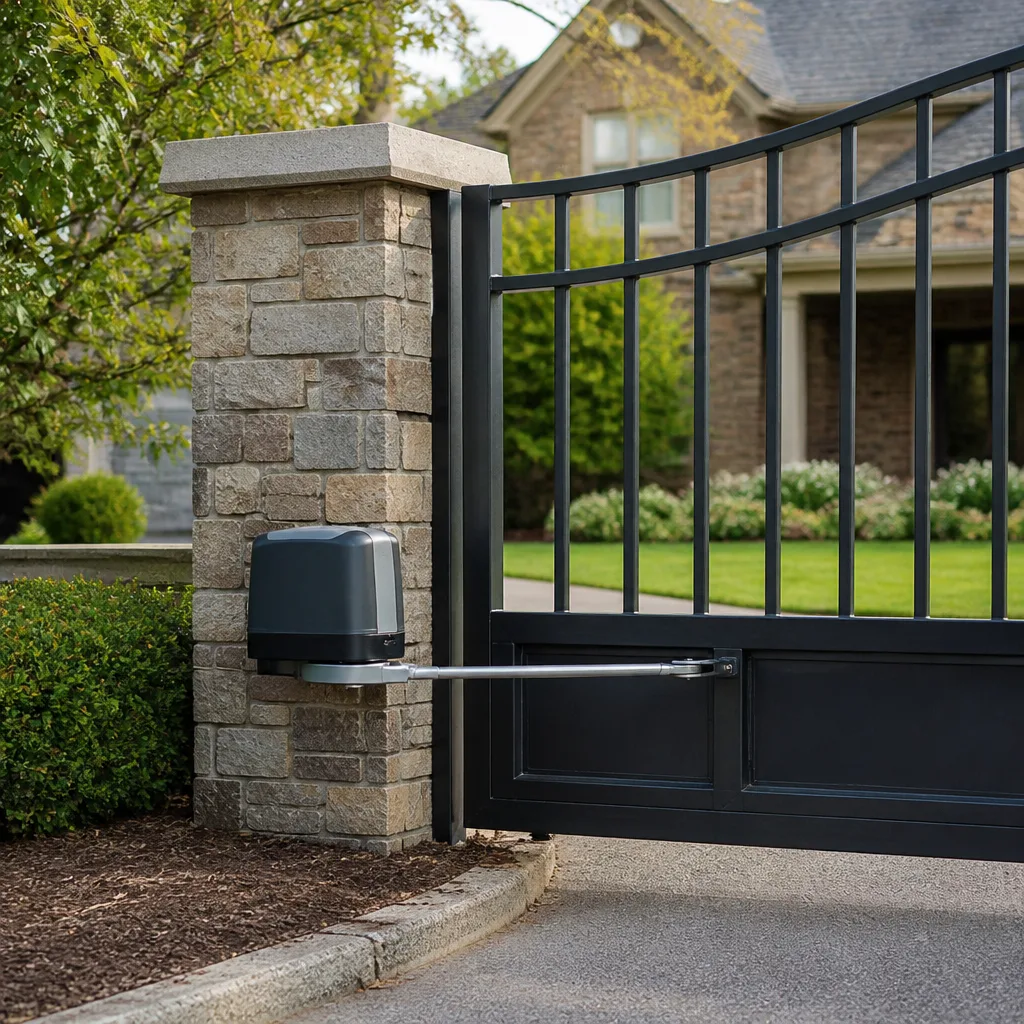 LiftMaster operators
Free on-site gate assessment - hinges, posts, and your LiftMaster or Nice gate operator checked before anything is quoted
The assessment is free and the quote is the invoice.
Get your free estimateHow Long Does Gate Installation Take? Timelines and What to Expect
A single-leaf swing gate on a level concrete pad can be operational in one day. A dual swing gate on an unlevel caliche lot with underground conduit run to a keypad? That’s a four-day job minimum, and any contractor who quotes otherwise is skipping steps. The gate itself is rarely the slow part. Site prep, concrete cure time, and automation wiring are what stretch the calendar. This guide breaks the timeline down honestly by gate type, drive surface, and automation complexity, so you know what a real schedule looks like in Winchester before anyone sets a post.
Quick Answer
Most driveway gate installations in Winchester take between one and four days of active work, with the average single swing gate on a prepared surface finished in a single day. Add time for concrete cure (24 to 48 hours before a gate is hung) and, on automated jobs, a half day or more for conduit, transformer, and access-device wiring. A realistic total from first dig to working gate runs two to five days depending on your site and how much automation you’re adding.
Styles & brands we work with
- Wrought iron
- Wood & steel frame
- Farm & ranch
- Sliding driveway gates
- LiftMaster operators
Table of Contents
- Timeline by Gate Type: Single, Dual, and Slide
- Why Concrete Cure Time Is Non-Negotiable
- Mechanical-Only vs. Full Automated Install
- Winchester Site Conditions That Affect Scheduling
- A Day-by-Day Look at a Typical Install
- What to Have Ready Before the Crew Arrives
- Common Mistakes to Avoid
- Frequently Asked Questions
Timeline by Gate Type: Single, Dual, and Slide
The gate style drives the schedule as much as anything else. A single swing gate is one leaf on one hinge post, so there’s less to hang and less to align. A dual swing gate doubles the hardware and needs both leaves to meet cleanly at center, which takes more adjustment time. A slide gate needs a track or cantilever system and a clear run of level ground, so the site work is heavier up front. Here’s how the day counts usually shake out in Winchester.
- Single swing gate, level concrete, no automation: one day. Dig posts, set them, hang the leaf, adjust the latch.
- Single swing gate, full automation: two days. Day one for posts and hanging, day two for the operator, wiring, and safety edges.
- Dual swing gate, automated: three to four days. Two leaves means two operators and synchronized travel, plus the center-meet adjustment that always takes a little care.
- Slide gate, automated: three to five days. Track or cantilever footing, the slab or pad, then the operator and access control.
These are working-day figures. They assume the site is accessible and the hardware is on hand. If your gate is a custom weld or a specialty finish, add fabrication lead time before day one even starts. When we quote a gate installation in Winchester, we spell out both the active workdays and any wait for materials, because those are different clocks and homeowners deserve to see both.
Why Concrete Cure Time Is Non-Negotiable
Concrete needs to reach enough strength to hold a gate before you hang weight on it. That’s typically 24 to 48 hours for the footings, and it can’t be rushed without consequences. A gate hung on green concrete will sag, the post will lean, and the latch will drift out of alignment within weeks. Then you’re paying to pull it back out and start over.
What happens when someone skips the cure? The post settles unevenly as the concrete finishes hardening under load. On a swing gate, that shows up as a leaf that drags or a gap that won’t close. On a slide gate, a shifting pad binds the track and burns out the operator motor early. We’ve pulled out gate posts set the “fast” way more times than we’d like to count, and the repair almost always costs more than the wait would have.
In Winchester’s summer heat, concrete sets faster on the surface but still needs its full cure under the surface. Crews working in July and August sometimes cover fresh footings or add a little water management to keep them from curing too hot and cracking. That care adds hours, not days, but it’s part of why a desert install isn’t the same as one back east.
Mechanical-Only vs. Full Automated Install
A mechanical install is the gate and its hardware only. You open it by hand. A full automated install adds an operator, a power run, and the access devices that tell the gate when to move. That difference is the single biggest swing in your timeline, and it helps to see the two side by side.
Mechanical-only install covers:
- Post digging, footing, and concrete
- Hanging the gate leaf or leaves
- Hinges, latch, and stop hardware
- Adjustment so the gate swings clean and closes square
Full automated install adds:
- Underground conduit run from the power source to the operator
- A low-voltage transformer and control wiring
- The operator itself, mounted and tuned to the gate’s weight and travel
- Safety edges and photo-eyes so the gate reverses rather than closes on a person or vehicle
- Access devices: keypad, remote receiver, or an entry system
The conduit run alone can eat half a day if the trench has to cross a driveway or navigate rocky ground. On a full automated job we’re trained on nine major opener brands, including Linear, Viking, and DoorKing, so the right operator and the right wiring plan are chosen up front rather than discovered mid-install. If you’re only automating an existing gate, that’s a different scope entirely, and our gate motor and opener service in Winchester handles that side of the work.
Winchester Site Conditions That Affect Scheduling
Winchester sits on ground that doesn’t always cooperate. Caliche, that cemented layer of soil common around the valley, is hard enough that digging a post hole can feel like chipping rock. A crew that shows up expecting soft dirt loses time fast. We plan for it: the right augers and bits, and a realistic dig estimate before we ever load up.
Three local conditions move the schedule more than any other:
- Caliche soil. Post holes that would take twenty minutes in loam can take an hour or more. It’s the most common reason a one-day job slips to two.
- Grade changes. Sloped driveways mean footings at different depths and a gate that has to be leveled against the slope rather than the horizon. More layout time, more adjustment.
- Desert heat and concrete set. In peak summer, footings need watching so they don’t cure too fast and crack. Winter mornings are the opposite: cool temps slow the initial set, so we build that into the day.
None of these are dealbreakers. They’re the reasons a Winchester install is scheduled with local ground in mind rather than a generic template. If you’ve had a bid that sounded too quick for a caliche lot, that’s a red flag worth asking about.
A Day-by-Day Look at a Typical Install
Here’s how a two-day automated single swing install usually runs on a prepared Winchester driveway. Your job may compress or stretch depending on the gate type and site, but this gives you a realistic shape to plan around.
- Morning, day one: layout and dig. We mark post locations, check the grade, and dig footings. Caliche slows this step and it’s where extra time usually shows up.
- Midday, day one: set posts and pour concrete. Posts go in plumb, footings get poured, and then the concrete starts its cure.
- Afternoon, day one: prep for automation. While the concrete sets, we run conduit, set the transformer location, and stage the operator and access wiring.
- Morning, day two: hang the gate. With the footings cured, the leaf goes on and gets adjusted for a clean swing and a square close.
- Afternoon, day two: mount and tune the operator. The operator is mounted, the travel and force limits are set, and the safety edges and photo-eyes are wired and tested.
- Close-out: test and hand off. We cycle the gate, test the keypad and remotes, and walk you through operation before we leave.
The cure window is the reason this is two days and not one. Everything else is scheduling around it. When this is done right, a gate that started as a hole in the ground closes smoothly and quietly, and it stays that way.
What to Have Ready Before the Crew Arrives
Most day-of delays come from things a homeowner could have handled before the truck pulled in. A little prep on your end keeps the schedule honest. Here’s the short list we give every Winchester customer.
- Clear the work area. Move vehicles, trash bins, and anything parked where the gate, posts, or trench will go.
- Know where the utilities run. Have any records of buried lines, sprinkler systems, or septic on hand. Call 811 if you’re unsure what’s underground.
- Decide on the access devices. Pick your keypad, remotes, and entry system before install day so the wiring plan is final. Changing it mid-job adds a return trip.
- Confirm power access. Know where the operator will draw power and make sure that circuit is reachable or that a plan is set for getting power there.
- Settle the price in writing first. Any reputable crew quotes and agrees on the price before a single bolt is turned. You should never see a surprise on the bill.
Get these squared away and the install moves at the pace the schedule promised. It’s the difference between a smooth two days and a job that keeps stalling.
Common Mistakes to Avoid
- Believing a one-day quote on a caliche lot. Digging through Winchester’s hardpan takes real time. A bid that ignores it is either guessing or planning to cut corners on the footings.
- Rushing the concrete cure. Hanging a gate on green concrete leads to sagging posts and a latch that won’t line up. The 24 to 48 hour wait protects the whole job.
- Skipping a proper conduit run. Laying operator wire on the surface or in a shallow trench is asking for trouble. Buried conduit protects the wire from heat, water, and a stray shovel.
- Choosing an operator before checking the gate. The motor has to match the gate’s weight and travel. Picking the brand first and the gate second leads to an operator that strains or fails early.
- Leaving out safety edges to save a few dollars. An automated gate without reversing safety edges is a hazard. On a dual swing gate especially, the safety devices aren’t optional.
- Paying for a finish the schedule can’t support. Custom powder coat or a hand-forged look adds fabrication lead time. Build that into your expectations so day one doesn’t arrive before the gate does.
- Hiring on price alone. The cheapest bid often skips the cure, the conduit, or the safety edges. Those shortcuts show up as repairs a season later.
See the difference
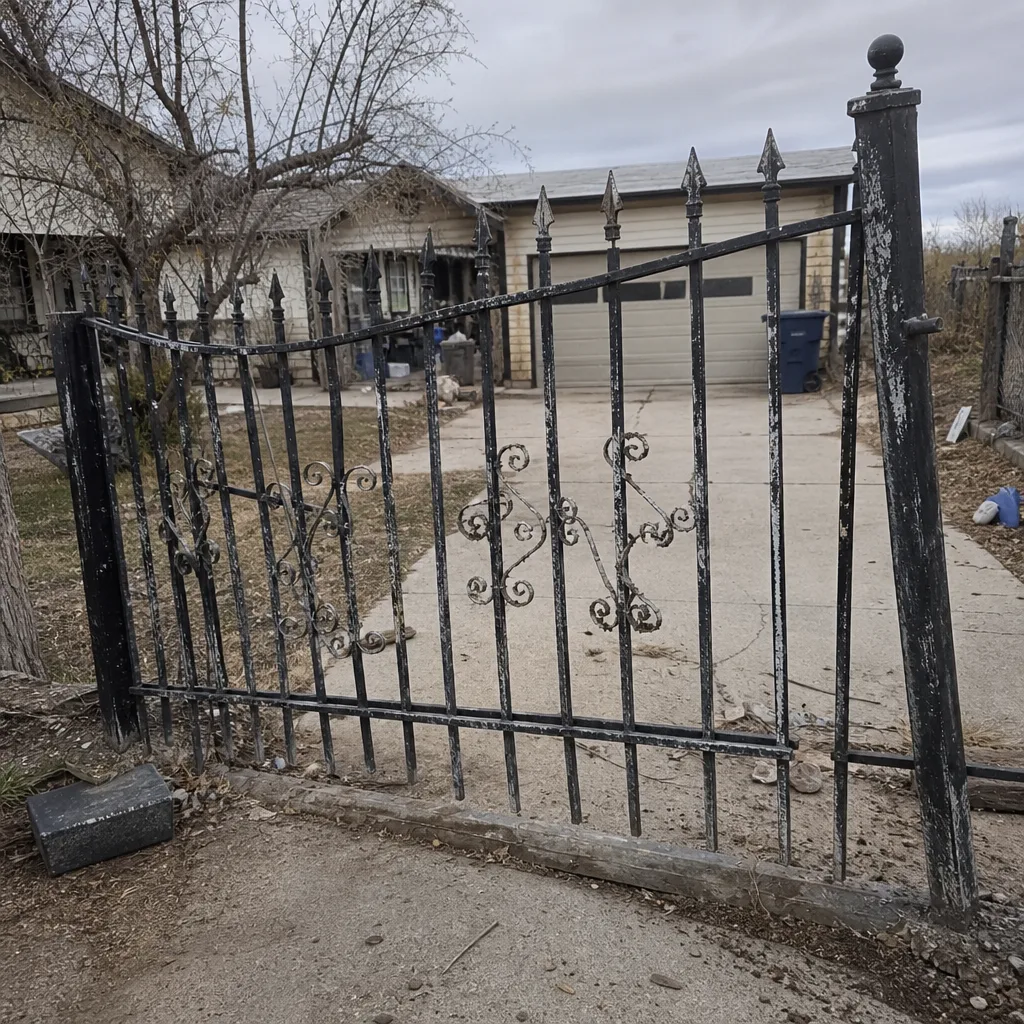 Before
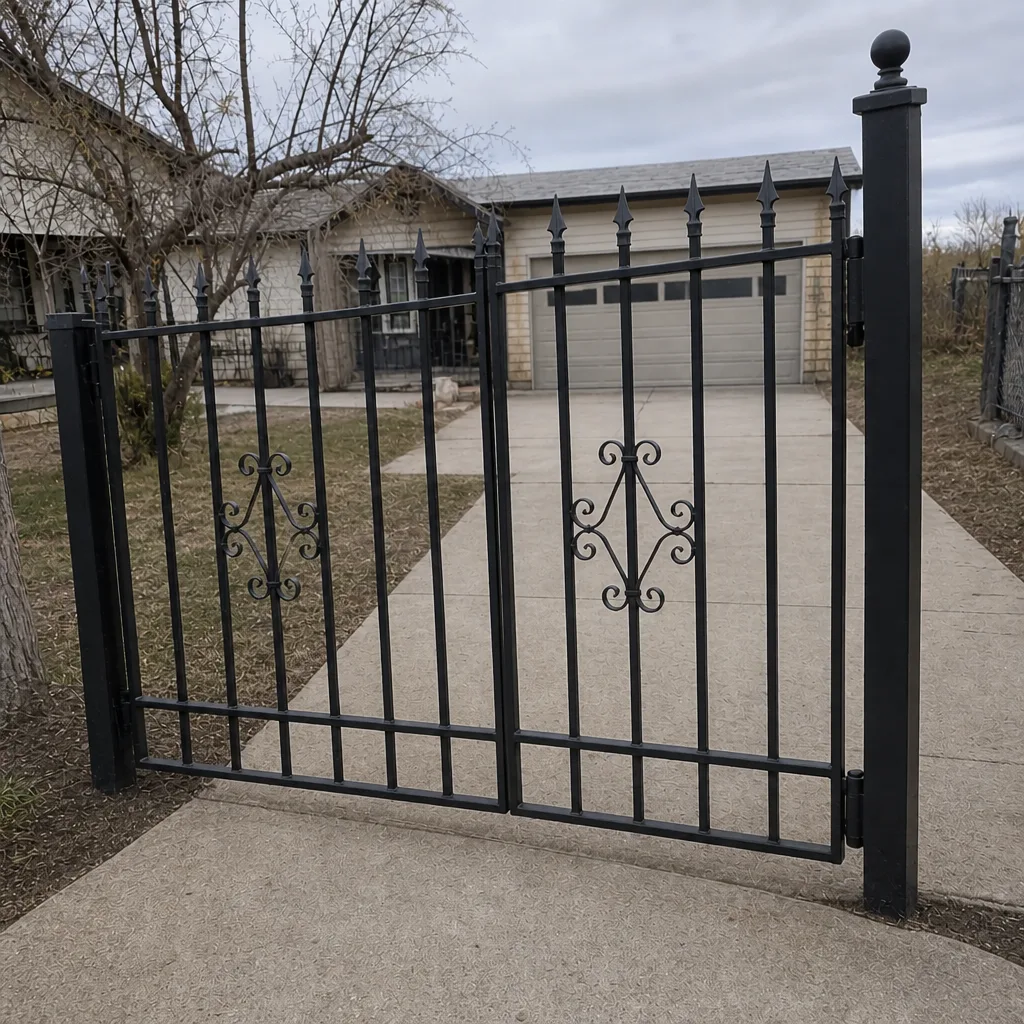 After
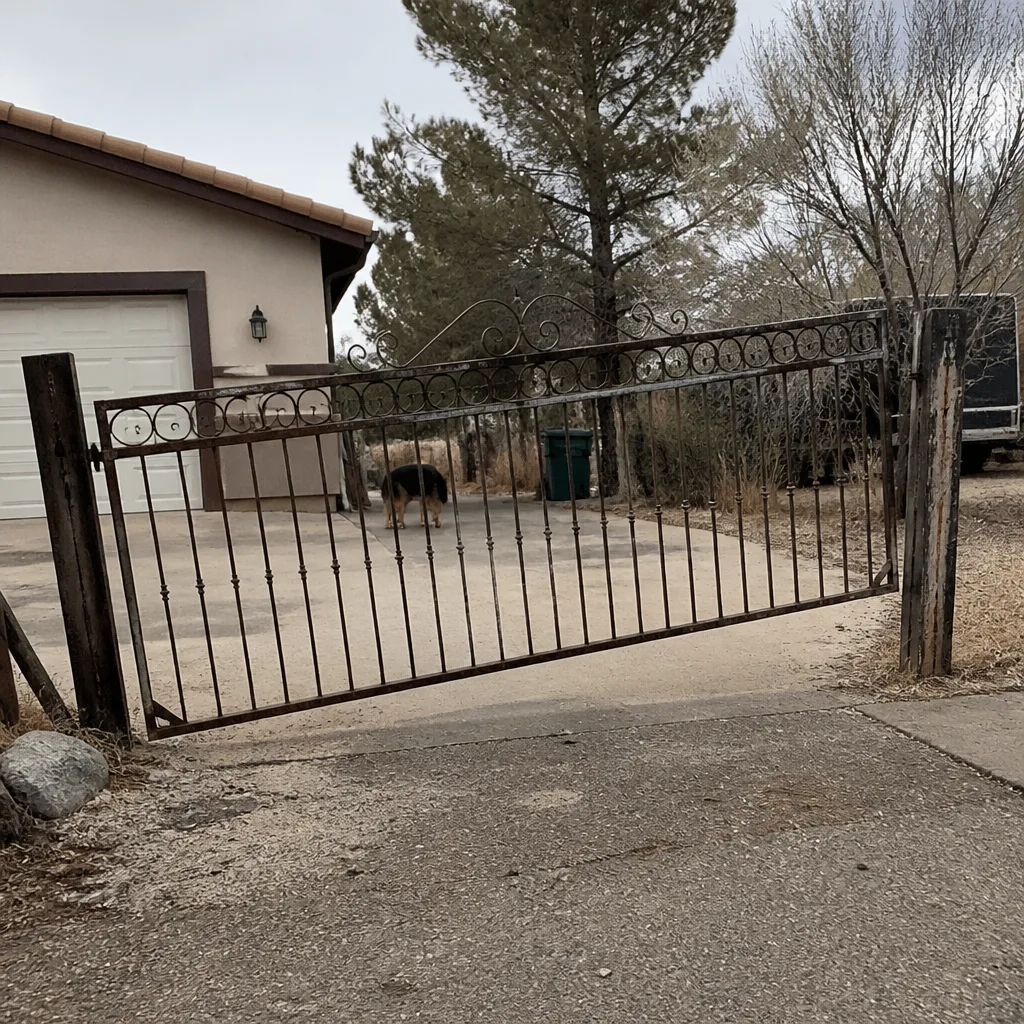 Before
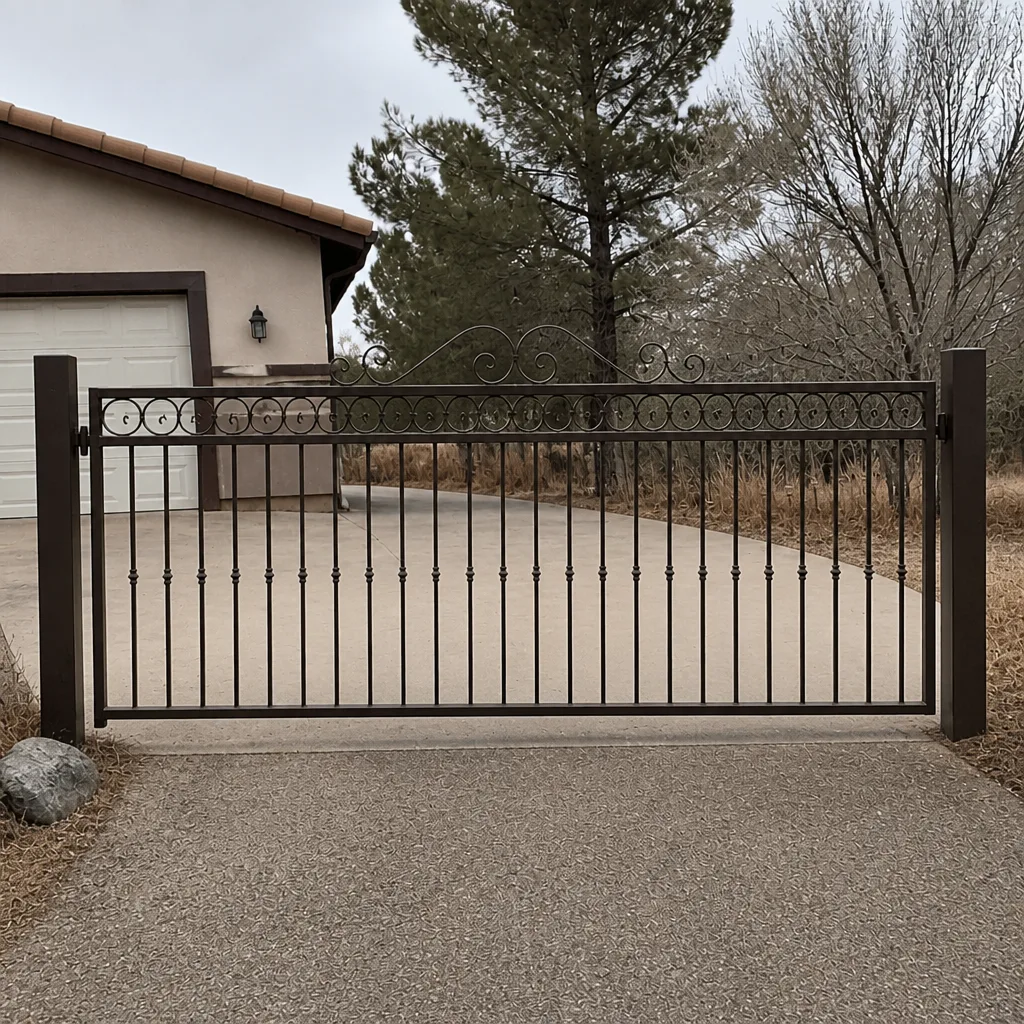 After
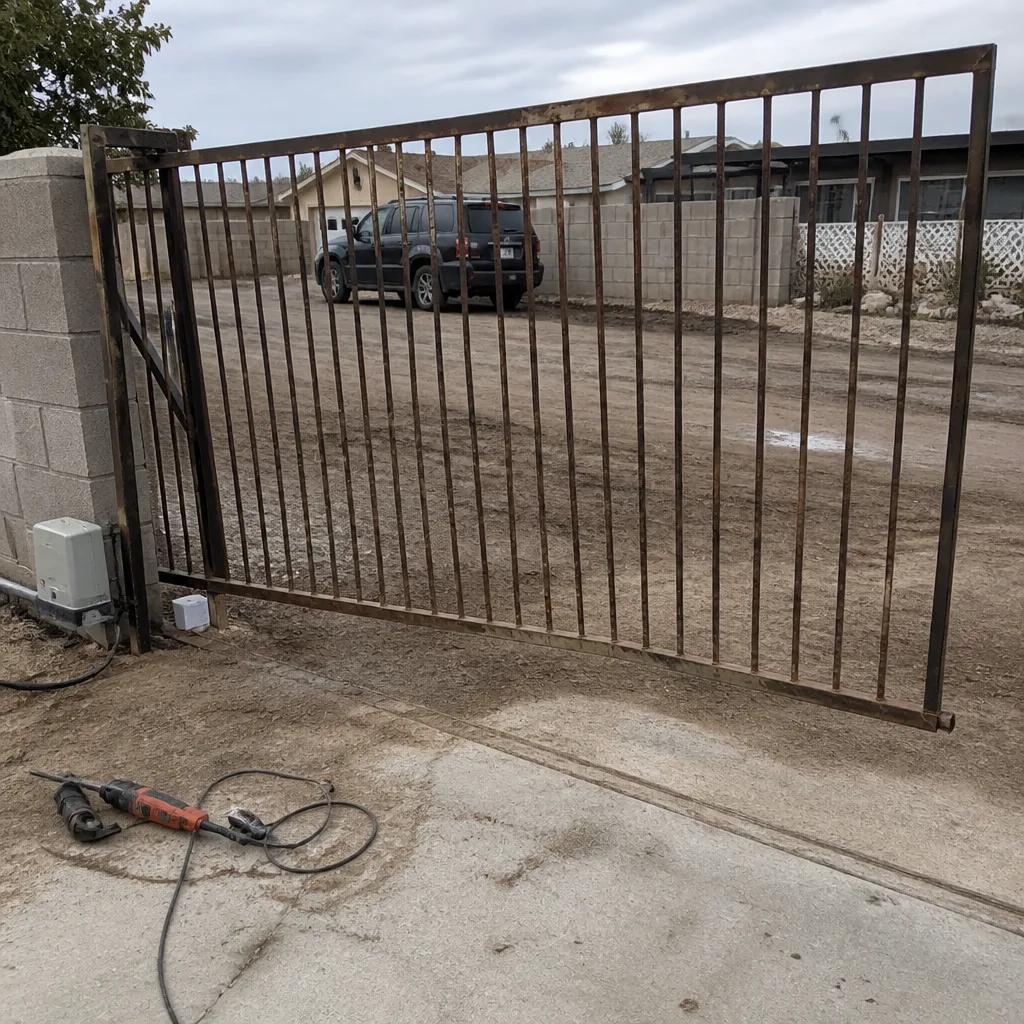 Before
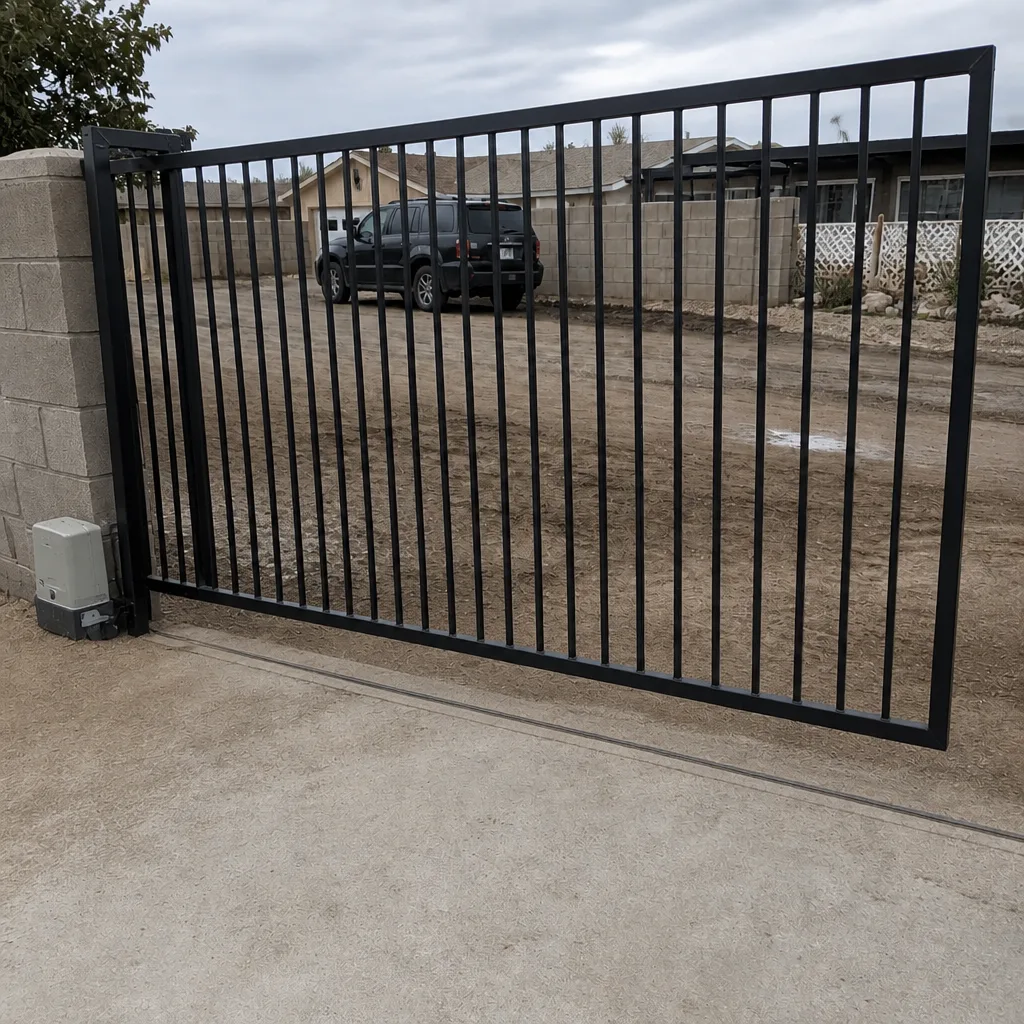 After
When to Call a Professional
Some gate work is a genuine safety matter and belongs with a trained technician. High-tension springs, heavy welded steel, buried conduit tied to line voltage, and any automation wiring are all places where a mistake can injure someone or burn out expensive hardware. If your gate is heavy enough to need a truck to move, or your plan involves an operator, safety edges, or an entry system, that’s a professional job.
Ironworks Gate Co. Winchester offers free estimates in Winchester. We’ll walk your driveway, look at the ground and the grade, and give you a written price and a realistic schedule before any work begins. If you’ve got a written estimate from someone else and want a second look, we offer a free second opinion on that too. Call (866) 984-8340 and a live person will answer, day or night.
Frequently Asked Questions
Most Winchester installations take one to five working days depending on the gate type, drive surface, and automation, with a single swing gate on a prepared pad finished in about a day. Add 24 to 48 hours for concrete cure before the gate is hung, and budget extra time for conduit work on automated jobs. Call (866) 984-8340 for an exact timeline based on your driveway.
Yes, a mechanical single swing gate on a level, already-cured concrete pad can be installed and working in a single day. A caliche lot or a full automation package will extend that to two days or more. The one-day figure only holds when the site prep is done and the gate is on hand.
Concrete needs 24 to 48 hours to reach enough strength to hold a gate’s weight without the posts settling. Hang a heavy gate too soon and the post leans, the leaf sags, and the latch drifts out of line within weeks. Skipping the cure usually costs more than waiting for it.
Automation typically adds half a day to a full day or more, mostly for the conduit run, transformer, operator mounting, and safety-edge wiring. A simple operator on an existing gate is quicker than a full install with a buried power run and an access keypad. We’re trained on nine major brands, including Linear, Viking, and DoorKing, so the right operator is chosen on the first visit.
Yes. A full automated install includes the underground conduit run, the low-voltage transformer, operator wiring, and safety edges and photo-eyes, all wired and tested before we leave. We don’t leave the electrical side for someone else to finish.
Clear the work area, have records of any buried lines, pick your keypad and access devices in advance, and confirm where the operator will draw power. Settle the price in writing before work begins. Those five things prevent most day-of delays on a Winchester install.
The Bottom Line
The honest answer to how long gate installation takes is that the gate goes in fast and the groundwork takes the time. Plan on one day for a simple swing gate on a prepared pad, two to four days for automated or dual-leaf jobs, and always allow for 24 to 48 hours of concrete cure before anything is hung. Winchester’s caliche and grade changes can add to the schedule, and a contractor who respects that gives you a truer timeline. Get the price agreed in writing before the first bolt turns, and you’ll know exactly what you’re getting and when.
Every job we complete is backed by our written 90-Day Done Right Promise, and our technicians bring up to 13 years of experience to the work. If you’re ready to plan your install, see how we approach gate repair in Winchester and the full scope of our work from our Ironworks Gate Co. Winchester home. For a free estimate, call Ironworks Gate Co. Winchester at (866) 984-8340 today.
Written by the team at Ironworks Gate Co. Winchester.