
Last updated November 18, 2026
 Wrought iron
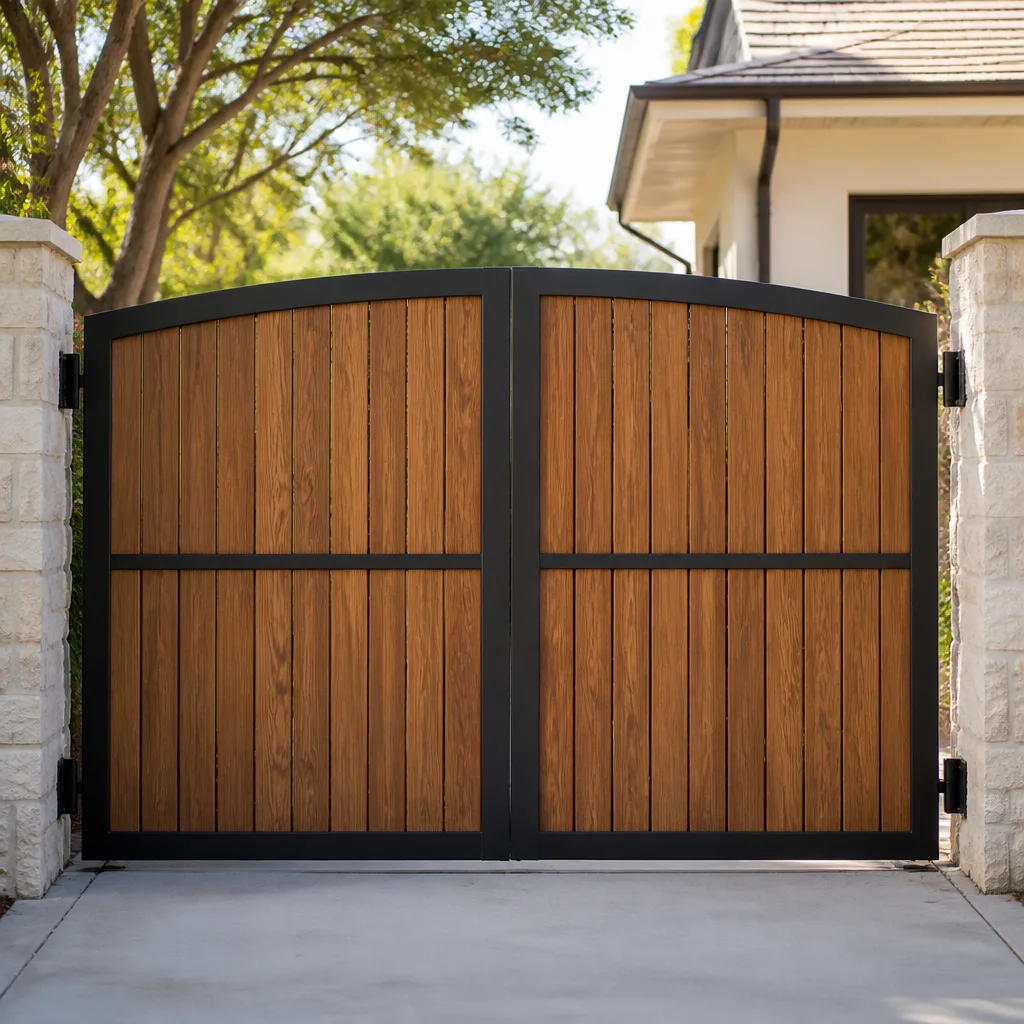 Wood & steel frame
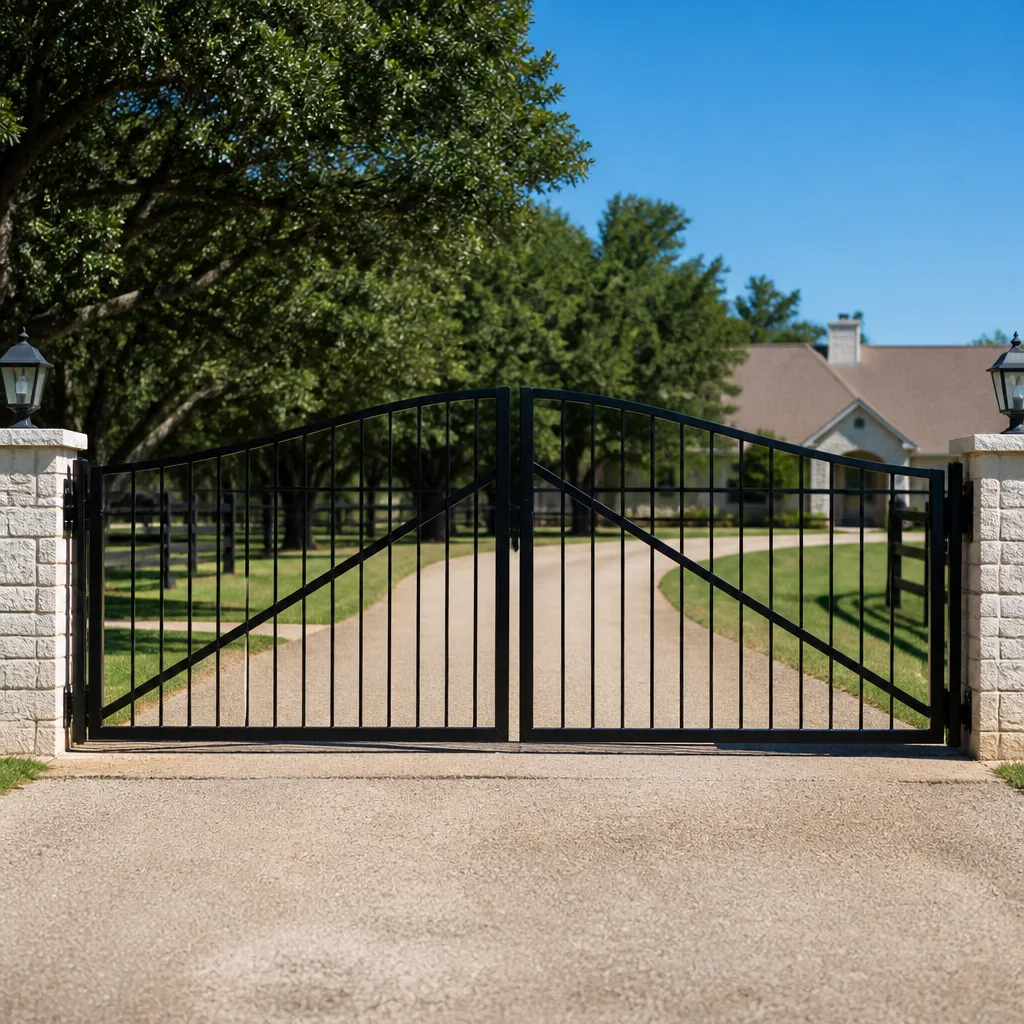 Farm & ranch
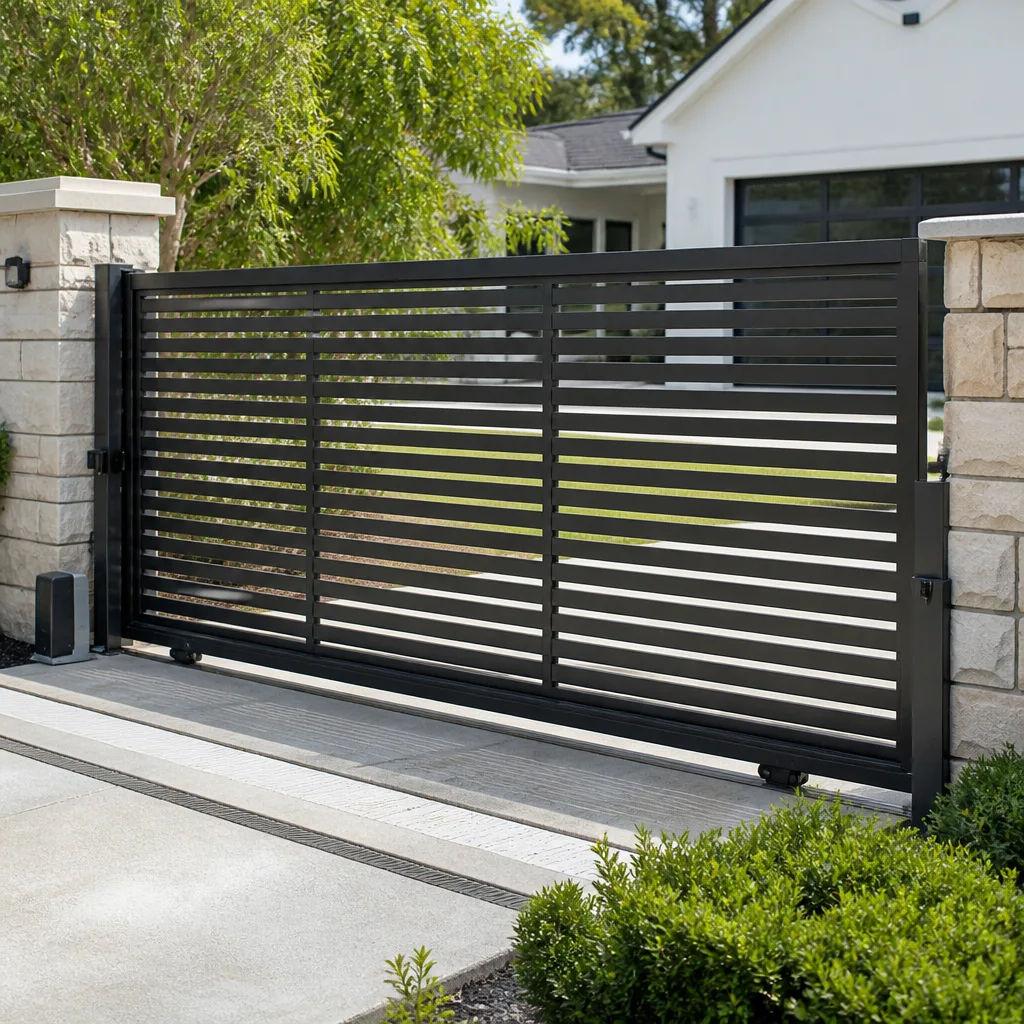 Sliding driveway gates
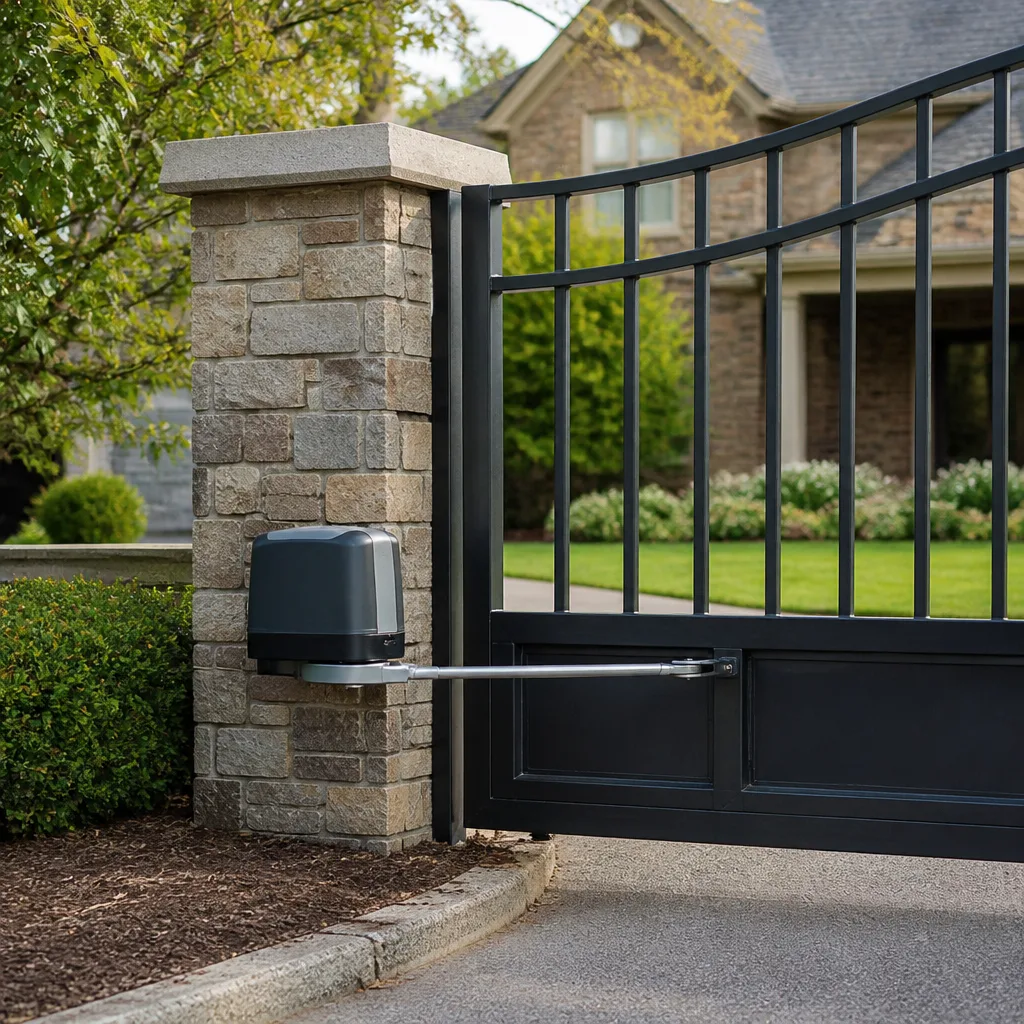 LiftMaster operators
Free on-site gate assessment - hinges, posts, and your LiftMaster or Nice gate operator checked before anything is quoted
The assessment is free and the quote is the invoice.
Get your free estimateGate Repair Warning Signs Every Homeowner Should Know
The gate that “just stopped working overnight” almost never did. In our experience across Winchester, a failing gate gives four to eight weeks of warning before it quits, and most of those warnings get rationalized away: a little slower closing, a grind that only shows up on cool mornings, a remote that needs a second press. Read those signs early and you’re looking at a $200 repair. Ignore them and the same gate becomes an $1,800 emergency call once a weld lets go or a motor burns out. This guide covers the seven physical signs of structural failure, the four behavioral signs of opener failure, and how to tell them apart from ordinary aging. It’s written for Winchester homeowners who plan to stay put and want the job done once.
Quick Answer
The most reliable gate repair warning signs are sagging or dragging leaves, grinding under load, hinge deformation, loose post movement, uneven gaps at closure, error code lights on the opener, inconsistent cycle completion, and reduced remote range. Surface rust and faded paint are cosmetic. Rust that migrates onto the frame, cracked welds, and a gate that no longer lines up are structural, and those need professional attention within the week. In Winchester’s desert heat, these signs appear faster than in milder climates because heat expansion stresses every tolerance in the system at once.
Styles & brands we work with
- Wrought iron
- Wood & steel frame
- Farm & ranch
- Sliding driveway gates
- LiftMaster operators
Table of Contents
- The Seven Physical Warning Signs of Structural Failure
- The Four Behavioral Warning Signs of Opener Failure
- Cosmetic Aging vs. Structural Aging: Telling Them Apart Without Tools
- Same-Week Service vs. Schedule-It Signs
- Why Warning Signs Appear Faster in Winchester Summers
- What You Should Never Check Yourself
- Common Mistakes to Avoid
- Frequently Asked Questions
The Seven Physical Warning Signs of Structural Failure
A gate hangs from hinges, rides on a track or swings free, and meets a post at closure. Every one of those contact points tells you something about the metal before the metal actually breaks. In Winchester, we’ve seen gates fail at the weld long before the homeowner noticed anything wrong with the hinge, which is why the physical signs matter so much: they’re available to you weeks ahead of time, if you know where to look.
Walk out and check for these seven, in order:
- Sag. Stand back from the gate and sight along the top rail. If the far edge has dropped a quarter inch or more compared to the near edge, the hinge or post footing has shifted. Sag accelerates – it doesn’t level off on its own.
- Drag. Listen for a scrape as the gate closes. A swing gate that drags on the ground is usually a hinge problem or a settling post. A sliding gate that drags is usually a track or roller issue. Both put stress on the motor, which is where the real money goes.
- Visible rust migration. Rust on the gate is normal aging. Rust appearing in a line, spreading outward from a weld or a hinge plate, means moisture has gotten inside the tube. That’s structural.
- Loose post movement. Push the latch post firmly with one hand. It should not move. Any rock, sway, or give means the footing has loosened or the concrete has cracked, and that will eventually take the gate with it.
- Uneven gap at closure. The gap between the gate and the latch post should be even from top to bottom. A gap that’s wider at the top than the bottom (or vice versa) means the gate is moving out of plumb, which stresses the weld every time it closes.
- Grinding under load. A steady grind as the gate moves, not just at the start or end of travel, points to a bearing, roller, or gear inside the opener or the gate carriage. Grinding is metal on metal, and metal on metal only gets worse.
- Hinge deformation. Look at the hinge plates. A hinge that’s been bent, stretched, or has visible cracks around the bolt holes is on its way to failing. Lifting the far edge of the gate slightly and feeling play at the hinge confirms it.
If you count two or more of these at once, that’s a service call, not a someday item. Our team handles gate repair in Winchester most days of the week, and the earliest-stage sag or drag jobs are among the fastest to put right.
The Four Behavioral Warning Signs of Opener Failure
An opener gives you four behavioral signals before it quits, and each one narrows down the cause. Handled early, all four are routine. Handled late, three of them end in a motor replacement or a control board, and those are the calls that cost the most.
- Inconsistent cycle completion. The gate opens fine most days, then stops halfway or reverses for no reason. On a LiftMaster or FAAC operator, this usually means the limit switch has drifted or the safety reverse is tripping on a misaligned sensor. Left alone, the operator starts fighting its own safety system and eventually loses.
- Error code lights. Every modern opener has a diagnostic light on the body of the motor, usually blinking a pattern. Count the blinks and note the color. That pattern points a trained technician straight to the fault: a battery, a limit, a sensor, a control board. Noting the pattern before the light stops blinking saves diagnostic time and money on the bill.
- Unusual operating sounds. A motor that hums, clicks, squeals, or thunks is telling you where the wear is. Humming without motion means a bound mechanism or a failed capacitor. A squeal means a dry bearing. A thunk at the start or end of the cycle means a gear or a limit has worn.
- Remote range reduction. If you used to open the gate from the end of the driveway and now you have to be five feet from it, the receiver or the remote antenna has degraded. On older Elite and Mighty Mule openers, this is often a failing receiver board or a battery in the remote. On newer systems, it can be interference from a new appliance or a wireless access control point.
If you’re seeing any of these and want a straight answer before the gate fails entirely, our gate motor and opener service in Winchester team has the diagnostic tools for every major brand on the driveway – LiftMaster, FAAC, BFT, Linear, Viking, Ghost Controls, DoorKing, Elite, and Mighty Mule – and we’ll tell you what’s failing and what it costs before any work starts.
Cosmetic Aging vs. Structural Aging: Telling Them Apart Without Tools
Most of what you see on an older gate is just age. A little surface rust, faded paint, a few dings in the corners – none of that means the gate is failing. But knowing which marks you can ignore and which ones mean a weld is about to let go is the whole point of learning the signs. You don’t need tools for any of it. You need your eyes and a flashlight.
Cosmetic signs (schedule these at your convenience)
- Surface rust that wipes away or comes off with a wire brush, especially on flat panels
- Paint chalking, fading, or peeling on the visible face
- Small dings or dents that don’t reach a weld
- Scratches and scuffs at the closure point
- Dust or dirt buildup in the corners of the frame
Structural signs (book service this week)
- Rust forming in a line or spreading outward from a weld or a hinge plate
- A visible crack in the metal, no matter how small
- Weld beads that have separated from the surrounding metal
- Metal fatigue: short hairline cracks near bolt holes or the corners of the frame
- A joint that used to be straight and is now curved or “kinked”
- Any deformation of a load-bearing part of the frame
The one trick worth knowing: use your thumbnail, not your fingernail, and press firmly on a rust spot. If the metal feels thin, crumbly, or gives at all, it’s structural. If it feels like painted steel with a surface stain, it’s cosmetic. That one test catches almost every borderline case on gates here in Winchester, where dry air preserves the surface of the metal while hidden moisture does its work inside the tubes.
Same-Week Service vs. Schedule-It Signs
The single biggest cost driver in gate repair isn’t the parts – it’s the delay. A homeowner who calls on the first grind pays for a bearing. A homeowner who calls after the motor quits pays for a motor. The list below is how we’d categorize it ourselves if it were our gate.
Call for same-week service if you see:
- Two or more of the seven physical signs at the same time
- Any grinding, squealing, or metal-on-metal sound while the gate moves
- The gate dragging on the ground or reversing unexpectedly mid-travel
- Loose latch post movement, or a gap at closure that’s wider at the top
- Any visible crack or weld separation
- An opener that stops partway through the cycle more than once a week
You can schedule on your own timeline if you see:
- One faded section of paint or surface rust without migration
- A slow or noisy hinge that still moves smoothly
- A remote that needs a fresh battery and then works reliably
- A cosmetic chip or ding that doesn’t reach a weld
- An annual tune-up coming due (the $89 seasonal tune-up exists precisely for this)
If you’re not sure which list a sign belongs on, call us and describe what you’re seeing. Live phone support answers 24 hours a day, seven days a week, and a description of the sound and the symptom is usually enough to tell you whether the gate can wait until Tuesday or needs to be looked at today. You can also book a gate installation in Winchester consult if the answer turns out to be replacement rather than repair – some gates, especially older ones with repeated weld failures, cost less to replace over five years than to keep repairing.
Why Warning Signs Appear Faster in Winchester Summers
Winchester is a desert climate, and desert climates accelerate gate failure in a way homeowners moving from milder places never expect. Steel expands as it heats. An eight-foot gate on a 100-degree July afternoon can measure nearly an eighth of an inch longer than it did at dawn, and every hinge, weld, and stop in the system has to accommodate that movement. Most of them do for a while. Then one doesn’t, and you get a grind or a drag that wasn’t there in April.
The pattern is predictable. Between late May and early September, we see a spike in:
- Hinge and weld failures, because the gate is expanding into a frame that was hung at a cooler temperature
- Opener overload trips, because the motor is fighting the added friction of a slightly bigger gate in a slightly tighter gap
- Post settling, because our summer soil dries, shrinks, and contracts, leaving a footing with more room to move than it had in winter
- Control board failures, because the electronics are running hot in their housing with no relief
We’ve also learned the local timing. If a gate was hung or repaired in October, we know to look at it again in June, because that’s when the first real heat wave pushes it past the tolerance it was set at. If a gate was hung in June, the winter contraction is usually gentler, and the seasonal warning signs come later. That’s a Winchester pattern, not a general rule, and it’s one reason we ask every caller when the gate was last serviced.
The upside: summer is actually a good time to catch a failing gate, because the signs show themselves. A gate that’s fine in March and grinding in July is telling you it needs attention before next summer, when the same problem will be worse. Learn more about the company on the Ironworks Gate Co. Winchester home page.
What You Should Never Check Yourself
Some of this is learnable. Some of it isn’t, and the difference matters. Anything behind a cover on the opener, anything involving the 120-volt power run to an operator, anything on a gas or electric strike, and any work on a high-tension spring on a swing gate are all jobs for a trained technician. The metal is under load, the electronics carry mains voltage, and the mechanics aren’t forgiving of a slip.
What’s safe to check: a visual walk-around, listening for sounds, watching the cycle for inconsistencies, and trying the remote from various distances. What’s not: opening the operator cover, adjusting the safety reverse sensors with a tool, loosening a hinge to “see what’s wrong,” or putting a hand near a swinging gate while it moves. In our experience, more damage happens in five minutes of unskilled tinkering than in a year of the original fault.
The dangerous components on a gate are the same ones that cause serious injury in the trade, and there’s no version of “just a quick look” that shortens that list. If the gate is spring-assisted, if it has an automatic closer, or if the operator is wired to mains, that’s a call to a professional. What to check is the eye test. What to fix is ours.
Common Mistakes to Avoid
- Treating the first grind as background noise. A grind that only happens in the morning is not “the gate warming up.” It’s the metal telling you where the wear is, and it never resolves on its own. Catch it early and you’re paying for a bearing or a hinge, not a motor or a whole gate.
- Assuming a slow gate is a battery problem. On a sliding gate with an opener, slowness usually means friction in the mechanism, not a weak battery. Replacing the remote battery when the gate is bound will make the light work better and the gate still won’t close.
- Painting over migrating rust. Paint is fine on surface rust. On rust that’s spreading in a line from a weld, it traps moisture inside the tube, and the failure happens faster underneath the fresh coat. In Winchester’s dry air, rust migration is easy to miss because the outside looks fine – so look for the line, not the patch.
- Ignoring the loose latch post. A post that wiggles a half-inch is a post that will move a full inch by fall. It’s a footing job, and it gets more expensive the longer it goes, because the gate keeps closing against something that isn’t steady.
- Waiting until the gate fails to book a service call. A repair on a warning sign is an hour of labor and a part. A repair on a failure is a diagnosis, a part, and whatever the failing mechanism took with it. The math doesn’t favor waiting.
- Skipping the seasonal tune-up. The $89 seasonal tune-up exists to catch exactly the warning signs in this guide before they become repairs. Once a year, in late spring before the first real heat wave, is the right time in Winchester.
- Calling the first name on a search results page. Gate openers are specific systems, and the brand matters. A generalist handyman may not have the parts or the diagnostic tools for a DoorKing or a Ghost Controls operator. Ask before you book whether they work on your brand.
See the difference
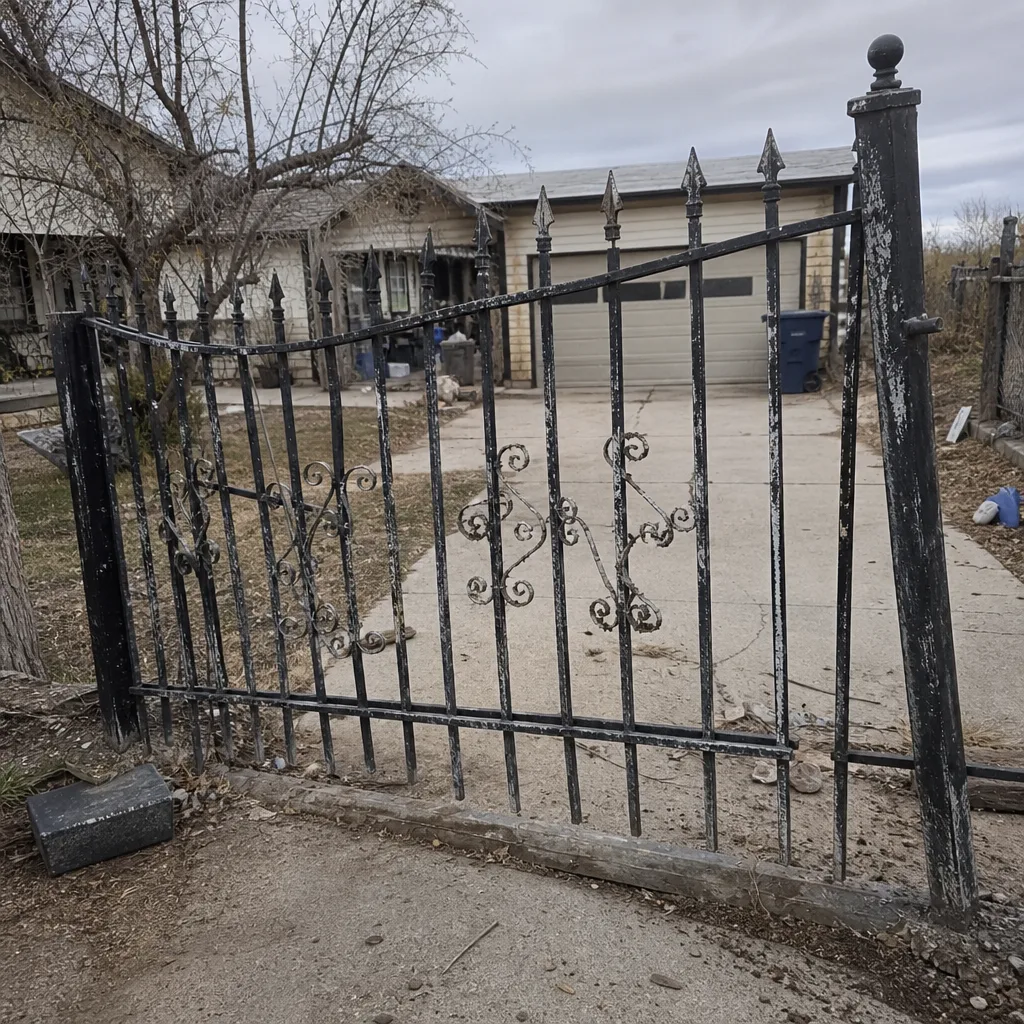 Before
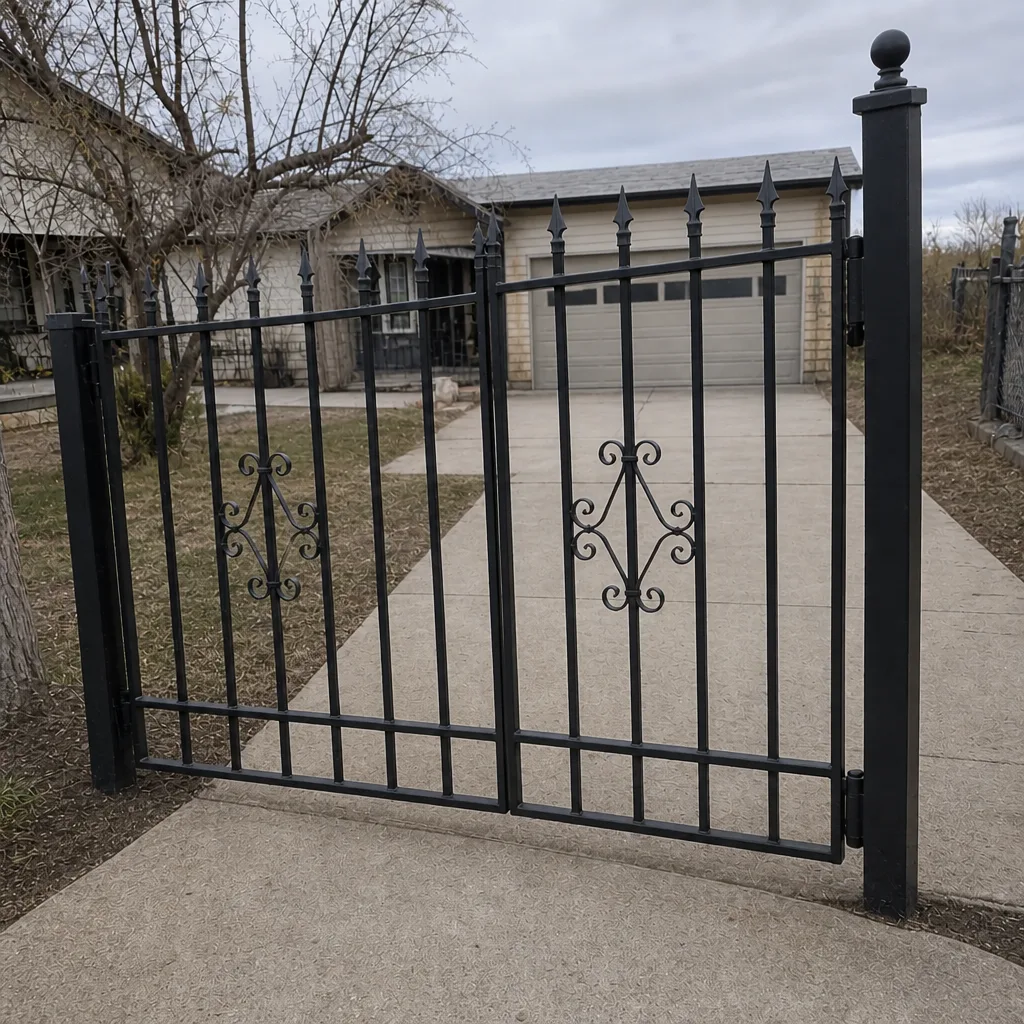 After
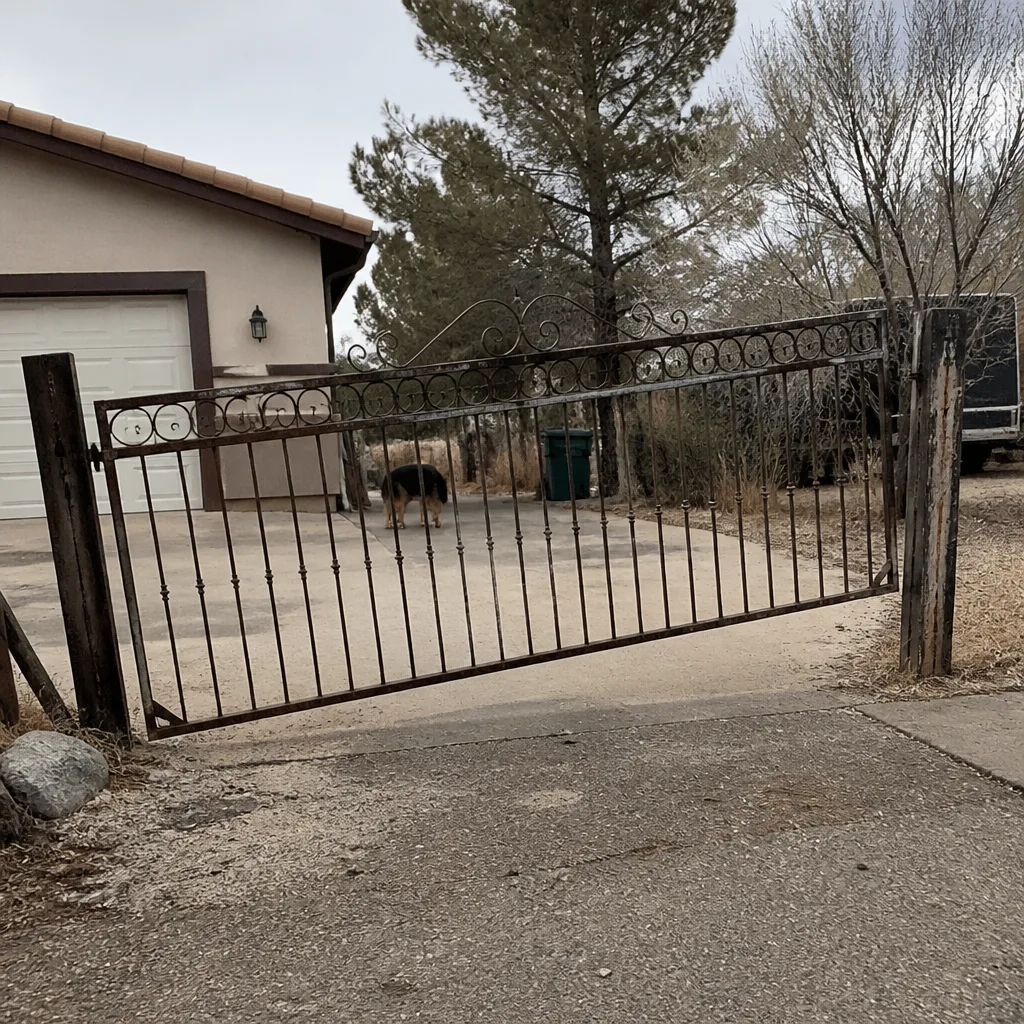 Before
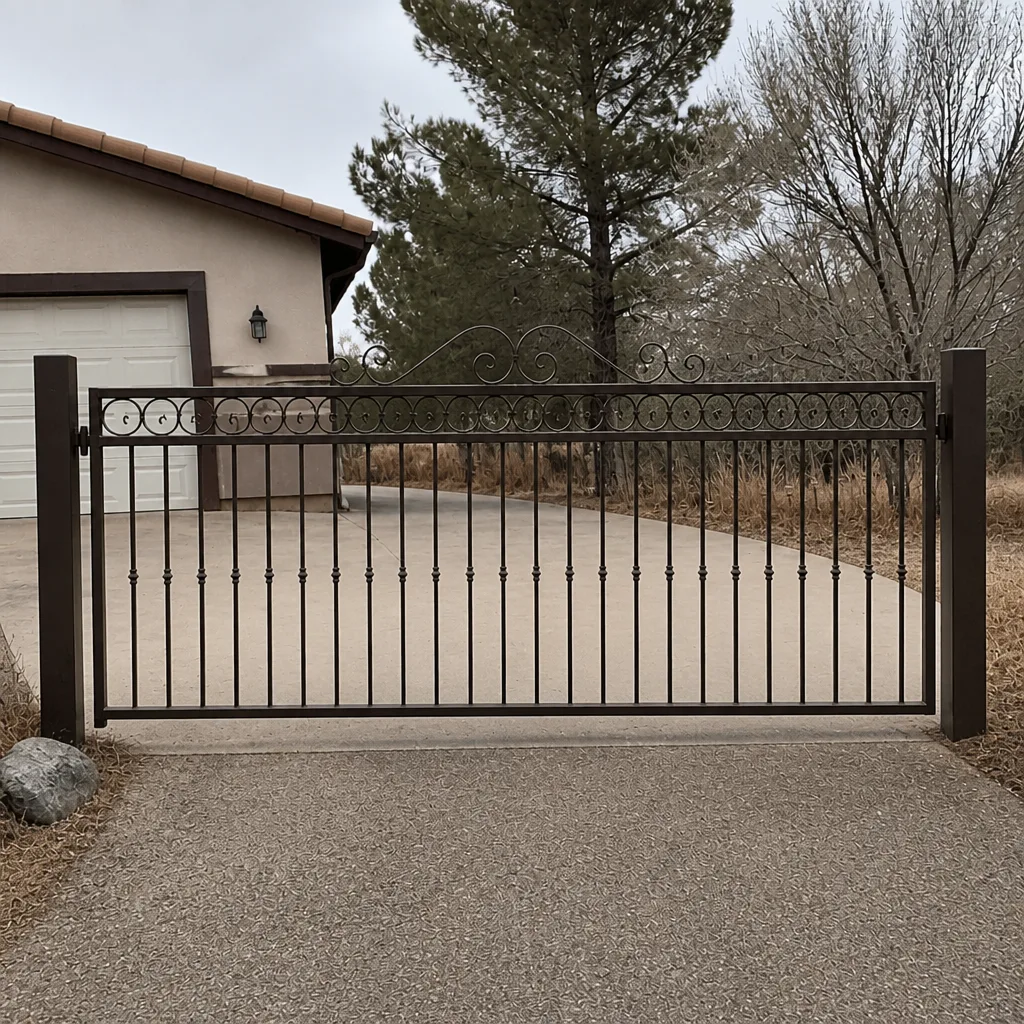 After
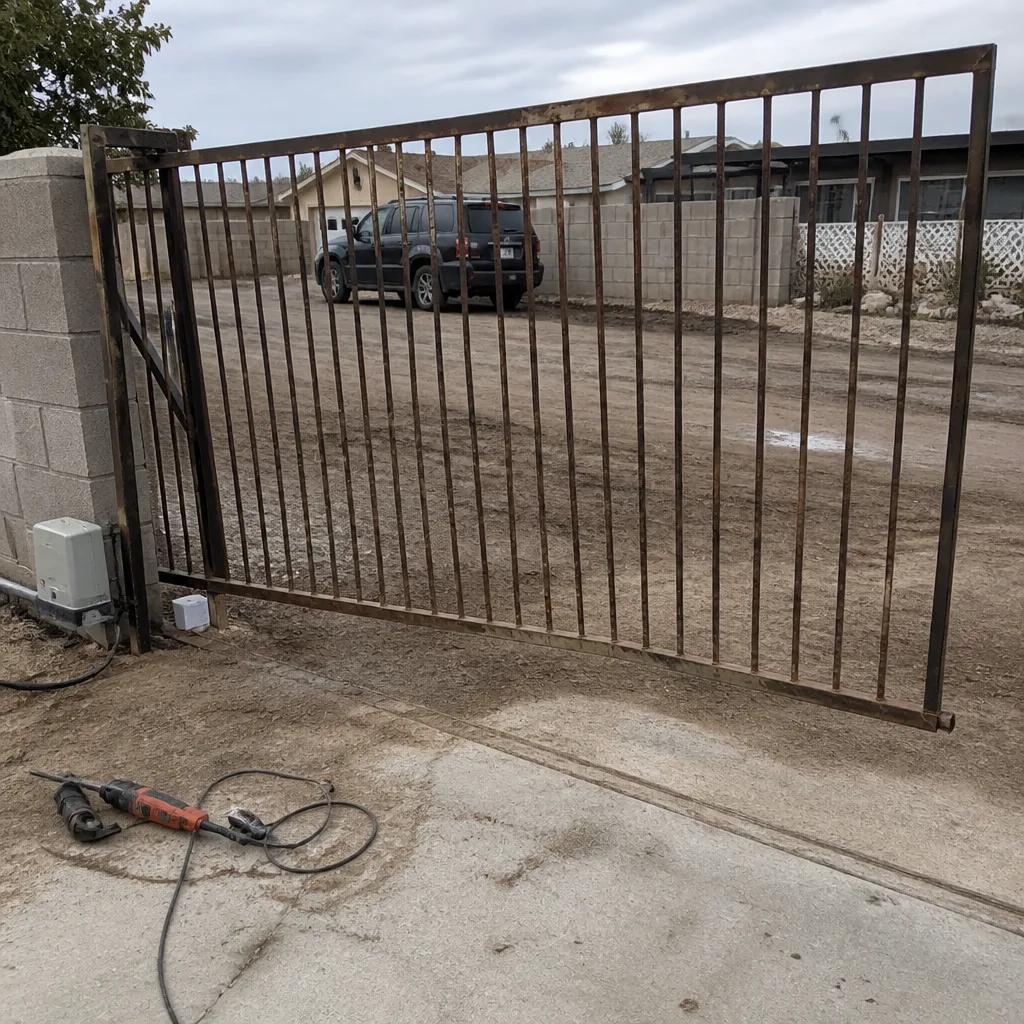 Before
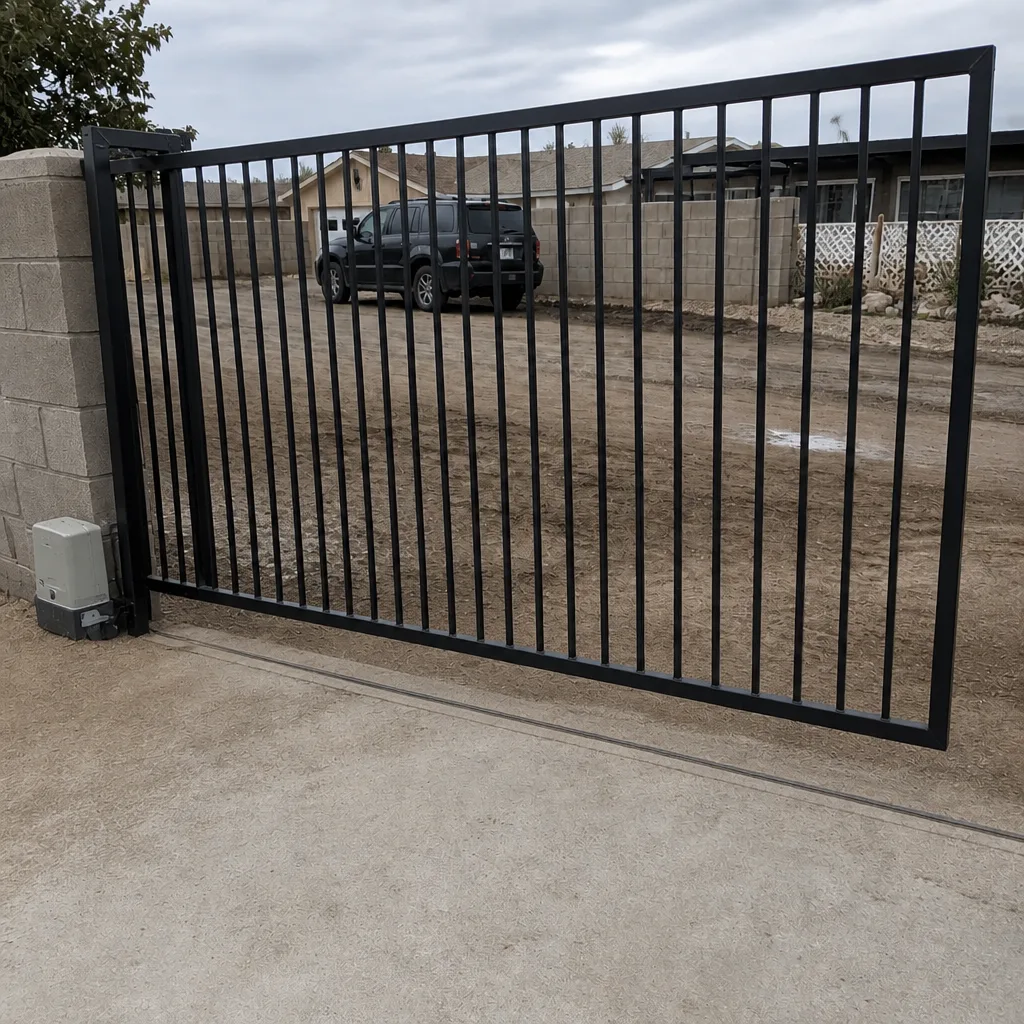 After
When to Call a Professional
Call a professional the moment you see any of the following: a visible crack or weld separation, a post that moves when you push it, a gate that drags on the ground, a motor grinding inside the operator cover, an opener that reverses mid-cycle, or an error light that keeps flashing after you power-cycle the system. Also call if the gate has stopped responding to a remote altogether – that’s a receiver or control board fault, not a battery.
If you’re not sure whether a sign belongs on the list, describe it to us on the phone and we’ll tell you honestly whether it can wait. Ironworks Gate Co. Winchester offers free estimates in Winchester – call (866) 984-8340, and a live person will pick up. Every job is covered by our 90-Day Done Right Promise, and the price is settled before a single bolt is turned.
Frequently Asked Questions
Most gate repairs in Winchester run between $200 and $650 for common issues like a hinge replacement, a sag adjustment, a track realignment, or an opener diagnostic and part. Motor replacement on a sliding gate typically runs $700 to $1,400 depending on the brand, and post-footing work runs $400 to $900. Every job we quote is priced and agreed before any work starts, so the bill matches the estimate. Call (866) 984-8340 for an exact quote – estimates are free.
In most cases, yes. A gate that has stopped completely – especially one blocking a driveway – is treated as urgent, and a live person answers our line 24 hours a day, seven days a week. Call (866) 984-8340 and describe what the gate is doing, and we’ll tell you what to expect. Our technicians have up to 13 years of experience, and we work on nine major opener brands including LiftMaster, FAAC, Elite, and Mighty Mule.
Surface rust on flat panels is cosmetic and can be treated with sanding, primer, and paint. Rust that spreads in a line or blooms outward from a weld or a hinge plate is a structural sign and should be inspected professionally within the week. In Winchester’s climate, the outside of the metal often looks fine while hidden moisture is failing the weld from inside, so look for lines and streaks rather than patches.
It’s a mild warning sign, and the cause depends on the age of the system. On a newer opener, it’s usually the battery in the remote. On a system older than about ten years, it’s often the receiver board beginning to fail, and that’s worth a diagnostic before it stops responding entirely. Try a fresh battery first; if the second press is still needed, call (866) 984-8340 and we’ll schedule a look.
Steel expands in the heat, and Winchester’s summer temperatures push a gate to expand by roughly an eighth of an inch across an eight-foot span. Every hinge, weld, and stop has to absorb that movement, and the ones already near the edge of their tolerance give out first. The soil also shrinks and contracts in our dry summers, which loosens post footings. That’s why we see a spike in hinge, weld, and post failure between late May and early September.
Yes. Our team is trained on safety reverse sensors, loop detectors, keypads, and the low-voltage wiring that connects them, along with the mains wiring to the operator. We also service access control and intercom systems. If you’re not sure what your gate needs, call (866) 984-8340 – a description of the symptom is usually enough for us to tell you whether it’s a repair or a diagnosis.
The Bottom Line
Gates don’t fail suddenly. They warn you for weeks – sometimes months – and the warnings are learnable. Seven physical signs (sag, drag, rust migration, loose post, uneven closure gap, grinding, hinge deformation) tell you the structure is failing. Four behavioral signs (inconsistent cycles, error lights, unusual sounds, reduced remote range) tell you the opener is. Some of it is cosmetic. Some of it is structural and needs same-week attention. In Winchester, the heat accelerates everything, so the calendar matters. The cost of learning these signs is nothing. The cost of ignoring them is the difference between a repair and an emergency call. Ironworks Gate Co. Winchester serves the homeowners here with free estimates, upfront pricing, and a written 90-Day Done Right Promise. Call (866) 984-8340, and a live person will answer – 24 hours a day, seven days a week.
Written by the team at Ironworks Gate Co. Winchester.