
Last updated November 18, 2026
 Wrought iron
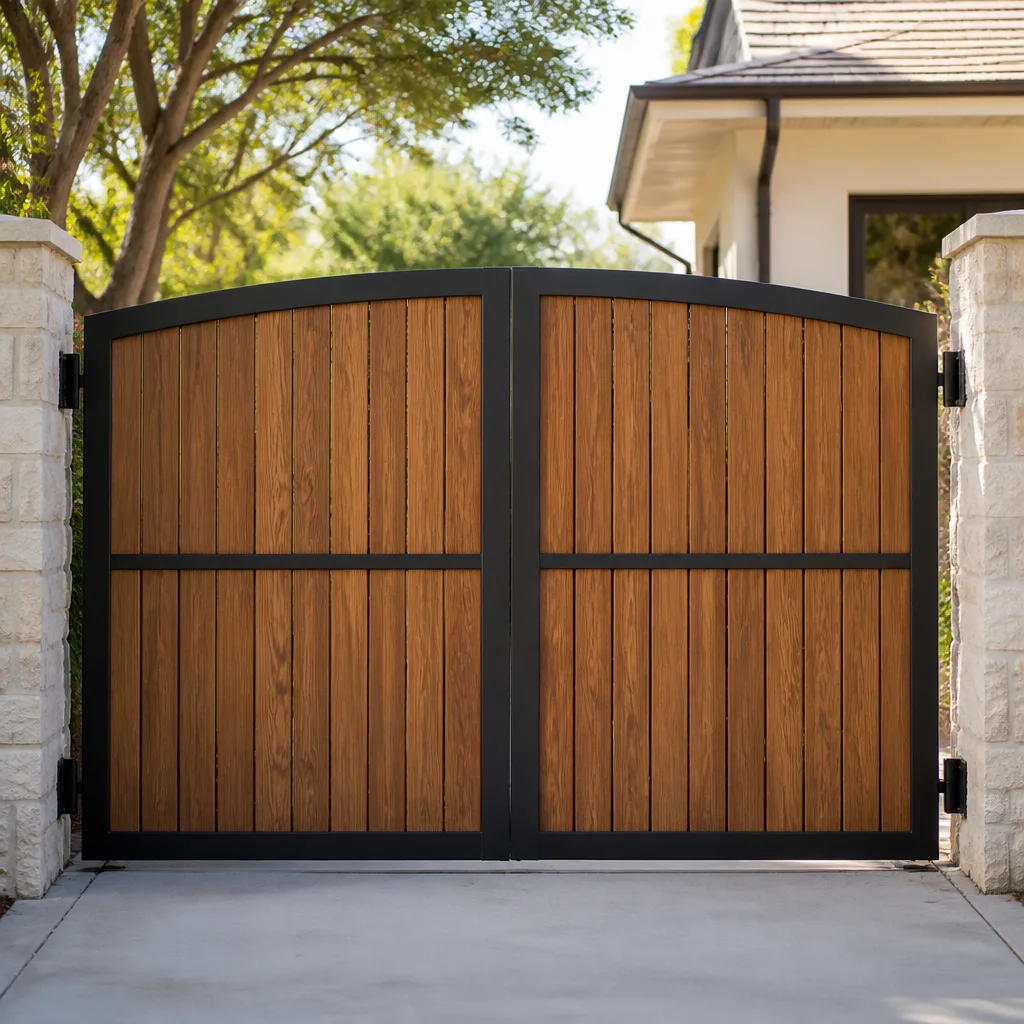 Wood & steel frame
 Farm & ranch
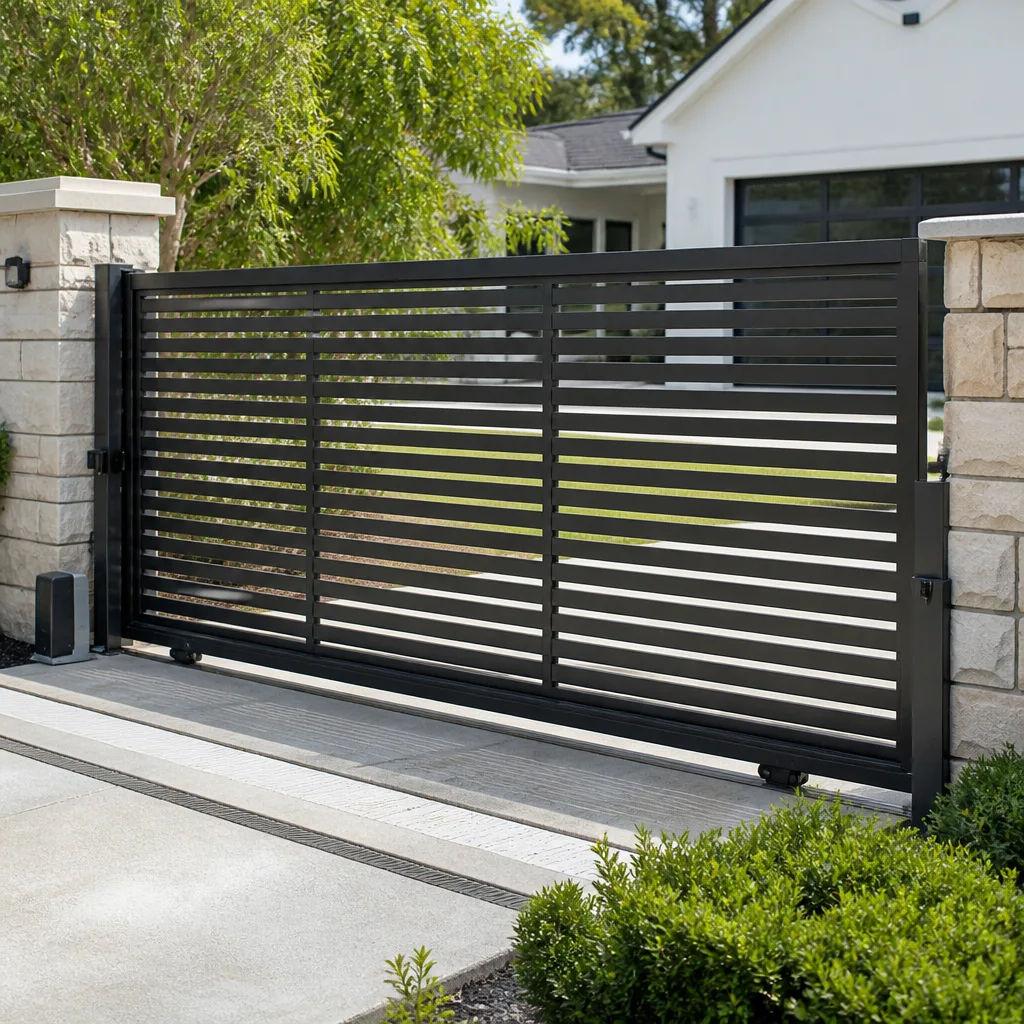 Sliding driveway gates
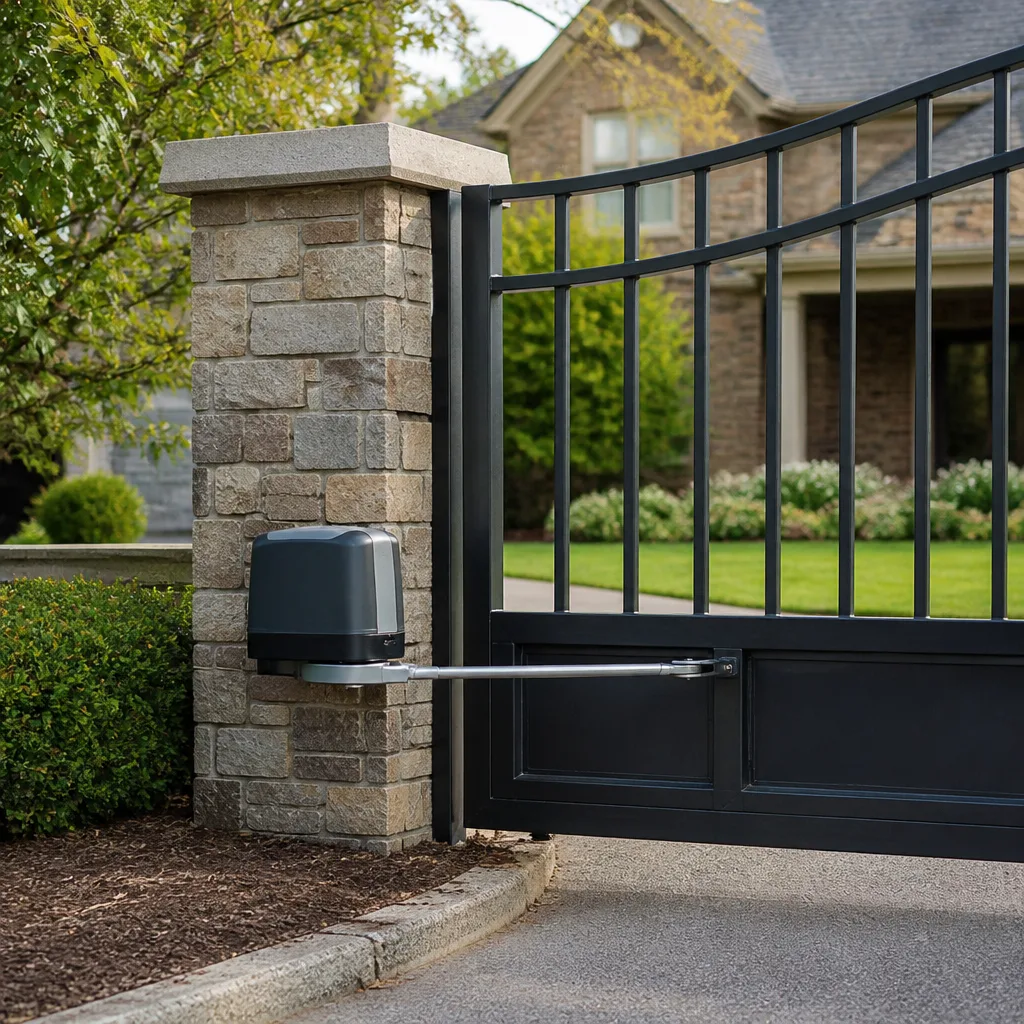 LiftMaster operators
Free on-site gate assessment - hinges, posts, and your LiftMaster or Nice gate operator checked before anything is quoted
The assessment is free and the quote is the invoice.
Get your free estimateGate Repair Warning Signs: A Winchester Homeowner’s Reference Guide
A gate that hesitates for half a second before it moves isn’t “warming up.” It is telling you exactly which component has entered the first stage of its failure curve, usually 30 to 90 days before the gate stops entirely. Most gate failures that strand a car in a Winchester driveway or pin a vehicle against a post announced themselves three times before they happened. The homeowners just didn’t know what they were looking at. This guide teaches you to read your gate’s behavior as diagnostic language instead of background noise. We will cover sound, motion, structure, and what to photograph so a technician arrives in Winchester already knowing what to expect.
Quick Answer
The most common gate repair warning signs in Winchester are a half-second hesitation before movement, grinding or humming at the opener, a gate that drifts back open after closing, visible weld stress cracks at the hinge plates, and a post that has shifted out of plumb. Of these, three require same-week attention because they are safety hazards: an opener that no longer reverses on obstruction, a post that has moved more than a half-inch, and any gate that has dropped far enough to drag the ground. The rest can usually wait for a scheduled visit, but none should be ignored indefinitely.
Styles & brands we work with
- Wrought iron
- Wood & steel frame
- Farm & ranch
- Sliding driveway gates
- LiftMaster operators
Table of Contents
- Behavioral Warning Signs: What Motion Tells You
- Electromechanical vs. Hydraulic Openers: They Fail Differently
- Structural Warning Signs: Reading the Metal
- The Sound-Based Diagnostic: Grinding, Clicking, Humming, Silence
- Low Urgency vs. Same-Week Attention
- Brand-Specific Notes: LiftMaster, FAAC, Elite, Mighty Mule
Behavioral Warning Signs: What Motion Tells You
A gate’s motion is the clearest signal it sends, and the earliest. Long before anything breaks outright, the operator and the hardware begin negotiating. Slow starts, partial openings, and mid-travel pauses are all the gate telling you something has shifted out of tolerance. In our experience across Winchester, these motion signs show up first in gates older than 12 to 15 years, and they almost always trace back to one of four causes: a weakening opener, worn hinges, a shifted post, or an obstruction sensor out of alignment.
Here is what particular motion behaviors usually indicate:
- Half-second hesitation before moving: early-stage opener motor wear, or a control board whose startup capacitor is failing. On LiftMaster swing operators this is often the first sign of a capacitor on its way out.
- Slow or uneven travel: binding at the hinges, or a track (on sliding gates) that has accumulated grit and loss of lubrication.
- Gate reverses partway and stops: a safety edge or photo-eye falsely reading an obstruction, often after wind-blown debris settles in the beam path.
- Drifts back open after closing: the limit switch has drifted out of adjustment, or the close-force setting has been overridden.
- Stops at the same point every time: mechanical binding at that specific point in the gate’s arc, usually a hinge or track issue rather than the opener.
None of these are mysterious if you know what to look for. Each one narrows the diagnosis before you’ve even opened the control box. That is what saves time and money on a repair visit in Winchester.
Electromechanical vs. Hydraulic Openers: They Fail Differently
Electromechanical and hydraulic gate operators use different mechanisms, and they announce failure in different languages. A homeowner who assumes every opener fails the same way will misread half the warning signs. Learning which type sits on your driveway is the first step toward reading its symptoms correctly.
Electromechanical Openers
These use an electric motor driving gears and a screw or chain. Brands like LiftMaster and Elite fall mostly in this category. Failure signs to watch for:
- Grinding or loud gear noise during travel
- Motor hums but doesn’t move the gate (stalled gear or stripped drive)
- A rhythmic click that repeats in time with gate movement
- Motor casing hot to the touch after a single cycle
- Burning smell after use, which is a stop-now warning
Hydraulic Openers
These use hydraulic fluid pressurized by a pump to move the gate arm. FAAC units and many heavy estate gates use this design. Failure tends to be slower and messier:
- Fluid weeping at the arm fittings or around the ram
- Sluggish movement, especially in cold weather (a Winchester winter morning will expose a marginal hydraulic unit quickly)
- Inconsistent speed mid-travel
- Gate drifts when power is off, from internal valve bypass
- Audible whine from the pump that wasn’t there before
If you don’t know which type you have, look at the operator arm itself. A metal screw or chain drive visible along the arm means electromechanical. A sealed cylinder with fluid lines means hydraulic.
Structural Warning Signs: Reading the Metal
Structural damage and automation failure produce different clues, and distinguishing them saves you from replacing an opener when the real issue is a post. You can separate the two with visual inspection alone. No tools, no crawling around under the gate.
Structural warning signs (the gate and its mounting)
- Post visibly leaning when you sight along the fence line
- Hinge plate separation from the gate frame, even by a fraction of an inch
- Weld cracks that look like hairline dark lines near hinge or latch points
- Gate sagging on one side, dragging the ground at the far end
- Rust bleeding at the base of a steel post, especially in Winchester where summer soil swings between bone-dry and irrigation-soaked
Automation warning signs (the operator and controls)
- Keypad or remote responds inconsistently
- Gate operates by remote but not by keypad (or the reverse)
- Safety edge or photo-eye triggers a reverse at random
- Gap between where the gate stops and where it should
- Control box LED codes flashing in patterns
The rule of thumb: if the gate’s physical body is deformed, unstable, or has lost its shape, you have a structural problem. If the gate is physically fine but refuses to move correctly, you have an automation problem. In Winchester, the split matters most on older properties where the gate was hung before the operator was added: a 20-year-old gate post has often shifted a quarter inch by now, which puts strain on the newer opener.
The Sound-Based Diagnostic: Grinding, Clicking, Humming, Silence
The sounds a gate makes are its most direct form of communication. There are four sound categories, and each points toward a specific class of problem.
Grinding
Metal-on-metal contact. Usually a gear inside the operator, or a hinge that has lost its lubrication. Grinding is the sound of metal being consumed, so it gets worse fast. It is a schedule-this-week signal, not a wait-and-see.
Clicking
Single click on start or stop is often normal relay action. A repeating click that continues after the gate has stopped usually points to a control board cycling, a limit switch hitting its travel point too aggressively, or a failing capacitor on electromechanical units. Clicking is rarely an emergency but almost always a sign something will fail within weeks.
Humming with no movement
The motor receives power but the mechanism is stuck or the drive has broken. Further remote presses will overheat the motor. Power it down and call. This is one of the top causes of a burnt-out operator we see at Gate Motor & Opener in Winchester calls.
Silence
No hum, no click, no movement. Usually a power, control board, or battery backup issue rather than a motor failure. Check the breaker first. If the breaker is fine and the keypad and remote both produce nothing, you have a control board or transformer problem. Silence is also what you hear on a Mighty Mule solar or battery unit when the battery has dropped below charge threshold, which happens in Winchester during long stretches of overcast winter weather.
A simple diagnostic routine:
- Listen at each phase: remote press, gate start, gate travel, gate stop.
- Note which phase the abnormal sound occurs in. It narrows the suspect component.
- Power down the operator if grinding or humming without movement occurs.
- Write down what you heard and when. That notation goes to the technician.
Low Urgency vs. Same-Week Attention
Not every warning sign means drop everything. Most are genuinely low urgency and can wait for a scheduled visit. Three are not.
Genuinely low urgency
- Slow keypad response
- Remote needing a battery change
- Occasional reverse triggered by wind-blown leaves crossing the photo-eye
- Cosmetic rust bloom on a steel gate that isn’t structural
- Slight delay on cold mornings that resolves once the gate warms up
Same-week attention required (safety hazards)
- The opener no longer reverses on obstruction. A gate that closes on a person, pet, or vehicle without reversing is the most common cause of a serious injury from a residential gate. If a broom handle placed in the closing path doesn’t trigger a reverse, stop using the gate.
- A post has moved more than a half-inch out of plumb. Gate weight is now loading the hinge in a direction it wasn’t designed for. Left alone, this bends the hinge plate and eventually the gate frame.
- Any gate that has dropped far enough to drag or nearly drag the ground. A gate that has dropped is a gate whose hinge or post has begun failing, and the problem compounds every time the opener pushes through the resistance.
If any of the three same-week signs is present in your Winchester driveway, don’t wait for the weekend project. This is the moment to schedule a repair. Ironworks Gate Co. takes those calls 24/7.
How to Photograph and Document Warning Signs
Documentation turns a vague call (“something is wrong with my gate”) into a technician showing up with the right part. It also lets us quote a real estimate instead of a guess. You don’t need to be a photographer. You need about five minutes and a phone.
- Photograph the full gate from both sides. Stand back far enough that the entire gate and both posts are in frame. This is your baseline.
- Photograph each hinge plate up close. Hinge-to-frame and hinge-to-post views catch weld cracks a wide shot misses.
- Photograph the control box interior with the lid open. Include any LED indicator lights. Model number labels on the inside of the lid are gold.
- Photograph the safety edges and photo-eyes. These are usually small housings on the gate posts at knee or shin height.
- Record a 15-second video of the gate opening and closing. Capture the sound and behavior. A hesitation or click that a homeowner can’t describe in words is instantly clear in a video.
- Note the date, time, and weather when you observed each symptom. Cold-morning sluggishness is a different diagnosis from midday grinding.
Send the photos with your call. The technician arrives knowing whether the visit is an opener repair, a hinge replacement, or a structural correction. That’s the difference between one visit and three.
Brand-Specific Notes: LiftMaster, FAAC, Elite, Mighty Mule
Gate operators have brand personalities. What is a warning sign on a LiftMaster isn’t necessarily one on a FAAC. In our experience servicing gates across Winchester, these are the brand-specific patterns homeowners should know about.
- LiftMaster swing and slide operators are workhorses, but their control boards are the first thing to fail after a power surge. A gate that works one day and is completely silent the next, with no other symptom, is often a LiftMaster control board.
- FAAC hydraulic operators give months of warning before failure, but the warning is usually a fluid weep at the base of the operator arm. A small oil stain under the driveway gate means the hydraulic system is losing pressure.
- Elite operators are legendary for durability but their mechanical wear points (drive gears, limit switches) need periodic attention. Grinding on an Elite after years of smooth service often means the drive gear is worn.
- Mighty Mule is a popular DIY-installed brand and the entry-level units are solar or battery powered. The most common warning sign is the gate slowing down before it stops responding entirely, which is almost always a battery dropping below charge threshold.
If your gate brand isn’t listed here, don’t assume the failure patterns don’t apply. These four cover most of what we see across west-side and east-side properties in Winchester. The general principle holds: a warning sign appears before an outright failure, every time.
Where This Fits with the Rest of Gate Care
Warning signs are the entry point to gate maintenance. When a sign is caught early, the fix is usually a hinge, a battery, or an adjustment. When it’s caught late, the call becomes a repair or replacement. Knowing what your gate is telling you shortens the path from sign to solution. If you want context on how a full repair visit works, our team covers that in Gate Repair in Winchester. If your gate is old enough that repair no longer makes economic sense, Gate Installation in Winchester walks through the process from measure to hang. And for the full picture of how we approach every gate call from hinges to access control, see the Ironworks Gate Co. Winchester home page.
Common Mistakes to Avoid
- Waiting for the gate to fail completely before calling. A hesitation is cheaper to fix than a stranded vehicle. Every day a failing component runs, it takes the part next to it with it.
- Spraying WD-40 on the hinges and calling it maintenance. It displaces lubrication rather than providing it, and Winchester’s summer dust turns it into a grinding paste. Use proper gate-hinge lubricant, or have the hinge serviced.
- Forcing the gate by hand when the opener has stopped. On a hydraulic unit this can damage internal valves; on an electromechanical unit it can strip the drive gear. Release the manual override if you need to move the gate, don’t push through the resistance.
- Overriding the safety reverse because it keeps “bothering” you. A gate that closes without reversing on obstruction is a hazard. Every override is another day of risk. Fix the photo-eye, don’t bypass it.
- Assuming every sound means the opener is going out. Hinge grinding sounds like operator grinding to untrained ears. Photographing the source of a sound before assuming the worst can save the cost of an unnecessary opener replacement.
- Having a handyman adjust the springs or counterbalance on a heavy gate. A 300-pound swing gate under stored counterbalance force can injure a person badly if the adjustment goes wrong. This is a job for a trained gate technician.
- Ignoring a post that “just looks a little crooked.” A leaning post is not cosmetic. It is loading every hinge on that gate with stress it was never designed for.
See the difference
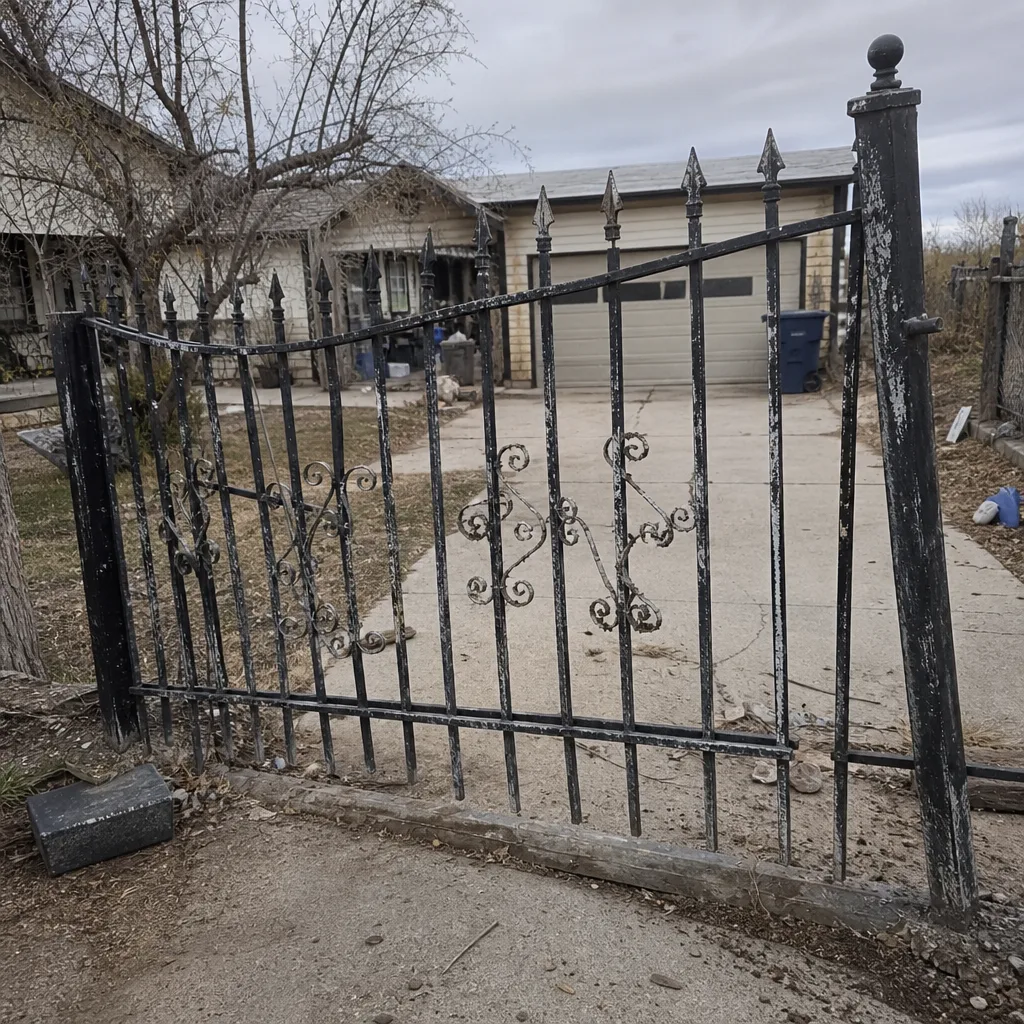 Before
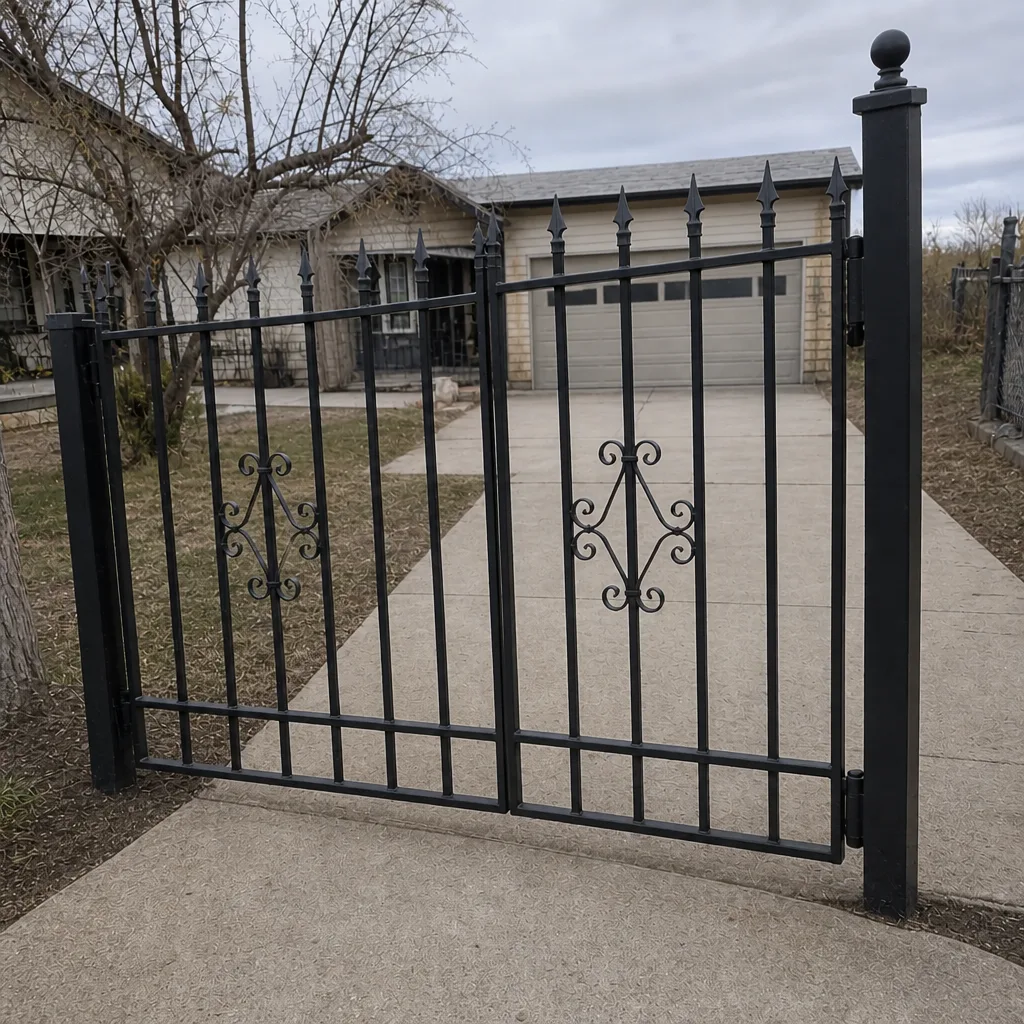 After
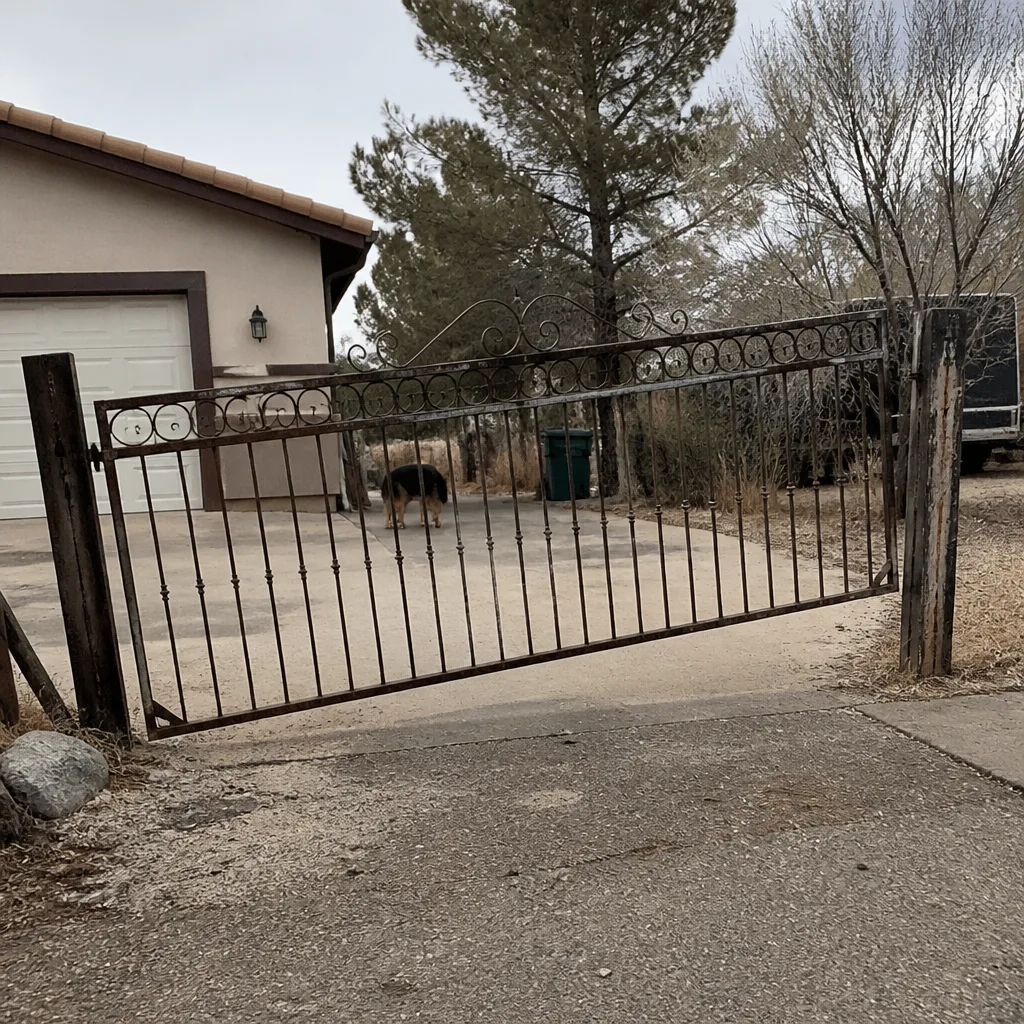 Before
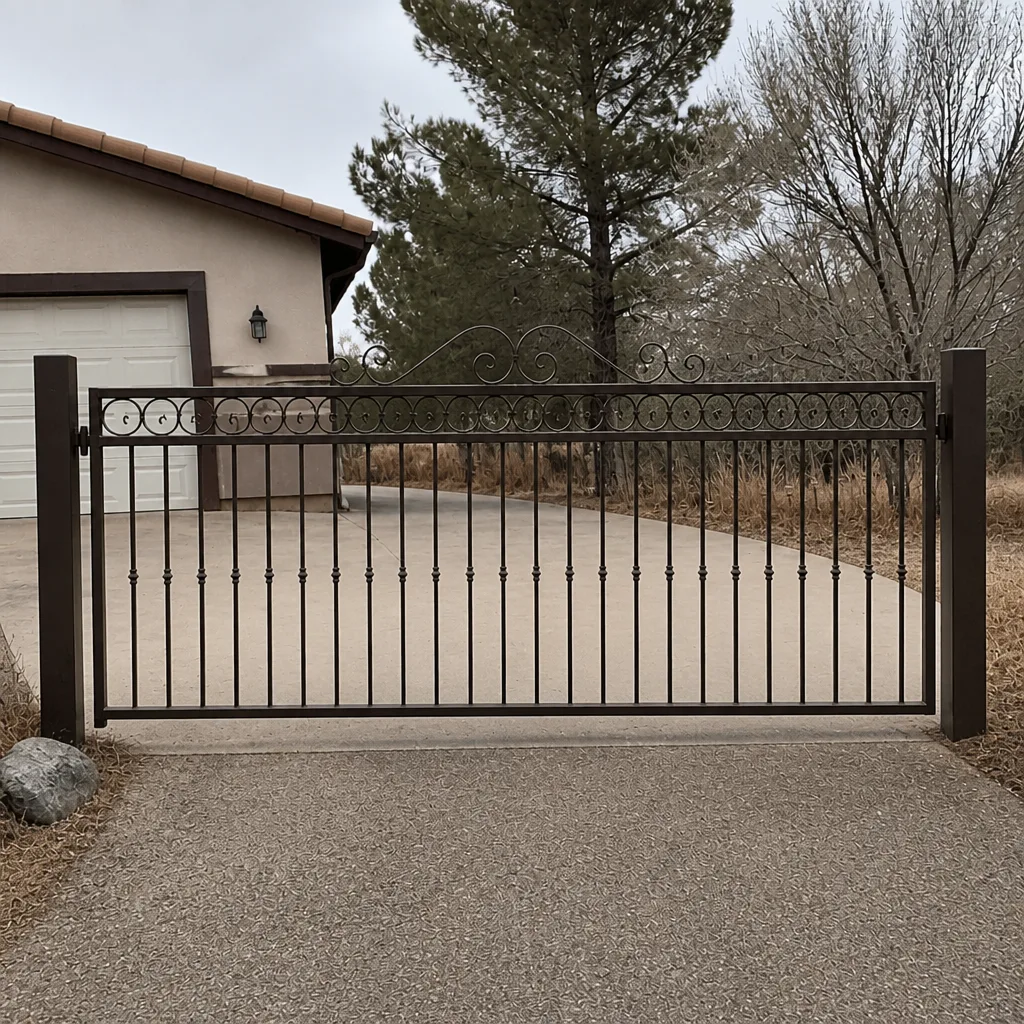 After
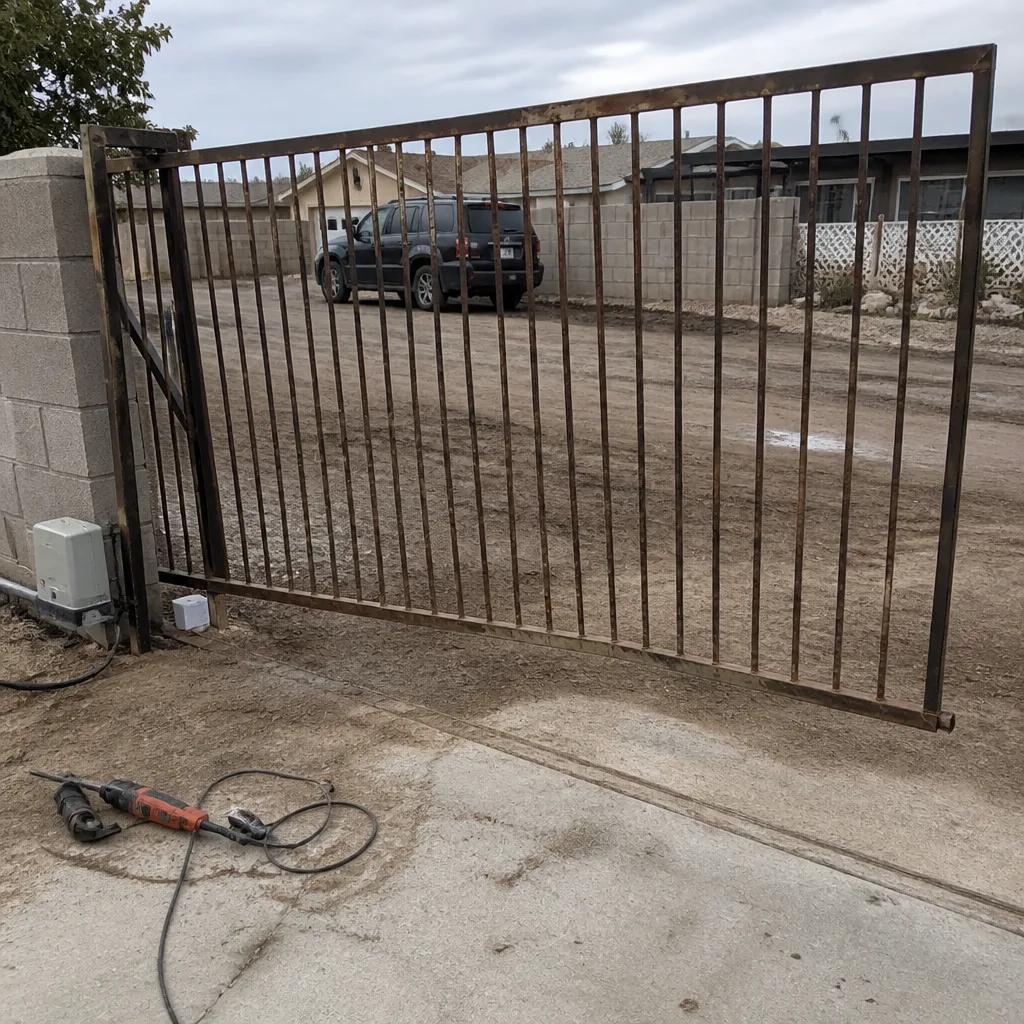 Before
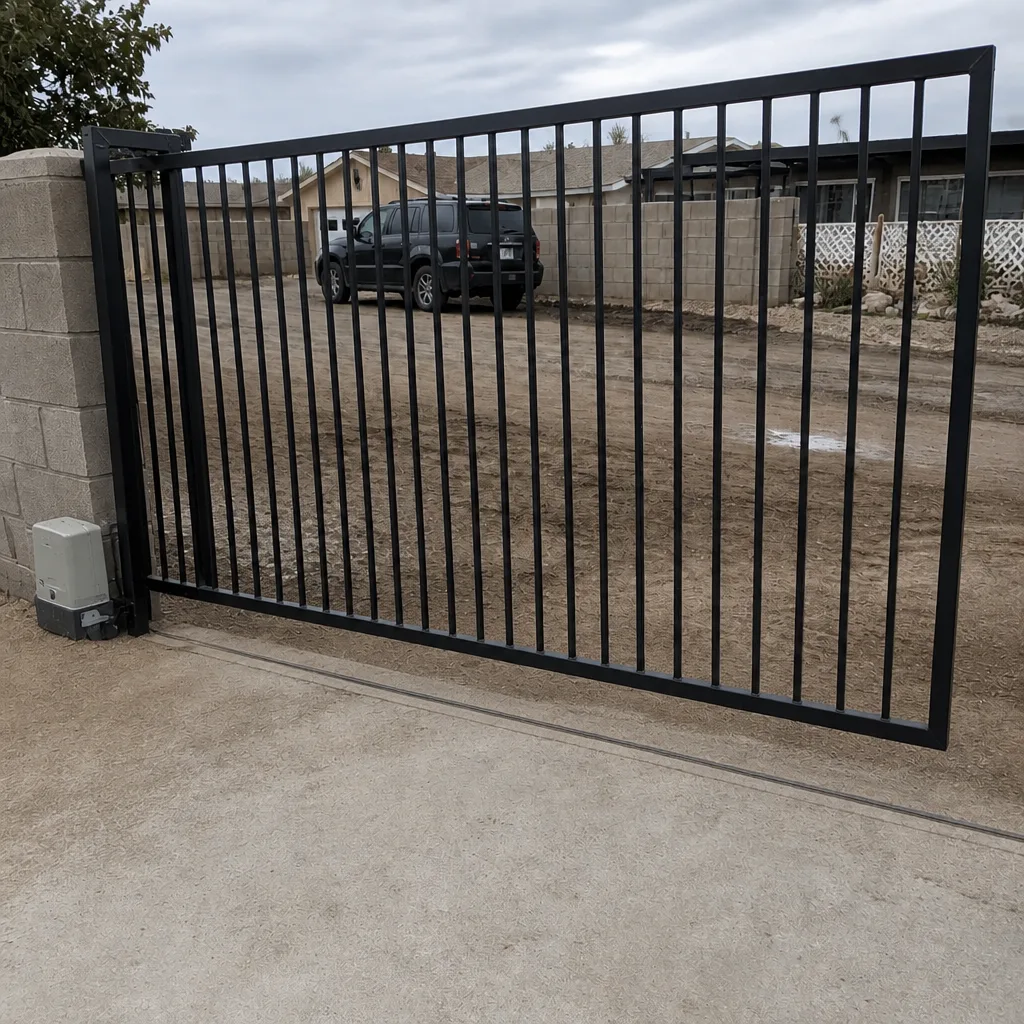 After
When to Call a Professional
Call a trained gate technician immediately if the opener no longer reverses on obstruction, if a post has shifted visibly, if the gate is dragging the ground, if you see weld cracks at hinge plates, or if you observe humming from the operator with no movement. These are not DIY repairs. A heavy swing gate under operator force or counterbalance spring tension can cause serious injury, and the fix is not something to learn on the fly. Ironworks Gate Co. Winchester offers free estimates in Winchester, and our technicians are trained and equipped on nine gate-automation brands including LiftMaster, FAAC, Elite, and Mighty Mule. Call (866) 984-8340 for a free estimate; we answer live, day or night.
Frequently Asked Questions
The half-second hesitation before movement. It usually traces back to an early-stage opener component or a hinge that has started to bind. Caught early, this is often a modest repair. Caught late, the same sign becomes an opener replacement. Call (866) 984-8340 for a no-cost estimate if you’re seeing this on your gate.
Yes, with visual inspection alone. A structural problem shows up as post lean, weld cracks, hinge plate separation, or sagging. An automation problem shows up as a physically intact gate refusing to move correctly, reverse correctly, or respond to a remote or keypad. If the gate is whole but the behavior is wrong, suspect automation first.
Grinding means metal is being consumed, and it gets worse quickly. Schedule service within the week. Do not keep cycling the gate, because each cycle removes more material. A humming-with-no-movement condition is even more urgent: power the operator down and call, since further pressing will overheat the motor.
Both sides of the full gate, each hinge plate up close, the interior of the control box with the lid open (including any LED lights), the safety edges and photo-eyes, and a 15-second video of the gate operating. Include the model number label inside the control box lid. Those photos give the technician enough context to arrive with the correct parts and a realistic estimate.
Once a month, on the same day you check your smoke detectors. Place a broom handle or a piece of 2×4 in the gate’s closing path. If the gate closes without reversing, stop using it and call. This is the single most important safety check on any automated gate, and it is the one most homeowners never perform.
Mostly, with one difference: a Mighty Mule or other solar unit tends to slow down before failing rather than giving off mechanical sounds. Slow movement on a solar gate is usually a battery falling below charge, especially in Winchester’s long winter overcast stretches. A charge check is the first step in those cases.
The Bottom Line
Every gate that has ever stranded a car in a Winchester driveway gave at least three warnings first. The lesson is learnable, and it does not require opening the control box. Watch motion, listen to sound, sight down the post, and photograph what you see. The half-second hesitation, the grinding at a hinge, the post that has drifted a quarter inch out of plumb: all of them are the gate telling you what is coming. Reading them early is how a modest repair stays a modest repair. Ironworks Gate Co. Winchester is here when you’re ready: free estimates, upfront pricing, and written backing on every job under the 90-Day Done Right Promise. Call (866) 984-8340 and let’s take a look.
Written by the team at Ironworks Gate Co. Winchester.